

Kirjailija
John Evans
Kirjat ja teokset yhdessä paikassa: 161 kirjaa, julkaisuja vuosilta 1999–2026, suosituimpiin kuuluu Evans's Sketch of the Denominations of the Christian World and of Atheism, Deism, Mahometanism, Etc.. Vertaile teosten hintoja ja tarkista saatavuus suomalaisista kirjakaupoista.
161 kirjaa
Kirjojen julkaisuvuodet: 1999–2026.
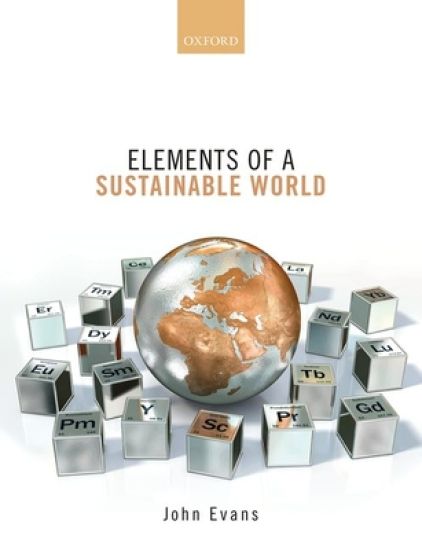
We have 118 known chemical elements as our palette in our context of sustaining our world. Our context is considered in terms of the four spheres of the ancient world: Earth, Air, Fire and Water. This book shows how chemical principles can be used to understand the pressures on our world, spanning from greenhouse emissions through freshwater supplies to energy generation and storage. The supply of the chemical elements is key to their contribution to alleviating these pressures. Most synthetic and radioactive elements are not available in sufficient supply to contribute in this. Some solutions, such as wind turbines, batteries, fuel cells and automotive exhaust remediation pose questions about sustainable supplies of critical elements. With an eye on the target of the IPCC of capping the temperature anomaly to 1.5 oC (RCP2.6), options for carbon capture and storage, and the generation of energy and element supply from the sea are assessed. The consequences of the escape of plastics and pharmaceuticals into the wider environment for water integrity are also considered. This book is designed around providing a one semester course for students who have entered at least the second level of university chemistry. It provides explanations and entries to current environmental issues. For students of environmental science, it provides an understanding of the chemical principles underpinning the causes and possible solutions to these issues. Each chapter has a set appropriate study questions. A study guide is available for the book.
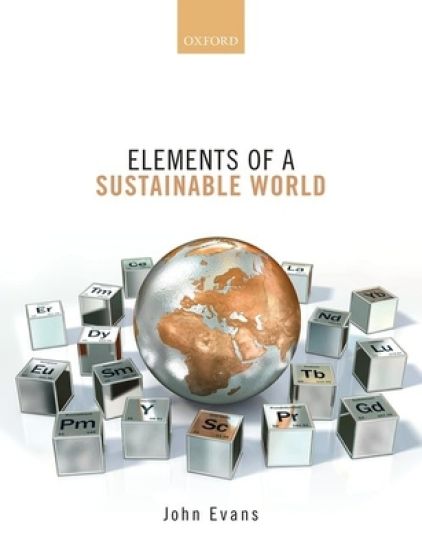
We have 118 known chemical elements as our palette in our context of sustaining our world. Our context is considered in terms of the four spheres of the ancient world: Earth, Air, Fire and Water. This book shows how chemical principles can be used to understand the pressures on our world, spanning from greenhouse emissions through freshwater supplies to energy generation and storage. The supply of the chemical elements is key to their contribution to alleviating these pressures. Most synthetic and radioactive elements are not available in sufficient supply to contribute in this. Some solutions, such as wind turbines, batteries, fuel cells and automotive exhaust remediation pose questions about sustainable supplies of critical elements. With an eye on the target of the IPCC of capping the temperature anomaly to 1.5 oC (RCP2.6), options for carbon capture and storage, and the generation of energy and element supply from the sea are assessed. The consequences of the escape of plastics and pharmaceuticals into the wider environment for water integrity are also considered. This book is designed around providing a one semester course for students who have entered at least the second level of university chemistry. It provides explanations and entries to current environmental issues. For students of environmental science, it provides an understanding of the chemical principles underpinning the causes and possible solutions to these issues. Each chapter has a set appropriate study questions. A study guide is available for the book.
An Attempt to Account for the Infidelity of the Late Edward Gibbon, Esq. Founded on his own Memoirs, Published by John Lord Sheffield; With Reflections on the Best Means of Checking ... Scepticism And Irreligion; Including an Account of the Conversion And
John Evans
Gale Ecco, Print Editions
2018
sidottu
The 18th century was a wealth of knowledge, exploration and rapidly growing technology and expanding record-keeping made possible by advances in the printing press. In its determination to preserve the century of revolution, Gale initiated a revolution of its own: digitization of epic proportions to preserve these invaluable works in the largest archive of its kind. Now for the first time these high-quality digital copies of original 18th century manuscripts are available in print, making them highly accessible to libraries, undergraduate students, and independent scholars. The Age of Enlightenment profoundly enriched religious and philosophical understanding and continues to influence present-day thinking. Works collected here include masterpieces by David Hume, Immanuel Kant, and Jean-Jacques Rousseau, as well as religious sermons and moral debates on the issues of the day, such as the slave trade. The Age of Reason saw conflict between Protestantism and Catholicism transformed into one between faith and logic -- a debate that continues in the twenty-first century.++++The below data was compiled from various identification fields in the bibliographic record of this title. This data is provided as an additional tool in helping to insure edition identification: ++++British LibraryT078217Preface dated: Feb.1, 1797. London: printed for T. N. Longman; and sold by J. Cottle, Bristol, 1797]. 76p.; 8
J. K. Evans’ pioneering work explores the profound changes in the social, economic and legal condition of Roman women, which, it is argued, were necessary consequences of two centuries of near-continuous warfare as Rome expanded from city-state to empire. Bridging the gap that has isolated the specialised studies of Roman women and children from the more traditional political and social concerns of historians, J. K. Evans’ investigation ranges from Cicero’s wife Terentia to the anonymous spouse of the peasant-soldier Ligustinus, charting the severe erosion of the very institutions that kept women and children in thrall. War, Women and Children in Ancient Rome will be interest not only to classicists and historians of antiquity but also to sociologists and anthropologists, while it will similarly prove an indispensable reference work for historians of women and the family.
A Second Look at Jesus: The Perspective of Experience
John Evans
Insight Publishing LLC
2014
nidottu
In the summer of 1978, I took a summer course in Biblical Hebrew at Harvard Divinity School. One of the questions that interested me was the Hebrew name of God. This word was clearly a central part of Hebrew theology and practice for more than 2000 years. I wanted to try it as part of my daily spiritual practice. The first thing my instructor told me was that no one is sure how to pronounce that Name today. He said that while the King James Bible used the word Jehovah, this pronunciation was almost certainly wrong. Looking further, I found that a few hundred years before the time of Jesus the use of the Hebrew name of God became more and more restricted until only the high priest was allowed to use it. He did this only once a year, during the High Holy Days, while standing alone within the innermost room of the temple. How and why did this disappearing act occur? I looked further still into this question and I found an interesting statement by Jesus: The Bible has evidence in John 17:26 that Jesus took a different path concerning the name of God. He said "And I have declared unto them thy name, and will declare it: that the love wherewith thou hast loved me may be in them, and I in them." This quote clearly shows that Jesus, acting contrary to the trend of his time, not only knew how to pronounce this name of God and used the name himself, he taught this name of God to his disciples. What has happened since? Why was I not taught this name and its proper use in the catechism of my youth? With further research, I found more that provoked my curiosity. What is the explanation for the mysterious blessing of Jesus found in John 20:22? Here we read; "With that he breathed on them and said: 'Receive the Holy Spirit." Questions like these are answered to the best of my ability later in this book. I was raised as a traditional Christian. I was fully engaged from an early age with the sacraments, parochial school and, service as an altar boy. During my first year of college, I learned to meditate. A few months later, in the summer of 1971, I was transformed by what I can only call an irresistible force that delivered a peace that truly passes all understanding. The transformation of that spiritual breakthrough has never left me. Its significance only becomes more vivid as time passes. I have tried to follow up on that event and, along the way, met some fascinating people. I learned to teach meditation. My meditation teacher then sent me to India to teach and represent him there. Returning home, I worked with a courageous Civil Rights' activist, Robert Pritchard, who was locked in a struggle to turn back a resurgent Ku Klux Klan. Robert took the time to befriend me and counsel me. One day Robert took me aside and recommended I "take a second look at Jesus." I respected Robert and took his challenge to heart. To a great extent, this book is the result. Traditionally, Christianity has not recognized the validity of spirituality if it is not closely tied to its own doctrine. This attitude was simply not an option for me. The ongoing miracle of the surging life that was and is animating me could not be denied. Instead, I have closely reexamined contemporary and historic Christianity. I searched for evidence that my experience and the methods that triggered it were consistent with my Christian heritage. I have found what I was looking for. What I uncovered convinces me that Jesus intended we all partake in the ongoing miracle of life with an intimacy and intensity far exceeding contemporary Christian standards.
J. K. Evans’ pioneering work explores the profound changes in the social, economic and legal condition of Roman women, which, it is argued, were necessary consequences of two centuries of near-continuous warfare as Rome expanded from city-state to empire. Bridging the gap that has isolated the specialised studies of Roman women and children from the more traditional political and social concerns of historians, J. K. Evans’ investigation ranges from Cicero’s wife Terentia to the anonymous spouse of the peasant-soldier Ligustinus, charting the severe erosion of the very institutions that kept women and children in thrall. War, Women and Children in Ancient Rome will be of interest not only to classicists and historians of antiquity but also to sociologists and anthropologists, while it will similarly prove an indispensable reference work for historians of women and the family.


An Attempt to Account for the Infidelity of the Late Edward Gibbon, Esq. Founded on His Own Memoirs, Published by John Lord Sheffield; With Reflections on the Best Means of Checking ... Scepticism and Irreligion; Including an Account of the Conversion and
John Evans
Gale Ecco, Print Editions
2010
pokkari
Evans's Sketch Of The Various Denominations Of The Christian World
John Evans
KESSINGER PUBLISHING, LLC
2009
pokkari
The Christian Temper V2: Being Thirty-Eight Discourses Upon The Principal Heads Of Practical Religion, Designed For The Use Of Families
John Evans
KESSINGER PUBLISHING, LLC
2007
sidottu
The Ancient Stone Implements, Weapons and Ornaments of Great Britain
John Evans
Kessinger Pub
2007
sidottu
Evans's Sketch Of The Denominations Of The Christian World And Of Atheism, Deism, Mahometanism, Etc.
John Evans
Kessinger Publishing
2007
sidottu
Evans's Sketch of the Denominations of the Christian World and of Atheism, Deism, Mahometanism, Etc.
John Evans; James Hews (EDT) Bransby
Kessinger Pub
2007
pokkari



The Ancient Stone Implements, Weapons, and Ornaments of Great Britain
John Evans
Antigonos Verlag
2025
nidottu

The Numismatic Chronicle and Journal of the Royal Numismatic Society Third Series
John Evans; Barclay V. Head; Herbert A. Grueber
Antigonos Verlag
2025
nidottu

The Numismatic Chronicle and Journal of the Royal Numismatic Society Third Series
John Evans; Barclay V. Head; Herbert A. Grueber
Antigonos Verlag
2025
nidottu