
Kirjailija
John Evelyn
Kirjat ja teokset yhdessä paikassa: 112 kirjaa, julkaisuja vuosilta 2000–2026, suosituimpiin kuuluu Advertisement. the Silva of Mr. Evelyn, One of the Best Books Upon Planting Ever Published, Being Nearly Out of Print, and the Few Remaining Copies of the Fifth Edition Sold at the High Price of Three Guineas. Vertaile teosten hintoja ja tarkista saatavuus suomalaisista kirjakaupoista.
112 kirjaa
Kirjojen julkaisuvuodet: 2000–2026.
The Miscellaneous Writings Of John Evelyn V2 (1825)
John Evelyn
KESSINGER PUBLISHING, LLC
2007
nidottu
The Miscellaneous Writings Of John Evelyn V1 (1825)
John Evelyn
KESSINGER PUBLISHING, LLC
2007
nidottu
Diary of John Evelyn
John Evelyn; William (EDT) Bray; Henry B. (FRW) Wheatley
Kessinger Pub
2007
pokkari
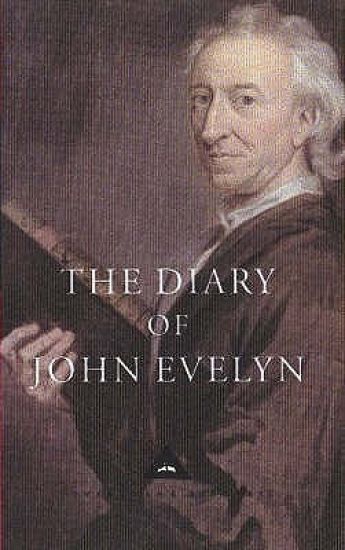
Sometimes overshadowed by his friend and contemporary, Samuel Pepys, Evelyn is the other great English diarist. He was a scholar, a scientific amateur, a garden designer and architect, and a founder member of the Royal Society who published a magisterial book about trees, Sylva, and many pamphlets on assorted subjects. His great interest as a diarist is that he was privy to all the great men and events of his very long life, from the execution of Charles I to the accession of Queen Anne, whereas Pepys writes of a relatively short period. A personal friend of Charles II, he observed at close quarters- and with some disapproval- that monarch's amorous life, and the diaries contain vivid portraits of Nell Gwynn, other royal mistresses and their children. The personalities of James II, the Dukes of Monmouth and Marlborough, and Judge Jeffreys, also figure largely. But this is more than a social record. As a valued administrator, Evelyn was also involved with many serious projects, such as combating the Plague, and rebuilding London after the Great Fire - an enterprise which brought him close to Christopher Wren. In all, a vivid portrait of the social, personal and political life of a society in ferment by one of its major players.
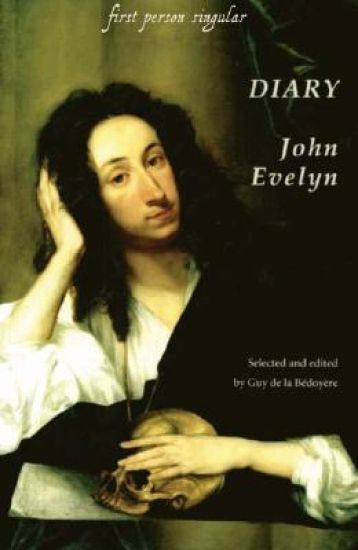
Evelyn was at the centre of English social and political life in the17c, friend of Charles II, member of Royal Society. The Diary of John Evelyn (1620-1706) is one of the principal literary sources for life and manners in the English seventeenth century. Evelyn was one of an influential group of men which included Wren, Pepys and Boyle; afounding member of the Royal Society, he was also a friend of Charles II, a Commissioner for sick seamen and prisoners of war during the Dutch Wars, a prime mover behind Chelsea and Greenwich Hospitals, and a prolific author who wrote about architecture, art, arboriculture, fashion, and pollution. In his Diary he recorded the events and experiences of his long and remarkable life; there are also extensive references to his family, including hispoignant recollections of the children who predeceased him. This edition has been based on the only comprehensive and accurate transcription, by E. S. de Beer, published by Oxford University Press in 1955, but the text hasbeen reworked into individual years and months while retaining the original spelling and grammar throughout. GUY DE LA BÉDOYERE holds degrees in history and archaeology from the Universities of Durham and London.
In a letter to Sir Thomas Browne about his proposed magnum opus on gardens, John Evelyn stated his purpose: "to refine upon some particulars, especially concerning the ornaments of Gardens, which I shal endeavor so to handle that persons of all conditions and faculties, which delight in Gardens, may therein encounter something for their owne advantage." In his Elysium Britannicum, or The Royal Gardens, Evelyn indeed produced a rich document, an assemblage of the horticultural knowledge and wisdom of the seventeenth century. An intriguing intellectual whom many have called a virtuoso, Evelyn was a garden designer, a noted author and translator of garden books, and a founding member of the Royal Society in 1660, where experimental science was at the heart of intellectual debate. Interlacing in his work practical, literary, and philosophical approaches to landscape architecture, Evelyn created the first large-scale encyclopedic work on the science and art of gardening. Evelyn never saw his great work published. Until now, the entire Elysium Britannicum, or The Royal Gardens has never appeared in print. In an impressive transcription, John E. Ingram makes the document-of which only a single folio volume remains-accessible to a wide range of scholars. Complete with Evelyn's extensive marginalia, interlineations, and tipped-in addenda, the manuscript is expertly organized by Ingram to preserve the meaningful complexity of Evelyn's original. The Elysium Britannicum, or The Royal Gardens was composed over a period of forty years, and Ingram's transcription reveals the challenge Evelyn faced in writing in-and for-a rapidly evolving intellectual culture. The work also displays many of Evelyn's own illustrations, including drawings of garden layouts, diagrams of inventions for plant and tree cultivation, and plans for the artificial and natural embellishment of the land, all of which were to contribute to the beauty and utility of the gardens.
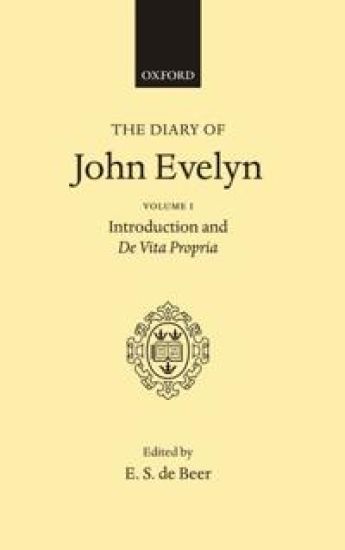
The Diary of John Evelyn: Volume 1: Introduction and De Vita Propria
John Evelyn
Oxford University Press
2000
sidottu
A scholarly edition of volume one of the diary of John Evelyn. The edition presents an authoritative text, together with an introduction, commentary notes, and scholarly apparatus.
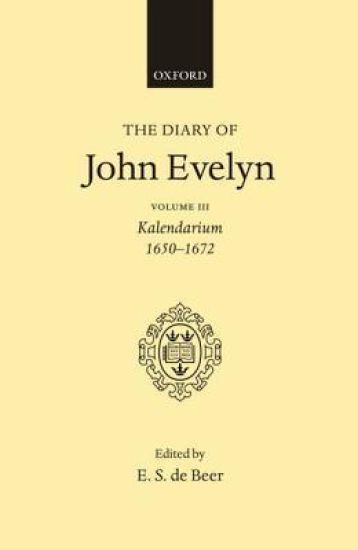
The Diary of John Evelyn: Volume 3: Kalendarium 1650-1672
John Evelyn
Oxford University Press
2000
sidottu
A scholarly edition of volume three of the diary of John Evelyn. The edition presents an authoritative text, together with an introduction, commentary notes, and scholarly apparatus.
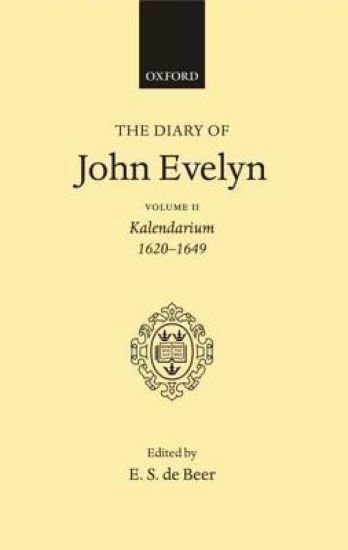
The Diary of John Evelyn: Volume 2: Kalendarium 1620-1649
John Evelyn
Oxford University Press
2000
sidottu
A scholarly edition of volume two of the diary of John Evelyn. The edition presents an authoritative text, together with an introduction, commentary notes, and scholarly apparatus.
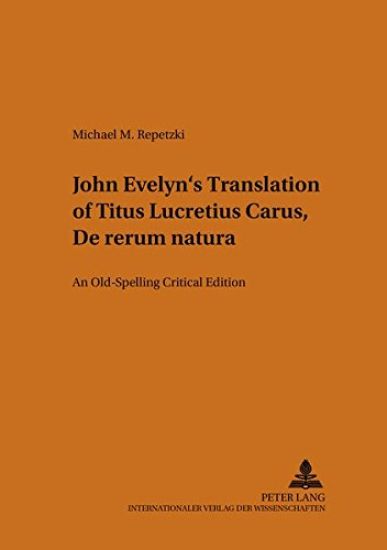
John Evelyn's Translation of Titus Lucretius Carus "De Rerum Natura"
Michael M. Repetzki; John Evelyn
Peter Lang GmbH
2000
nidottu
It remains, however, slightly surprising that Evelyn was attracted to Lucretius, for, despite his appeal to men like Gassendi and Charleton, Lucretius was a figure who had long been frowned on in orthodox circles, Michael Hunter, the unrivalled expert on Evelyn's philosophical and scientific interests, states in his article on the translator. In addition to presenting, for the first time, the full text of Evelyn's translation of De rerum natura, still in manuscript in the British Library, this study tries to answer the question why the project appealed at all to somebody who had a worldview which could hardly be further from a clear, atomistic exposition of things.