Kirjojen hintavertailu – 12 903 735 kirjaa ja 27 kauppaa

Kirjailija

John F. Healey

Kirjat ja teokset yhdessä paikassa: 6 kirjaa, julkaisuja vuosilta 1991–2014, suosituimpiin kuuluu The Nabataean Temple at Khirbet et-Tannur, Jordan, Volume 1. Vertaile teosten hintoja ja tarkista saatavuus suomalaisista kirjakaupoista.

6 kirjaa

Kirjojen julkaisuvuodet: 1991–2014.

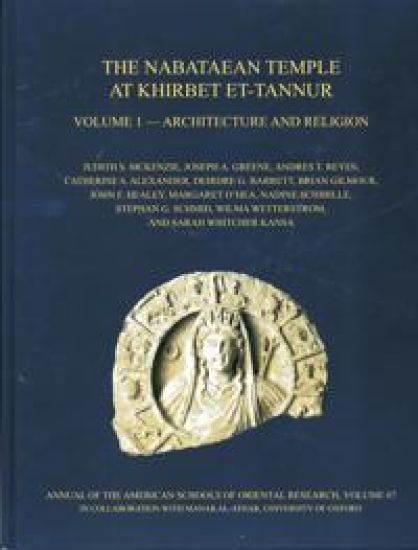
The Nabataean Temple at Khirbet et-Tannur, Jordan, Volume 1

The Nabataean Temple at Khirbet et-Tannur, Jordan, Volume 1

Judith S. McKenzie; Joseph A. Greene; Andres T. Reyes; Catherine S. Alexander; Deirdre G. Barrett; Brian Gilmour; John F. Healey; Margaret O’Hea; Nadine Schibille; Stephan G. Schmid; Wilma Wetterstrom; Sara Whitcher Kansa

American Schools of Oriental Research
2014
sidottu
Khirbet et-Tannur is a Nabataean site dating from the second century B. C. to the fourth to sixth centuries A. D. located on a hilltop above the Wadi el-Hasa near Khirbet edh-Dharih, 70 km north of Petra along the King’s Highway. In 1937, Nelson Glueck excavated Khirbet et-Tannur on behalf of the American Schools of Oriental Research and the Department of Antiquities of Transjordan, but died before completing a final report. Now, in two extensively illustrated volumes, the results of Glueck’s excavations are finally published, based on previously unstudied excavation records and archaeological materials in the ASOR Nelson Glueck Archive at the Semitic Museum, Harvard University. Volume 1 is devoted to the architecture of the temple, the dating of its successive phases, its sculptural decoration and iconography,and to a discussion of Nabataean religion, including the evidence for its connections with the religion of Iron Age Edom and its continuation at the temple of Khirbet et-Tannur well into the Christian era, before the A. D. 363 earthquake brought an end to the site. The volume closes with observations about iconoclasm at Khirbet et-Tannur, Khirbet edh-Dharih and Petra. Annual of ASOR 67
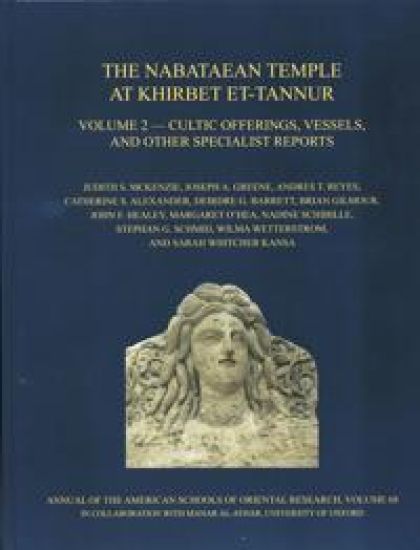
The Nabataean Temple at Khirbet et-Tannur, Jordan, Volume 2

The Nabataean Temple at Khirbet et-Tannur, Jordan, Volume 2

Judith S. McKenzie; Joseph A. Greene; Andres T. Reyes; Catherine S. Alexander; Deirdre G. Barrett; Brian Gilmour; John F. Healey; Margaret O’Hea; Nadine Schibille; Stephan G. Schmid; Wilma Wetterstrom; Sara Whitcher Kansa

American Schools of Oriental Research
2014
sidottu
Khirbet et-Tannur is a Nabataean site dating from the second century B. C. to the fourth to sixth centuries A. D. located on a hilltop above the Wadi el-Hasa near Khirbet edh-Dharih, 70 km north of Petra along the King’s Highway. In 1937, Nelson Glueck excavated Khirbet et-Tannur on behalf of the American Schools of Oriental Research and the Department of Antiquities of Transjordan, but died before completing a final report. Now, in two extensively illustrated volumes, the results of Glueck’s excavations are finally published, based on previously unstudied excavation records and archaeological materials in the ASOR Nelson Glueck Archive at the Semitic Museum, Harvard University. Volume 2 offers a systematic reorganization of Glueck’s original excavation records and presents detailed specialist analyses of the Khirbet et-Tannur faunal and botanical remains, metal, glass, lamps and pottery collected by Glueck in 1937 and now preserved in Semitic Museum’s ASOR Nelson Glueck Archive, along with fresh examinations of the Nabataean inscriptions and altars from the site. Annual of ASOR 68
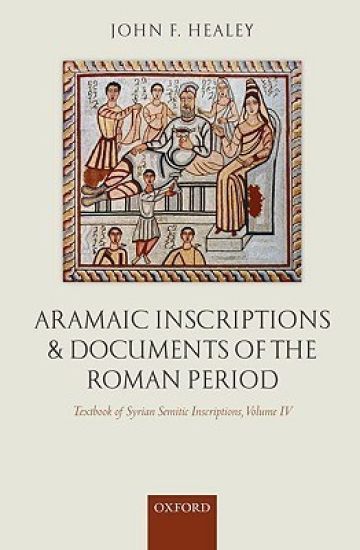
Aramaic Inscriptions and Documents of the Roman Period

Aramaic Inscriptions and Documents of the Roman Period

John F. Healey

Oxford University Press
2009
sidottu
In the first centuries AD, although much of the Near East was ruled by Rome, the main local language was Aramaic, and the people who lived inside or on the fringes of the area controlled by the Romans frequently wrote their inscriptions and legal documents in their own local dialects of this language. This book introduces these fascinating early texts to a wider audience, by presenting a representative sample, comprising eighty inscriptions and documents in the following dialects: Nabataean, Jewish, Palmyrene, Syriac, and Hatran. Detailed commentaries on the texts are preceded by chapters on history and culture and on epigraphy and language. The linguistic commentaries will help readers who have a knowledge of Hebrew or Arabic or one of the Aramaic dialects to understand the difficulties involved in interpreting such materials. The translations and more general comments will be of great interest to classicists and ancient historians.
Biblical & Near Eastern Essays

Biblical & Near Eastern Essays

Carmel McCarthy; John F. Healey

CONTINUUM PUBLISHING CORPORATION
2004
sidottu
This collection of essays contains a wide range of topics reflecting the depth and breadth of interest of the scholar in whose honour they were commissioned - Kevin J. Cathcart. The central focus is Near Eastern, and covers a range of philological, linguistic, exegetical, historical and interpretative issues. The Near Eastern languages examined include Akkadian, Arabic, Aramaic, Ethiopic, Hebrew, Septuagintal Greek, Syriac and Ugaritic, while exegetical and text-critical topics include treatments of issues in Deuteronomy, 1 Kings, Isaiah, Amos, Psalms and the Song of Songs. Hermeneutical and historical essays touch on Ancient Israel's history and its interpretation, as well as on the significance of such individuals as the consular official John Dickson, E. H. Palmer in the Cambridge Libraries, William Lithgow of Lanark, and the contribution to Semitic epigraphy of the explorer Julius Euting. This is volume 375 in the Journal for the Study of the Old Testament Supplement series.
Studies on Arabia in Honour of G. Rex Smith

Studies on Arabia in Honour of G. Rex Smith

John F. Healey; Venetia Porter

Oxford University Press
2002
sidottu
This collection of essays was put together to honour a lifetime's academic achievement by Professor G. Rex Smith, arabist, historian and scholar of the medieval history of the Yemen. Written by his friends, colleagues and former students, these essays reflect his wide ranging interests in the history and culture of Arabia from the pre-Islamic era until modern times. Focusing principally on the region covered by present-day Saudi Arabia and the Yemen, the topics include epigraphy, philology, architecture, anthropology, customary law, and aspects of the history of medieval Yemen. Together these essays offer an insight into the many important aspects of research being undertaken into the rich and fascinating culture of this region.