Kirjojen hintavertailu – 12 859 828 kirjaa ja 27 kauppaa

Kirjailija

John Fea

Kirjat ja teokset yhdessä paikassa: 8 kirjaa, julkaisuja vuosilta 2009–2026, suosituimpiin kuuluu American Exceptionalism and Civil Religion – Reassessing the History of an Idea. Vertaile teosten hintoja ja tarkista saatavuus suomalaisista kirjakaupoista.

8 kirjaa

Kirjojen julkaisuvuodet: 2009–2026.

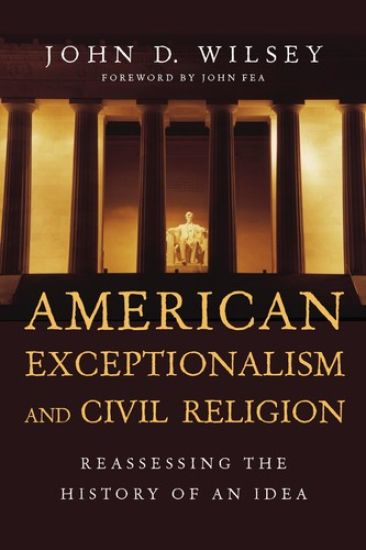
American Exceptionalism and Civil Religion – Reassessing the History of an Idea
Ever since John Winthrop told his fellow colonists in 1630 that they were about to establish a City upon a Hill, the idea of having a special place in history has captured the American imagination. Through centuries of crises and opportunities, many have taken up this theme to inspire the nation. But others have criticized the notion because it implies a sense of superiority which can fuel racism, warmongering and even idolatry. In this remarkable book, John Wilsey traces the historical development of exceptionalism, including its theological meaning and implications for civil religion. From seventeenth-century Puritans to twentieth-century industrialists, from politicians to educators, exceptionalism does not appear as a monolithic concept to be either totally rejected or devotedly embraced. While it can lead to abuses, it can also point to constructive civil engagement and human flourishing. This book considers historically and theologically what makes the difference. Neither the term nor the idea of American exceptionalism is going away. John Wilsey's careful history and analysis will therefore prove an important touchstone for discussions of American identity in the decades to come.
Why Study History?

Why Study History?

John Fea

BAKER PUBLISHING GROUP
2024
nidottu
What is the purpose of studying history? How do we reflect on contemporary life from a historical perspective, and can such reflection help us better understand ourselves, the world around us, and the God we worship and serve? Written by an accomplished historian, award-winning author, public evangelical spokesman, and respected teacher, this introductory textbook shows why Christians should study history, how faith is brought to bear on our understanding of the past, and how studying the past can help us more effectively love God and others. John Fea shows that deep historical thinking can relieve us of our narcissism; cultivate humility, hospitality, and love; and transform our lives more fully into the image of Jesus Christ. The first edition of this book has been used widely in Christian colleges across the country. The second edition contains updates throughout.
Believe Me: The Evangelical Road to Donald Trump

Believe Me: The Evangelical Road to Donald Trump

John Fea

William B. Eerdmans Publishing Company
2020
nidottu
A historian's discerning, critical take on current American politics"Believe me" may be the most commonly used phrase in Donald Trump's lexicon. Whether about building a wall or protecting a Christian heritage, the refrain has been constant. And to the surprise of many, a good 80 percent of white evangelicals have believed Trump--at least enough to help propel him into the White House. Historian John Fea is not surprised, however--and in these pages he explains how we have arrived at this unprecedented moment in American politics. An evangelical Christian himself, Fea argues that the embrace of Donald Trump is the logical outcome of a long-standing evangelical approach to public life defined by the politics of fear, the pursuit of worldly power, and a nostalgic longing for an American past. Now in paperback and as insightful as it is timely, Fea's Believe Me challenges Christians to replace fear with hope, the pursuit of power with humility, and nostalgia with history.
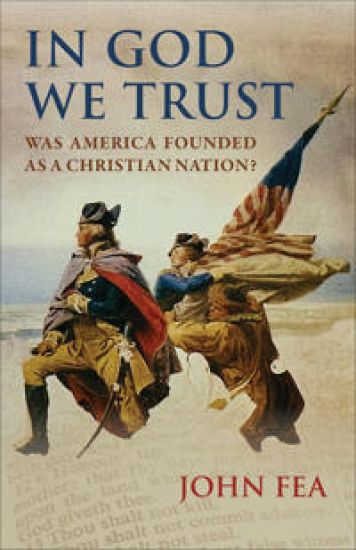
Was America Founded as a Christian Nation? Revised Edition

Was America Founded as a Christian Nation? Revised Edition

John Fea

Westminster/John Knox Press,U.S.
2016
nidottu
John Fea offers a thoroughly researched, evenhanded primer on whether America was founded to be a Christian nation, as many evangelicals assert, or a secular state, as others contend. He approaches the title's question from a historical perspective, helping readers see past the emotional rhetoric of today to the recorded facts of our past. This updated edition reports on the many issues that have arisen in recent years concerning religion's place in American societyincluding the Supreme Court decision on same-sex marriage, contraception and the Affordable Care Act, and state-level restrictions on abortionand demonstrates how they lead us to the question of whether the United States was or is a Christian nation. Fea relates the history of these and other developments, pointing to the underlying questions of national religious identity inherent in each." We live in a sound-bite culture that makes it difficult to have any sustained dialogue on these historical issues," Fea writes in his preface. "It is easy for those who argue that America is a Christian nation (and those who do not) to appear on radio or television programs, quote from one of the founders or one of the nation's founding documents, and sway people to their positions. These kinds of arguments, which can often be contentious, do nothing to help us unravel a very complicated historical puzzle about the relationship between Christianity and America's founding."
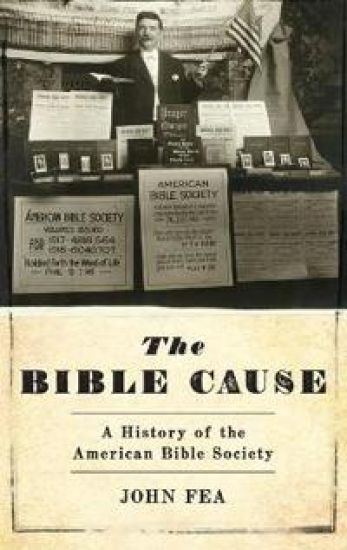
The Bible Cause

The Bible Cause

John Fea

Oxford University Press Inc
2016
sidottu
Founded in 1816, the American Bible Society (ABS) exists to disseminate free copies of the Bible in local languages throughout the world, based on the belief that healthy republics require a moral citizenry and that the best way of promoting virtue throughout the nations is through the publication and dissemination of the Bible. Today, the ABS is a Christian ministry based in Philadelphia with a $300 million endowment and a mission to engage 100 million Americans with the Bible by 2025. Released just in time for the ABS's Bicentennial year, this book will demonstrate how the ABS's primary mission--to place the Bible in the hands of as many people as possible--has led the history of the ABS to intersect at nearly every point with the history of the United States. However and wherever the United States developed, the ABS was there, fusing American imperialism with the biblical mandate to preach the gospel throughout the entire world. Over the years ABS Bibles could be found in hotel rooms, bookstores, and airports, on steam boats, college and university campuses, and the Internet, and even behind the Iron Curtain. Its agents, Bibles in hand, could be found on the front lines of every American military conflict from the Mexican-American War to the Iraq War. Over the last two hundred years, the ABS has steadily increased its influence both at home and abroad, working with all Christian denominations in the US and internationally, aligning itself whenever possible with the gatekeepers of American religious culture, and has been on the cutting edge of technological innovation. However, despite the changes that the organization has undergone, The Bible Cause demonstrates that the ABS's primary mission and its commitment to positioning itself as the guardian of a Christian civilization have remained constant throughout the last two centuries.
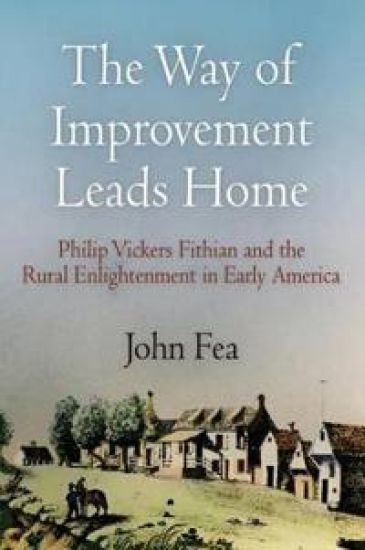
The Way of Improvement Leads Home

The Way of Improvement Leads Home

John Fea

University of Pennsylvania Press
2009
pokkari
The Way of Improvement Leads Home traces the short but fascinating life of Philip Vickers Fithian, one of the most prolific diarists in early America. Born to Presbyterian grain-growers in rural New Jersey, he was never quite satisfied with the agricultural life he seemed destined to inherit. Fithian longed for something more-to improve himself in a revolutionary world that was making upward mobility possible. While Fithian is best known for the diary that he wrote in 1773-74 while working as a tutor at Nomini Hall, the Virginia plantation of Robert Carter, this first full biography moves beyond his experience in the Old Dominion to examine his inner life, his experience in the early American backcountry, his love affair with Elizabeth Beatty, and his role as a Revolutionary War chaplain. From the villages of New Jersey, Fithian was able to participate indirectly in the eighteenth-century republic of letters-a transatlantic intellectual community sustained through sociability, print, and the pursuit of mutual improvement. The republic of letters was above all else a rational republic, with little tolerance for those unable to rid themselves of parochial passions. Participation required a commitment to self-improvement that demanded a belief in the Enlightenment values of human potential and social progress. Although Fithian was deeply committed to these values, he constantly struggled to reconcile his quest for a cosmopolitan life with his love of home. As John Fea argues, it was the people, the religious culture, and the very landscape of his "native sod" that continued to hold Fithian's affections and enabled him to live a life worthy of a man of letters.