Kirjojen hintavertailu – 12 903 735 kirjaa ja 27 kauppaa

Kirjailija

John Feffer

Kirjat ja teokset yhdessä paikassa: 15 kirjaa, julkaisuja vuosilta 2003–2024, suosituimpiin kuuluu Shock Waves. Vertaile teosten hintoja ja tarkista saatavuus suomalaisista kirjakaupoista.

15 kirjaa

Kirjojen julkaisuvuodet: 2003–2024.

State Of The Union 1994

State Of The Union 1994

Richard Caplan; John Feffer; Gerald Horne; John Cavanagh

TAYLOR FRANCIS LTD
2024
nidottu
State of the Union 1994 assesses the Clinton administration's first year in office and lays out progressive policy alternatives in the realms of foreign and domestic affairs. It charts the course of the nation in fourteen critical areas, giving readers a solid basis of information on which to compare trends historically and internationally and to m
Aftershock

Aftershock

John Feffer

BLOOMSBURY PUBLISHING PLC
2022
nidottu
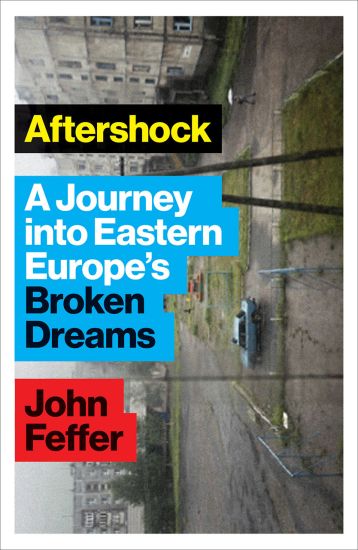
In this unique, panoramic account of faded dreams, journalist John Feffer returns to Eastern Europe a quarter of a century after the fall of communism, to track down hundreds of people he spoke to in the initial atmosphere of optimism as the Iron Curtain fell – from politicians and scholars to trade unionists and grass roots activists. What he discovers makes for fascinating, if sometimes disturbing, reading. From the Polish scholar who left academia to become head of personnel at Ikea to the Hungarian politician who turned his back on liberal politics to join the far-right Jobbik party, Feffer meets a remarkable cast of characters. He finds that years of free-market reforms have failed to deliver prosperity, corruption and organized crime are rampant, while optimism has given way to bitterness and a newly invigorated nationalism. Even so, through talking to the region’s many extraordinary activists, Feffer shows that against stiff odds hope remains for the region’s future.
Right Across the World

Right Across the World

John Feffer

Pluto Press
2021
sidottu
'John Feffer is our 21st-century Jack London' - Mike Davis In a post-Trump world, the right is still very much in power. Significantly more than half the world’s population currently lives under some form of right-wing populist or authoritarian rule. Today’s autocrats are, at first glance, a diverse band of brothers. But religious, economic, social and environmental differences aside, there is one thing that unites them - their hatred of the liberal, globalised world. This unity is their strength, and through control of government, civil society and the digital world they are working together across borders to stamp out the left. In comparison, the liberal left commands only a few disconnected islands - Iceland, Mexico, New Zealand, South Korea, Spain and Uruguay. So far they have been on the defensive, campaigning on local issues in their own countries. This narrow focus underestimates the resilience and global connectivity of the right. In this book, John Feffer speaks to the world’s leading activists to show how international leftist campaigns must come together if they are to combat the rising tide of the right. A global Green New Deal, progressive trans-European movements, grassroots campaigning on international issues with new and improved language and storytelling are all needed if we are to pull the planet back from the edge of catastrophe. This book is both a warning and an inspiration to activists terrified by the strengthening wall of far-right power.
Right Across the World

Right Across the World

John Feffer

Pluto Press
2021
pokkari
'John Feffer is our 21st-century Jack London' - Mike Davis In a post-Trump world, the right is still very much in power. Significantly more than half the world’s population currently lives under some form of right-wing populist or authoritarian rule. Today’s autocrats are, at first glance, a diverse band of brothers. But religious, economic, social and environmental differences aside, there is one thing that unites them - their hatred of the liberal, globalised world. This unity is their strength, and through control of government, civil society and the digital world they are working together across borders to stamp out the left. In comparison, the liberal left commands only a few disconnected islands - Iceland, Mexico, New Zealand, South Korea, Spain and Uruguay. So far they have been on the defensive, campaigning on local issues in their own countries. This narrow focus underestimates the resilience and global connectivity of the right. In this book, John Feffer speaks to the world’s leading activists to show how international leftist campaigns must come together if they are to combat the rising tide of the right. A global Green New Deal, progressive trans-European movements, grassroots campaigning on international issues with new and improved language and storytelling are all needed if we are to pull the planet back from the edge of catastrophe. This book is both a warning and an inspiration to activists terrified by the strengthening wall of far-right power.
Songlands

Songlands

John Feffer

Haymarket Books
2021
pokkari
2052. The world is a mess. The climate change meltdown has triggered an endless cycle of natural disasters. Nationalist paramilitaries battle against religious extremists. Multinational corporations, with their own security forces, have replaced global institutions as the only real power-brokers. Waves of pandemics have closed borders with such regularity that travelhas become mostly virtual. Aurora, a middle-aged sociologist, tries not to think about how the world has turned so chaotic and dangerous. At university, she focuses on her students. At home, it 's her children. She devotes her spare time to writing poetry. She 's relatively comfortable, but not particularly happy. And she 's angry at how small her life has become. Then one day a strange woman walks into Aurora 's life and, in an instant, the world 's chaos gets personal. Suddenly the obscure professor has a target on her back and the fate of the world in her hands. Her salvation, and that of the planet as well, lies in the mysteries locked inside the head of this enigmatic woman who has appeared on her doorstep. Unlocking those mysteries will take Aurora on a virtual journey around the fragmented globe and up against the world 's most powerful corporation. Songlands, the stand-alone finale to the Splinterlands trilogy, describes humanity 's last shot at solving the world 's problems. Can Aurora assemble a team to reverse the splintering of the international community and avert an even more dystopian future?
Songlands

Songlands

John Feffer

Haymarket Books
2021
sidottu
2052. The world is a mess. The climate change meltdown has triggered an endless cycle of natural disasters. Nationalist paramilitaries battle against religious extremists. Multinational corporations, with their own security forces, have replaced global institutions as the only real power-brokers. Waves of pandemics have closed borders with such regularity that travelhas become mostly virtual. Aurora, a middle-aged sociologist, tries not to think about how the world has turned so chaotic and dangerous. At university, she focuses on her students. At home, it 's her children. She devotes her spare time to writing poetry. She 's relatively comfortable, but not particularly happy. And she 's angry at how small her life has become. Then one day a strange woman walks into Aurora 's life and, in an instant, the world 's chaos gets personal. Suddenly the obscure professor has a target on her back and the fate of the world in her hands. Her salvation, and that of the planet as well, lies in the mysteries locked inside the head of this enigmatic woman who has appeared on her doorstep. Unlocking those mysteries will take Aurora on a virtual journey around the fragmented globe and up against the world 's most powerful corporation. Songlands, the stand-alone finale to the Splinterlands trilogy, describes humanity 's last shot at solving the world 's problems. Can Aurora assemble a team to reverse the splintering of the international community and avert an even more dystopian future?
The Pandemic Pivot

The Pandemic Pivot

John Feffer

Seven Stories Press,U.S.
2021
sidottu
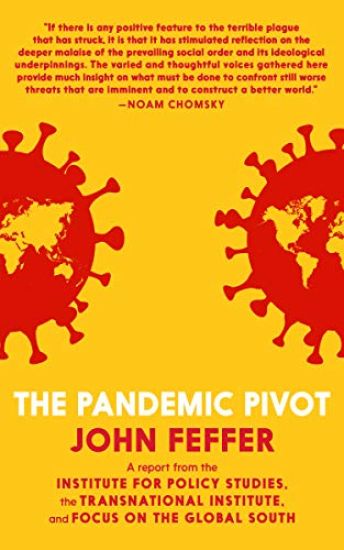
Experts from the frontlines of global policy tackle the implications of Covid-19 Transformative change can come out of the COVID-19 crisis, which has exposed everything that's wrong with decades of the world's governments betting on militarism, competition and wealth creation. A return to sanity and humane governance is still possible. We need a pandemic pivot. Both a sobering analysis of the present moment and a hopeful cry on behalf of the power inherent in a global, people-oriented response to the pandemic and the societal breakdown that led to it, The Pandemic Pivot offers insight and an actionable framework for what Cindy Wiesner calls a just transition to a regenerative, anti-racist, feminist economy. As The Pandemic Pivot demonstrates, equity and cooperation aren't just nice principles, they're survival strategies. In June and July of 2020, the Institute for Policy Studies invited 68 of the world's leading thinkers and activists to participate in eight in-depth discussions. Their task: to assess the implications of COVID-19 for key global issues as well as the potential for transformative change coming out of this crisis. They discussed a Green recovery, the global economy, coronavirus authoritarianism, migrants and refugees, budget priorities, the global ceasefire, international civil society, and multilateral cooperation. This report by John Feffer from the frontlines of global policy stands in stark contrast to the reality in the world today. Reading it amounts to a return to sanity and humane governance, and illuminates the way forward that is still possible if we begin soon. Participants included EcoEquity Executive Director and author Tom Athanasiou; Nigerian architect, environmental activist and author Nnimmo Bassey; Focus on the Global South co-founder and author Walden Bello; CODEPINK and Global Exchange co-founder and acclaimed peace activist Medea Benjamin; AFL-CIO International Department director Cathy Feingold; Indian columnist and International Development Economics Associates executive secretary Jayati Ghosh; author and arms trade expert Bill Hartung; Peace and World Security Studies director and noted author Michael Klare; Quincy Institute for Responsible Statecraft CEO and noted author Lora Lumpe; Yale professor and distinguished author on human rights and peace studies Samuel Moyn; Geneva-based human rights advocate Aziz Muhamat; acclaimed political philosopher Jan-Werner Muller; African storyteller and writer Coumba Toure--to name just a few, representing organizations and regions from across the globe.
The Pandemic Pivot

The Pandemic Pivot

John Feffer

Seven Stories Press,U.S.
2021
nidottu
Experts from the frontlines of global policy tackle the implications of Covid-19 Transformative change can come out of the COVID-19 crisis, which has exposed everything that's wrong with decades of the world's governments betting on militarism, competition and wealth creation. A return to sanity and humane governance is still possible. We need a pandemic pivot. Both a sobering analysis of the present moment and a hopeful cry on behalf of the power inherent in a global, people-oriented response to the pandemic and the societal breakdown that led to it, The Pandemic Pivot offers insight and an actionable framework for what Cindy Wiesner calls a just transition to a regenerative, anti-racist, feminist economy. As The Pandemic Pivot demonstrates, equity and cooperation aren't just nice principles, they're survival strategies. In June and July of 2020, the Institute for Policy Studies invited 68 of the world's leading thinkers and activists to participate in eight in-depth discussions. Their task: to assess the implications of COVID-19 for key global issues as well as the potential for transformative change coming out of this crisis. They discussed a Green recovery, the global economy, coronavirus authoritarianism, migrants and refugees, budget priorities, the global ceasefire, international civil society, and multilateral cooperation. This report by John Feffer from the frontlines of global policy stands in stark contrast to the reality in the world today. Reading it amounts to a return to sanity and humane governance, and illuminates the way forward that is still possible if we begin soon. Participants included EcoEquity Executive Director and author Tom Athanasiou; Nigerian architect, environmental activist and author Nnimmo Bassey; Focus on the Global South co-founder and author Walden Bello; CODEPINK and Global Exchange co-founder and acclaimed peace activist Medea Benjamin; AFL-CIO International Department director Cathy Feingold; Indian columnist and International Development Economics Associates executive secretary Jayati Ghosh; author and arms trade expert Bill Hartung; Peace and World Security Studies director and noted author Michael Klare; Quincy Institute for Responsible Statecraft CEO and noted author Lora Lumpe; Yale professor and distinguished author on human rights and peace studies Samuel Moyn; Geneva-based human rights advocate Aziz Muhamat; acclaimed political philosopher Jan-Werner Muller; African storyteller and writer Coumba Toure--to name just a few, representing organizations and regions from across the globe.
State Of The Union 1994

State Of The Union 1994

Richard Caplan; John Feffer; Gerald Horne; John Cavanagh

Routledge
2019
sidottu
Clinton rode into office on the promise of "change." It was a safe, content- free slogan. After all, in recent years, the most radical proposals for change have come not from the Democrats but from the Republican right. "Change" could mean the further downsizing of government and neglect of social problems, or, of course, the reversal of these trends. When they went to the polls in 1992, however, most Americans had a good idea of what kind of change they wanted.
Frostlands

Frostlands

John Feffer

Haymarket Books
2019
sidottu
Arcadia’s defense corps is mobilized to defend against what first appears to be a routine assault, one of the many that the community must repulse from para- military forces every year. But as sensors report a breach in the perimeter wall, even 80-year-old Rachel Leopold shoulders a weapon and reports for duty. The attack, it turns out, has been orchestrated by one of the world’s largest corporations, CR ISPR International, and it is interested primarily in stopping Rachel’s research into stopping global warming. As Arcadia prepares to defend itself against the next CR ISPR attack, Rachel contacts Emmanuel Puig, the foremost scholar of her ex-husband’s work, to get information that she can use to stop CR ISPR . Arcadia intersperses the action with short reports from Emmanuel Puig on his interactions with Rachel as they meet, via V R, in different parts of the world—Brussels, Ningxia, and finally Darwin. The novel concludes with an explosive, unexpected twist that forces a reevaluation of all that has come before.
Aftershock

Aftershock

John Feffer

Zed Books Ltd
2017
sidottu
In this unique, panoramic account of faded dreams, journalist John Feffer returns to Eastern Europe a quarter of a century after the fall of communism, to track down hundreds of people he spoke to in the initial atmosphere of optimism as the Iron Curtain fell – from politicians and scholars to trade unionists and grass roots activists. What he discovers makes for fascinating, if sometimes disturbing, reading. From the Polish scholar who left academia to become head of personnel at Ikea to the Hungarian politician who turned his back on liberal politics to join the far-right Jobbik party, Feffer meets a remarkable cast of characters. He finds that years of free-market reforms have failed to deliver prosperity, corruption and organized crime are rampant, while optimism has given way to bitterness and a newly invigorated nationalism. Even so, through talking to the region’s many extraordinary activists, Feffer shows that against stiff odds hope remains for the region’s future.
Crusade 2.0

Crusade 2.0

John Feffer

City Lights Books
2012
pokkari
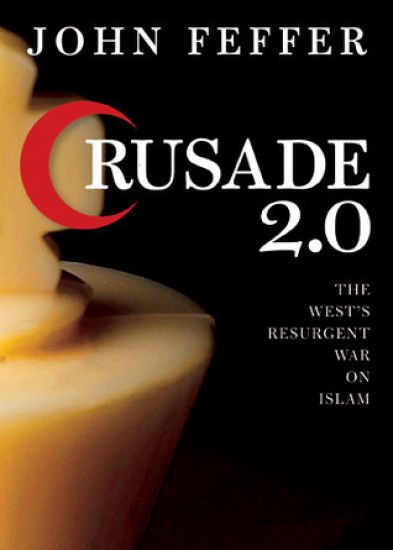
In his official response to the attacks of September 11, George W. Bush invoked the Crusades, tapping into a centuries-long history of fear and aggression. The West's longstanding perception of Islam as a threat has taken on new and more complex implications in the twenty-first century, as years of migration and resulting demographic shifts have brought the "enemy" within Western borders. Virulent opposition to the planned construction of an Islamic center near the 9/11 attack site in New York City reveals much about the intensity of public sentiments simmering just below the surface. As the United States and countries across Europe struggle with a resurgence of unexamined fear and antagonism, often directed against their own citizens, the imperative for better understanding could not be greater. Crusade 2.0 examines the resurgence of anti-Islamic sentiment in the West and its global implications. John Feffer discusses the influence of three "unfinished wars"--the Crusades, the Cold War, and the current "war on terror." He presents a timely, concise and provocative look at current events in the context of historical trends and goes beyond a "clash of civilizations" critique to offer concrete ways to defuse the ticking bomb of Islamophobia. "John Feffer's Crusade 2.0: The West's Resurgent War On Islam offers a brief but effective expose of a social cancer that continues to grow exponentially, in America and Europe, threatening the security and civil liberties of Muslims and the principles and values of Western democracies."--John L. Esposito "John Feffer's illuminating and important new work, Crusade 2.0, sheds light on the disturbing phenomenon of Islamophobia in America with a clear-eyed view of history, meticulous research, and persuasive arguments. This accessible and informative book shows how fear-mongering, when married to ignorance and selfish political agendas, not only threatens to marginalize entire communities of innocent people but also undermine the core values of pluralism, tolerance and fairness that define America." --Wajahat Ali "If you want to understand the particular madness of America's twenty-first century, you need to read John Feffer's account of how Washington launched "crusade 2.0," including two invasions and occupations of Muslim lands and a Global War on Terror sporting aptly named Hellfire missiles aimed directly at the Muslim world. Add in the injection of fear of Islam directly into the American bloodstream and the rise of Islamophobia as domestic political red meat, and you have a truly American nightmare. Feffer is its Homer and this is our sad Odyssey."--Tom Engelhardt John Feffer is co-director of Foreign Policy in Focus at the Institute for Policy Studies in Washington, DC. He is the author of several books, including North Korea, South Korea. His essays have been published in The New York Times, The Boston Globe, and elsewhere; he has been interviewed by CNN, MSNBC, Al Jazeera, Democracy Now! and other international news media.

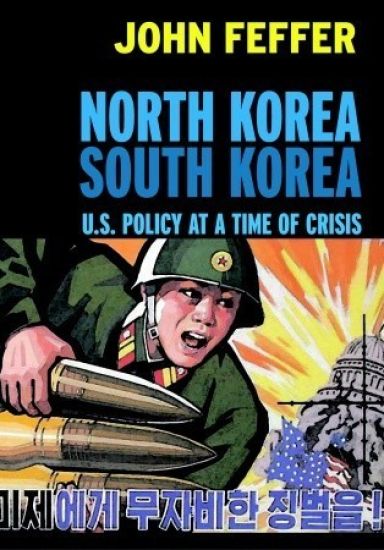
North Korea, South Korea

North Korea, South Korea

John Feffer

Seven Stories Press,U.S.
2003
nidottu
"North Korea/South Korea" is a short, accessible book about the history and politics of the Korean peninsula, with a focus on the U. S. presence. The first of four sections is a snapshot of the status quo. The second section establishes a political and economic context through an exploration of the history of the Korean peninsula, including the Korean War. The third section surveys the current regional political dynamic. The last section concentrates on the shift in emphasis in U. S. foreign policy from engagement under the Clinton administration to containment under the Bush administration. Feffer offers concrete proposals for U. S. policies that could help reduce tensions on the Korean peninsula. John Feffer is the editor of "Power Trip: U. S. Foreign Policy After September 11."