

Kirjailija
John Field
Kirjat ja teokset yhdessä paikassa: 33 kirjaa, julkaisuja vuosilta 1993–2026, suosituimpiin kuuluu An Humble Application to the Queen, and Her Great Council, the Parliament of England, to Suppress Play-Houses and Bear-Baitings, with All Prophaness and Immorality. by John Feild. Vertaile teosten hintoja ja tarkista saatavuus suomalaisista kirjakaupoista.
33 kirjaa
Kirjojen julkaisuvuodet: 1993–2026.


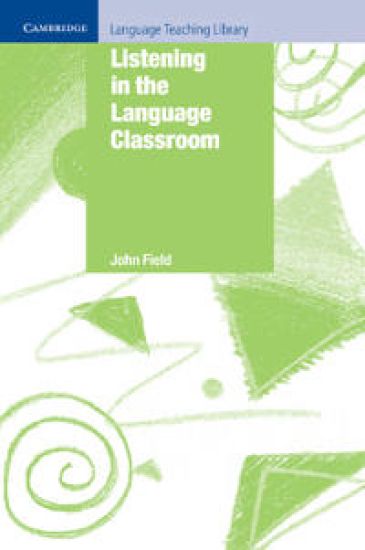
This book challenges the orthodox approach to the teaching of second language listening, which is based upon the asking and answering of comprehension questions. The book's central argument is that a preoccupation with the notion of 'comprehension' has led teachers to focus upon the product of listening, in the form of answers to questions, ignoring the listening process itself. The author provides an informed account of the psychological processes which make up the skill of listening, and analyses the characteristics of the speech signal from which listeners have to construct a message. Drawing upon this information, the book proposes a radical alternative to the comprehension approach and provides for intensive small-scale practice in aspects of listening that are perceptually or cognitively demanding for the learner. Listening in the Language Classroom was winner of the Ben Warren International Trust House Prize in 2008.
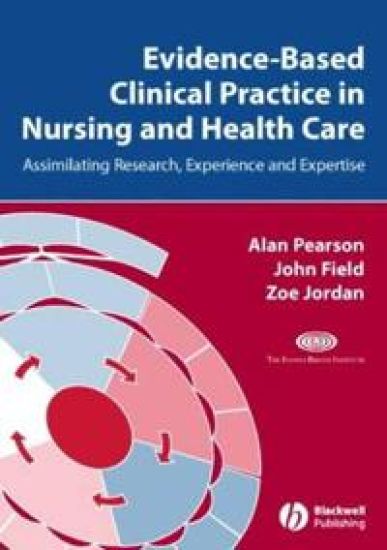
Evidence-Based Clinical Practice in Nursing and Health Care
Alan Pearson; John Field; Zoe Jordan
Wiley-Blackwell (an imprint of John Wiley Sons Ltd)
2006
nidottu
Evidence-Based Clinical Practice in Nursing and Healthcare examines the Joanna Briggs Institute model for evidence-based practice which recognises research, theory and practice as sources of evidence and takes a practical approach to developing, implementing and evaluating practice, based on 'evidence' in its broadest sense. Evidence-based Clinical Practice in Nursing and Healthcare addresses the nature of evidence in clinical practice, generating and synthesising evidence, and transferring and utilising evidence in clinical practice. It describes the development of practice information sheets and clinical guidelines and provides practical guidance on the implementation of evidence-based practice and its evaluation using clinical audit.
Social capital and lifelong learning are central to current policy concerns both in the UK and internationally. This book confirms the significance of social capital as an analytical tool, while challenging the basis on which current policy is being developed. It: · offers a wealth of evidence on a topic that has become central to contemporary government; · provides a detailed empirical investigation of the relationship between social capital, knowledge creation and lifelong learning; · relates the findings to wider policy debates; · questions the dominant theoretical models of social capital; and · confronts the assumption of many policy makers that the obvious solution to social problems is to 'invest in social capital'.
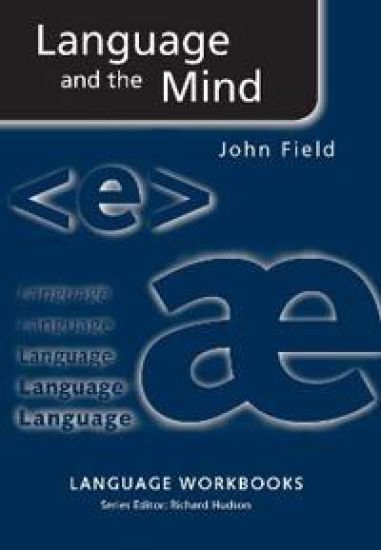
Routledge Language Workbooks provide absolute beginners with practical introductions to core areas of language study. Books in the series offer comprehensive coverage of the area as well as a basis for further investigation. Each Language Workbook guides the reader through the subject using 'hands-on' language analysis, equipping them with the basic analytical skills needed to handle a wide range of data. Written in a clear and simple style, with all technical concepts fully explained, Language Workbooks can be used for independent study or as part of a taught class. Language and the Mind:is an accessible introduction to the relationship between language and mental processescovers core areas including language in the brain, language impairment, how language is acquired, how the mind stores vocabulary and how it deals with speaking, listening, reading and writingdraws on a variety of real-life materialemploys a discovery approach that enables students to form conclusions for themselvescan be used to complement existing textbook material.
Routledge Language Workbooks provide absolute beginners with practical introductions to core areas of language study. Books in the series offer comprehensive coverage of the area as well as a basis for further investigation. Each Language Workbook guides the reader through the subject using 'hands-on' language analysis, equipping them with the basic analytical skills needed to handle a wide range of data. Written in a clear and simple style, with all technical concepts fully explained, Language Workbooks can be used for independent study or as part of a taught class. Language and the Mind:is an accessible introduction to the relationship between language and mental processescovers core areas including language in the brain, language impairment, how language is acquired, how the mind stores vocabulary and how it deals with speaking, listening, reading and writingdraws on a variety of real-life materialemploys a discovery approach that enables students to form conclusions for themselvescan be used to complement existing textbook material.

Psycholinguistics is an authoritative, wide-ranging and up-to-date A to Z guide to this important field. Cross-referenced, with suggestions for further reading and a full index, this book is a highly accessible introduction to the main terms and concepts in psycholinguistics. Psycholinguistics offers over 170 entries covering the key areas:psychological processesfirst language acquisitionthe nature of languagebrain and languagelanguage disorders. This comprehensive guide is an essential resource for all students of English language, linguistics and psychology.
Psycholinguistics is an authoritative, wide-ranging and up-to-date A to Z guide to this important field. Cross-referenced, with suggestions for further reading and a full index, this book is a highly accessible introduction to the main terms and concepts in psycholinguistics. Psycholinguistics offers over 170 entries covering the key areas:psychological processesfirst language acquisitionthe nature of languagebrain and languagelanguage disorders. This comprehensive guide is an essential resource for all students of English language, linguistics and psychology.
Routledge English Language Introductions cover core areas of language study and are one-stop resources for students. Assuming no prior knowledge, books in the series offer an accessible overview of the subject, with activities, study questions, commentaries and key readings - all in the same volume. The innovative and flexible 'two-dimensional' structure is built around four sections - introduction, development, exploration and extension - which offer self-contained stages for study. Each topic can also be read across these sections, enabling the reader to build gradually on the knowledge gained. Psycholinguistics:is a comprehensive introduction to psycholinguistic theorycovers the core areas of psycholinguistics: language as a human attribute, language and the brain, vocabulary storage and use, language and memory, the four skills (writing, reading, listening, speaking), comprehension, language impairment and deprivationdraws on a range of real texts, data and examples, including a Radio Four interview, an essay written by a deaf writer, and the transcript of a therapy session addressing stutteringprovides classic readings by the key names in the discipline, including Jean Aitchison, Terrence Deacon, Robert Logie, Willem Levelt and Dorothy Bishop. Written by an experienced teacher, this accessible textbook is an essential resource for all students of English language, linguistics and psychology. The accompanying website to this book can be found at http://www.routledge.com/textbooks/0415276004
Routledge English Language Introductions cover core areas of language study and are one-stop resources for students. Assuming no prior knowledge, books in the series offer an accessible overview of the subject, with activities, study questions, commentaries and key readings - all in the same volume. The innovative and flexible 'two-dimensional' structure is built around four sections - introduction, development, exploration and extension - which offer self-contained stages for study. Each topic can also be read across these sections, enabling the reader to build gradually on the knowledge gained. Psycholinguistics:is a comprehensive introduction to psycholinguistic theorycovers the core areas of psycholinguistics: language as a human attribute, language and the brain, vocabulary storage and use, language and memory, the four skills (writing, reading, listening, speaking), comprehension, language impairment and deprivationdraws on a range of real texts, data and examples, including a Radio Four interview, an essay written by a deaf writer, and the transcript of a therapy session addressing stutteringprovides classic readings by the key names in the discipline, including Jean Aitchison, Terrence Deacon, Robert Logie, Willem Levelt and Dorothy Bishop. Written by an experienced teacher, this accessible textbook is an essential resource for all students of English language, linguistics and psychology. The accompanying website to this book can be found at http://www.routledge.com/textbooks/0415276004

Field names are not only interesting in themselves, but also a rich source of information about the communities originating them. The earliest recorded names often describe only the location or nature of the land, but changes in language, technology, social organisation, land ownership and even religious and political thinking have all contributed to a surprisingly complex picture today. A pioneering history.