Kirjojen hintavertailu – 12 903 725 kirjaa ja 27 kauppaa

Kirjailija

John Fraser Hart

Kirjat ja teokset yhdessä paikassa: 4 kirjaa, julkaisuja vuosilta 1998–2008, suosituimpiin kuuluu Landscapes of Minnesota. Vertaile teosten hintoja ja tarkista saatavuus suomalaisista kirjakaupoista.

4 kirjaa

Kirjojen julkaisuvuodet: 1998–2008.

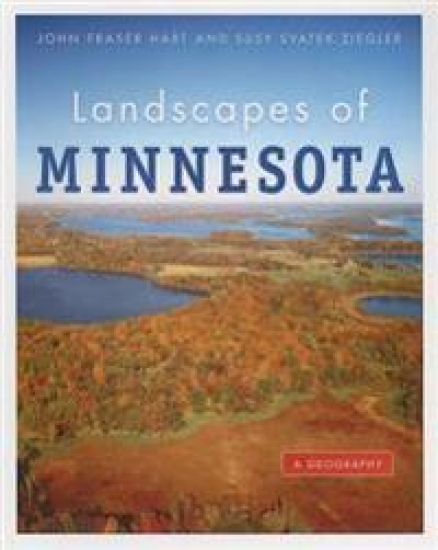
Landscapes of Minnesota

Landscapes of Minnesota

John Fraser Hart; Susy Svatek Ziegler

Minnesota Historical Society Press,U.S.
2008
nidottu
Have you ever wondered why Minnesota's forests grow in the north and not in the West? Why gaming casinos are prospering? Why producers raise chickens instead of cows? Why some towns grow while others fail? Minnesota's natural wonders have had an effect on and been changed by the people who call this complex mosaic of lakes and forests, rivers and fields home. Through engaging, in-depth text and copious illustrations, John Fraser Hart and Susy Svatek Ziegler explore the human and environmental characteristics that define the state in "Landscapes of Minnesota". Illustrated with hundreds of maps and colour photographs that reveal the changing character of Minnesota, this stunning geography traces the development of the state's natural environment, how the land formations, plants, and animals became a part of its fabric, and how they have changed over time. Focusing on small towns, the authors document patterns of growth and decline, offering striking commentary on these once-key bastions of Minnesota-ness. Turning to the Twin Cities, they analyse the expanding urban arc and the surprising growth of a baby boomer retirement belt. The book explores how the lives and livelihoods of Minnesotans have affected what the state has become and what it will one day be.

The Changing Scale of American Agriculture

The Changing Scale of American Agriculture

John Fraser Hart

University of Virginia Press
2004
sidottu
This work describes the transformation of farming in America from the mid-20th century, when small family farms were still viable, to the present, when a farm must sell at least $250,000 of farm products each year to provide an acceptable level of living for a family.
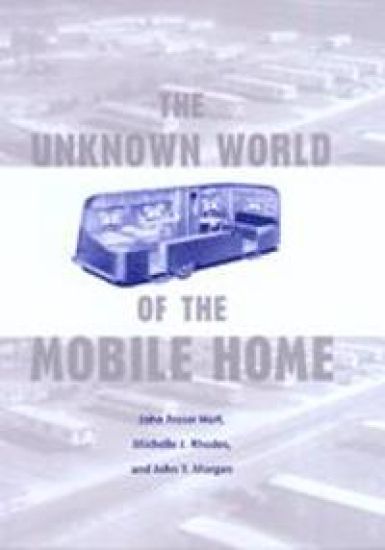
The Unknown World of the Mobile Home

The Unknown World of the Mobile Home

John Fraser Hart; Michelle J. Rhodes; John T. Morgan

Johns Hopkins University Press
2002
sidottu
In American popular imagination, the mobile home evokes images of cramped interiors, cheap materials, and occupants too poor or unsavory to live anywhere else. Since the 1940s and '50s, however, mobile home manufacturers have improved standards of construction and now present them as an affordable alternative to conventional site-built homes. Today one of every fourteen Americans lives in a mobile home. In The Unknown World of the Mobile Home authors John Fraser Hart, Michelle J. Rhodes, and John T. Morgan illuminate the history and culture of these often misunderstood domiciles. They describe early mobile homes, which were trailers designed to be pulled behind automobiles and which were more often than not poorly constructed and unequal to the needs of those who used them. During the 1970s, however, Congress enacted federal standards for the quality and safety of mobile homes, which led to innovation in design and the production of much more attractive and durable models. These models now comply with local building codes and many are designed to look like conventional houses. As a result, one out every five new single-family housing units purchased in the United States is a mobile home, sited everywhere from the conventional trailer park to custom-designed "estates" aimed at young couples and retirees. Despite all these changes in manufacture and design, even the most immobile mobile homes are still sold, financed, regulated, and taxed as vehicles. With a wealth of detail and illustrations, The Unknown World of the Mobile Home provides readers with an in-depth look into this variation on the American dream.
The Rural Landscape

The Rural Landscape

John Fraser Hart

Johns Hopkins University Press
1998
sidottu
In this book, John Fraser Hart offers a comprehensive handbook to understanding the elements that make up the rural landscape-those regions that lie at or beyond the fringes of modern metropolitan life. Though the last two centuries have seen an inversion in the portion of people living on farms to those in cities, the land still beckons, whether traversed in a car or train, scanned from far above, or as the locus of our food supply or leisure. The Rural Landscape provides a deceptively simple method for approaching the often complex and variegated shape of the land. Hart divides it into its mineral, vegetable, and animal components and shows how each are interdependent, using examples from across Europe and America. Looking at the land forms of southern England, for instance, he comments on the use of hedgerows to divide fields, the mineral or geomorphological features of the land determining where hedgerows will grow in service of the human animal's needs. Hart reveals the impact on the land of human culture and the basic imperative of making a living as well as the evolution of technical skills toward that end (as seen in the advance of barbed wire as a function of modern transportation). Hart describes with equal clarity the erosion of land to form river basins and the workings of a coal mine. He charts shifting patterns of crop rotation, from the medieval rota of food (wheat or rye), feed (barley or oats), and fallow (to restore the land) to modern two-crop cycle of corn and soybeans, made possible by fertilizers and pesticides. He comments on traditions of land division (it is almost impossible to find a straight line on a map of Europe) and inventories a variety of farm structures (from hop yards and oast houses to the use of dikes for irrigation). He identifies the relict features of the landscape-from low earthen terraces once used in the southern United States to prevent erosion to old bank buildings that have become taverns and barns turned into human homes. Carrying the story of the rural landscape into our frantic era, he describes the "bow wave"where city life meets rural agriculture and plots the effect of recreation and its structures on the look of the land.