Kirjailija
John Fry
Kirjat ja teokset yhdessä paikassa: 44 kirjaa, julkaisuja vuosilta 1983–2022, suosituimpiin kuuluu The Legend of Mary, Queen of Scots [By T. Wenman?] and Other Ancient Poems, Now First Published from Mss. of the Sixteenth Century. with an Introduction, Notes, and an Appendix [By the Editor J. F., i.e. John Fry]. L.P.. Vertaile teosten hintoja ja tarkista saatavuus suomalaisista kirjakaupoista.
44 kirjaa
Kirjojen julkaisuvuodet: 1983–2022.
We share with our colleagues the difficulties presented by the increasing volume of drugs available for our use in the care of patients. The introduction of new and effective preparations has added to our problems both in keeping up to date and, paradoxically, in their proper selection and use. There are yet further difficulties in general practice because of the nature of the diseases and situations encountered; uncer tainties in the preciseness of di-a.gnosis, in the likely course and outcome of diseases and in the particular characteristics of the individual patient. We have attempted to ease these difficulties by adopting a logical but Simplistic schematic approach to the choice of medicines for 14 selected common conditions. Our approach includes: • statements of knowledge and understanding of the conditions; • analyses of the most suitable available drugs; • setting objectives and principles for management; • suggested treatment plans. The suggestions are, of course, our own and may not be completely acceptable to some of our readers, but in creating this schematic approach our intention has been that those who follow it will be able to select from alternative preparations with satisfactory results.
Why yet another book on clinical diagnosis? The profusion ofmedical text booksfor studentsand young postgraduates is known to all ofus, and so also is the time-consuming and frequently frus- trating search in these books for the relevant facts we need, so often sub- merged in a mass of information which we do not really require. The traditional textbook that most clinicians have used in their training may well be written in the leisurely, discursive and unstructured style much loved by our teachers of old, but perhaps out of place in modern medical education where knowledge is so rapidly expanding and time available for its assimi- lation rapidly contracting. It iswith these considerationsinmindthat wefelt itwould beusefulto pro- vide a clear, concise, easily readable and well-illustrated book on the essen- tials of clinical diagnosis. Each chapter deals with a medical problem commonly encountered in dailyclinicalpracticeand beginswith alistofthepossiblecausesand apracti- cal perspective of their prevalence in general practice and in hospital prac- tice; the age distribution and the clinicalsignificanceofthe various disorders is also pointed out. The majorpartofthe chapter isconcernedwith thediag- nostic approach to the particular problem and emphasizes the importance of symptomsand signsin reachingthecorrectdiagnosis, as well asthe value and limitation of the investigational approach to the diagnosis. The book emphasizes the fundamental clinical skills ofhistory-taking and clinicalexamination in diagnosis, so frequently and mistakenlysubordinated to the investigational approach which is often disappointing in the limited diagnostic help which it does provide.
Herewe offer anew approach to understanding and managing common medical conditions. With the needs of our readers in mind we present clearer, more extensive and more expansive views on them. Traditional medical textbooks are wordy tomes with well worn patterns dealing in set order with 'causes, symptoms and signs, diagnosis and treatment'. They offer formal instant snapshots of diseases. We have devised an economic synoptic style, and we have endeavoured to give acomprehensive and an on-going long term movepicture ofeach condition and to relate this to the analysisofsymptoms and signs, to diagnostic assessment and to management and treatment. We have selected 22 important conditions and for eachhave followed the same sequence of questions and answers: • What is it? giving a brief summary of the current understanding of the nature of the condition. • Who gets it when? showing the age-sex distributions and influence ofother factors such as social class, international comparisons, andtheirlikelyfrequency ingeneralpractice and at the district general hospital. • What happens? analysing the significance of symptoms and signs, the likely course and outcome and how these influence care. • What to do? an appreciation of the nature and presentation of the condition, and their relevance to diagnosis and management.
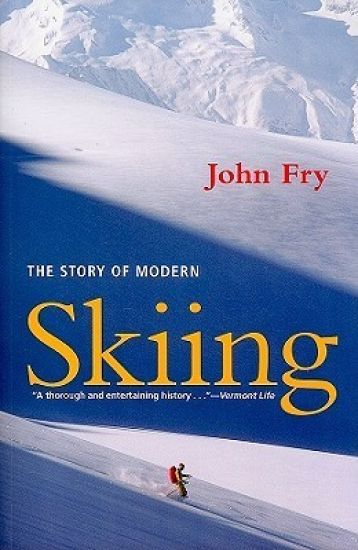
This is the definitive history of the sport that has exhilarated and infatuated about 30 million Americans and Canadians over the course of the last fifty years. Consummate insider John Fry chronicles the rise of a ski culture and every aspect of the sport's development, including the emergence of the mega-resort and advances in equipment, technique, instruction, and competition. The Story of Modern Skiing is laced with revelations from the author's personal relationships with skiing greats such as triple Olympic gold medalists Toni Sailer and Jean-Claude Killy, double gold medalist and environmental champion Andrea Mead Lawrence, first women's World Cup winner Nancy Greene, World Alpine champion Billy Kidd, Sarajevo gold and silver medalists Phil and Steve Mahre, and industry pioneers such as Vail founder Pete Seibert, metal ski designer Howard Head, and plastic boot inventor Bob Lange. Fry writes authoritatively of alpine skiing in North America and Europe, of Nordic skiing, and of newer variations in the sport: freestyle skiing, snowboarding, and extreme skiing. He looks closely at skiing's relationship to the environment, its portrayal in the media, and its response to social and economic change. Maps locating major resorts, records of ski champions, and a timeline, bibliography, glossary, and index of names and places make this the definitive work on modern skiing. Skiers of all ages and abilities will revel in this lively tale of their sport's heritage.
A New Translation And Exposition Of The Very Ancient Book Of Job; With Notes, Explanatory And Philological (1827)
John Fry
KESSINGER PUBLISHING, LLC
2008
sidottu
Bibliographical Memoranda: In Illustration Of Early English Literature (1816)
John Fry
KESSINGER PUBLISHING, LLC
2008
sidottu
A New Translation And Exposition Of The Very Ancient Book Of Job; With Notes, Explanatory And Philological (1827)
John Fry
KESSINGER PUBLISHING, LLC
2008
nidottu
This book investigates the operation of two linguistic mechanisms, ellipsis and wa-marking, in a corpus of colloquial Japanese speech. Its data set is the CallHome Japanese (CHJ) corpus, a collection of transcripts and digitized speech data for 120 telephone conversations between native speakers of Japanese. To make the CHJ data useful for linguistic research, John Fry annotates the original transcripts with a comprehensive set of acoustic, phonetic, syntactic, and semantic tags. John Fry demonstrates that Japanese conversation obeys certain principles of argument ellipsis that appear to be language universal: namely, the tendency to omit transitive and human subjects and the tendency to express at most one argument per clause. He identifies a set of syntactic and semantic factors that correlate significantly with the ellipsis of grammatical particles following a noun phrase. These factors include the grammatical construction type (question, idiom), length of the NP, utterance length, proximity of the NP to the predicate, and the animacy and definiteness of the NP. The animacy and definiteness constrains are of particular interest because these too seem to reflect language-universal principles. Analyzing the CHJ data further, Fry investigates the use and function of the topic-marking particle wa. His study identifies a set of semantic and prosodic properties that tend to distinguish wa from the subject-marking particle ga. This book shows that wa-phrases exhibit more prominent intonation, as measured by peak F0, than ga-phrases in the CHJ speech data, contradicting accounts which predict that ga-phrases, because they are associated with new information, should be more prominent.
Reviving Primary Care
John Fry; Donald Light; Robert M. Lawrence
Radcliffe Publishing Ltd
1995
nidottu
The quality of health care in the US depends on the patient's ability to pay and his or her insurance cover, at an annual cost of $3600 per head of population. In the UK, the quality of care costs less at an annual cost of $1000 per head of population, although care is sometimes delayed through a lack of resources. This book compares the two systems from the viewpoint of primary care, identifying some models of excellence from which both can benefit. It draws on the experience of the NHS reforms in the UK and the political imperative to control costs and improve the service in the US.
The Principles and Practice of Primary Care and Family Medicine
John Fry; Nat Yuen
Radcliffe Publishing Ltd
1993
sidottu
Guidelines are powerful instruments of assistance to clinicians capable of extending the clinical roles of nurses and pharmacists. Purchasers and managers perceive them as technological tools guaranteeing treatment quality. Guidelines also offer mechanisms by which doctors and other health care professionals can be made more accountable to their patients. But how can clinicians tell whether a guideline has authority and whether or not it should be followed? Does the law protect doctors who comply with guidelines? Are guideline developers liable for faulty advice? This timely book provides a comprehensive and accessible analysis of the many medical and legal issues arising from the current explosion of clinical guidelines. Featuring clear summaries of relevant UK US and Commonwealth case law it is vital reading for all doctors health care workers managers purchasers patients and lawyers.
General Practice is undergoing the most major series of changes since the introduction of the National Health Service in 1948. They concern both concepts of care and practical details of the way care is delivered. In spite of the hostility generated by the changes most of the broad general concepts have been accepted. The principle of patients having more choice is widely sup ported, the inclusion of preventive medicine and antici patory care in the responsibilities of practice has few opponents, the introduction of audit as a way of im proving performance has been generally welcomed. Even the idea of putting GPs in better financial management of patients and drug budgets has had supporters in prin ciple. The antipathy has generally related to the method of introduction of these changes. One important con cern has been the time requirements of the New Con tract and the feeling that these will erode the real nature of our work: the close personal relationship with pa tients. If we improve the quality of our management this is less likely to happen. We shall be able to work within the New Contract and retain the quality of service we pro vide. If we improve the understanding of our staff of what we are trying to achieve we are more likely to reach the targets that we set whilst keeping people happy. vii This book sets out to explain the New Contract.
General Practice is undergoing the most major series of changes since the introduction of the National Health Service in 1948. They concern both concepts of care and practical details of the way care is delivered. In spite of the hostility generated by the changes most of the broad general concepts have been accepted. The principle of patients having more choice is widely supported, the inclusion of preventive medicine and anticipatory care in the responsibilities of practice has few opponents, the introduction of audit as a way of improving performance has been generally welcomed. Even the idea of putting GPs in better financial management of patients and drug budgets has had supporters in principle. The antipathy has generally related to the method of introduction of these changes. One important concern has been the time requirements of the New Contract and the feeling that these will erode the real nature of our work: the close personal relationship with patients. If we improve the quality of our management this is less likely to happen. We shall be able to work within the New Contract and retain the quality of service we pro vide. If we improve the understanding of our staff of what we are trying to achieve we are more likely to reach the targets that we set whilst keeping people happy. vii This book sets out to explain the New Contract.
General Practice is undergoing the most major series of changes since the introduction of the National Health Service in 1948. They concern both concepts of care and practical details of the way care is delivered. In spite of the hostility generated by the changes most of the broad general concepts have been accepted. The principle of patients having more choice is widely sup ported, the inclusion of preventive medicine and antici patory care in the responsibilities of practice has few opponents, the introduction of audit as a way of im proving performance has been generally welcomed. Even the idea of putting GPs in better financial management of patients and drug budgets has had supporters in prin ciple. The antipathy has generally related to the method of introduction of these changes. One important con cern has been the time requirements of the New Con tract and the feeling that these will erode the real nature of our work: the close personal relationship with pa tients. If we improve the quality of our management this is less likely to happen. We shall be able to work within the New Contract and retain the quality of service we pro vide. If we improve the understanding of our staff of what we are trying to achieve we are more likely to reach the targets that we set whilst keeping people happy. vii This book sets out to explain the New Contract.