
Kirjailija
John G. Neihardt
Kirjat ja teokset yhdessä paikassa: 63 kirjaa, julkaisuja vuosilta 1970–2026, suosituimpiin kuuluu Graphic Classics Volume 20: Western Classics. Vertaile teosten hintoja ja tarkista saatavuus suomalaisista kirjakaupoista.
Nimi esiintyy myös muodoissa: John G Neihardt
63 kirjaa
Kirjojen julkaisuvuodet: 1970–2026.

How important were Sioux authors such as Charles Eastman in the opinion of the writer responsible for Black Elk Speaks? What will be the legacy of modern poetry according to the poet behind The Cycle of the West? Knowledge and Opinion offers an unparalleled glimpse into the social and literary thought of John G. Neihardt (1881–1973), one of America's most celebrated poets and authors. A wealth of little-known essays and reviews deepen and round out our appreciation for the accomplishments of Neihardt by revealing his no-nonsense opinions about noted literary figures and trends, events, and social issues of his day. Featured in these pages are Neihardt's views of such literary giants as F. Scott Fitzgerald, Robert Frost, H. G. Wells, e. e. Cummings, Dorothy Parker, Ernest Hemingway, Ezra Pound, Eugene O'Neill, and Upton Sinclair. The contributions of Sigmund Freud, anthropologist Paul Radin, and modern philosophers like Bertrand Russell do not escape his sweeping gaze. In their entirety, these essays showcase Neihardt's perspectives and opinions on a wide range of subjects and issues, including modern poetry, the qualities of great literature, twentieth-century trends in writing and literary criticism, the defining characteristics of Western civilization, the literatures and cultures of Native Americans, the lost world of the Old West, economic turmoil in the Great Depression, and the enduring power of classical thought. This rich archive of essays and reviews will surprise, delight, and provoke those who thought they already knew John G. Neihardt.
The Ancient Memory and Other Stories
John G. Neihardt; Hilda Martinsen Neihardt
University of Nebraska Press
1998
pokkari
Death-defying and vulnerable fur-traders and Indians, demi-devils and almost-angels, and other complex personalities come fully to life in The Ancient Memory, which completes the collecting of John G. Neihardt's early short fiction begun with The End of the Dream and Other Stories. Originally published in popular magazines between 1905 and 1908, these stories about the American frontier illustrated Neihardt's artistry in the short form and foreshadow the themes, situations, and characterizations of his later, better-known work. Although two of the Indian stories, the ironic "Feather for Feather" and the satirical "A Political Coup at Little Omaha," were collected in The Lonesome Trail in 1907, none has been reprinted since early in the twentieth century. Other stories included here are "Like a Woman," featuring the plucky Pelagie, and "The Face in the Balcony," which is dedicated to "those who have gone through life misunderstood." "The Epic-Minded Scot," about a stranger who is stubbornly idealistic and scrupulous, is considered one of Neihardt's best tales. "The Brutal Fact" revolves around a William Tell type of contest between trapping partners that anticipates Neihardt's Song of Three Friends. "The Lure of Woman," a study of greed and revenge, was expanded into his novel Life's Lure. The ineffable "Ancient Memory" carries profound philosophical implications while presenting a strange doppelgänger of sorts. Finally, the memorable Waters—an alcoholic, one-legged, one-eyed frontier printer—is introduced in "The Discarded Fetish," which, with minor changes, became the first half of the novel The Dawn-Builder. In her foreword Neihardt's daughter Hilda Neihardt recalls intimate details incidental to the writing of these stories.
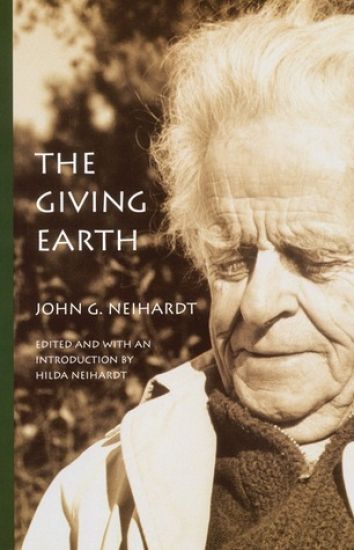
Internationally known for Black Elk Speaks and A Cycle of the West, John G. Neihardt (1881–1973) wrote in almost all major genres: fiction, lyric and epic poetry, biography, autobiography, travelogue, literary criticism, and the familiar essay. The Giving Earth includes nearly forty selections representing every phase of Neihardt's art, from the passionate poetry of his youth to the masterworks of his maturity to the lapidary reflections of his old age. In her introduction, Hilda Neihardt, who was with her father when he interviewed Black Elk at Pine Ridge, provides many personal details surrounding the publication of his works. She also introduces each section. Included among the early lyrics are "Let Me Live Out My Years." The short stories that brought him his first fame are represented by "Dreams Are Wiser Than Men" and the memorably horrific "Alien." An excerpt from The River and I documents a trip down the Missouri as atmospheric and eventful as any described by Mark Twain. A Cycle of the West, the five-volume masterwork written over nearly thirty years, receives its due with chapters from The Song of Three Friends, The Song of Hugh Glass, The Song of Jed Smith, The Song of the Indian Wars, and The Song of the Messiah. The extent of Neihardt's achievement is apparent long before the reader comes to the selections from the classic Black Elk Speaks and the fine, late novel When the Trees Flowered. Concluding the anthology are selections from the literary criticism that helped form his philosophy of literature and the autobiographical writing of his twilight years. The Giving Earth is the gift of a writer's generous spirit and unlimited imagination.
In 1908 John Neihardt (1881–1973) and two companions traveled the Missouri River—about two thousand miles—in a twenty-foot canoe. Originally published in Outing Magazine as a series of articles, The River and I describes their adventures on that wild waterway before it was dammed by the Army Corps of Engineers and points out storied sites along the shore. The result transcends journalism; Neihardt does for the Missouri what Twain did for the Mississippi. This Landmark edition makes available once more the book that was issued in 1910, two years before Neihardt began work on A Cycle of the West and twenty-two years before the publication of Black Elk Speaks.
Originally published just months after his marriage to Mona Martinsen, the poems collected in Man-Song celebrate passionate love and offer many personal glimpses of the young John Neihardt. Unashamedly erotic, they reveal his capacity for love at age twenty-eight. Poems like "A Vision of Woman" and "Women-Wine" show the lover's prejudices and greedy need for caresses and strong embraces. Those like "To Volney Streamer" are addressed to male friends and anticipate the theme of male bonding that runs throughout his work. Because passion takes various forms, Man-Song also include lyrics of the warrior little like the war chants Neihardt later learned from Plains Indians. "Battle Cry," a poem that was recited by Clarence Darrow and Samuel Gompers, is an example of the fighting songs current in the European avant-garde preceding World War I. Neihardt was beginning his struggle to reconcile the demands of the robustly physical life with spiritual insight. His love poems for the American West were still to come, but in Man-Song he is already exploring the vast tract between the essentially erotic and the divine that would be cultivated in his later work. This edition is the first complete reprinting of the work since 1909.
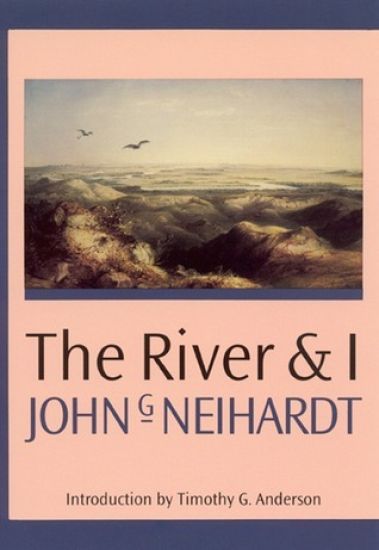
In 1908 John Neihardt (1881–1973) and two companions traveled the Missouri River—about two thousand miles—in a twenty-foot canoe. Originally published in Outing Magazine as a series of articles, The River and I describes their adventures on that wild waterway before it was dammed by the Army Corps of Engineers and points out storied sites along the shore. The result transcends journalism; Neihardt does for the Missouri what Twain did for the Mississippi. This Landmark edition makes available once more the book that was issued in 1910, two years before Neihardt began work on A Cycle of the West and twenty-two years before the publication of Black Elk Speaks.
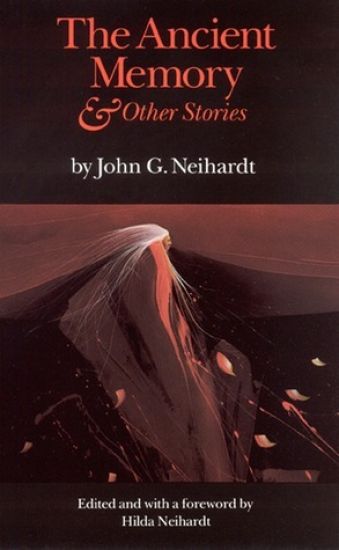
The Ancient Memory and Other Stories
John G. Neihardt; Hilda Martinsen Neihardt
University of Nebraska Press
1991
sidottu
"Neihardt's frontier men and women are appealing dreamers who lose everything, start over and often lose everything again... The stories exude his firsthand knowledge of the frontier, the last remnants of which he explored during the early years of this twentieth century." (Publishers Weekly). "The pacing throughout this collection is admirable. Neihardt sympathizes with the underdog and conveys the loneliness and terror felt even by villains". (Los Angeles Times Book Review). Death-defying and vulnerable fur-traders and Indians, demi-devils and almost-angels, come to life in these early stories by John G. Neihardt. Featured in popular magazines between 1905 and 1908, they are collected in The Ancient Memory and reprinted for the first time in nearly a century. These nine stories, including "Feather for Feather," "A Political Coup at Little Omaha," "The Brutal Fact," "The Epic-Minded Scot," "The Discarded Fetish," and "The Ancient Memory," foreshadow much of Neihardt's later work. Neihardt's daughter, Hilda, provides details about the writing of the stories in the foreword.
Coming four years after The Dawn Builder (1910), John G. Neihardt's second novel portrays the lives of Black Hills miners and of those who preyed on them. Life's Lure takes up a theme that runs throughout Neihardt's work: the consequences of an inordinate desire for wealth. The protagonists come in sets of three. On one hand there are Samuel Drake, a hapless thirty-year-old who has just squandered his inheritance in a Deadwood card game; his fickle wife Joy; and Louis Devlin, a smooth-talking, fast-fingered gentleman gambler. Devlin is not above talking about philosophy; he even paraphrases Nietzsche. On the other hand are Monte Joe, a drunken scoundrel, Punkins, a young man fresh off the farm, guileless and easy pickings; and Nellie, a mining-camp prostitute. Women and gold lure men to go on living, but Fortune is "a capricious jilt." Neihardt puts a lot of colorful characters in motion and then, along with the reader, watches them collide.

Book by Neihardt, John G.
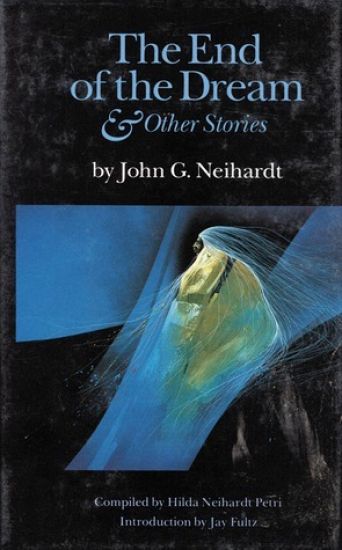
Originally published at the beginning of the twentieth century, the short stories of John G. Neihardt deserve to be better known. Their flesh-and-blood Indians were practically unprecedented in an era when the fiends of dime novels and idealizations of Cooper were still the literary norm. Owing much to young Neihardt's intimate association with the Omahas at their reservation in eastern Nebraska, the stories were of an Indian cast that perplexed the critics. They were often overlooked as the years brought laurels to the author of A Cycle of the West and Black Elk Speaks. A closer look at them reveals that Neihardt was a disciplined artist from the very beginning. The nine stories in this volume appeared from 1901 to 1905 in the Overland Monthly; five were collected in The Lonesome Trail in 1907. All of them are informed by Neihardt's experience among Omaha Indians and shaped by the power of his imagination. Except for "A Prairie Borgia," which clearly touches on the notorious Chief Blackbird's relations with traders, all are set in the time before contact with white men. Love and hate, kindness and cruelty, hope and despair, generosity and envy, honesty and guile, spiritual impulse and sexual desire operate in this wholly Indian world. "The End of the Dream," 'The Triumph of Seha," and "The Smile of God" are patterned on vision quests issuing in profound irony. The social outcast who figured in Neihardt's Indian Tales and Others (1927, a Bison Book), appears again in adventures with a cosmic, and sometimes fantastic, dimension. These stories, as well as "When the Snows Drift," "The Beating of the War Drums," "The Fading of Shadow Flower," "The Singing of the Frogs," and "The Spirit of Crow Butte," have an inwardness reflected by vivid imagery. Their quality led Dr. Susan LaFlesche Picotte, the daughter of Joseph LaFlesche (Iron Eyes), last chief of the Omahas, to exclaim that Neihardt was the only writer in a long line extending from Cooper to Frederic Remington who possessed "a true understanding of Indian character." The stories were compiled by Neihardt's daughter, Hilda Neihardt Petri. In his introduction Jay Fultz discusses their cultural context and artistic integrity.
The Dawn Builder, originally published in 1910, was John G. Neihardt's first novel. At the center of it is a one-eyed, peg-legged man named Waters. He comes to Fort Calhoun, Nebraska Territory, in 1862 and drinks himself into a hole when he isn't setting type on the town newspaper. Because his thirst is metaphysical as well, he only temporarily loses sight of the possibility of happiness, of building his own dawn. Like all memorable characters, Waters can't be contained on the page. Isolated by his physical ugliness, marked by loneliness not yet deadened by silence, compromised by his own excessive energy, he reaches out to a young woman farther outside society than he is and to a kindly widow and her son. The Dawn Builder is reminiscent of Twain in its frontier humor, of Poe in its bizarre adventures, and of Dickens in its casting of some busybodies who belong to the Needle Club. Its return to print will be welcomed by John G. Neihardt's many admirers.
The creative energy that would in time produce A Cycle of the West and Black Elk Speaks is apparent in his first book, The Divine Enchantment, published in 1990 when he was nineteen years old. It can be viewed as an early version of the philosophy of spiritual awareness that Neihardt articulated twenty-five years later in Poetic Values. They are reprinted together for the first time in this Landmark Edition. A narrative poem bursting with youthful enthusiasm, The Divine Enchantment reveals Neihardt not as an ordinary poet but as a visionary bard. Inspired by his reading of Eastern philosophy, it is a Hindu myth with Christian parallels. The virgin heroine, Devanaguy, fulfills prophecy in bearing Krishna, the incarnation of Vishnu, in spite of imprisonment by a jealous and fearful king. Neihardt's vision of the union of spirit and matter, of reason and higher consciousness, introduces themes he was to expand on in his later writings. Poetic Values, a series of lectures published in 1925, speaks of the common need for self-enlightenment. Drawing on sources ranging from the Upanishads to psychology textbooks, Neihardt argues that poetry can provide a balanced philosophy to live by in bridging the gap between Western materialism and Eastern otherworldliness. Poetry links the objective with the subjective, the real with the imaginary, and for the reader of Poetic Values, as for the heroine of The Divine Enchantment, the highest self-enlightenment comes with self-forgetfulness. Blair Whitney writes that, in comparing these two works, "one can see [Neihardt's] strong, consistent development from a boy who loved words and had big dreams to a mature poet who found ways to realize his ideals and to communicate them to a large audience of readers."
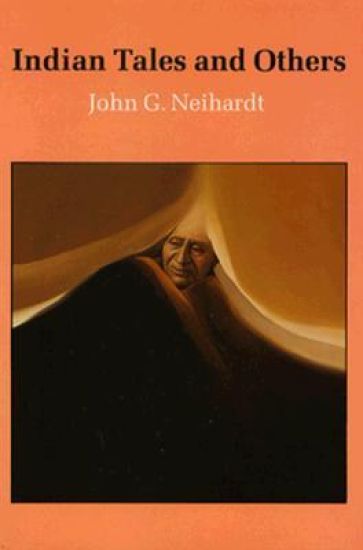
Before Black Elk Speaks, before his epic poem A Cycle of the West, John G. Neihardt wrote many short stories that found favor with readers and critics. Among his best were the seventeen collected in Indian Tales and Others in 1926 and now available for the first time in paperback. "The Singer of the Ache," considered Neihardt's highest achievement in short fiction, portrays young Moon-Walker's quest for supernatural powers achieved at a price. Other Indian tales include "The Look in the Face," one of many about a social outcast; "The White Wakunda," about a Christ figure; "The Mark of Shame," concerning murder as a violation of the natural order; "Vylin" and "Mignon," moral fables about Indian-white marriages; "The Last Thunder Song"; and "Dreams Are Wiser Than Men." Other stories, set on the frontier, are "The Scars," "The Nemesis of the Deuces," "The Revolt of a Sheep," "The Parable of the Sack," "The Art of Hate," and perhaps Neihardt's most popular tale, "The Alien," in which a fur trapper makes a pet of a she-wolf, with unex-pected consequences. "The Red Roan," a ghost story, and "Beyond the Spectrum," about a man who may have stepped outside his body permanently, bring to a peak the strain of the supernatural that is apparent throughout the collection.
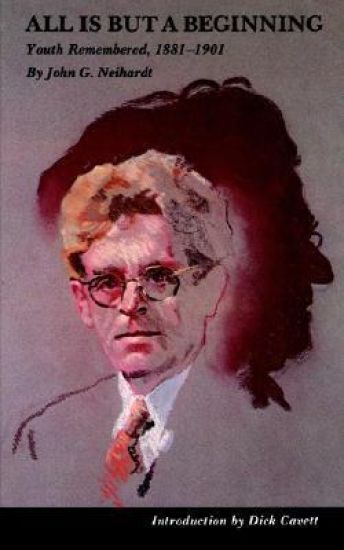
John Neihardt, celebrated for his cycle of epic poems about the American West and for Black Elk Speaks, was in his nineties when he wrote this engaging book about growing up in the Midwest. All Is But a Beginning describes the people and events instrumental in shaping his later distinguished career as a poet; historian, and authority on Indians.
This volume is a continuation of the autobiography of John G. Neihardt All Is But a Beginning offering a final glimpse into his fascinating life. Covering the years 1901-1908, he weaves a mosaic of personal fulfillment, joy and sorrow, reflecting on the successes and failures he experienced during his "mature" years. As only he could, Neihardt shares a mingling of romantic anecdotes alive with names and faces he sought out or fought for along the way. Writing with warmth and sensitivity, the late Poet Laureate of Nebraska tells of his early newspaper days, his struggle to write poetry, his family, his encounters with nature, his relationships with Indians, and the various people who, whether met once or often, had a profound effect on his life. Using a conversational style, the author does not present episodes in chronological order. Rather he begins to elaborate on one memorable experience, then quickly draws out, without warning, another one that occurred years later, tying them into a pattern or coincidence. The book's Epilogue is written by Neihardt's daughter, Hilda Neihardt Petri. Summarizing her father's visions, daydreams, and philosophy, she movingly concludes that with his death on 3 November 1973 Neihardt's "great adventure had begun." The late John G. Neihardt is best remembered as an authority on the traditions and customs of the Sioux Indians. Neihardt, named Poet Laureate of Nebraska in 1921 and Prairie Poet Laureate of America in 1968, was literary editor of the St. Louis Post-Dispatch from 1926 to 1938 and poet in residence and lecturer in English at the University of Missouri-Columbia from 1949 to 1965. The author of some twenty-five volumes of poetry, fiction, and philosophy, his works include Black Elk Speaks, Lyric and Dramatic Poems, and A Cycle of the West.