Kirjojen hintavertailu – 12 903 725 kirjaa ja 27 kauppaa

Kirjailija

John Gagné

Kirjat ja teokset yhdessä paikassa: 4 kirjaa, julkaisuja vuosilta 2021–2026, suosituimpiin kuuluu Giorgione, Dante and the Sydney Incunable. Vertaile teosten hintoja ja tarkista saatavuus suomalaisista kirjakaupoista.

Nimi esiintyy myös muodoissa: John Gagne

4 kirjaa

Kirjojen julkaisuvuodet: 2021–2026.

Giorgione, Dante and the Sydney Incunable

Giorgione, Dante and the Sydney Incunable

Jaynie Anderson; John Gagne

MELBOURNE UNIVERSITY PRESS
2026
sidottu
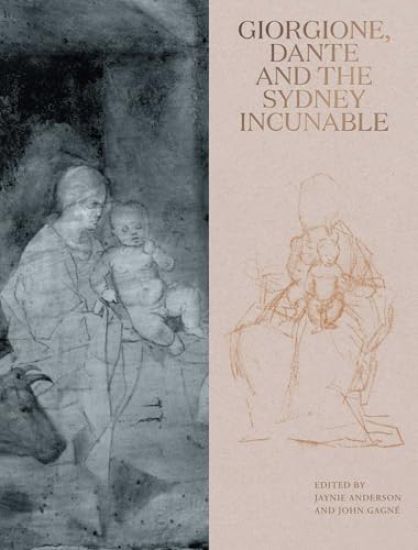
While preparing for an event at the University of Sydney in 2017, a librarian turned to the back page of the library's 1497 copy of Dante Alighieri's Divine Comedy and made a curious discovery. In red chalk was a drawing of a woman and baby, and an inscription in Italian: On the day of 17th September, Giorgione of Castelfranco, a very excellent artist, died of the plague in Venice at the age of 36 and he rests in peace. This discovery would shine the international art history spotlight on Sydney and begin a project that has seen state-of-the-art imaging techniques used alongside good old-fashioned archival research in a quest for answers. Was the drawing on the endpaper actually by Giorgione? Was Dante his inspiration? Do we have for the first time the dates of Giorgione's birth and death? How should we reimagine Giorgione's chronology? And how did the early edition of Divine Comedy end up in Sydney? Bringing together scholars from art history, Italian studies, librarianship and book history from Sydney to the Vatican, Giorgione, Dante and the Sydney Incunable tells a story of the provenance and significance of this remarkable discovery.
The Fabric of War

The Fabric of War

John Gagné; Timothy McCall

Cambridge University Press
2025
pokkari
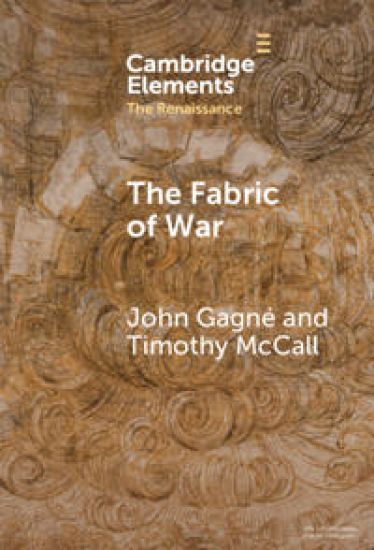
The Fabric of War traces the rich history of flags and banners in Renaissance Europe through a critical analysis of the cultural, ideological, material, and artistic histories of these complex and ubiquitous objects. It examines banners as numinous textiles that animated and adorned battle, energized and embellished armies, constructed and celebrated victory. Though flags are often investigated as mere symbols to be deciphered – as heraldic code revealing identity – they were vibrant and charismatic textiles whose mutability, movement, and multivalency constituted their appeal and salience. Banners propelled their viewers not only to decipher or identify, but to act.
The Fabric of War

The Fabric of War

John Gagné; Timothy McCall

Cambridge University Press
2025
sidottu
The Fabric of War traces the rich history of flags and banners in Renaissance Europe through a critical analysis of the cultural, ideological, material, and artistic histories of these complex and ubiquitous objects. It examines banners as numinous textiles that animated and adorned battle, energized and embellished armies, constructed and celebrated victory. Though flags are often investigated as mere symbols to be deciphered – as heraldic code revealing identity – they were vibrant and charismatic textiles whose mutability, movement, and multivalency constituted their appeal and salience. Banners propelled their viewers not only to decipher or identify, but to act.
Milan Undone

Milan Undone

John Gagné

Harvard University Press
2021
sidottu
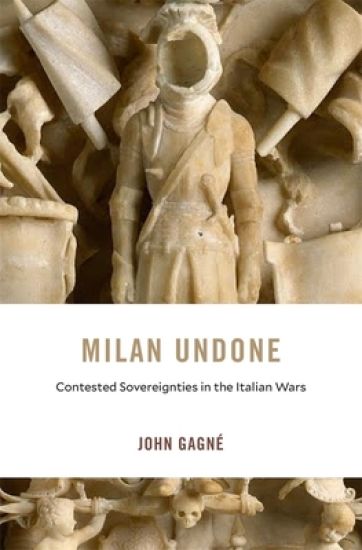
A new history of how one of the Renaissance’s preeminent cities lost its independence in the Italian Wars. In 1499, the duchy of Milan had known independence for one hundred years. But the turn of the sixteenth century saw the city battered by the Italian Wars. As the major powers of Europe battled for supremacy, Milan, viewed by contemporaries as the “key to Italy,” found itself wracked by a tug-of-war between French claimants and its ruling Sforza family. In just thirty years, the city endured nine changes of government before falling under three centuries of Habsburg dominion. John Gagné offers a new history of Milan’s demise as a sovereign state. His focus is not on the successive wars themselves but on the social disruption that resulted. Amid the political whiplash, the structures of not only government but also daily life broke down. The very meanings of time, space, and dynasty—and their importance to political authority—were rewritten. While the feudal relationships that formed the basis of property rights and the rule of law were shattered, refugees spread across the region. Exiles plotted to claw back what they had lost. Milan Undone is a rich and detailed story of harrowing events, but it is more than that. Gagné asks us to rethink the political legacy of the Renaissance: the cradle of the modern nation-state was also the deathbed of one of its most sophisticated precursors. In its wake came a kind of reversion—not self-rule but chaos and empire.