Kirjojen hintavertailu – 12 903 724 kirjaa ja 27 kauppaa

Kirjailija

John Gastil

Kirjat ja teokset yhdessä paikassa: 8 kirjaa, julkaisuja vuosilta 2000–2020, suosituimpiin kuuluu Legislature by Lot. Vertaile teosten hintoja ja tarkista saatavuus suomalaisista kirjakaupoista.

8 kirjaa

Kirjojen julkaisuvuodet: 2000–2020.

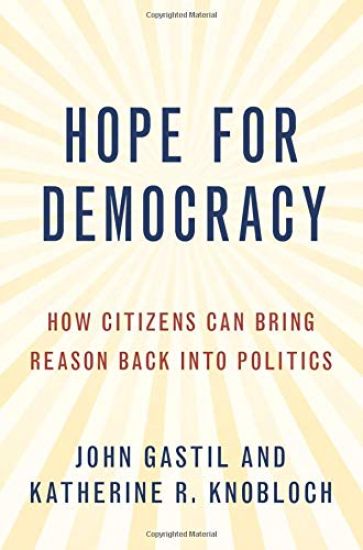
Hope for Democracy

Hope for Democracy

John Gastil; Katherine Knobloch

Oxford University Press Inc
2020
sidottu
Concerned citizens across the globe fear that democratic institutions are failing them. Citizens feel shut out of politics and worry that politicians are no longer responsive to their interests. In Hope for Democracy, John Gastil and Katherine R. Knobloch introduce new tools for tamping down hyper-partisanship and placing citizens at the heart of the democratic process. They showcase the Citizens' Initiative Review, which convenes a demographically-balanced random sample of citizens to study statewide ballot measures. Citizen panelists interrogate advocates, opponents, and experts, then write an analysis that distills their findings for voters. Gastil and Knobloch reveal how this process has helped voters better understand the policy issues placed on their ballots. Placed in the larger context of deliberative democratic reforms, Hope for Democracy shows how citizens and public officials can work together to bring more rationality and empathy into modern politics.
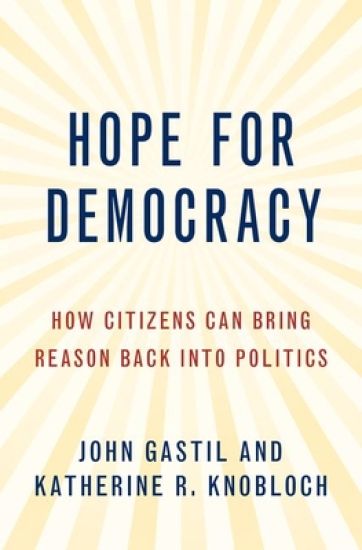
Hope for Democracy

Hope for Democracy

John Gastil; Katherine Knobloch

Oxford University Press Inc
2020
nidottu
Concerned citizens across the globe fear that democratic institutions are failing them. Citizens feel shut out of politics and worry that politicians are no longer responsive to their interests. In Hope for Democracy, John Gastil and Katherine R. Knobloch introduce new tools for tamping down hyper-partisanship and placing citizens at the heart of the democratic process. They showcase the Citizens' Initiative Review, which convenes a demographically-balanced random sample of citizens to study statewide ballot measures. Citizen panelists interrogate advocates, opponents, and experts, then write an analysis that distills their findings for voters. Gastil and Knobloch reveal how this process has helped voters better understand the policy issues placed on their ballots. Placed in the larger context of deliberative democratic reforms, Hope for Democracy shows how citizens and public officials can work together to bring more rationality and empathy into modern politics.
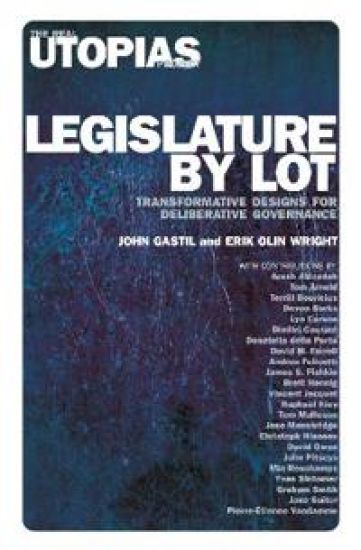
Legislature by Lot

Legislature by Lot

Erik Olin Wright; John Gastil

Verso Books
2019
sidottu
Democracy means rule by the people, but in practice even the most robust democracies delegate most rule making to a political class The gap between the public and its representatives might seem unbridgeable in the modern world, but Legislature by Lot examines an inspiring solution: a legislature chosen through "sortition" - the random selection of lay citizens. It's a concept that has come to the attention of democratic reformers across the globe. Proposals for such bodies are being debated in Australia, Belgium, Iceland, the United Kingdom, and many other countries. Sortition promises to reduce corruption and create a truly representative legislature in one fell swoop. In Legislature by Lot, John Gastil and Erik Olin Wright make the case for pairing a sortition body with an elected chamber within a bicameral legislature. Gastil is a leading deliberative democracy scholar, and Wright a distinguished sociologist and editor of the Real Utopias series, of which this is a part. In this volume, they bring together critics and advocates of sortition who have studied ancient Athens, deliberative polling, political theory, social movements, and civic innovation. Without obscuring its limitations, the contributors offer a wide variety of ideas for how to implement sortition and examine its potential for reshaping modern politics. Legislature by Lot includes sixteen essays that respond to Gastil and Wright's detailed proposal. Essays comparing sortition to contemporary reforms see it as a dramatic extension of deliberative "minipublics," which gather random samples of citizens to weigh public policy dilemmas without being empowered to enact legislation. Another set of essays explores the democratic principles underlying sortition and elections and considers, for example, how a sortition body holds itself accountable to a public that did not elect it. The third set of essays considers alternative paths to democratic reform, which limit the powers of a sortition chamber or more quickly establish a pure sortition body. With contributions by Arash Abizadeh, Tom Arnold, Terrill Bouricius, Deven Burks, Lyn Carson, Dimitri Courant, Donatella della Porta, David M. Farrell, Andrea Felicetti, James S. Fishkin, Brett Hennig, Vincent Jacquet, Raphaël Kies, Tom Malleson, Jane Mansbridge, Christoph Niessen, David Owen, John Pitseys, Min Reuchamps, Yves Sintomer, Graham Smith, Jane Suiter, and Pierre-Étienne Vandamme.

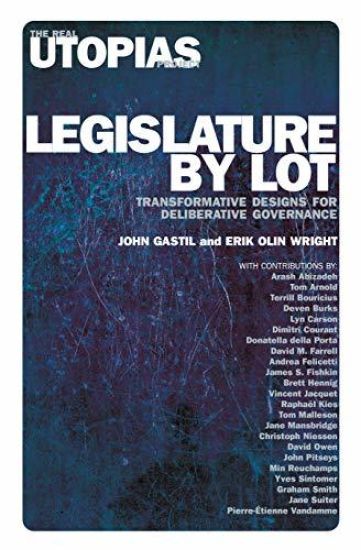
Legislature by Lot

Legislature by Lot

Erik Olin Wright; John Gastil

Verso Books
2019
nidottu
Democracy means rule by the people, but in practice even the most robust democracies delegate most rule making to a political class. The gap between the public and its public officials might seem unbridgeable in the modern world, but Legislature by Lot presents a close examination of an inspiring solution: a legislature chosen through "sortition"-the random selection of lay citizens. It's a concept that has come to the attention of democratic reformers across the globe. Proposals for such bodies are being debated in Australia, Belgium, Iceland, the United Kingdom, and many other countries. Sortition promises to reduce corruption and create a truly representative legislature in one fell swoop. In Legislature by Lot, John Gastil and Erik Olin Wright make the case for pairing a sortition body with an elected chamber within a bicameral legislature. Gastil is a leading deliberative democracy scholar, and Wright a distinguished sociologist and series editor of the Real Utopias books, of which this is a part. In this volume, they bring together critics and advocates of sortition who studied ancient Athens, deliberative polling, political theory, social movements, and civic innovation. The constellation of voices in this book lays out a wide variety of ideas for how to implement sortition, without obscuring its limitations, and examine its potential for reshaping modern politics. Legislature by Lot includes sixteen essays that respond to Gastil and Wright's detailed proposal. Essays comparing it to contemporary reforms see it as a dramatic extension of deliberative "minipublics," which gather random samples of citizens to weight public policy dilemmas without being empowered to enact legislation. Another set of essays explores the democratic principles underlying sortition and elections and considers, for example, how a sortition body holds itself accountable to a public that did not elect it. The third set of essays consider alternative paths to democratic reform, which limit the powers of a sortition chamber or more quickly establish a pure sortition body.
The Jury and Democracy

The Jury and Democracy

John Gastil; E. Pierre Deess; Philip J. Weiser; Cindy Simmons

Oxford University Press Inc
2010
sidottu
Alexis de Tocqueville, John Stuart Mill, and the U. S. Supreme Court have all alleged that jury service promotes democratic civic attitudes and political engagement. The Jury and Democracy is the first book to link jury service and political engagement, demonstrating how this institutionalized form of deliberation can contribute to democratic society not only in the United States but also in the many other countries using or experimenting with juries. The authors look at court and voting records for over thirteen thousand empanelled jurors from across the United States and draw from interviews with thousands more jurors to show that serving on a jury can trigger changes in how citizens view themselves, their peers, and their government. In fact, the study shows that this experience can significantly increase electoral turnout among infrequent voters. Partly as a result of these changing attitudes, jury service also sparks long-term shifts in media use, political action, and community group involvement. The original findings presented in this research advance modern theories of democracy, deliberation, and the law. Whereas Robert Putnam's Bowling Alone brought attention to informal social networks and voluntary associations, The Jury and Democracy demonstrates the importance of institutionalized, state-sponsored deliberative opportunities for citizens to meet and make legally-binding decisions. Legal debates over the proper use of the jury system have failed to account for the hidden civic costs of circumscribing jury service opportunities. The Jury and Democracy suggests how the jury's power might influence newer, deliberative visions of democracy and promote the transition to democracy in more autocratic societies.
The Jury and Democracy

The Jury and Democracy

John Gastil; E. Pierre Deess; Philip J. Weiser; Cindy Simmons

Oxford University Press Inc
2010
nidottu
Alexis de Tocqueville, John Stuart Mill, and the U. S. Supreme Court have all alleged that jury service promotes democratic civic attitudes and political engagement. The Jury and Democracy is the first book to link jury service and political engagement, demonstrating how this institutionalized form of deliberation can contribute to democratic society not only in the United States but also in the many other countries using or experimenting with juries. The authors look at court and voting records for over thirteen thousand empanelled jurors from across the United States and draw from interviews with thousands more jurors to show that serving on a jury can trigger changes in how citizens view themselves, their peers, and their government. In fact, the study shows that this experience can significantly increase electoral turnout among infrequent voters. Partly as a result of these changing attitudes, jury service also sparks long-term shifts in media use, political action, and community group involvement. The original findings presented in this research advance modern theories of democracy, deliberation, and the law. Whereas Robert Putnam's Bowling Alone brought attention to informal social networks and voluntary associations, The Jury and Democracy demonstrates the importance of institutionalized, state-sponsored deliberative opportunities for citizens to meet and make legally-binding decisions. Legal debates over the proper use of the jury system have failed to account for the hidden civic costs of circumscribing jury service opportunities. The Jury and Democracy suggests how the jury's power might influence newer, deliberative visions of democracy and promote the transition to democracy in more autocratic societies.
By Popular Demand

By Popular Demand

John Gastil

University of California Press
2000
pokkari
John Gastil challenges conventional assumptions about public opinion, elections, and political expression in this persuasive treatise on how to revitalize the system of representative democracy in the United States. Gastil argues that American citizens have difficulty developing clear policy interests, seldom reject unrepresentative public officials, and lack a strong public voice. Our growing awareness of a flawed electoral system is causing increased public cynicism and apathy. The most popular reforms, however, will neither restore public trust nor improve representation. Term limits and campaign finance reforms will increase turnover, but they provide no mechanism for improved deliberation and accountability. Building on the success of citizen juries and deliberative polling, Gastil proposes improving our current process by convening randomly selected panels of citizens to deliberate for several days on ballot measures and candidates. Voters would learn about the judgments of these citizen panels through voting guides and possibly information printed on official ballots. The result would be a more representative government and a less cynical public. America has a long history of experimentation with electoral systems, and the proposals in By Popular Demand merit serious consideration and debate.