
Kirjojen hintavertailu – 12 903 725 kirjaa ja 27 kauppaa

Kirjailija

John Gavin

Kirjat ja teokset yhdessä paikassa: 2 kirjaa, julkaisuja vuosilta 2008–2025, suosituimpiin kuuluu Vera Philosophia. Vertaile teosten hintoja ja tarkista saatavuus suomalaisista kirjakaupoista.

2 kirjaa

Kirjojen julkaisuvuodet: 2008–2025.

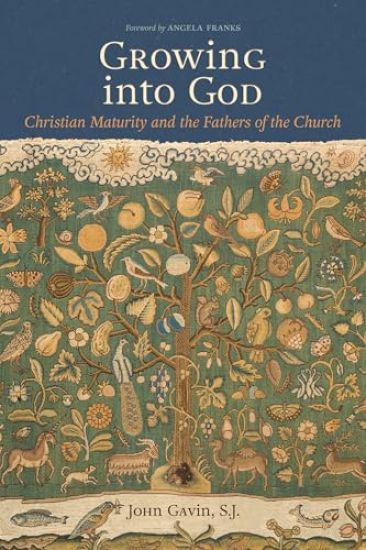
Growing Into God

Growing Into God

John Gavin; Angela Franks

THE CATHOLIC UNIVERSITY OF AMERICA PRESS
2025
nidottu
Many studies of spiritual development exist under the heading of "Christian Perfection." However, John Gavin revisits such topics as asceticism, prayer, sacraments, virtues, and spiritual combat through scriptural and patristic texts that present the Christian life as one of growth from spiritual infancy to a particular fulfillment or end (telos): divinized humanity as formed and revealed in Jesus Christ. Thus, though Christian maturity does incorporate such things as physical and cognitive development, its true distinction lies in its gifted, supernatural end that does not exclude human freedom. Part One establishes the pillars of Christian maturity – form and finality; virtue and character; vocation and mission – and explores the opposition to maturation in the form of demonic infantilism. Part Two examines the means of maturity given to us in the life of the Church: the Scriptures, the Mysteries (Sacraments), and asceticism. Finally, Part Three reviews four figures of Christian adulthood: the Witness, the Teacher, the Servant, and the Fool. A concluding chapter applies the insights from the previous chapters to our modern world to see in what ways our times need to "grow up." Growing into God includes a variety of early Christian voices: Irenaeus of Lyons, Origen of Alexandria, Gregory of Nazianzus, Gregory of Nyssa, Basil of Caesarea, Augustine of Hippo, Ambrose of Milan, John Cassian, Dionysius the Areopagite, Mark the Monk, John Moschos, Maximus the Confessor, Symeon the Holy Fool, and others. Their collective insights, all the fruits of great learning and the contemplation of God's Word, describe a wondrous figure: the mature saint transformed by union with the Father, Son, and Spirit.
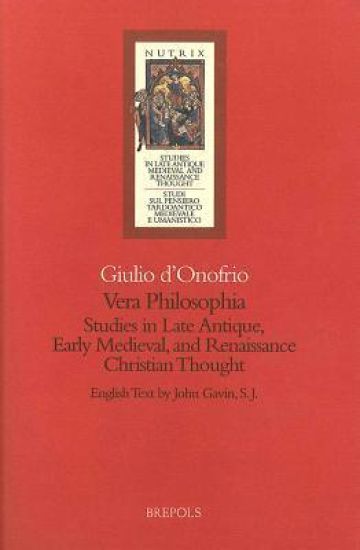
Vera Philosophia

Vera Philosophia

Giulio D'Onofrio; John Gavin

Brepols Publishers
2008
nidottu
This volume includes a collection of reworked articles which the author, during the last twenty years, dedicated to the origins and conditions constitutive of Christian philosophical-theological thought. From the earliest centuries of the Christian era, human reason was submitted to a particular formal conditioning, in so far as it was necessarily obliged to confront the contents of a divine revelation recognized as necessarily 'true'. The medieval Latin scholar was induced by the social and cultural peculiarities of his time to confront a model of thought which imposes a decisive subordination of natural knowledge - demonstrated to be imperfect and inconclusive - to the certainties assured by the faith. The production of this model of philosophia, sensibly different from the dominant paradigms in the classical period, rooted itself in the critical redimensioning of reason introduced into the West by Cicero. Departing from the observation of the failure of the philosophical aspirations of antiquity, the Christian intellectuals effected an operative 'overturning' of the conditions of veridical knowledge. The new wisdom was not the result of a pure interference of religion in the field of rational science; it was, however, directed by a conscious 'conversion' of the philosophers and fulfilled on two sides: on that of the faith, which requires earthly knowledge in order to defend itself from misunderstandings and heresies; and on that of reason, which allows itself to draw upon supernatural revelation for the possession of regulatory principles which guide it in the study of natural things. This book investigates the development of this approach during the course of the centuries which precede, in the West, the rediscovery of Aristotelian epistemology: from Augustine to Boethius, from John Scottus Eriugena to Anselm of Aosta. It moves to the point of describing the return of this methodological approach, at the end of the Medieval Scholastic period, in the results of the anti-Aristotelian critique carried out by the men of the Renaissance in the recovering of a model of thought which had dominated in the Patristic and Early Medieval periods.