Kirjojen hintavertailu – 12 859 818 kirjaa ja 27 kauppaa

Kirjailija

John Gerring

Kirjat ja teokset yhdessä paikassa: 21 kirjaa, julkaisuja vuosilta 1998–2024, suosituimpiin kuuluu Case Study Research. Vertaile teosten hintoja ja tarkista saatavuus suomalaisista kirjakaupoista.

21 kirjaa

Kirjojen julkaisuvuodet: 1998–2024.

A Liberal Education

A Liberal Education

Brendan Apfeld; Emanuel Coman; John Gerring; Stephen Jessee

Cambridge University Press
2024
pokkari
Enlisting a natural experiment, global surveys, and historical data, this book examines the university's evolution and its contemporary impact. Its authors conduct an unprecedented big-data comparative study of the consequences of higher education on ideology, democratic citizenship, and more. They conclude that university education has a profound effect on social and political attitudes across the world, greater than that registered by social class, gender, or age. A university education enhances political trust and participation, reduces propensities to crime and corruption, and builds support for democracy. It generates more tolerant attitudes toward social deviance, enhances respect for rationalist inquiry and scientific authority, and usually encourages support for Leftist parties and movements. It does not nurture support for taxation, redistribution, or the welfare state, and may stimulate opposition to these policies. These effects are summarized by the co-authors as liberal, understood in its classic, nineteenth-century meaning.

A Liberal Education

A Liberal Education

Brendan Apfeld; Emanuel Coman; John Gerring; Stephen Jessee

Cambridge University Press
2024
sidottu
Enlisting a natural experiment, global surveys, and historical data, this book examines the university's evolution and its contemporary impact. Its authors conduct an unprecedented big-data comparative study of the consequences of higher education on ideology, democratic citizenship, and more. They conclude that university education has a profound effect on social and political attitudes across the world, greater than that registered by social class, gender, or age. A university education enhances political trust and participation, reduces propensities to crime and corruption, and builds support for democracy. It generates more tolerant attitudes toward social deviance, enhances respect for rationalist inquiry and scientific authority, and usually encourages support for Leftist parties and movements. It does not nurture support for taxation, redistribution, or the welfare state, and may stimulate opposition to these policies. These effects are summarized by the co-authors as liberal, understood in its classic, nineteenth-century meaning.

Finding your Social Science Project

Finding your Social Science Project

John Gerring; Jason Seawright

Cambridge University Press
2022
sidottu
The most important step in social science research is the first step – finding a topic. Unfortunately, little guidance on this crucial and difficult challenge is available. Methodological studies and courses tend to focus on theory testing rather than theory generation. This book aims to redress that imbalance. The first part of the book offers an overview of the book's central concerns. How do social scientists arrive at ideas for their work? What are the different ways in which a study can contribute to knowledge in a field? The second part of the book offers suggestions about how to think creatively, including general strategies for finding a topic and heuristics for discovery. The third part of the book shows how data exploration may assist in generating theories and hypotheses. The fourth part of the book offers suggestions about how to fashion disparate ideas into a theory.
Finding your Social Science Project

Finding your Social Science Project

John Gerring; Jason Seawright

Cambridge University Press
2022
pokkari
The most important step in social science research is the first step – finding a topic. Unfortunately, little guidance on this crucial and difficult challenge is available. Methodological studies and courses tend to focus on theory testing rather than theory generation. This book aims to redress that imbalance. The first part of the book offers an overview of the book's central concerns. How do social scientists arrive at ideas for their work? What are the different ways in which a study can contribute to knowledge in a field? The second part of the book offers suggestions about how to think creatively, including general strategies for finding a topic and heuristics for discovery. The third part of the book shows how data exploration may assist in generating theories and hypotheses. The fourth part of the book offers suggestions about how to fashion disparate ideas into a theory.
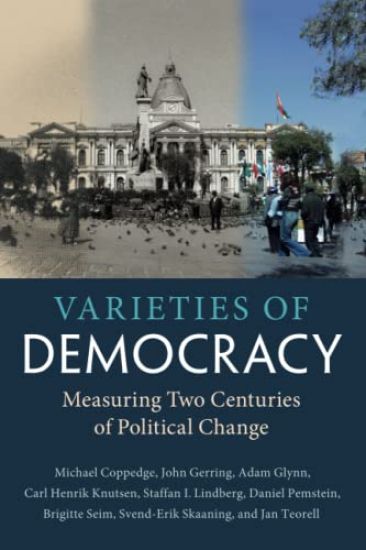
Varieties of Democracy

Varieties of Democracy

Michael Coppedge; John Gerring; Adam Glynn; Carl Henrik Knutsen; Staffan I. Lindberg; Daniel Pemstein; Brigitte Seim; Svend-Erik Skaaning; Jan Teorell

Cambridge University Press
2022
pokkari
Varieties of Democracy is the essential user's guide to The Varieties of Democracy project (V-Dem), one of the most ambitious data collection efforts in comparative politics. This global research collaboration sparked a dramatic change in how we study the nature, causes, and consequences of democracy. This book is ambitious in scope: more than a reference guide, it raises standards for causal inferences in democratization research and introduces new, measurable, concepts of democracy and many political institutions. Varieties of Democracy enables anyone interested in democracy - teachers, students, journalists, activists, researchers and others - to analyze V-Dem data in new and exciting ways. This book creates opportunities for V-Dem data to be used in education, research, news analysis, advocacy, policy work, and elsewhere. V-Dem is rapidly becoming the preferred source for democracy data.
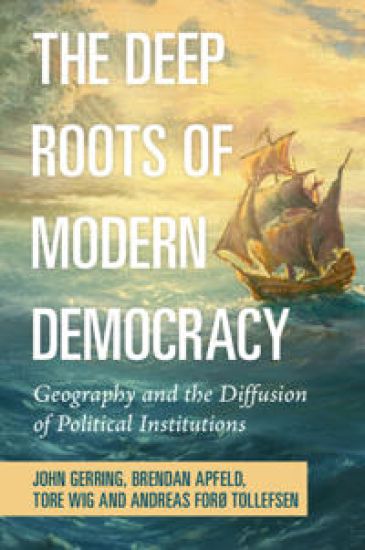
The Deep Roots of Modern Democracy

The Deep Roots of Modern Democracy

John Gerring; Brendan Apfeld; Tore Wig; Andreas Forø Tollefsen

Cambridge University Press
2022
pokkari
This book explores the deep roots of modern democracy, focusing on geography and long-term patterns of global diffusion. Its geographic argument centers on access to the sea, afforded by natural harbors which enhance the mobility of people, goods, capital, and ideas. The extraordinary connectivity of harbor regions thereby affected economic development, the structure of the military, statebuilding, and openness to the world – and, through these pathways, the development of representative democracy. The authors' second argument focuses on the global diffusion of representative democracy. Beginning around 1500, Europeans started to populate distant places abroad. Where Europeans were numerous they established some form of representative democracy, often with restrictions limiting suffrage to those of European heritage. Where they were in the minority, Europeans were more reticent about popular rule and often actively resisted democratization. Where Europeans were entirely absent, the concept of representative democracy was unfamiliar and its practice undeveloped.
The Deep Roots of Modern Democracy

The Deep Roots of Modern Democracy

John Gerring; Brendan Apfeld; Tore Wig; Andreas Forø Tollefsen

Cambridge University Press
2022
sidottu
This book explores the deep roots of modern democracy, focusing on geography and long-term patterns of global diffusion. Its geographic argument centers on access to the sea, afforded by natural harbors which enhance the mobility of people, goods, capital, and ideas. The extraordinary connectivity of harbor regions thereby affected economic development, the structure of the military, statebuilding, and openness to the world – and, through these pathways, the development of representative democracy. The authors' second argument focuses on the global diffusion of representative democracy. Beginning around 1500, Europeans started to populate distant places abroad. Where Europeans were numerous they established some form of representative democracy, often with restrictions limiting suffrage to those of European heritage. Where they were in the minority, Europeans were more reticent about popular rule and often actively resisted democratization. Where Europeans were entirely absent, the concept of representative democracy was unfamiliar and its practice undeveloped.
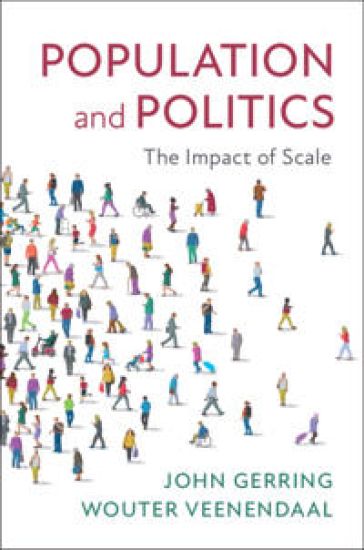
Population and Politics

Population and Politics

John Gerring; Wouter Veenendaal

Cambridge University Press
2020
pokkari
Every country, every subnational government, and every district has a designated population, and this has a bearing on politics in ways most citizens and policymakers are barely aware of. Population and Politics provides a comprehensive evaluation of the political implications stemming from the size of a political unit – on social cohesion, the number of representatives, overall representativeness, particularism ('pork'), citizen engagement and participation, political trust, electoral contestation, leadership succession, professionalism in government, power concentration in the central apparatus of the state, government intervention, civil conflict, and overall political power. A multimethod approach combines field research in small states and islands with cross-country and within-country data analysis. Population and Politics will be of interest to academics, policymakers, and anyone concerned with decentralization and multilevel governance.
Population and Politics

Population and Politics

John Gerring; Wouter Veenendaal

Cambridge University Press
2020
sidottu
Every country, every subnational government, and every district has a designated population, and this has a bearing on politics in ways most citizens and policymakers are barely aware of. Population and Politics provides a comprehensive evaluation of the political implications stemming from the size of a political unit – on social cohesion, the number of representatives, overall representativeness, particularism ('pork'), citizen engagement and participation, political trust, electoral contestation, leadership succession, professionalism in government, power concentration in the central apparatus of the state, government intervention, civil conflict, and overall political power. A multimethod approach combines field research in small states and islands with cross-country and within-country data analysis. Population and Politics will be of interest to academics, policymakers, and anyone concerned with decentralization and multilevel governance.
Varieties of Democracy

Varieties of Democracy

Michael Coppedge; John Gerring; Adam Glynn; Carl Henrik Knutsen; Staffan I. Lindberg; Daniel Pemstein; Brigitte Seim; Svend-Erik Skaaning; Jan Teorell

Cambridge University Press
2020
sidottu
Varieties of Democracy is the essential user's guide to The Varieties of Democracy project (V-Dem), one of the most ambitious data collection efforts in comparative politics. This global research collaboration sparked a dramatic change in how we study the nature, causes, and consequences of democracy. This book is ambitious in scope: more than a reference guide, it raises standards for causal inferences in democratization research and introduces new, measurable, concepts of democracy and many political institutions. Varieties of Democracy enables anyone interested in democracy - teachers, students, journalists, activists, researchers and others - to analyze V-Dem data in new and exciting ways. This book creates opportunities for V-Dem data to be used in education, research, news analysis, advocacy, policy work, and elsewhere. V-Dem is rapidly becoming the preferred source for democracy data.
Applied Social Science Methodology

Applied Social Science Methodology

John Gerring; Dino Christenson

Cambridge University Press
2017
sidottu
This textbook provides a clear, concise, and comprehensive introduction to methodological issues encountered by the various social science disciplines. It emphasizes applications, with detailed examples, so that readers can put these methods to work in their research. Within a unified framework, John Gerring and Dino Christenson integrate a variety of methods - descriptive and causal, observational and experimental, qualitative and quantitative. The text covers a wide range of topics including research design, data-gathering techniques, statistics, theoretical frameworks, and social science writing. It is designed both for those attempting to make sense of social science, as well as those aiming to conduct original research. The text is accompanied by online practice questions, exercises, examples, and additional resources, including related readings and websites. An essential resource for undergraduate and postgraduate programs in communications, criminal justice, economics, business, finance, management, education, environmental policy, international development, law, political science, public health, public policy, social work, sociology, and urban planning.
Applied Social Science Methodology

Applied Social Science Methodology

John Gerring; Dino Christenson

Cambridge University Press
2017
pokkari

Halvin toimitettuna 40,70 €

This textbook provides a clear, concise, and comprehensive introduction to methodological issues encountered by the various social science disciplines. It emphasizes applications, with detailed examples, so that readers can put these methods to work in their research. Within a unified framework, John Gerring and Dino Christenson integrate a variety of methods - descriptive and causal, observational and experimental, qualitative and quantitative. The text covers a wide range of topics including research design, data-gathering techniques, statistics, theoretical frameworks, and social science writing. It is designed both for those attempting to make sense of social science, as well as those aiming to conduct original research. The text is accompanied by online practice questions, exercises, examples, and additional resources, including related readings and websites. An essential resource for undergraduate and postgraduate programs in communications, criminal justice, economics, business, finance, management, education, environmental policy, international development, law, political science, public health, public policy, social work, sociology, and urban planning.
Case Study Research

Case Study Research

John Gerring

Cambridge University Press
2017
sidottu
Case Study Research: Principles and Practices provides a general understanding of the case study method as well as specific tools for its successful implementation. These tools are applicable in a variety of fields including anthropology, business and management, communications, economics, education, medicine, political science, psychology, social work, and sociology. Topics include: a survey of case study approaches; a methodologically tractable definition of 'case study'; strategies for case selection, including random sampling and other algorithmic approaches; quantitative and qualitative modes of case study analysis; and problems of internal and external validity. The second edition of this core textbook is designed to be accessible to readers who are new to the subject and is thoroughly revised and updated, incorporating recent research, numerous up-to-date studies and comprehensive lecture slides.
Case Study Research

Case Study Research

John Gerring

Cambridge University Press
2016
pokkari

Halvin toimitettuna 39,60 €

Case Study Research: Principles and Practices provides a general understanding of the case study method as well as specific tools for its successful implementation. These tools are applicable in a variety of fields including anthropology, business and management, communications, economics, education, medicine, political science, psychology, social work, and sociology. Topics include: a survey of case study approaches; a methodologically tractable definition of 'case study'; strategies for case selection, including random sampling and other algorithmic approaches; quantitative and qualitative modes of case study analysis; and problems of internal and external validity. The second edition of this core textbook is designed to be accessible to readers who are new to the subject and is thoroughly revised and updated, incorporating recent research, numerous up-to-date studies and comprehensive lecture slides.
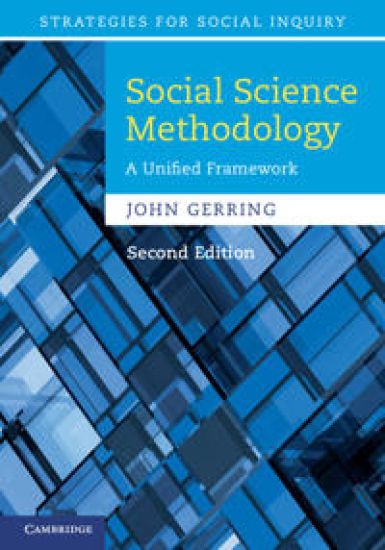
Social Science Methodology

Social Science Methodology

John Gerring

Cambridge University Press
2011
sidottu
John Gerring's exceptional textbook has been thoroughly revised in this second edition. It offers a one-volume introduction to social science methodology relevant to the disciplines of anthropology, economics, history, political science, psychology and sociology. This new edition has been extensively developed with the introduction of new material and a thorough treatment of essential elements such as conceptualization, measurement, causality and research design. It is written for students, long-time practitioners and methodologists and covers both qualitative and quantitative methods. It synthesizes the vast and diverse field of methodology in a way that is clear, concise and comprehensive. While offering a handy overview of the subject, the book is also an argument about how we should conceptualize methodological problems. Thinking about methodology through this lens provides a new framework for understanding work in the social sciences.
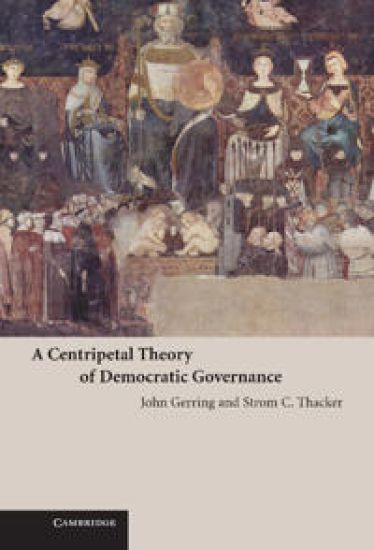
A Centripetal Theory of Democratic Governance

A Centripetal Theory of Democratic Governance

John Gerring; Strom C. Thacker

Cambridge University Press
2008
sidottu
This book outlines the importance of political institutions in achieving good governance within a democratic polity and sets forth an argument to explore what sorts of institutions do the job best. By focusing on 'centripetal institutions', which maximize both representation and authority by bringing political energy and actors toward the centre of a polity, the authors set forth a relatively novel theory of democratic governance, applicable to all political settings in which multi-party competition obtains. Basing their theory on national-level political institutions, the authors argue that there are three types of political institutions that are fundamental in securing a centripetal style of democratic governance: unitary (rather than federal) sovereignty, a parliamentary (rather than presidential) executive, and a closed-list PR electoral system (rather than a single-member district or preferential-vote system).
A Centripetal Theory of Democratic Governance

A Centripetal Theory of Democratic Governance

John Gerring; Strom C. Thacker

Cambridge University Press
2008
pokkari
This book outlines the importance of political institutions in achieving good governance within a democratic polity and sets forth an argument to explore what sorts of institutions do the job best. By focusing on 'centripetal institutions', which maximize both representation and authority by bringing political energy and actors toward the centre of a polity, the authors set forth a relatively novel theory of democratic governance, applicable to all political settings in which multi-party competition obtains. Basing their theory on national-level political institutions, the authors argue that there are three types of political institutions that are fundamental in securing a centripetal style of democratic governance: unitary (rather than federal) sovereignty, a parliamentary (rather than presidential) executive, and a closed-list PR electoral system (rather than a single-member district or preferential-vote system).
Party Ideologies in America, 1828–1996

Party Ideologies in America, 1828–1996

John Gerring

Cambridge University Press
2001
pokkari
This book, first published in 1998, challenges traditional notions of American party politics and political culture. Usually, American politics is looked upon as relatively consensual and nonideological. Professor Gerring argues, instead, that the major parties have articulated views that were coherent, differentiated, and stable. American party history, and by extension American political history at-large, has been irreducibly ideological. The argument rests on evidence provided by election rhetoric - speeches, party platforms, and other campaign tracts disseminated by party leaders during presidential campaigns. With these texts Professor Gerring traces the values, beliefs, and issue-positions which have defined party life from the 1830s to the 1990s. Party Ideologies in America, 1828–1996 thus presents an historical synthesis of mainstream party politics from the birth of competitive parties to the present.