Kirjojen hintavertailu – 12 903 735 kirjaa ja 27 kauppaa
Kirjailija
John Graves
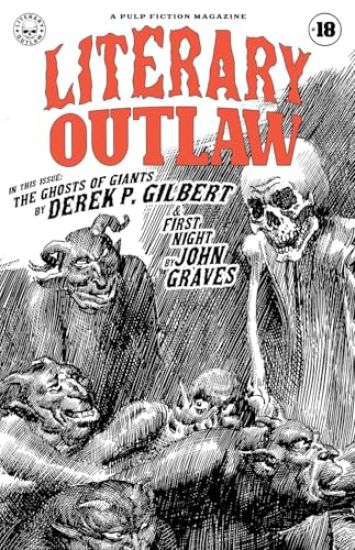
Kirjat ja teokset yhdessä paikassa: 18 kirjaa, julkaisuja vuosilta 1988–2025, suosituimpiin kuuluu Literary Outlaw #18. Vertaile teosten hintoja ja tarkista saatavuus suomalaisista kirjakaupoista.
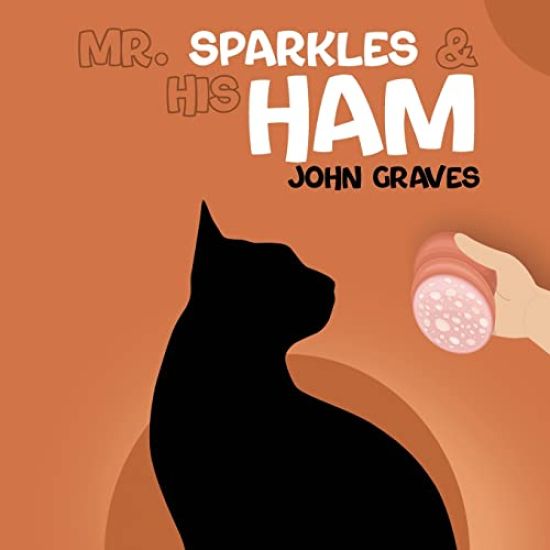
Mr. Sparkles is a real cat, and this is the story of how he came to live with his real-life family. He came to us as a thin, scared cat that hid under our barn and has turned into a purring, lovey housecat that is a true part of our family. We love you, Mr. Sparkles
Her foreboding eyes hide the horrid truth. She will destroy humanity unless a self-absorbed CRSPR scientist, her brilliant daughter, a sadistic interrogator or Mantis - her nemesis - can kill Tracker first. Who will survive? Will You?
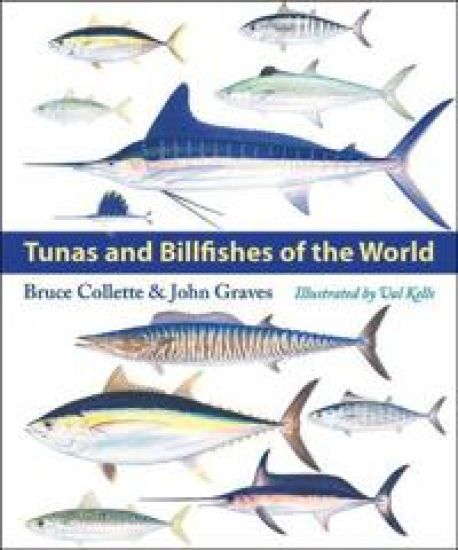
The definitive resource on tunas and billfishes from the world's top authorities. Tunas and billfishes are peak predators of the oceans. Admired by scientists and naturalists for their speed, grace, unique physiology, and diversity, they are important both ecologically and socioeconomically. Vital sources of food and income for many maritime nations, whose fleets of vessels target them with huge purse seines or miles-long lines, these exhilarating fishes are also highly desired and avidly sought by big game fishers across the globe. In Tunas and Billfishes of the World, Bruce Collette, a leading marine ichthyologist and conservationist, and John Graves, an expert on the biology, fisheries, and management of tunas and billfishes, focus on three families of fishes: Scombridae, the mackerels and tunas; Istiophoridae, sailfish and marlins; and Xiphiidae, the Swordfish. Over the course of 61 in-depth species accounts, Collette and Graves• describe what each species looks like and where it lives• include detailed summaries of the fishes' biology—size, food, habitat, reproduction, and early life history• offer current information about fisheries interests and conservation status• provide up-to-date evaluations of the threat status for each speciesAccompanied by full-color, scientifically accurate illustrations by renowned illustrator Val Kells, along with range maps for each species, this spectacular volume is the essential book on these majestic inhabitants of the sea. Destined to quickly become the standard reference for scientists, students, and naturalists, Tunas and Billfishes of the World will also be prized by all fishers who pursue these species.
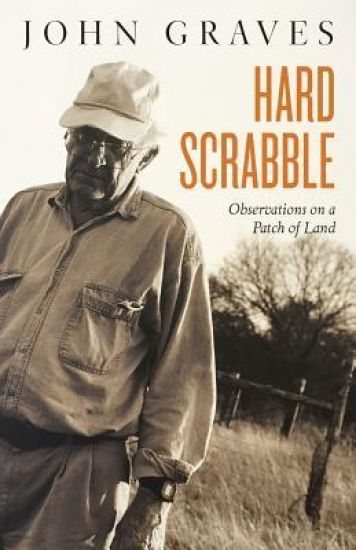
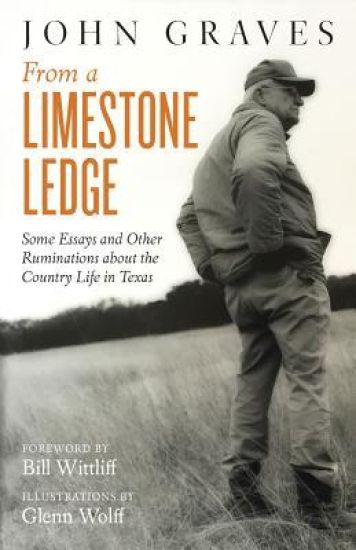
“A kind of homemade book-imperfect like a handmade thing, a prize. It’s a galloping, spontaneous book, on occasion within whooping distance of that greatest and sweetest of country books, Ivan Turgenev’s A Sportsman’s Notebook.” -Edward Hoagland, New York Times Book Review“His subjects are trees and brush, hired help, fences, soil, armadillos and other wildlife, flood and drought, local history, sheep and goats . . . and they come to us reshaped and reenlivened by his agreeably individual (and sometimes cranky) notions.” -New Yorker“If Goodbye to a River was in some sense Graves’s Odyssey, this book is his [version of Hesiod’s] Works and Days. It is partly a book about work, partly a book about nature, but mostly a book about belonging. In the end John Graves has learned to belong to his patch of land so thoroughly that at moments he can sense in himself a unity with medieval peasants and Sumerian farmers, working with their fields by the Tigris.” -Larry McMurtry, Washington Post Book World“Hard Scrabble is hard pastoral of the kind we have learned to recognize in Wordsworth, Frost, Hemingway, and Faulkner. It celebrates life in accommodation with a piece of the ‘given’ creation, a recalcitrant four hundred or so acres of Texas cedar brake, old field, and creek bottom, which will require of any genuine resident all the character he can muster.” -Southwest Review
“Another fine, reflective, anecdotal look at rural Texas.” -New Yorker“Graves writes eloquently about a countryman’s concerns. There's not a false note in the book.” -Boston Globe“Like the unmortared stone fences of Graves’s native hill country, From a Limestone Ledge is constructed of bits and pieces never designed to fit together, yet made to achieve a unity that is more enduring than the sum of its individual parts by the hands of a master craftsman.” -Southwestern Historical Quarterly“The beauty of his work endures, and there is a greater pride in Texans’ hearts for their home, I think, than there would be if he hadn’t written the books he did.” -Rick Bass, Garden & Gun“In describing the particulars of his surroundings, Graves often was describing the world in microcosm and the place and plight of humankind in it.” -Bryan Woolley, Dallas Morning News
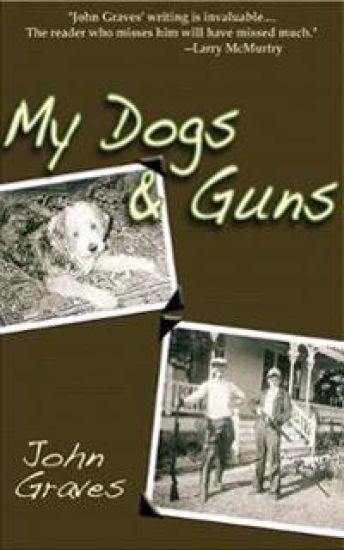
"Blue and Some Other Dogs" is a brilliant memoir about Graves' Basque-Australian sheep dog. "Guns of a Lifetime" tells the stories related to the guns this octogenarian Texan has owned, beginning with a "rusted and cylinderless" revolver. "So here are the stories," Graves writes. "They are not all ?nice’ tales in contemporary terms. Political correctness, as presently defined, may be perpetrated here and there, though I hope no parts will seem like the maunderings of a Deep South redneck. But if they do, the hell with it. I am too old to fret about such matters." It’s delightful writing from a treasure of a writer.
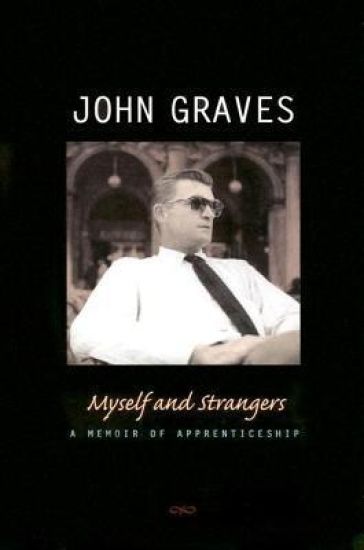
In Myself and Strangers, John Graves, the highly regarded author of Goodbye to a River and other classic works, recalls the decade-long apprenticeship in which he found his voice as a writer. He recounts his wanderings from Texas to Mexico, New York, and Spain, where, like Hemingway, he hoped to find the material with which to write books that mattered. With characteristic honesty, Graves admits the false starts and dead ends that dogged much of his writing, along with the exhilaration he felt when the words finally flowed. He frankly describes both the pleasures and the restlessness of expatriate life in Europe after World War II-as well as his surprising discovery, when family obligations eventually called him home to Texas, that the years away had prepared him to embrace his native land as the fit subject matter for his writing. For anyone seeking the springs that fed John Graves' best-loved books, this memoir of apprenticeship will be genuinely rewarding.
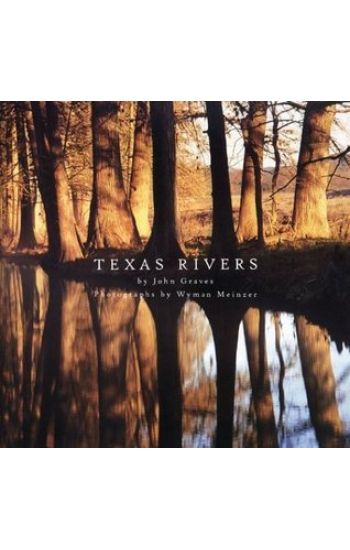
In Goodbye to a River, John Graves defined what it means to know a river-as a real place, as a landscape of memory and imagination, and as "a piece of country, [that] hunted and fished and roamed over, felt and remembered, can be company enough." Readers who've taken the canoe trip down the Brazos with him have long wished to travel other rivers with John Graves. Those journeys now begin in Texas Rivers. This book marries the work of two Texas legends. John Graves brings to Texas Rivers his ability to weave history, geography, and culture into a vibrant portrait of a land and its people. Through photographs of rare beauty, Wyman Meinzer reveals the rivers as few will ever see them in person, distilling decades of experience in capturing light on film into a tour de force presentation of Texas landscapes. In essays on the Canadian, Pecos, Llano, Clear Fork of the Brazos, Neches, and Sabinal rivers, Graves captures the essence of what makes each river unique. While the Canadian is a river of the plains that runs through big ranch country, the Neches is a forest stream heavily impacted by human encroachment. The Llano and the Sabinal remain largely unspoiled, though the forces of change ebb and flow about them. The Pecos shows ripples of its Old West heritage, while the Clear Fork of the Brazos flows through country still living in those times. Meinzer's photographs offer a stunning visual counterpoint to Graves's word portraits, and, together, they show clearly that rivers have been central to the development of the unique character of Texas.
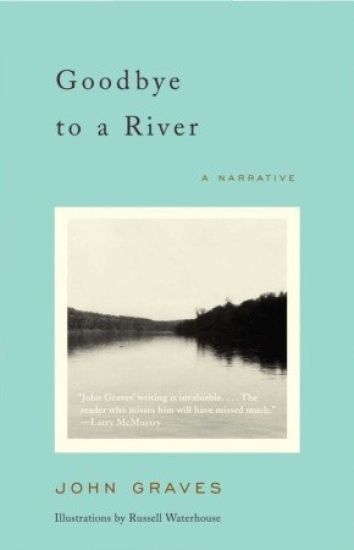
In the 1950s, a series of dams was proposed along the Brazos River in north-central Texas. For John Graves, this project meant that if the stream's regimen was thus changed, the beautiful and sometimes brutal surrounding countryside would also change, as would the lives of the people whose rugged ancestors had eked out an existence there. Graves therefore decided to visit that stretch of the river, which he had known intimately as a youth. Goodbye to a River is his account of that farewell canoe voyage. As he braves rapids and fatigue and the fickle autumn weather, he muses upon old blood feuds of the region and violent skirmishes with native tribes, and retells wild stories of courage and cowardice and deceit that shaped both the river's people and the land during frontier times and later. Nearly half a century after its initial publication, Goodbye to a River is a true American classic, a vivid narrative about an exciting journey and a powerful tribute to a vanishing way of life and its ever-changing natural environment.
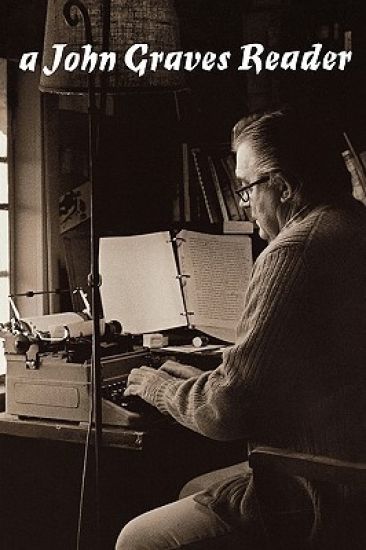
Since the publication of his haunting, elegiac Goodbye to a River in 1960, John Graves has become one of Texas' most beloved writers, whose circle of loyal readers extends far beyond the borders of his home state. A "regional" writer only by virtue of his gift for vividly evoking the spirit of the land and its people, Mr. Graves is also admired for the unerring craftsmanship of his prose. Now the University of Texas Press takes great pleasure in publishing A John Graves Reader to introduce his writing to a new generation of readers. This anthology contains selections from Goodbye to a River and his two other major books, Hard Scrabble (1974) and From a Limestone Ledge (1980). It also includes short stories and essays, some of which have never been published before and others that Mr. Graves has reworked especially for this book. All of the pieces in this anthology were chosen by Mr. Graves himself to be, in his words, "representative of my writing, for better or worse." They reflect various stages of his life and writing career-youth in Texas, World War II, sojourns in New York, Mexico, and Europe during the 1940s and 1950s, and his final return to Texas as home and as subject matter-as well as recurring themes in his writing, from the land and the people to fishing, traveling, and the enduring friendships that have enriched his life. For those who have never read John Graves, this anthology will be the perfect introduction to the range and excellence of his work. At the same time, those who have read him faithfully for many years will find new pieces to enjoy, as well as old favorites to savor once again.
A thoroughly researched and extensively documented look at race relations in Arkansas druing the forty years after the Civil War, Town and Country focuses on the gradual adjustment of black and white Arkansans to the new status of the freedman, in both society and law, after generations of practicing the racial etiquette of slavery. John Graves examines the influences of the established agrarian culture on the developing racial practices of the urban centers, where many blacks living in the towns were able to gain prominence as doctors, lawyers, successful entrepreneurs, and political leaders. Despite the tension, conflict, and disputes within and between the voice of the government and the voice of the people in an arduous journey toward compromise, Arkansas was one of the most progressive states during Reconstruction in desegregating its people. Town and Country makes a significant contribution to the history of the postwar South and its complex engagement with the race issue.