Kirjojen hintavertailu – 12 859 828 kirjaa ja 27 kauppaa

Kirjailija

John Grin

Kirjat ja teokset yhdessä paikassa: 6 kirjaa, julkaisuja vuosilta 2010–2020, suosituimpiin kuuluu Well-being, Sustainability and Social Development. Vertaile teosten hintoja ja tarkista saatavuus suomalaisista kirjakaupoista.

6 kirjaa

Kirjojen julkaisuvuodet: 2010–2020.

Well-being, Sustainability and Social Development

Well-being, Sustainability and Social Development

John Grin; Jan-Pieter Smits; Frank Veraart

Saint Philip Street Press
2020
sidottu
This open access book examines more than two centuries of societal development using novel historical and statistical approaches. It applies the well-being monitor developed by Statistics Netherlands that has been endorsed by a significant part of the international, statistical community. It features The Netherlands as a case study, which is an especially interesting example; although it was one of the world's richest countries around 1850, extreme poverty and inequality were significant problems of well-being at the time. Monitors of 1850, 1910, 1970 and 2015 depict the changes in three dimensions of well-being: the quality of life 'here and now', 'later' and 'elsewhere'. The analysis of two centuries shows the solutions to the extreme poverty problem and the appearance of new sustainability problems, especially in domestic and foreign ecological systems. The study also reveals the importance of natural capital: soil, air, water and subsoil resources, showing their relation with the social structure of the 'here and now . Treatment and trade of natural resources also impacted on the quality of life 'later' and 'elsewhere.' Further, the book illustrates the role of natural capital by dividing the capital into three types of raw materials and concomitant material flows: bio-raw materials, mineral and fossil subsoil resources. Additionally, the analysis of the institutional context identifies the key roles of social groups in well-being development. The book ends with an assessment of the solutions and barriers offered by the historical anchoring of the well-being and sustainability issues. This unique analysis of well-being and sustainability and its institutional analysis appeals to historians, statisticians and policy makers.; Examines over two centuries of societal development using a novel historical and statistical analysis Features The Netherlands as a case study -- a once rich country currently experiencing high levels of extreme poverty Shows that the way a society deals with natural capital shapes social structure and also has a great impact on quality of life This work was published by Saint Philip Street Press pursuant to a Creative Commons license permitting commercial use. All rights not granted by the work's license are retained by the author or authors.
Well-being, Sustainability and Social Development

Well-being, Sustainability and Social Development

John Grin; Jan-Pieter Smits; Frank Veraart

Saint Philip Street Press
2020
pokkari
This open access book examines more than two centuries of societal development using novel historical and statistical approaches. It applies the well-being monitor developed by Statistics Netherlands that has been endorsed by a significant part of the international, statistical community. It features The Netherlands as a case study, which is an especially interesting example; although it was one of the world's richest countries around 1850, extreme poverty and inequality were significant problems of well-being at the time. Monitors of 1850, 1910, 1970 and 2015 depict the changes in three dimensions of well-being: the quality of life 'here and now', 'later' and 'elsewhere'. The analysis of two centuries shows the solutions to the extreme poverty problem and the appearance of new sustainability problems, especially in domestic and foreign ecological systems. The study also reveals the importance of natural capital: soil, air, water and subsoil resources, showing their relation with the social structure of the 'here and now . Treatment and trade of natural resources also impacted on the quality of life 'later' and 'elsewhere.' Further, the book illustrates the role of natural capital by dividing the capital into three types of raw materials and concomitant material flows: bio-raw materials, mineral and fossil subsoil resources. Additionally, the analysis of the institutional context identifies the key roles of social groups in well-being development. The book ends with an assessment of the solutions and barriers offered by the historical anchoring of the well-being and sustainability issues. This unique analysis of well-being and sustainability and its institutional analysis appeals to historians, statisticians and policy makers.; Examines over two centuries of societal development using a novel historical and statistical analysis Features The Netherlands as a case study -- a once rich country currently experiencing high levels of extreme poverty Shows that the way a society deals with natural capital shapes social structure and also has a great impact on quality of life This work was published by Saint Philip Street Press pursuant to a Creative Commons license permitting commercial use. All rights not granted by the work's license are retained by the author or authors.
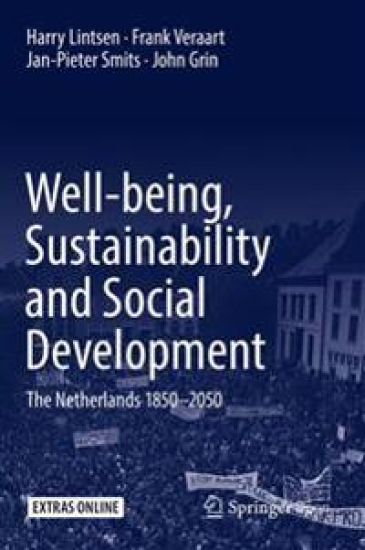
Well-being, Sustainability and Social Development

Well-being, Sustainability and Social Development

Harry Lintsen; Frank Veraart; Jan-Pieter Smits; John Grin

Springer Nature Switzerland AG
2018
nidottu
This open access book examines more than two centuries of societal development using novel historical and statistical approaches. It applies the well-being monitor developed by Statistics Netherlands that has been endorsed by a significant part of the international, statistical community. It features The Netherlands as a case study, which is an especially interesting example; although it was one of the world’s richest countries around 1850, extreme poverty and inequality were significant problems of well-being at the time. Monitors of 1850, 1910, 1970 and 2015 depict the changes in three dimensions of well-being: the quality of life 'here and now', 'later' and 'elsewhere'. The analysis of two centuries shows the solutions to the extreme poverty problem and the appearance of new sustainability problems, especially in domestic and foreign ecological systems. The study also reveals the importance of natural capital: soil, air, water and subsoil resources, showing their relation with the social structure of the ‘here and now´. Treatment and trade of natural resources also impacted on the quality of life ‘later’ and ‘elsewhere.’ Further, the book illustrates the role of natural capital by dividing the capital into three types of raw materials and concomitant material flows: bio-raw materials, mineral and fossil subsoil resources. Additionally, the analysis of the institutional context identifies the key roles of social groups in well-being development. The book ends with an assessment of the solutions and barriers offered by the historical anchoring of the well-being and sustainability issues. This unique analysis of well-being and sustainability and its institutional analysis appeals to historians, statisticians and policy makers.
Well-being, Sustainability and Social Development

Well-being, Sustainability and Social Development

Harry Lintsen; Frank Veraart; Jan-Pieter Smits; John Grin

Springer International Publishing AG
2018
sidottu
This open access book examines more than two centuries of societal development using novel historical and statistical approaches. It applies the well-being monitor developed by Statistics Netherlands that has been endorsed by a significant part of the international, statistical community. It features The Netherlands as a case study, which is an especially interesting example; although it was one of the world’s richest countries around 1850, extreme poverty and inequality were significant problems of well-being at the time. Monitors of 1850, 1910, 1970 and 2015 depict the changes in three dimensions of well-being: the quality of life 'here and now', 'later' and 'elsewhere'. The analysis of two centuries shows the solutions to the extreme poverty problem and the appearance of new sustainability problems, especially in domestic and foreign ecological systems. The study also reveals the importance of natural capital: soil, air, water and subsoil resources, showing their relation with the social structure of the ‘here and now´. Treatment and trade of natural resources also impacted on the quality of life ‘later’ and ‘elsewhere.’ Further, the book illustrates the role of natural capital by dividing the capital into three types of raw materials and concomitant material flows: bio-raw materials, mineral and fossil subsoil resources. Additionally, the analysis of the institutional context identifies the key roles of social groups in well-being development. The book ends with an assessment of the solutions and barriers offered by the historical anchoring of the well-being and sustainability issues. This unique analysis of well-being and sustainability and its institutional analysis appeals to historians, statisticians and policy makers.
Transitions to Sustainable Development

Transitions to Sustainable Development

John Grin; Jan Rotmans; Johan Schot

Routledge
2011
nidottu
Over the past few decades, there has been a growing concern about the social and environmental risks which have come along with the progress achieved through a variety of mutually intertwined modernization processes. In recent years these concerns are transformed into a widely-shared sense of urgency, partly due to events such as the various pandemics threatening livestock, and increasing awareness of the risks and realities of climate change, and the energy and food crises. This sense of urgency includes an awareness that our entire social system is in need of fundamental transformation. But like the earlier transition between the 1750's and 1890's from a pre-modern to a modern industrial society, this second transition is also a contested one. Sustainable development is only one of many options. This book addresses the issue on how to understand the dynamics and governance of the second transition dynamics in order to ensure sustainable development. It will be necessary reading for students and scholars with an interest in sustainable development and long-term transformative change.
Transitions to Sustainable Development

Transitions to Sustainable Development

John Grin; Jan Rotmans; Johan Schot

Routledge
2010
sidottu
Over the past few decades, there has been a growing concern about the social and environmental risks which have come along with the progress achieved through a variety of mutually intertwined modernization processes. In recent years these concerns are transformed into a widely-shared sense of urgency, partly due to events such as the various pandemics threatening livestock, and increasing awareness of the risks and realities of climate change, and the energy and food crises. This sense of urgency includes an awareness that our entire social system is in need of fundamental transformation. But like the earlier transition between the 1750's and 1890's from a pre-modern to a modern industrial society, this second transition is also a contested one. Sustainable development is only one of many options. This book addresses the issue on how to understand the dynamics and governance of the second transition dynamics in order to ensure sustainable development. It will be necessary reading for students and scholars with an interest in sustainable development and long-term transformative change.