Kirjojen hintavertailu – 12 859 828 kirjaa ja 27 kauppaa

Kirjailija

John H. Aldrich

Kirjat ja teokset yhdessä paikassa: 13 kirjaa, julkaisuja vuosilta 2007–2025, suosituimpiin kuuluu Change and Continuity in the 2020 and 2022 Elections. Vertaile teosten hintoja ja tarkista saatavuus suomalaisista kirjakaupoista.

Nimi esiintyy myös muodoissa: John H Aldrich

13 kirjaa

Kirjojen julkaisuvuodet: 2007–2025.

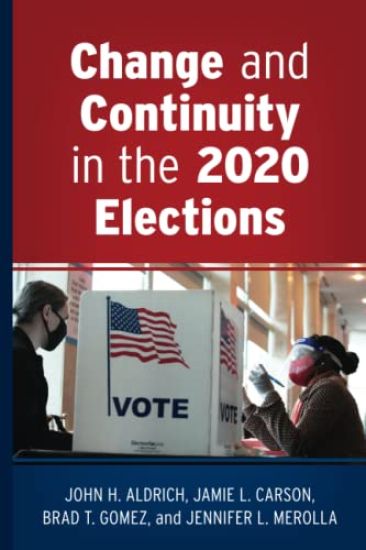
Change and Continuity in the 2020 and 2022 Elections

Change and Continuity in the 2020 and 2022 Elections

John H. Aldrich; Jamie L. Carson; Brad T. Gomez; Jennifer L. Merolla

BLOOMSBURY PUBLISHING PLC
2023
sidottu
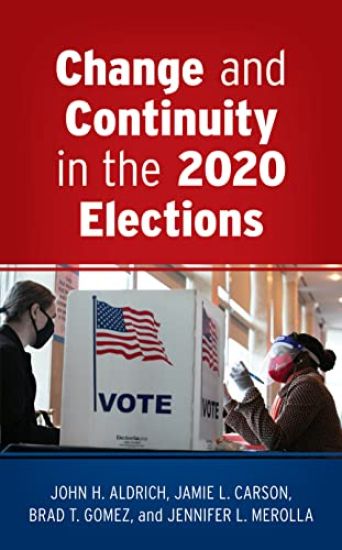
Is America in the midst of an electoral transformation? What were the sources of Joseph Biden’s victory in 2020, and how do they differ from Republican and Democratic coalitions of the past? Does the Democratic victory signal a long-term decline for Republicans’ chances in presidential elections? Change and Continuity in the 2020 and 2022 Elections explores those questions by analyzing and explaining the voting behavior in the most recent elections, as well as setting the results in the context of larger trends and patterns in elections studies. This top-notch author team meticulously explains the latest National Election Studies data and discuss its importance and impact. Readers will critically analyze a variety of variables such as the presidential and congressional elections, voter turnout, and the social forces, party loyalties, and prominent issues that affect voting behavior. Readers will come away with a better understanding of the 2020 and 2022 elections and what the results mean for the future of American politics.

Change and Continuity in the 2020 and 2022 Elections

Change and Continuity in the 2020 and 2022 Elections

John H. Aldrich; Jamie L. Carson; Brad T. Gomez; Jennifer L. Merolla

BLOOMSBURY PUBLISHING PLC
2023
nidottu
Is America in the midst of an electoral transformation? What were the sources of Joseph Biden’s victory in 2020, and how do they differ from Republican and Democratic coalitions of the past? Does the Democratic victory signal a long-term decline for Republicans’ chances in presidential elections? Change and Continuity in the 2020 and 2022 Elections explores those questions by analyzing and explaining the voting behavior in the most recent elections, as well as setting the results in the context of larger trends and patterns in elections studies. This top-notch author team meticulously explains the latest National Election Studies data and discuss its importance and impact. Readers will critically analyze a variety of variables such as the presidential and congressional elections, voter turnout, and the social forces, party loyalties, and prominent issues that affect voting behavior. Readers will come away with a better understanding of the 2020 and 2022 elections and what the results mean for the future of American politics.
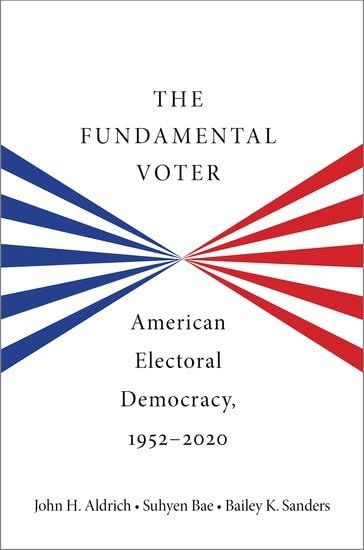
The Fundamental Voter

The Fundamental Voter

John H. Aldrich; Suhyen Bae; Bailey K. Sanders

OXFORD UNIVERSITY PRESS INC
2025
nidottu
Why is American politics so intense and emotionally competitive today, and how did we get here? In The Fundamental Voter, John H. Aldrich, Suhyen Bae, and Bailey K. Sanders explain why the notion that we are divided into tribal loyalties is, at best, only partially correct, and discuss how the divisions rest on much more substantive politics than they once did. In the 1950s and 1960s, the American public based voting primarily on partisan loyalties. Landslide presidential elections were once common, but over the last forty years, they have converged to very closely contested elections. Congressional elections were increasingly incumbent centered before 1984 and decreasingly so afterward. These changes reflect the changing nature of fundamental forces that shape the public's electoral opinions and voting behavior. From a single such fundamental, partisan identification, the electorate now rests on five fundamental forces: party, ideology, issues, race, and economics. Since the 1980s, these fundamentals have grown increasingly important and increasingly aligned, such that voters are now sorted into two increasingly bitterly divided sides. Believing that the other side is on the wrong side of nearly everything of political relevance, voters, like officials, have come to deeply dislike the opposition, a state of affairs that threatens to undermine the stability of democratic institutions in the United States.
The Fundamental Voter

The Fundamental Voter

John H. Aldrich; Suhyen Bae; Bailey K. Sanders

OXFORD UNIVERSITY PRESS INC
2024
sidottu
Why is American politics so intense and emotionally competitive today, and how did we get here? In The Fundamental Voter, John H. Aldrich, Suhyen Bae, and Bailey K. Sanders explain why the notion that we are divided into tribal loyalties is, at best, only partially correct, and discuss how the divisions rest on much more substantive politics than they once did. In the 1950s and 1960s, the American public based voting primarily on partisan loyalties. Landslide presidential elections were once common, but over the last forty years, they have converged to very closely contested elections. Congressional elections were increasingly incumbent centered before 1984 and decreasingly so afterward. These changes reflect the changing nature of fundamental forces that shape the public's electoral opinions and voting behavior. From a single such fundamental, partisan identification, the electorate now rests on five fundamental forces: party, ideology, issues, race, and economics. Since the 1980s, these fundamentals have grown increasingly important and increasingly aligned, such that voters are now sorted into two increasingly bitterly divided sides. Believing that the other side is on the wrong side of nearly everything of political relevance, voters, like officials, have come to deeply dislike the opposition, a state of affairs that threatens to undermine the stability of democratic institutions in the United States.
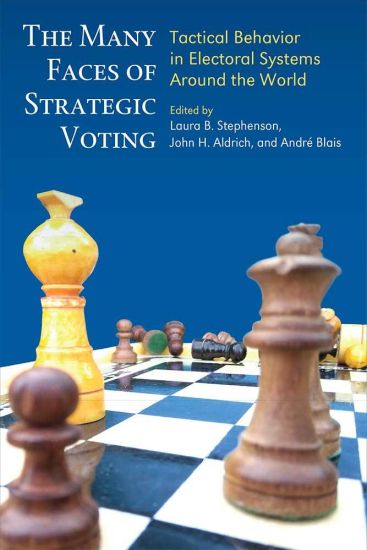
The Many Faces of Strategic Voting

The Many Faces of Strategic Voting

John H Aldrich; André Blais; Laura B. Stephenson

The University of Michigan Press
2018
sidottu
Voters do not always choose their preferred candidate on election day. Often they cast their ballots to prevent a particular outcome, as when their own preferred candidate has no hope of winning and they want to prevent another, undesirable candidate’s victory; or, they vote to promote a single-party majority in parliamentary systems, when their own candidate is from a party that has no hope of winning. In their thought-provoking book The Many Faces of Strategic Voting, Laura B. Stephenson, John H. Aldrich, and André Blais first provide a conceptual framework for understanding why people vote strategically, and what the differences are between sincere and strategic voting behaviors. Expert contributors then explore the many facets of strategic voting through case studies in Great Britain, Spain, Canada, Japan, Belgium, Germany, Switzerland, and the European Union.
Why Parties Matter

Why Parties Matter

John H. Aldrich; John D. Griffin

University of Chicago Press
2018
nidottu
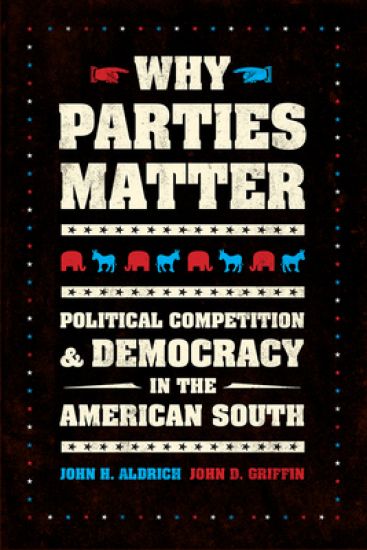
Since the founding of the American Republic, the North and South have followed remarkably different paths of political development. Among the factors that have led to their divergence throughout much of history are differences in the levels of competition among the political parties. While the North has generally enjoyed a well-defined two-party system, the South has tended to have only weakly developed political parties and at times no system of parties to speak of. With Why Parties Matter, John H. Aldrich and John D. Griffin make a compelling case that competition between political parties is an essential component of a democracy that is responsive to its citizens and thus able to address their concerns. Tracing the history of the parties through four eras the Democratic-Whig party era that preceded the Civil War; the post-Reconstruction period; the Jim Crow era, when competition between the parties virtually disappeared; and the modern era Aldrich and Griffin show how and when competition emerged between the parties and the conditions under which it succeeded and failed. In the modern era, as party competition in the South has come to be widely regarded as matching that of the North, the authors conclude by exploring the question of whether the South is poised to become a one-party system once again with the Republican party now dominant.
Why Parties Matter

Why Parties Matter

John H. Aldrich; John D. Griffin

University of Chicago Press
2018
sidottu
Since the founding of the American Republic, the North and South have followed remarkably different paths of political development. Among the factors that have led to their divergence throughout much of history are differences in the levels of competition among the political parties. While the North has generally enjoyed a well-defined two-party system, the South has tended to have only weakly developed political parties and at times no system of parties to speak of. With Why Parties Matter, John H. Aldrich and John D. Griffin make a compelling case that competition between political parties is an essential component of a democracy that is responsive to its citizens and thus able to address their concerns. Tracing the history of the parties through four eras the Democratic-Whig party era that preceded the Civil War; the post-Reconstruction period; the Jim Crow era, when competition between the parties virtually disappeared; and the modern era Aldrich and Griffin show how and when competition emerged between the parties and the conditions under which it succeeded and failed. In the modern era, as party competition in the South has come to be widely regarded as matching that of the North, the authors conclude by exploring the question of whether the South is poised to become a one-party system once again with the Republican party now dominant.
Before the Convention

Before the Convention

John H. Aldrich

University of Chicago Press
2012
nidottu
Campaigns to win the Democratic and Republican presidential nominations are now longer, more complex, and more confusing to the observer than ever before. The maze of delegate-selection procedures includes state-run primaries and caucuses, while federal election laws govern campaign financing. In "Before the Convention", political scientist John H. Aldrich presents a systematic analysis of presidential nomination politics, based on application of rational-choice models to candidate behavior. Aldrich views the candidates as decision makers with limited resources in a highly competitive environment. From this perspective, he seeks to determine why and how candidates choose to run, why some succeed and others fail, and what consequences the nomination process has for the general election and, later, for the president in office. Now back in print, "Before the Convention" fills a significant gap in the literature on presidential politics and should be of particular importance to specialists in this area. It will be of interest also to everyone who is concerned with understanding the rules of the game for a complicated but vitally important exercise of American democracy.
Why Parties?

Why Parties?

John H. Aldrich

University of Chicago Press
2011
nidottu
Since its first appearance fifteen years ago, "Why Parties?" has been essential reading for anyone wishing to understand the nature of American political parties, but in the interim, the party system has undergone some radical changes. In this landmark book, now rewritten for the new millennium, John H. Aldrich goes beyond the clamor of arguments over whether American political parties are in resurgence or decline and undertakes a wholesale reexamination of the foundations of the American party system. Surveying critical episodes in the development of American political parties - from their formation in the 1790s to the Civil War - Aldrich shows how they address three fundamental problems of democracy: how to regulate the number of people seeking public office, how to mobilize voters, and how to achieve and maintain the majorities needed to accomplish goals once in office. Aldrich brings this innovative account up to the present by looking at the profound changes in the character of political parties since World War II, especially in light of ongoing contemporary transformations, including the rise of the Republican Party in the South, and what those changes accomplish, such as the Affordable Care Act. Finally, "Why Parties?" offers a fuller consideration of party systems in general, especially the two-party system in the United States, and explains why it is necessary for effective democracy.
Positive Changes in Political Science

Positive Changes in Political Science

John H Aldrich; James E. Alt; Skip Lupia

The University of Michigan Press
2007
sidottu
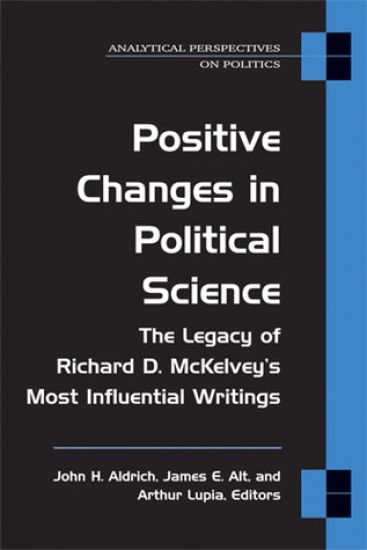
Richard D. McKelvey was a pioneer in the use of mathematical modeling for understanding the nature of political choices. Positive Changes in Political Science brings together his most important articles, accompanied by original essays from contemporary political scientists, some his colleagues or students, who reflect upon his contributions, their continuing relevance today, and how they are still shaping research for the future." Richard McKelvey's fundamental contributions to the foundations of political choice and to model-based empirical research are brought together in this volume. Their value is greatly enhanced by the perspectives provided by outstanding scholars."---Kenneth J. Arrow, Stanford University"If there were a Nobel Prize in Political Science, the late Richard McKelvey's name would have been high on the short list. This outstanding book shows why, by presenting McKelvey's original work on seven major contributions to the discipline, along with interpretive essays by numerous major scholars. This book is the essential McKelvey."---William R. Keech, Professor Emeritus of Political Economy, Carnegie Mellon University"Richard McKelvey made brilliant contributions to political science. This volume collects some of his most important papers and includes perspectives and comments on his work by noted scholars. It is a valuable resource for students and researchers."---Thomas Romer, Professor of Politics and Public Affairs, Princeton University"This excellent collection of essays, conjoined with reprinted papers by McKelvey, documents the continuing influence of one of the seminal forces in modern political science. High-quality commentaries on some of the most important published papers in political science highlight both McKelvey's empirical and theoretical contributions, and argue that McKelvey did indeed provide the building blocks for the research agendas being pursued today."---Gary Miller, Professor of Political Science, Washington University in St. LouisJohn H. Aldrich is Pfizer-Pratt University Professor of Political Science at Duke University. Visit the author's website at: www.duke.edu/~aldrich/. James E. Alt is Frank G. Thomson Professor of Government at Harvard University. Visit the author's website at: www.gov.harvard.edu/faculty/jalt/. Arthur Lupia is Varian Collegiate Professor of Political Science at the University of Michigan, Research Professor at the Institute for Social Research, and Principal Investigator of the American National Election Studies. Visit the author's website at: www.umich.edu/~lupia.
Positive Changes in Political Science

Positive Changes in Political Science

John H Aldrich; James E. Alt; Skip Lupia

The University of Michigan Press
2007
nidottu
Richard D. McKelvey was a pioneer in the use of mathematical modeling for understanding the nature of political choices. Positive Changes in Political Science brings together his most important articles, accompanied by original essays from contemporary political scientists, some his colleagues or students, who reflect upon his contributions, their continuing relevance today, and how they are still shaping research for the future." Richard McKelvey's fundamental contributions to the foundations of political choice and to model-based empirical research are brought together in this volume. Their value is greatly enhanced by the perspectives provided by outstanding scholars."---Kenneth J. Arrow, Stanford University"If there were a Nobel Prize in Political Science, the late Richard McKelvey's name would have been high on the short list. This outstanding book shows why, by presenting McKelvey's original work on seven major contributions to the discipline, along with interpretive essays by numerous major scholars. This book is the essential McKelvey."---William R. Keech, Professor Emeritus of Political Economy, Carnegie Mellon University"Richard McKelvey made brilliant contributions to political science. This volume collects some of his most important papers and includes perspectives and comments on his work by noted scholars. It is a valuable resource for students and researchers."---Thomas Romer, Professor of Politics and Public Affairs, Princeton University"This excellent collection of essays, conjoined with reprinted papers by McKelvey, documents the continuing influence of one of the seminal forces in modern political science. High-quality commentaries on some of the most important published papers in political science highlight both McKelvey's empirical and theoretical contributions, and argue that McKelvey did indeed provide the building blocks for the research agendas being pursued today."---Gary Miller, Professor of Political Science, Washington University in St. LouisJohn H. Aldrich is Pfizer-Pratt University Professor of Political Science at Duke University. Visit the author's website at: www.duke.edu/~aldrich/. James E. Alt is Frank G. Thomson Professor of Government at Harvard University. Visit the author's website at: www.gov.harvard.edu/faculty/jalt/. Arthur Lupia is Varian Collegiate Professor of Political Science at the University of Michigan, Research Professor at the Institute for Social Research, and Principal Investigator of the American National Election Studies. Visit the author's website at: www.umich.edu/~lupia.