
Kirjojen hintavertailu – 12 903 725 kirjaa ja 27 kauppaa

Kirjailija

John H. Eastby

Kirjat ja teokset yhdessä paikassa: 2 kirjaa, julkaisuja vuodelta 2004, suosituimpiin kuuluu The Deconstitutionalization of America. Vertaile teosten hintoja ja tarkista saatavuus suomalaisista kirjakaupoista.

2 kirjaa

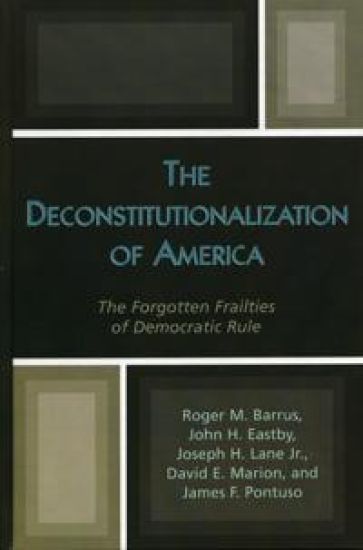
The Deconstitutionalization of America

The Deconstitutionalization of America

Roger M. Barrus; John H. Eastby; Joseph H. Lane; David E. Marion; James F. Pontuso

Lexington Books
2004
sidottu
In The Deconstitutionalization of America: The Forgotten Frailties of Democratic Rule, Roger M. Barrus and his coauthors embark on a discussion of American democracy from the nineteenth century to the present day. The present paradox democracy finds itself in can be summed up as "the best of times and the worst of times." Democracy, at its best, has triumphed throughout the world. It is the authors contention that this same success represents the potential for its undoing: with all governments claiming to be democratic, modern democrats-and this includes just about everyone-find it difficult if not impossible to understand the nature and problems of democracy. Since most everyone lives within a democratic horizon, they have nothing to compare democracy to and no one to point out its faults. In this way, they are hampered in dealing with their social and political problems, some of which may be the result of contradictions inherent in the democratic principle itself. The solution to democracy's ills might not be, after all, more democracy.
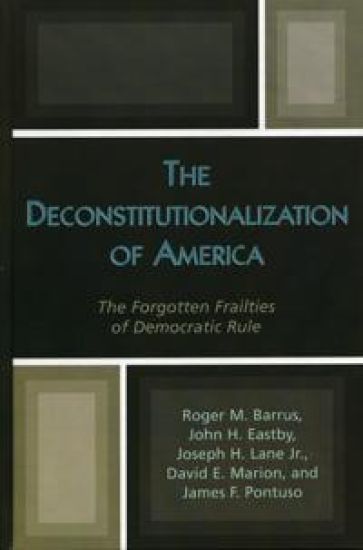
The Deconstitutionalization of America

The Deconstitutionalization of America

Roger M. Barrus; John H. Eastby; Joseph H. Lane; David E. Marion; James F. Pontuso

Lexington Books
2004
nidottu
In The Deconstitutionalization of America: The Forgotten Frailties of Democratic Rule, Roger M. Barrus and his coauthors embark on a discussion of American democracy from the nineteenth century to the present day. The present paradox democracy finds itself in can be summed up as 'the best of times and the worst of times.' Democracy, at its best, has triumphed throughout the world. It is the authors contention that this same success represents the potential for its undoing: with all governments claiming to be democratic, modern democrats-and this includes just about everyone-find it difficult if not impossible to understand the nature and problems of democracy. Since most everyone lives within a democratic horizon, they have nothing to compare democracy to and no one to point out its faults. In this way, they are hampered in dealing with their social and political problems, some of which may be the result of contradictions inherent in the democratic principle itself. The solution to democracy's ills might not be, after all, more democracy.