Kirjojen hintavertailu – 12 859 819 kirjaa ja 27 kauppaa

Kirjailija

John H. Walton

Kirjat ja teokset yhdessä paikassa: 46 kirjaa, julkaisuja vuosilta 1994–2026, suosituimpiin kuuluu The Zondervan Charts Library: Complete 17-Volume Set. Vertaile teosten hintoja ja tarkista saatavuus suomalaisista kirjakaupoista.

Nimi esiintyy myös muodoissa: John H Walton

46 kirjaa

Kirjojen julkaisuvuodet: 1994–2026.

Understanding Scientific Theories of Origins – Cosmology, Geology, and Biology in Christian Perspective

Understanding Scientific Theories of Origins – Cosmology, Geology, and Biology in Christian Perspective

Robert C. Bishop; Larry L. Funck; Raymond J. Lewis; Stephen O. Moshier; John H. Walton

IVP Academic
2018
sidottu
The question of origins remains a stumbling block for many. But just as the Psalmist gained insight into God's character through the observation of nature, modern scientific study can deepen and enrich our vision of the Creator and our place in his creation. In this often contentious field Bishop, Funck, Lewis, Moshier, and Walton serve as our able guides. Based on over two decades of teaching origins together in the classroom, the authors present a textbook exploring mainstream scientific theories of origins in astronomy, cosmology, chemistry, geology, biology, physical anthropology, and genetics. While many authors engage origins from a Christian perspective, this is the first work offering a full-fledged discussion of the scientific narrative of origins from the Big Bang through humankind, from biblical and theological perspectives accessible to a lay audience. Topics include Principles of biblical interpretationClose readings of relevant Genesis textsA comprehensive Trinitarian doctrine of creationCosmic originsThe geologic history of EarthThe origin of life on EarthThe origin of species and diversity of lifeHuman originsNew creation and creation careScience education Rather than the familiar scenario where science and faith compete, this book seeks to diffuse tensions by taking the inspiration and authority of the Bible seriously while respecting and honoring God's revelation through creation. Understanding Scientific Theories of Origins gives the reader a detailed picture of the sciences of origins along with how they fit into the story of God's creative and redemptive action. BioLogos Books on Science and Christianity invite us to see the harmony between the sciences and biblical faith on issues including cosmology, biology, paleontology, evolution, human origins, the environment, and more.
El Mundo Perdido de Adán Y Eva: Génesis 2-3 Y El Debate de Los Orígenes Humanos
" Puede una interpretaci n de G nesis 2-3 ser fiel al texto b blico y estar respaldada por las afirmaciones m s leg timas de la ciencia? Puede uno exaltar los relatos de la creaci n y ca da de Ad n y Eva a la luz de todos los paralelismos parciales en otras literaturas antiguas del Cercano Oriente y seguir creyendo en la inerrancia de las Escrituras? John Walton muestra que la respuesta a ambas preguntas es un rotundo 's '. Ya sea que se est de acuerdo o no con cada detalle de la interpretaci n de Walton, se tiene que admirar la brillantez, claridad y sensibilidad de su enfoque. Esta es una lectura obligada para cualquiera que piense que tiene que elegir entre la fe y la ciencia". Craig L. Blomberg, Profesor Distinguido de Nuevo Testamento, Denver Seminary
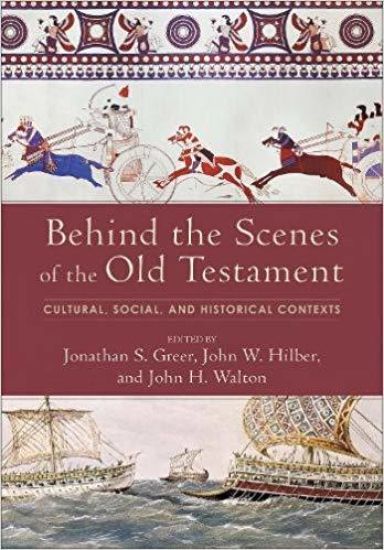
Behind the Scenes of the Old Testament – Cultural, Social, and Historical Contexts

Behind the Scenes of the Old Testament – Cultural, Social, and Historical Contexts

Jonathan S. Greer; John W. Hilber; John H. Walton

Baker Academic, Div of Baker Publishing Group
2018
sidottu

Halvin toimitettuna 42,90 €

This authoritative volume brings together a team of world-class scholars to cover the full range of Old Testament backgrounds studies in a concise, up-to-date, and comprehensive manner. With expertise in various subdisciplines of Old Testament backgrounds, the authors illuminate the cultural, social, and historical contexts of the world behind the Old Testament. They introduce readers to a wide range of background materials, covering history, geography, archaeology, and ancient Near Eastern textual and iconographic studies. Meant to be used alongside traditional literature-based canonical surveys, this one-stop introduction to Old Testament backgrounds fills a gap in typical introduction to the Bible courses. It contains over 100 illustrations, including photographs, line drawings, maps, charts, and tables, which will facilitate its use in the classroom.
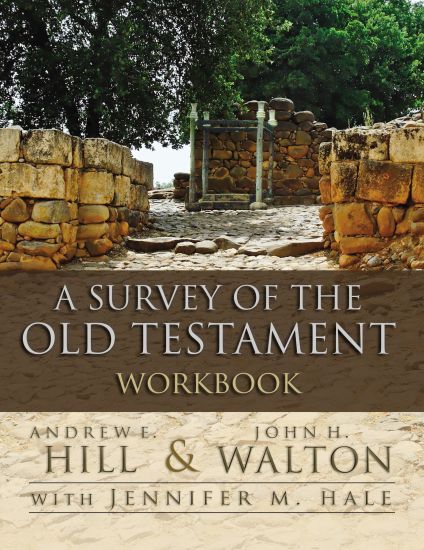
A Survey of the Old Testament Workbook

A Survey of the Old Testament Workbook

Andrew E. Hill; John H. Walton

Zondervan
2018
nidottu

Halvin toimitettuna 28,60 €

This workbook accompanies A Survey of the Old Testament by Andrew E. Hill and John H. Walton. It follows the textbook's structure and offers readings, activities, and exercises designed to support the students' learning experience as they explore the literary, historical, and theological issues behind each book of the Old Testament. A Survey of the Old Testament Workbook offers students an additional contact point with the content and concepts from the main textbook and will help them better understand the Old Testament, its background, purpose, message, structure, and major themes. This workbook is an indispensable study resource for students and independent learners alike who want to deepen their understanding of the Old Testament and the God it reveals.
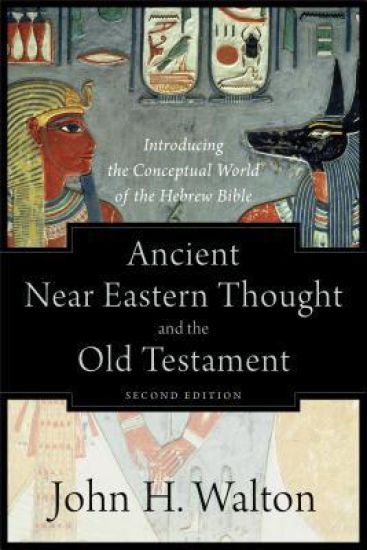
Ancient Near Eastern Thought and the Old Testame – Introducing the Conceptual World of the Hebrew Bible

Ancient Near Eastern Thought and the Old Testame – Introducing the Conceptual World of the Hebrew Bible

John H. Walton

Baker Academic, Div of Baker Publishing Group
2018
nidottu

Halvin toimitettuna 31,00 €

Leading evangelical scholar John Walton surveys the cultural context of the ancient Near East, bringing insight to the interpretation of specific Old Testament passages. This new edition of a top-selling textbook has been thoroughly updated and revised throughout to reflect the refined thinking of a mature scholar. It includes over 30 illustrations. Students and pastors who want to deepen their understanding of the Old Testament will find this a helpful and instructive study.
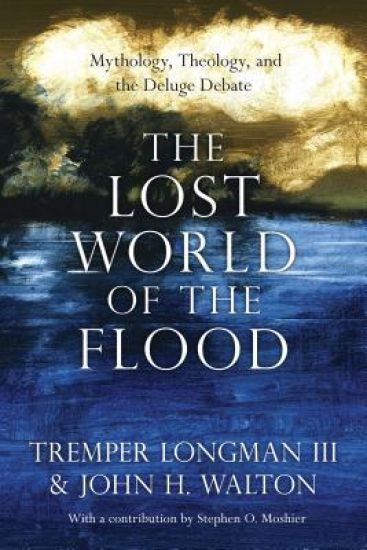
The Lost World of the Flood – Mythology, Theology, and the Deluge Debate

The Lost World of the Flood – Mythology, Theology, and the Deluge Debate

Tremper Longman III; John H. Walton; Stephen O. Moshier

IVP Academic
2018
nidottu

Halvin toimitettuna 28,20 €

"The flood continued forty days on the earth; and the waters increased, and bore up the ark, and it rose high above the earth . . . and the ark floated on the face of the waters" (Gen 6:17-18 NRSV). In modern times the Genesis flood account has been probed and analyzed for answers to scientific, apologetic, and historical questions. It is a text that has called forth "flood geology," fueled searches for remnants of the ark on Mount Ararat, and inspired a full-size replica of Noah's ark in a theme park. Some claim that the very veracity of Scripture hinges on a particular reading of the flood narrative. But do we understand what we are reading? Longman and Walton urge us to ask what the biblical author might have been saying to his ancient audience. Our quest to rediscover the biblical flood requires that we set aside our own cultural and interpretive assumptions and visit the distant world of the ancient Near East. Responsible interpretation calls for the patient examination of the text within its ancient context of language, literature, and thought. And as we return from that lost world to our own, we will need to ask whether geological science supports the notion of flood geology. To read Longman and Walton is to put our feet on firmer interpretive ground. Without attempting to answer all of our questions, they lift the fog of modernity and allow the sunlight to reveal the true contours of the text. As with other books in the Lost World series, The Lost World of the Flood is an informative and enlightening journey toward a more responsible reading of a timeless biblical narrative. The books in the Lost World Series follow the pattern set by Bible scholar John H. Walton, bringing a fresh, close reading of the Hebrew text and knowledge of ancient Near Eastern literature to an accessible discussion of the biblical topic at hand using a series of logic-based propositions.
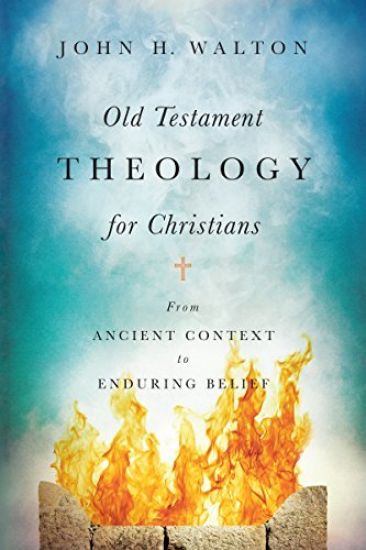
Old Testament Theology for Christians – From Ancient Context to Enduring Belief
Modern readers of the Bible often find the Old Testament difficult and even disturbing. What are we to do with obscure prophecies of long expired nations? Why should we read and study ancient laws that even the New Testament says are eclipsed by Christ? How can we reconcile Jesus’ Sermon on the Mount with the Old Testament’s graphic narratives of sex and violence? What does the Old Testament offer that is not surpassed and even made irrelevant by the New Testament? John Walton has spent a career engaging deeply with the Old Testament’s text and ancient context. He has studied, taught, and written about the issues. His signature approach can be introduced in one sentence: The Old Testament was written for us but not to us. We must not conform it to our own understanding. We will fully grasp the Old Testament and its theology only when we are immersed in the ancient cultural current of Israel within its broader cultural river of the ancient Near East. In Old Testament Theology for Christians, John Walton invites us to leave our modern—and even inherited Christian—preconceptions at the threshold as we enter the world of the Old Testament. He challenges us to see it anew—as if for the first time—as guests in a strange and fascinating foreign land. Then we will rediscover its testimony to God’s great enterprise. In this capstone to a career of studying and teaching the Old Testament, Walton unfolds a grand panorama of Yahweh and the gods, of cosmos and humanity, of covenant and kingdom, of temple and torah, of sin and evil, and of salvation and afterlife. Viewed within its ancient Near Eastern cognitive environment, the text takes unexpected turns and blossoms into fresh and challenging insights. No matter how you are accustomed to viewing the first testament of the Bible, Old Testament Theology for Christians will challenge and sharpen your perceptions.
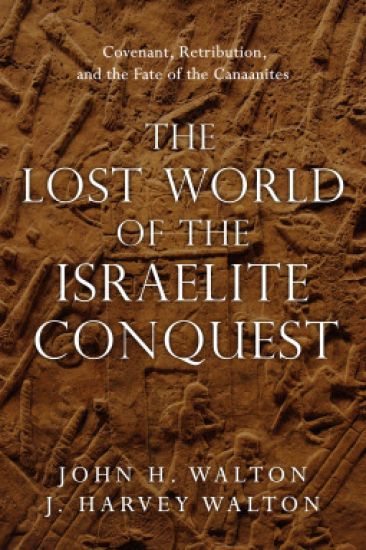
The Lost World of the Israelite Conquest – Covenant, Retribution, and the Fate of the Canaanites

The Lost World of the Israelite Conquest – Covenant, Retribution, and the Fate of the Canaanites

John H. Walton; J. Harvey Walton

Inter-Varsity Press,US
2017
nidottu

Halvin toimitettuna 30,80 €

Biblical Foundations Award Winner Holy warfare is the festering wound on the conscience of Bible-believing Christians. Of all the problems the Old Testament poses for our modern age, this is the one we want to avoid in mixed company. But do the so-called holy war texts of the Old Testament portray a divinely inspired genocide? Did Israel slaughter Canaanites at God's command? Were they enforcing divine retribution on an unholy people? These texts shock us. And we turn the page. But have we rightly understood them? In The Lost World of the Israelite Conquest, John Walton and J. Harvey Walton take us on an archaeological dig, excavating the layers of translation and interpretation that over time have encrusted these texts and our perceptions. What happens when we take new approaches, frame new questions? When we weigh again their language and rhetoric? Were the Canaanites punished for sinning against the covenanting God? Does the Hebrew word herem mean "devote to destruction"? How are the Canaanites portrayed and why? And what happens when we backlight these texts with their ancient context? The Lost World of the Israelite Conquest keenly recalibrates our perception and reframes our questions. While not attempting to provide all the answers, it offers surprising new insights and clears the ground for further understanding. The books in the Lost World Series follow the pattern set by Bible scholar John H. Walton, bringing a fresh, close reading of the Hebrew text and knowledge of ancient Near Eastern literature to an accessible discussion of the biblical topic at hand using a series of logic-based propositions.
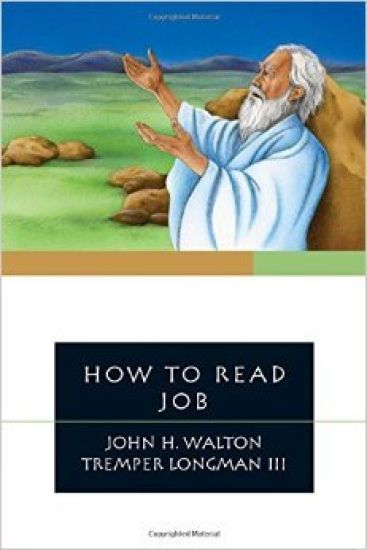
How to Read Job

How to Read Job

John H. Walton; Tremper Longman III

Inter-Varsity Press,US
2015
nidottu
Preaching's Survey of Bibles and Bible Reference We often turn to the book of Job when we encounter suffering. We look for an explanation for the questions "Why me?" or "Why her?" But what if it turns out that although Job does suffer, the book is not really about his suffering? If ever a book needed a "How to Read" instruction manual, it is the book of Job. And when two respected Old Testament scholars team up—both of whom have written commentaries on Job—we have a matchless guide to reading and appreciating the book. From their analysis of its place in the wisdom literature of the Bible and the ancient Near East to their discussions of its literary features and relationship to history, Walton and Longman give us the best of their expertise. They explore the theology of Job, placing it within Israelite religion and Old Testament theology. And they coach us in how to read Job as Christians. When it turns out the book is not what we thought it was, our reading is richly layered and more satisfying. Whether you are preparing for preaching, teaching, leading a Bible study, studying for a class or for personal enrichment, How to Read Job is your starting point.
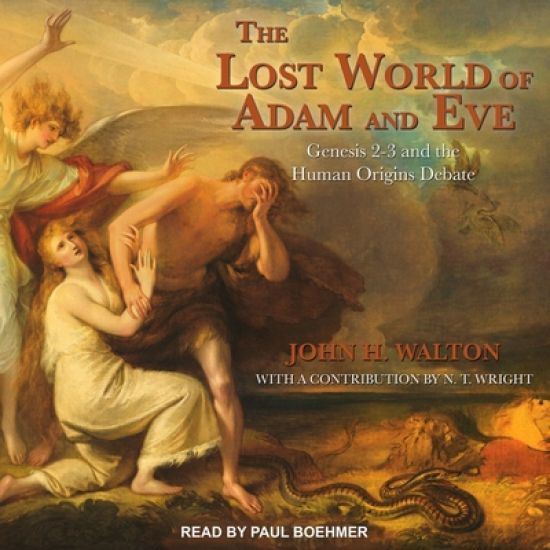
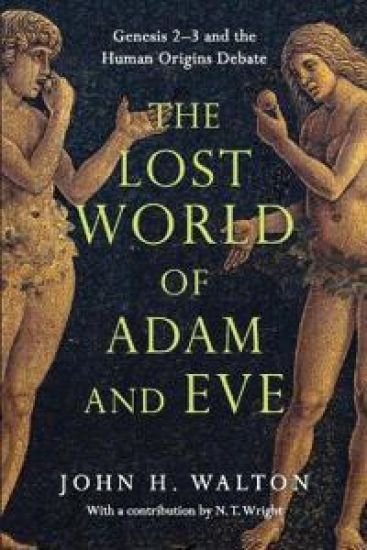
The Lost World of Adam and Eve – Genesis 2–3 and the Human Origins Debate

The Lost World of Adam and Eve – Genesis 2–3 and the Human Origins Debate

John H. Walton; N. T. Wright

Inter-Varsity Press,US
2015
nidottu

Halvin toimitettuna 31,30 €

Christianity Today Biblical Studies Award of Merit For centuries the story of Adam and Eve has resonated richly through the corridors of art, literature and theology. But for most moderns, taking it at face value is incongruous. And even for many thinking Christians today who want to take seriously the authority of Scripture, insisting on a "literal" understanding of Genesis 2–3 looks painfully like a "tear here" strip between faith and science. How can Christians of good faith move forward? Who were the historical Adam and Eve? What if we've been reading Genesis—and its claims regarding material origins—wrong? In what cultural context was this couple, this garden, this tree, this serpent portrayed? Following his groundbreaking Lost World of Genesis One, John Walton explores the ancient Near Eastern context of Genesis 2–3, creating space for a faithful reading of Scripture along with full engagement with science for a new way forward in the human origins debate. As a bonus, an illuminating excursus by N. T. Wright places Adam in the implied narrative of Paul's theology. The Lost World of Adam and Eve will be required reading for anyone seeking to understand this foundational text historically and theologically, and wondering how to view it alongside contemporary understandings of human origins. The books in the Lost World Series follow the pattern set by Bible scholar John H. Walton, bringing a fresh, close reading of the Hebrew text and knowledge of ancient Near Eastern literature to an accessible discussion of the biblical topic at hand using a series of logic-based propositions.
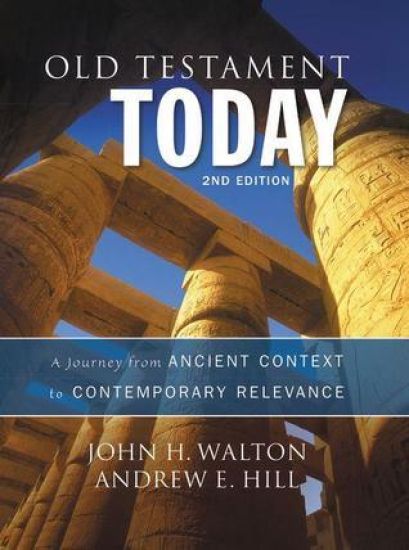
Old Testament Today, 2nd Edition

Old Testament Today, 2nd Edition

John H. Walton; Andrew E. Hill

Zondervan
2014
sidottu
This proven Old Testament text with a wealth of full-color images helps readers connect the world of the Old Testament with today's world. Old Testament Today, 2nd Edition, newly revised, includes a book-by-book survey, new maps and graphics, and other updates throughout. Unique among Old Testament surveys, Old Testament Today, 2nd Edition not only provides an orientation to the world of the Old Testament, but also builds a bridge between the original audience and modern readers, demonstrating why the ancient message is important for faith and life today. It goes beyond basic content to help students understand what the Scriptures mean and how to apply them personally. Taking readers progressively through the Old Testament, this text: (1) presents the details of the content, focusing on the story line, historical background, and literary information that address the original setting and audience; (2) focuses on theology perspectives and on issues of the author's purpose and the universal message of the text, building a bridge between the original audience and today's audience; and (3) develops an understanding of the relevance of the Old Testament writings to today's Christian, showing how they can be applied in personal faith and practice.
Death Before the Fall – Biblical Literalism and the Problem of Animal Suffering

Death Before the Fall – Biblical Literalism and the Problem of Animal Suffering

Ronald E. Osborn; John H. Walton

Inter-Varsity Press,US
2014
nidottu
ECPA Top Shelf Book Cover Award Did animals have predatory natures before the fall? Did God punish innocent animals with a curse because of human sin? Is it possible for theistic evolution to be compatible with the Bible, even though animal death before the fall would contradict the teaching that death began after the first sin? In this eloquent and provocative "open letter" to evangelicals, Ronald Osborn wrestles with these pointed questions and with the problem of biblical literalism and animal suffering within an evolutionary understanding of the world. Considering the topic of animal suffering and predation as a theodicy dilemma, Osborn offers an open-minded exploration of the subject, specifically coming against the fundamentalist and literalist view of the book of Genesis and the creation account. He challenges one-dimensional reading of Scripture and shines a sobering light on the evangelical dogma responsible for advancing viewpoints long ago dismantled by science. Always acknowledging the traditionalist viewpoint, Osborn demonstrates with a wealth of exegetical and theological insight how orthodox Christianity can embrace evolutionary concepts without contradiction. Osborn forces us to ask hard questions, not only of the Bible and church tradition, but also and especially of ourselves.
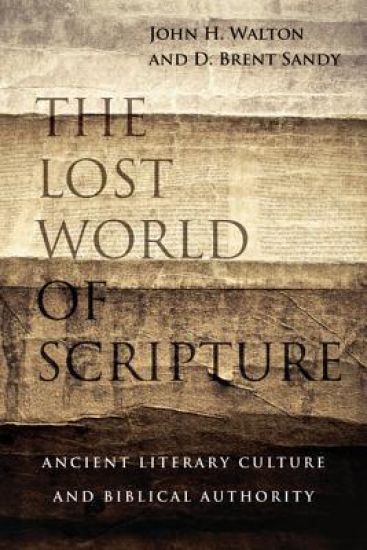
The Lost World of Scripture – Ancient Literary Culture and Biblical Authority
Readers' Choice Awards Honorable Mention Preaching's Preacher's Guide to the Best Bible Reference From John H. Walton, author of the bestselling Lost World of Genesis One, and D. Brent Sandy, author of Plowshares and Pruning Hooks, comes a detailed look at the origins of scriptural authority in ancient oral cultures and how they inform our understanding of the Old and New Testaments today. Stemming from questions about scriptural inerrancy, inspiration and oral transmission of ideas, The Lost World of Scripture examines the process by which the Bible has come to be what it is today. From the reasons why specific words were used to convey certain ideas to how oral tradition impacted the transmission of biblical texts, the authors seek to uncover how these issues might affect our current doctrine on the authority of Scripture. "In this book we are exploring ways God chose to reveal his word in light of discoveries about ancient literary culture," write Walton and Sandy. "Our specific objective is to understand better how both the Old and New Testaments were spoken, written and passed on, especially with an eye to possible implications for the Bible?s inspiration and authority." The books in the Lost World Series follow the pattern set by Bible scholar John H. Walton, bringing a fresh, close reading of the Hebrew text and knowledge of ancient Near Eastern literature to an accessible discussion of the biblical topic at hand using a series of logic-based propositions.
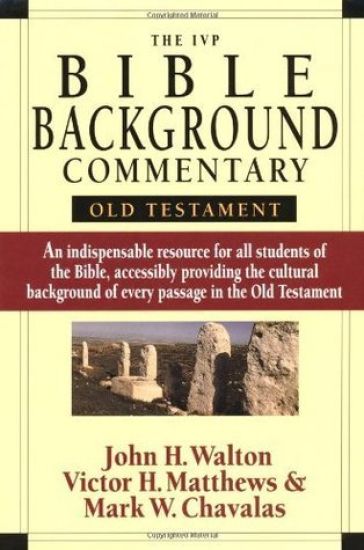
The IVP Bible Background Commentary: Old Testament

The IVP Bible Background Commentary: Old Testament

John H. Walton; Victor H. Matthews; Mark W. Chavalas

Inter-Varsity Press
2012
sidottu

Halvin toimitettuna 41,70 €

Preaching's Preacher's Guide to the Best Bible Reference How can we account for the "Book of the Law" suddenly being discovered during Josiah's renovation of the temple (2 Chron 34:14)? We know from Egypt and Mesopotamia that it was common to seal important documents--including theological documents--in the masonry or foundations of a palace or temple in order to inform a future king who might undertake restoration of the building. What might the psalmist have had in mind when praising God for removing our transgressions "as far as the east is from the west" (Ps 103:12)? In an Egyptian hymn to Amun-Re, the deity is praised for his judgment of the guilty. As a result of the god's discernment the guilty are assigned to the east and the righteous to the west. What is meant by God "weighing the heart" (Prov 21:2)? In Egyptian religious tradition we find the notion of the dead being judged before the gods. As the soul is examined, the dead person's heart is weighed in a scale against a feather symbolizing Truth. If the answers are correct and the heart does not outweigh the feather, the soul may enter the realm of everlasting life. The narratives, genealogies, laws, poetry, proverbs and prophecies of the Old Testament are deeply rooted in history. Archaeologists, historians and social scientists have greatly advanced our knowledge of the ancient world of the Bible. When we illuminate the stories of Abraham or David, the imagery of the Psalms or Proverbs, or the prophecies of Isaiah or Jeremiah with this backlight of culture and history, these texts spring to new life. The unique commentary joins The IVP Bible Background Commentary: New Testament in providing historical, social and cultural background for each passage of the Old Testament. From Genesis through Malachi, this single volume gathers and condenses an abundance of specialized knowledge--making it available and accessible to ordinary readers of the Old Testament. Expert scholars John Walton, Victor Matthews and Mark Chavalas have included along with the fruits of their research and collaboration a glossary of historical terms, ancient peoples, texts and inscriptionsmaps and charts of important historical resourcesexpanded explanations of significant background issuesintroductory essays on each book of the Old Testament The IVP Bible Background Commentary: Old Testament will enrich your experience of the Old Testament--and your teaching and preaching from Scripture--in a way that no other commentary can do.
Job

Job

John H. Walton

Zondervan
2012
sidottu

Halvin toimitettuna 29,20 €

The NIV Application Commentary helps you communicate and apply biblical text effectively in today's context. To bring the ancient messages of the Bible into today's world, each passage is treated in three sections:Original Meaning. Concise exegesis to help readers understand the original meaning of the biblical text in its historical, literary, and cultural context. Bridging Contexts. A bridge between the world of the Bible and the world of today, built by discerning what is timeless in the timely pages of the Bible. Contemporary Significance. This section identifies comparable situations to those faced in the Bible and explores relevant application of the biblical messages. The author alerts the readers of problems they may encounter when seeking to apply the passage and helps them think through the issues involved. This unique, award-winning commentary is the ideal resource for today's preachers, teachers, and serious students of the Bible, giving them the tools, ideas, and insights they need to communicate God's Word with the same powerful impact it had when it was first written. The book you receive may have a different cover design than shown on the website.
Genesis 1 as Ancient Cosmology

Genesis 1 as Ancient Cosmology

John H. Walton

Eisenbrauns
2011
pokkari
The ancient Near Eastern mode of thought is not at all intuitive to us moderns, but our understanding of ancient perspectives can only approach accuracy when we begin to penetrate ancient texts on their own terms rather than imposing our own world view. In this task, we are aided by the ever-growing corpus of literature that is being recovered and analyzed. After an introduction that presents some of the history of comparative studies and how it has been applied to the study of ancient texts in general and cosmology in particular, Walton focuses in the first half of this book on the ancient Near Eastern texts that inform our understanding about ancient ways of thinking about cosmology. Of primary interest are the texts that can help us discern the parameters of ancient perspectives on cosmic ontology—that is, how the writers perceived origins. Texts from across the ancient Near East are presented, including primarily Egyptian, Sumerian, and Akkadian texts, but occasionally also Ugaritic and Hittite, as appropriate. Walton’s intention, first of all, is to understand the texts but also to demonstrate that a functional ontology pervaded the cognitive environment of the ancient Near East. This functional ontology involves more than just the idea that ordering the cosmos was the focus of the cosmological texts. He posits that, in the ancient world, bringing about order and functionality was the very essence of creative activity. He also pays close attention to the ancient ideology of temples to show the close connection between temples and the functioning cosmos. The second half of the book is devoted to a fresh analysis of Genesis 1:1–2:4. Walton offers studies of significant Hebrew terms and seeks to show that the Israelite texts evidence a functional ontology and a cosmology that is constructed with temple ideology in mind, as in the rest of the ancient Near East. He contends that Genesis 1 never was an account of material origins but that, as in the rest of the ancient world, the focus of “creation texts” was to order the cosmos by initiating functions for the components of the cosmos. He further contends that the cosmology of Genesis 1 is founded on the premise that the cosmos should be understood in temple terms. All of this is intended to demonstrate that, when we read Genesis 1 as the ancient document it is, rather than trying to read it in light of our own world view, the text comes to life in ways that help recover the energy it had in its original context. At the same time, it provides a new perspective on Genesis 1 in relation to what have long been controversial issues. Far from being a borrowed text, Genesis 1 offers a unique theology, even while it speaks from the platform of its contemporaneous cognitive environment.
Genesis 1 as Ancient Cosmology

Genesis 1 as Ancient Cosmology

John H. Walton

Eisenbrauns
2011
sidottu
The ancient Near Eastern mode of thought is not at all intuitive to us moderns, but our understanding of ancient perspectives can only approach accuracy when we begin to penetrate ancient texts on their own terms rather than imposing our own world view. In this task, we are aided by the ever-growing corpus of literature that is being recovered and analyzed. After an introduction that presents some of the history of comparative studies and how it has been applied to the study of ancient texts in general and cosmology in particular, Walton focuses in the first half of this book on the ancient Near Eastern texts that inform our understanding about ancient ways of thinking about cosmology. Of primary interest are the texts that can help us discern the parameters of ancient perspectives on cosmic ontology—that is, how the writers perceived origins. Texts from across the ancient Near East are presented, including primarily Egyptian, Sumerian, and Akkadian texts, but occasionally also Ugaritic and Hittite, as appropriate. Walton’s intention, first of all, is to understand the texts but also to demonstrate that a functional ontology pervaded the cognitive environment of the ancient Near East. This functional ontology involves more than just the idea that ordering the cosmos was the focus of the cosmological texts. He posits that, in the ancient world, bringing about order and functionality was the very essence of creative activity. He also pays close attention to the ancient ideology of temples to show the close connection between temples and the functioning cosmos. The second half of the book is devoted to a fresh analysis of Genesis 1:1–2:4. Walton offers studies of significant Hebrew terms and seeks to show that the Israelite texts evidence a functional ontology and a cosmology that is constructed with temple ideology in mind, as in the rest of the ancient Near East. He contends that Genesis 1 never was an account of material origins but that, as in the rest of the ancient world, the focus of “creation texts” was to order the cosmos by initiating functions for the components of the cosmos. He further contends that the cosmology of Genesis 1 is founded on the premise that the cosmos should be understood in temple terms. All of this is intended to demonstrate that, when we read Genesis 1 as the ancient document it is, rather than trying to read it in light of our own world view, the text comes to life in ways that help recover the energy it had in its original context. At the same time, it provides a new perspective on Genesis 1 in relation to what have long been controversial issues. Far from being a borrowed text, Genesis 1 offers a unique theology, even while it speaks from the platform of its contemporaneous cognitive environment.
The Bible Story Handbook

The Bible Story Handbook

John H. Walton; Kim E. Walton

Crossway Books
2010
pokkari
How do Sunday school teachers lead children through the stories of Cain and Abel or Judas’s betrayal in a way that reflects the authority of Scripture? Sunday school curricula often glosses over difficult lessons or focuses too much on characters in Bible stories, neglecting God’s self-revelation in Scripture. John and Kim Walton have created this handbook for 175 Bible stories to assist teachers and parents in knowing what each story teaches and how to present it in a God-centered way. As they work their way through the Bible, the Waltons examine seven elements in each story: focus, theme, application, place in the Bible, interpretational issues, historical and cultural background, and age-group appropriateness. The Bible Story Handbook includes introductory articles on why we teach the Bible and right and wrong ways to use the Bible. Every parent and Sunday school teacher will find this unique resource to be invaluable in teaching children to know and love God.
The Lost World of Genesis One

The Lost World of Genesis One

John H. Walton

IVP Academic
2009
pokkari

Halvin toimitettuna 31,30 €

In this astute mix of cultural critique and biblical studies, John H. Walton presents and defends twenty propositions supporting a literary and theological understanding of Genesis 1 within the context of the ancient Near Eastern world and unpacks its implications for our modern scientific understanding of origins. Ideal for students, professors, pastors and lay readers with an interest in the intelligent design controversy and creation-evolution debates, Walton's thoughtful analysis unpacks seldom appreciated aspects of the biblical text and sets Bible-believing scientists free to investigate the question of origins.