Kirjojen hintavertailu – 12 903 735 kirjaa ja 27 kauppaa

Kirjailija

John Haldane

Kirjat ja teokset yhdessä paikassa: 12 kirjaa, julkaisuja vuosilta 2004–2012, suosituimpiin kuuluu Practical Philosophy. Vertaile teosten hintoja ja tarkista saatavuus suomalaisista kirjakaupoista.

12 kirjaa

Kirjojen julkaisuvuodet: 2004–2012.

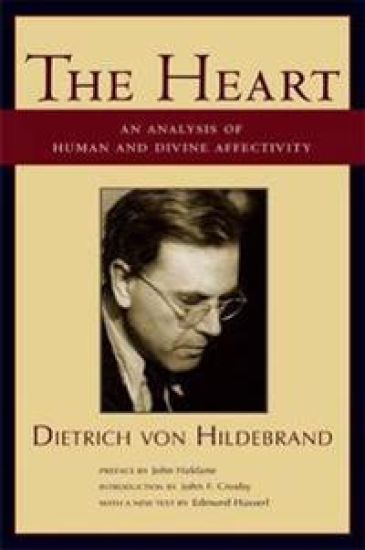
The Heart – An Analysis of Human and Divine Affectation

The Heart – An Analysis of Human and Divine Affectation

Dietrich von Hildebrand; John Haldane; John F. Crosby

ST AUGUSTINE'S PRESS
2012
nidottu
This new edition of The Heart (out of print for nearly 30 years) is the flagship volume in a series of Dietrich von Hildebrand’s works to be published by St. Augustine’s Press in collaboration with the Dietrich von Hildebrand Legacy Project. Founded in 2004, the Legacy Project exists in the first place to translate the many German writings of von Hildebrand into English. While many revere von Hildebrand as a religious author, few realize that he was a philosopher of great stature and importance. Those who knew von Hildebrand as philosopher held him in the highest esteem. Louis Bouyer, for example, once said that “von Hildebrand was the most important Catholic philosopher in Europe between the two world wars.” Joseph Cardinal Ratzinger expressed even greater esteem when he said: “I am personally convinced that, when, at some time in the future, the intellectual history of the Catholic Church in the twentieth century is written, the name of Dietrich von Hildebrand will be most prominent among the figures of our time.” The Heart is an accessible yet important philosophical contribution to the understanding of the human person. In this work von Hildebrand is concerned with rehabilitating the affective life of the human person. He thinks that for too long philosophers have held it in suspicion and thought of it as embedded in the body and hence as being much inferior to intellect and will. In reality, he argues, the heart, the center of affectivity, has many different levels, including an eminently personal level; at this level affectivity is just as important a form of personal life as intellect and will. Von Hildebrand develops the idea that properly personal affectivity, far than tending away from an objective relation to being, is in fact one major way in which we transcend ourselves and give being its due. Von Hildebrand also developed the important idea that the heart “in many respects is more the real self of the person than his intellect or will.” At the same time, the author shows full realism about the possible deformities of affective life; he offers rich analyses of what he calls affective atrophy and affective hypertrophy. The second half of The Heart offers a remarkable analysis of the affectivity of the God-Man.
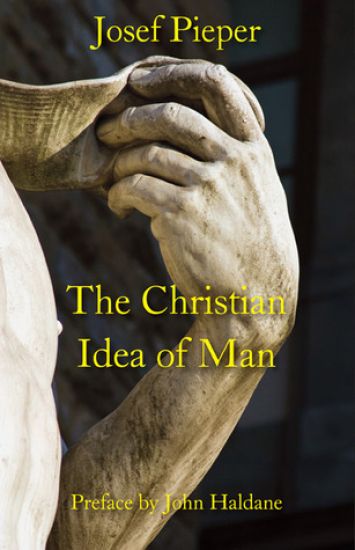
The Christian Idea of Man

The Christian Idea of Man

Josef Pieper; Dan Farrelly; John Haldane

ST AUGUSTINE'S PRESS
2011
sidottu
In The Christian Idea of Man Josef Pieper brings off an extraordinary feat. He acknowledges that whoever introduces the theme of “virtue” and “the virtues” can expect to be met with a smile – of various shades of condescension. He then proceeds to single out “prudence” as the fundamental virtue on which the other cardinal virtues are based. In defining it, he does away with the shallow connotations which have debased it in modern times. Similarly, he manages to divest it of all traces of “moralism,” which, to a large extent has become identified with the Christian idea of virtue and has made it fall into general disrepute. For Pieper, prudence is fundamentally based on a clear perception of reality – of things as they are – and the prudent person is the one who acts in accordance with this perception. It has nothing to do with knowing how to avoid decisions which might be to one’s disadvantage. Similarly, justice, which is based on prudence, involves acting toward other persons according to one’s perception of the truth of the circumstances – again, a perception of things “as they are.” This is not a reference to any “status quo,” but to the reality as constituted by the Creator. In referring to courage [fortitude], Pieper discusses the overcoming of fear. This does not imply having no fear but, precisely, overcoming it. With regard to the fundamental fear of death, Pieper rejects the approaches which contend that there is nothing to fear in death. On the contrary, there is everything to fear in death: it concerns the question of possible absolute annihilation! Here Pieper introduces the consideration of the “theological” virtues of faith, hope, and love [charity]. When confronted with the question of possible annihilation, the Christian’s faith is paramount. Belief in God lets him confront danger and overcome even the most radical fear – through hope in God. His love of God does not wipe out fear but gives him courage. Moderation is seen as the last in the hierarchy of the cardinal virtues. Through its manifestation, in recent Christian thinking, with chastity and abstinence, it became in the Christian mind the most prominent characteristic of the Christian idea of man and one that dominated everything else. It has been reduced to the status of the most private of the virtues and is combined with a moralistic conception of the good. Pieper’s analysis of moderation shows how this virtue needs to be rethought, although, even then, it will remain the last in the hierarchy of virtues.
The Christian Idea of Man

The Christian Idea of Man

Josef Pieper; Dan Farrelly; John Haldane

ST AUGUSTINE'S PRESS
2011
nidottu
In The Christian Idea of Man Josef Pieper brings off an extraordinary feat. He acknowledges that whoever introduces the theme of “virtue” and “the virtues” can expect to be met with a smile – of various shades of condescension. He then proceeds to single out “prudence” as the fundamental virtue on which the other cardinal virtues are based. In defining it, he does away with the shallow connotations which have debased it in modern times. Similarly, he manages to divest it of all traces of “moralism,” which, to a large extent has become identified with the Christian idea of virtue and has made it fall into general disrepute. For Pieper, prudence is fundamentally based on a clear perception of reality – of things as they are – and the prudent person is the one who acts in accordance with this perception. It has nothing to do with knowing how to avoid decisions which might be to one’s disadvantage. Similarly, justice, which is based on prudence, involves acting toward other persons according to one’s perception of the truth of the circumstances – again, a perception of things “as they are.” This is not a reference to any “status quo,” but to the reality as constituted by the Creator. In referring to courage [fortitude], Pieper discusses the overcoming of fear. This does not imply having no fear but, precisely, overcoming it. With regard to the fundamental fear of death, Pieper rejects the approaches which contend that there is nothing to fear in death. On the contrary, there is everything to fear in death: it concerns the question of possible absolute annihilation! Here Pieper introduces the consideration of the “theological” virtues of faith, hope, and love [charity]. When confronted with the question of possible annihilation, the Christian’s faith is paramount. Belief in God lets him confront danger and overcome even the most radical fear – through hope in God. His love of God does not wipe out fear but gives him courage. Moderation is seen as the last in the hierarchy of the cardinal virtues. Through its manifestation, in recent Christian thinking, with chastity and abstinence, it became in the Christian mind the most prominent characteristic of the Christian idea of man and one that dominated everything else. It has been reduced to the status of the most private of the virtues and is combined with a moralistic conception of the good. Pieper’s analysis of moderation shows how this virtue needs to be rethought, although, even then, it will remain the last in the hierarchy of virtues.
Reasonable Faith

Reasonable Faith

John Haldane

Routledge
2010
sidottu
In this awaited follow up to his book Faithful Reason, the well-known philosopher and Catholic thinker John Haldane brings his unrivalled insight to bear on questions of the existence of God and the nature and destiny of the human soul. His arguments weave elements drawn from philosophy of mind, epistemology and aesthetics, together with recurrent features of human experience to create a structure that simultaneously frames and supports ideas such as that the cosmos is a creation, human beings transcend their material composition, and that human fulfilment lies beyond death. As in many of his other writings this volume blends themes from Aquinas with insights drawn from analytical philosophy and further establishes John Haldane as the leading 'analytical thomist'.
Reasonable Faith

Reasonable Faith

John Haldane

Routledge
2010
nidottu
In this awaited follow up to his book Faithful Reason, the well-known philosopher and Catholic thinker John Haldane brings his unrivalled insight to bear on questions of the existence of God and the nature and destiny of the human soul. His arguments weave elements drawn from philosophy of mind, epistemology and aesthetics, together with recurrent features of human experience to create a structure that simultaneously frames and supports ideas such as that the cosmos is a creation, human beings transcend their material composition, and that human fulfilment lies beyond death. As in many of his other writings this volume blends themes from Aquinas with insights drawn from analytical philosophy and further establishes John Haldane as the leading 'analytical thomist'.
Practical Philosophy

Practical Philosophy

John Haldane

Imprint Academic
2009
sidottu
In this wide ranging volume of philosophical essays John Haldane explores some central areas of social life and issues of intense academic and public debate. These include the question of ethical relativism, fundamental issues in bioethics, the nature of individuals in relation to society, the common good, public judgement of prominent individuals, the nature and aims of education, cultural theory and the relation of philosophy to art and architecture. John Haldane is Professor of Philosophy, and Director of the Centre for Ethics, Philosophy and Public Affairs in the University of St Andrews. He is also a former Royden Davis Professor of Humanities at Georgetown University and is currently a Senior Fellow of the Witherspoon Institute, Princeton. As well as being a prominent academic philosopher he is well known in Britain, in North America and elsewhere in the English-speaking world as a public intellectual and social commentator. 'In Practical Philosophy, John Haldane eloquently makes the case for an approach to ethics that is distinctively practical - thought with a view to action (as contrasted with theoretical thought that might possibly be applied to the domain of action). Taking his inspiration from a tradition that includes Aristotle, Aquinas, and Elizabeth Anscombe, Haldane argues that an orthodox dichotomy has long dominated both philosophical and everyday thinking: we must be either dualists or material reductionists. Both of these alternatives, however, neglect a subtle approach to intentionality and agency offered by the Aristotelian tradition. Haldane uses his illuminating approach to advance arguments on a number of controversial moral and political issues: the status of the foetus, the importance of the family, compensation for victims of crime, the basis of human solidarity across national boundaries. Although his conclusions are frequently controversial, Haldane always avoids polemics and the ideological parti pris, thus giving a welcome example of respectful and civil public argument.' - Martha Nussbaum 'What resources can philosophy bring to bear, when its enquiries are not theoretical, but practical? In Practical Philosophy John Haldane answers this question in a brilliant survey of key issues, showing us how a variety of theories can obscure or distort our view of the practical realities of life, family, and society. With admirable clarity he also shows us how philosophy can rescue us from such theorizing.' - Alasdair MacIntyre
Practical Philosophy

Practical Philosophy

John Haldane

Imprint Academic
2009
pokkari
In this wide ranging volume of philosophical essays John Haldane explores some central areas of social life and issues of intense academic and public debate. These include the question of ethical relativism, fundamental issues in bioethics, the nature of individuals in relation to society, the common good, public judgement of prominent individuals, the nature and aims of education, cultural theory and the relation of philosophy to art and architecture. John Haldane is Professor of Philosophy, and Director of the Centre for Ethics, Philosophy and Public Affairs in the University of St Andrews. He is also a former Royden Davis Professor of Humanities at Georgetown University and is currently a Senior Fellow of the Witherspoon Institute, Princeton. As well as being a prominent academic philosopher he is well known in Britain, in North America and elsewhere in the English-speaking world as a public intellectual and social commentator. 'In Practical Philosophy, John Haldane eloquently makes the case for an approach to ethics that is distinctively practical - thought with a view to action (as contrasted with theoretical thought that might possibly be applied to the domain of action). Taking his inspiration from a tradition that includes Aristotle, Aquinas, and Elizabeth Anscombe, Haldane argues that an orthodox dichotomy has long dominated both philosophical and everyday thinking: we must be either dualists or material reductionists. Both of these alternatives, however, neglect a subtle approach to intentionality and agency offered by the Aristotelian tradition. Haldane uses his illuminating approach to advance arguments on a number of controversial moral and political issues: the status of the foetus, the importance of the family, compensation for victims of crime, the basis of human solidarity across national boundaries. Although his conclusions are frequently controversial, Haldane always avoids polemics and the ideological parti pris, thus giving a welcome example of respectful and civil public argument.' - Martha Nussbaum 'What resources can philosophy bring to bear, when its enquiries are not theoretical, but practical? In Practical Philosophy John Haldane answers this question in a brilliant survey of key issues, showing us how a variety of theories can obscure or distort our view of the practical realities of life, family, and society. With admirable clarity he also shows us how philosophy can rescue us from such theorizing.' - Alasdair MacIntyre
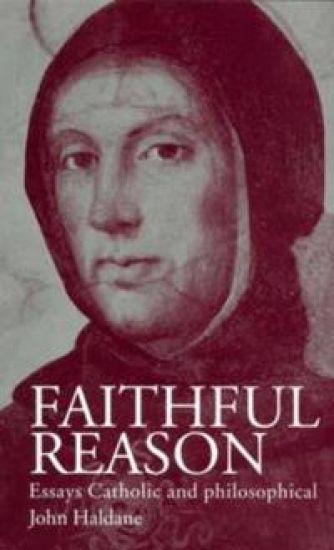
Faithful Reason

Faithful Reason

John Haldane

Routledge
2004
sidottu
In Faithful Reason, the noted Catholic philosopher John Haldane explores various aspects of intellectual and practical life from a perspective inspired by Catholic thought and informed by his distinctive philosophical approach: 'Analytical Thomism'. Haldane's discussions of ethics, politics, education, art, social philosophy and other themes explain why Catholic thought is still relevant in today's world, and show how the legacy of Thomas Aquinas can benefit modern philosophy in its efforts to answer fundamental questions about humanity and its place within nature. Drawing on a Catholic philosophical tradition that is committed to concepts of the world's intrinsic intelligibility and the objectivity of truth, Faithful Reason's bold and insightful perspectives provide rich matter for debate, and food for further thought.
Faithful Reason

Faithful Reason

John Haldane

Routledge
2004
nidottu
In Faithful Reason, the noted Catholic philosopher John Haldane explores various aspects of intellectual and practical life from a perspective inspired by Catholic thought and informed by his distinctive philosophical approach: 'Analytical Thomism'. Haldane's discussions of ethics, politics, education, art, social philosophy and other themes explain why Catholic thought is still relevant in today's world, and show how the legacy of Thomas Aquinas can benefit modern philosophy in its efforts to answer fundamental questions about humanity and its place within nature. Drawing on a Catholic philosophical tradition that is committed to concepts of the world's intrinsic intelligibility and the objectivity of truth, Faithful Reason's bold and insightful perspectives provide rich matter for debate, and food for further thought.
Modern Writings On Thomism

Modern Writings On Thomism

John Haldane

Thoemmes Continuum
2004
sidottu
Deriving from the name of its originator, Thomas Aquinas (1225-74), Thomism is a body of philosophical and theological ideas that seeks to articulate the intellectual content of Catholic Christianity. St Thomas was one of the main figures in the medieval Scholastic movement and wrote some of the greatest ever commentaries on Aristotle (also available from Thoemmes Press). Aquinas and his followers believed that faith and reason are both routes to truth - a conflict between them being impossible because they both originate in God - and Aquinas's celebrated "Five Ways" of proving the existence of God have remained central objects of study in the philosophy of religion ever since. The historical influence of Thomism has been enormous, and Thomist theologians and philosophers continue to work in what may be the longest continuous intellectual tradition in the Western world. Twentieth-century Thomists had important things to say in all of the key areas of philosophy: logic, metaphysics, theory of knowledge, ethics, natural science and philosophical anthropology. John Haldane has made a considered selection of half a dozen works which represent the best expositions of Thomistic approaches from the period between the first translation of Aquinas's Summa Theologiae into English (1912) and the start of the Second Vatican Council (1962) which transformed the intellectual world of Catholicism. In his substantial introduction to the set, Haldane gives an overview of the history of Thomism and locates these six books within it. He also looks ahead to the prospects for Thomism in the 21st century and beyond.