Kirjojen hintavertailu – 12 874 325 kirjaa ja 26 kauppaa

Kirjailija

John Haldon

Kirjat ja teokset yhdessä paikassa: 18 kirjaa, julkaisuja vuosilta 1994–2024, suosituimpiin kuuluu Byzantium at War AD 600-1453. Vertaile teosten hintoja ja tarkista saatavuus suomalaisista kirjakaupoista.

18 kirjaa

Kirjojen julkaisuvuodet: 1994–2024.

Modelling the Logistics of Mantzikert

Modelling the Logistics of Mantzikert

Philip Murgatroyd; Vincent Gaffney; John Haldon; Georgios Theodoropoulos

Archaeopress
2024
pokkari
In AD 1071, the Byzantine Emperor, Romanos IV Diogenes, set out from Constantinople for the eastern borders of his Empire with an army described as “more numerous than the sands of the sea”. His military campaign culminated in defeat by the Seljuk Sultan Alp Arslan at the Battle of Mantzikert. This defeat was to have profound consequences for both Byzantine and Turkish history and is still commemorated in the modern state of Turkey. Yet the historical sources for this campaign contain significant gaps and we know more about the political intrigues surrounding the emperor than we do about how the army moved and fed itself. The ‘Medieval Warfare on the Grid’ project (2007-2011) was funded by an AHRC-EPSRC-Jisc e-Science grant and set out to use computer simulation to shed new light on the Mantzikert campaign. In this book we present the results of the project and demonstrate that computer simulation has an important role to play in the analysis of pre-modern military logistics. It can give new context to historical sources, present new options for the interpretation of past events and enable questions of greater complexity to be asked of historical military campaigns. It can also highlight the similarities that exist across time and space when armies need to be mobilised, moved and fed.
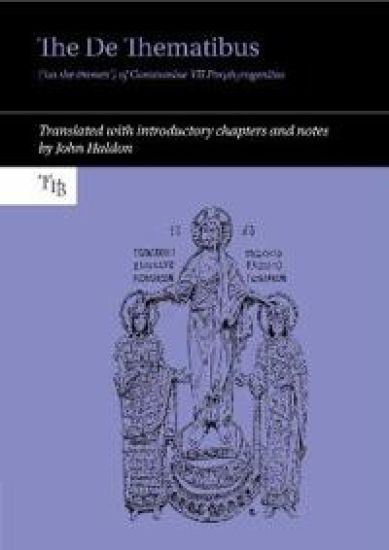
The De Thematibus ('on the themes') of Constantine VII Porphyrogenitus
The 10th-century treatise on the military provinces (the ‘themes’) of the medieval East Roman (Byzantine) empire is one of the most enigmatic of the works ascribed to the emperor Constantine VII Porphyrogennetos. A mix of historical geography, imperial propaganda, historical information and legend or myth drawn from ancient, Hellenistic as well as Roman and late Roman sources, it was one of the emperor’s earliest works, although the extent to which he was its author remains debated. Its purpose, and the emperor’s aims in commissioning or writing it, are equally unclear, since it offers neither an accurate historical account of the evolution of the themata nor does it appear to draw on available administrative material that would have been available to its writer. It has remained until now untranslated into English and thus inaccessible to many, in particular to students at all levels both within and outside the field of Byzantine Studies, as well as non-specialist readers. This volume is intended to rectify this situation with a translation into English, accompanying detailed notes, and three introductory chapters providing context and background to the history of the text, Byzantine ideas about geography, and the debate over the themata themselves.
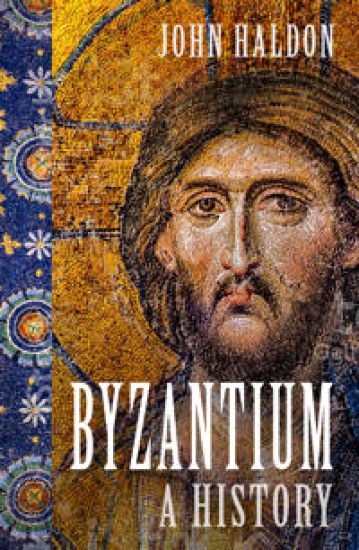
Byzantium

Byzantium

John Haldon

THE HISTORY PRESS LTD
2022
pokkari
Originally the eastern half of the mighty Roman Empire, Byzantium grew to be one of the longest-surviving empires in world history, spanning nine centuries and three continents. It was a land of contrasts – from the glittering centre at Constantinople, to the rural majority, to the heartland of the Orthodox Church – and one surrounded by enemies: Persians, Arabs and Ottoman Turks to the east, Slavs and Bulgars to the north, Saracens and Normans to the west. Written by one of the world’s leading experts on Byzantine history, Byzantium: A History tells the chequered story of a historical enigma, from its birth out of the ashes of Rome in the third century to its era-defining fall at the hands of the Ottoman Turks in 1453.
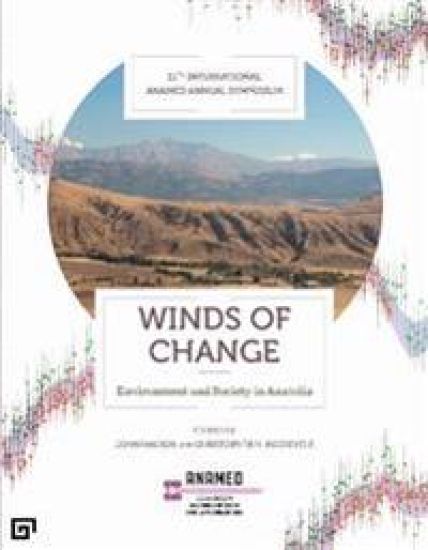
Winds of Change – Environment and Society in Anatolia

Winds of Change – Environment and Society in Anatolia

Christopher H. Roosevelt; John Haldon

Koc University Press
2022
nidottu
Understanding the varied and dynamic interactions between environment and society in Anatolia. In recent decades, the influences of environmental and climatic conditions on past human societies have attracted significant attention from both the scientific community and the general public. Anatolia’s location at the conjunction of Asia, Europe, and Africa and at the intersection of three climatic systems makes it well suited for the study of such effects. In particular, Anatolia challenges many assumptions about how climatic factors affect the socio-political organization and historical evolution, highlighting the importance of close collaboration between archaeologists, historians, and climate scientists. Integrating high-resolution archaeological, textual, and environmental data with longer-term, low-resolution data on past climates, this volume of essays, drawn from the fifteenth International ANAMED Annual Symposium (IAAS) at Koç University’s Research Center for Anatolian Civilizations, showcases recent evidence for periods of climate change and human responses to it, exploring the causes underlying societal change across several millennia.
The De Thematibus ('on the themes') of Constantine VII Porphyrogenitus
The 10th-century treatise on the military provinces (the ‘themes’) of the medieval East Roman (Byzantine) empire is one of the most enigmatic of the works ascribed to the emperor Constantine VII Porphyrogennetos. A mix of historical geography, imperial propaganda, historical information and legend or myth drawn from ancient, Hellenistic as well as Roman and late Roman sources, it was one of the emperor’s earliest works, although the extent to which he was its author remains debated. Its purpose, and the emperor’s aims in commissioning or writing it, are equally unclear, since it offers neither an accurate historical account of the evolution of the themata nor does it appear to draw on available administrative material that would have been available to its writer. It has remained until now untranslated into English and thus inaccessible to many, in particular to students at all levels both within and outside the field of Byzantine Studies, as well as non-specialist readers. This volume is intended to rectify this situation with a translation into English, accompanying detailed notes, and three introductory chapters providing context and background to the history of the text, Byzantine ideas about geography, and the debate over the themata themselves.
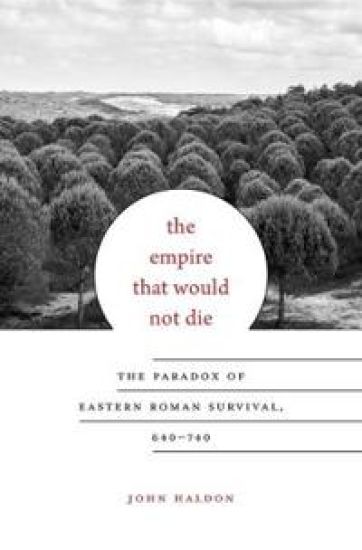
The Empire That Would Not Die

The Empire That Would Not Die

John Haldon

Harvard University Press
2016
sidottu
The eastern Roman Empire was the largest state in western Eurasia in the sixth century. Only a century later, it was a fraction of its former size. Surrounded by enemies, ravaged by warfare and disease, the empire seemed destined to collapse. Yet it did not die. In this holistic analysis, John Haldon elucidates the factors that allowed the eastern Roman Empire to survive against all odds into the eighth century. By 700 CE the empire had lost three-quarters of its territory to the Islamic caliphate. But the rugged geography of its remaining territories in Anatolia and the Aegean was strategically advantageous, preventing enemies from permanently occupying imperial towns and cities while leaving them vulnerable to Roman counterattacks. The more the empire shrank, the more it became centered around the capital of Constantinople, whose ability to withstand siege after siege proved decisive. Changes in climate also played a role, permitting shifts in agricultural production that benefitted the imperial economy. At the same time, the crisis confronting the empire forced the imperial court, the provincial ruling classes, and the church closer together. State and church together embodied a sacralized empire that held the emperor, not the patriarch, as Christendom’s symbolic head. Despite its territorial losses, the empire suffered no serious political rupture. What remained became the heartland of a medieval Christian Roman state, with a powerful political theology that predicted the emperor would eventually prevail against God’s enemies and establish Orthodox Christianity’s world dominion.
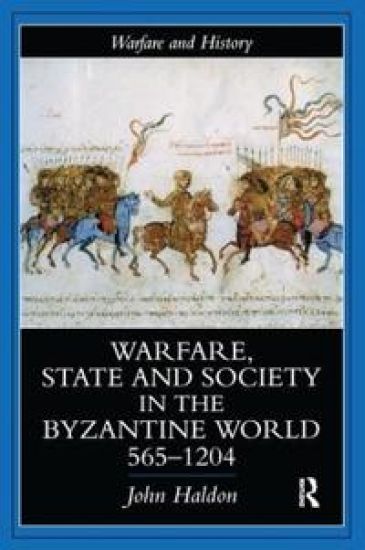
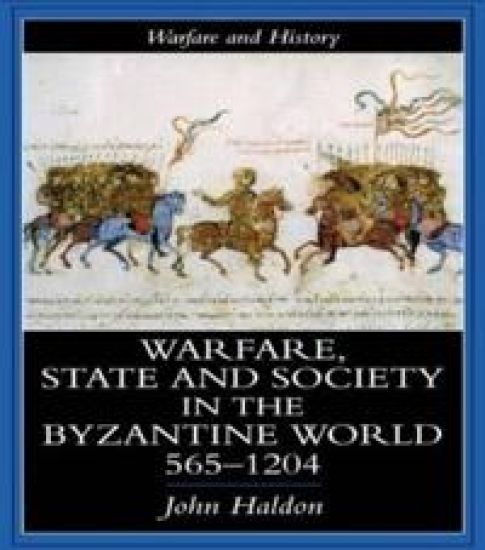
Warfare, State And Society In The Byzantine World 565-1204
Warfare, State and Society in the Byzantine World is the first comprehensive study of warfare and the Byzantine world from the sixth to the twelfth century. The book examines Byzantine attitudes to warfare, the effects of war on society and culture, and the relations between the soldiers, their leaders and society. The communications, logistics, resources and manpower capabilities of the Byzantine Empire are explored to set warfare in its geographical as well as historical context. In addition to the strategic and tactical evolution of the army, this book analyses the army in campaign and in battle, and its attitudes to violence in the context of the Byzantine Orthodox Church. The Byzantine Empire has an enduring fascination for all those who study it, and Warfare, State and Society is a colourful study of the central importance of warfare within it.
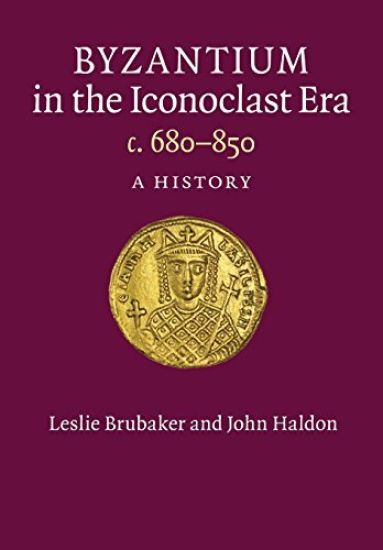
Byzantium in the Iconoclast Era, c. 680–850

Byzantium in the Iconoclast Era, c. 680–850

Leslie Brubaker; John Haldon

Cambridge University Press
2015
pokkari
Iconoclasm, the debate about the legitimacy of religious art that began in Byzantium around 720 and continued for nearly one hundred and twenty years, has long held a firm grip on the historical imagination. This is the first book in English for over fifty years to survey this most elusive and fascinating period in medieval history. It is also the first book in any language to combine the expertise of two authors who are specialists in the written, archaeological and visual evidence from this period, a combination of particular importance to the iconoclasm debate. The authors have worked together to provide a comprehensive overview of the visual, written and other materials that together help clarify the complex issues of iconoclasm in Byzantium. In doing so they challenge many traditional assumptions about iconoclasm and set the period firmly in its broader political, cultural and social-economic context.
A Critical Commentary on The Taktika of Leo VI

A Critical Commentary on The Taktika of Leo VI

John Haldon

Dumbarton Oaks Research Library Collection
2014
nidottu
The "Taktika, " ascribed to the hand of the Byzantine emperor Leo VI "the Wise" (886-912), is perhaps one of the best-known middle Byzantine texts of an official or semi-official genre. Presented in the form of a book of guidance for provincial generals, it served as both a statement of imperial authority and power, as well as a reminder of earlier "good practice" and the centrality of the values of a Christian society in the struggle against its enemies. In particular, the "Taktika "identified Islam, for the first time, as a fundamental threat to the very existence of the Christian Roman Empire and Christianity itself. Yet despite its significance for the history of Byzantine administration, culture, language, and society, no study has ever been devoted to this fascinating text. John Haldon offers the first critical commentary to appear in any language, addressing in detail the many varied subjects touched on in the treatise itself and accompanied by three introductory chapters that examine the context, sources, language, structure and content of the text, as well as the military administration of the empire in Leo's time.
Byzantium in the Iconoclast Era, c. 680–850

Byzantium in the Iconoclast Era, c. 680–850

Leslie Brubaker; John Haldon

Cambridge University Press
2011
sidottu
Iconoclasm, the debate about the legitimacy of religious art that began in Byzantium around 720 and continued for nearly one hundred and twenty years, has long held a firm grip on the historical imagination. This is the first book in English for over fifty years to survey this most elusive and fascinating period in medieval history. It is also the first book in any language to combine the expertise of two authors who are specialists in the written, archaeological and visual evidence from this period, a combination of particular importance to the iconoclasm debate. The authors have worked together to provide a comprehensive overview of the visual, written and other materials that together help clarify the complex issues of iconoclasm in Byzantium. In doing so they challenge many traditional assumptions about iconoclasm and set the period firmly in its broader political, cultural and social-economic context.
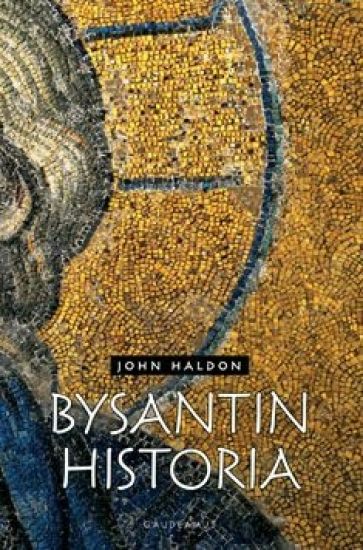
Bysantin historia

Bysantin historia

John Haldon

Gaudeamus
2010
nidottu

Halvin toimitettuna 23,90 €

Bysantin perusta syntyi, kun keisari Konstantinus I Suuri perusti vuonna 330 Konstantinopolin ja teki siitä Rooman imperiumin pääkaupungin, uuden Rooman. Kaupungin ympärille muotoutunut Itä-Rooman keisarikunta yhdisti Euroopan, Aasian ja Afrikan rajalla monia kansoja ja kulttuureja yhteisen kristillisen ja kreikankielisen hallinnon alle. Juuri Bysantin kautta antiikin kirjallinen ja kielellinen perinne välittyi eteenpäin sekä islamilaiseen maailmaan että myöhemmin Länsi-Euroopan renessanssihumanisteille. Bysantin historia on kokonaisesitys Bysantin lähes tuhatvuotisesta valtakunnasta. Se käsittelee valtakamppailujen, sotien ja kulttuurielämän lisäksi yhteiskunnan toimintatapoja ja talouselämää sekä etsii niistä selityksiä valtakunnan kukoistukselle ja lopulta kukistumiselle vuonna 1453.quot;Konstantinus ymmärsi, ettei keisarikuntaa enää voinut hallita Roomasta tehokkaasti yhtenä kokonaisuutena. Hän siirsi pääkaupungin idemmäksi Byzantioniin muinaisen Megaran siirtokunnan alueelle ja antoi sille uuden nimen, Konstantinoupolis, Konstantinuksen kaupunki. Kaupungin sijainti Bosporin salmessa oli strateginen, sillä keisari saattoi ylläpitää sieltä yhteyksiä sekä länteen että itään. Huomattavasti alivoimaisen keisarin armeijan ja heidän läntisten liittolaistensa urheasta vastarinnasta huolimatta janitsaarien valiojoukot onnistuivat viimein ylittämään muurit 29. toukokuuta vuonna 1453. Viimeinen keisari Konstantinos XI kuoli hyökkäyksessä, mutta hänen ruumistaan ei koskaan löydetty. Konstantinopolista tuli osmanien uusi pääkaupunki ja jäljellä olleet Egeanmeren saaret liitettiin osaksi osmani-imperiumia. JOHN HALDON on kansainvälisesti tunnettu Bysantin-tutkija. Hän toimii historian ja Kreikan tutkimuksen professorina Princetonin yliopistossa.
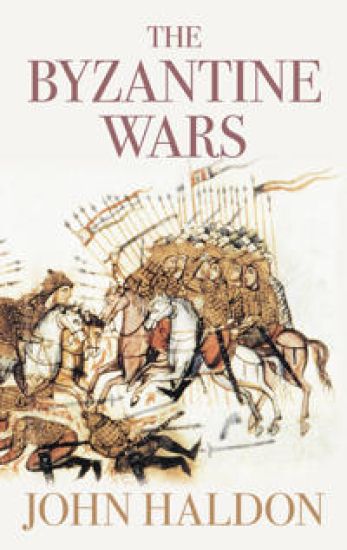
The Byzantine Wars

The Byzantine Wars

John Haldon

The History Press Ltd
2008
nidottu
By the middle of the sixth century the Byzantine emperor ruled a mighty empire that straddled Europe, Asia and North Africa. Within 100 years, this powerful empire had been cut in half. Two centuries later the Byzantine empire was once again a power to be reckoned with, and soon recovered its position as the paramount East Mediterranean and Balkan power, whose fabulous wealth attracted Viking mercenaries and central Asian nomad warriors to its armies, whose very appearance on the field of battle was sometimes enough to bring enemies to terms. No book has ever attempted a survey of Byzantine wars, and few accounts of Byzantine battles have ever been translated into a modern language. This book will provide essential support for those interested in Byzantine history in general as well as a useful corrective to the more usual highly romanticised views of Byzantine civilisation.
Byzantium at War AD 600-1453

Byzantium at War AD 600-1453

John Haldon

Routledge
2003
sidottu
Byzantium survived for 800 years, yet its dominions and power fluctuated dramatically during that time. In this book, John Haldon tells the full story of the Byzantine Empire--from the days when it was barely clinging to survival, to the age when its fabulous wealth attracted Viking mercenaries and Asian nomad warriors, to its armies whose very appearance on the battlefield was enough to bring enemies to terms. In 1453, the last emperor of Byzantium, Constantine XII, died fighting on the ramparts, bringing to a romantic end the glorious history of this legendary empire.
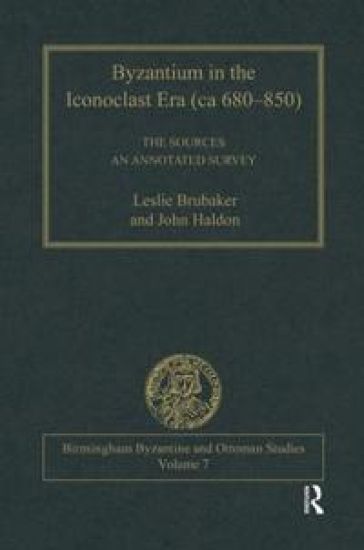
Byzantium in the Iconoclast Era (ca 680–850): The Sources

Byzantium in the Iconoclast Era (ca 680–850): The Sources

Leslie Brubaker; John Haldon

Ashgate Publishing Limited
2001
sidottu
Iconoclasm, the debate about the legitimacy of religious art that began in Byzantium around 730 and continued for nearly 120 years, has long held a firm grip on the historical imagination. Byzantium in the Iconoclast Era is the first book in English to survey the original sources crucial for a modern understanding of this most elusive and fascinating period in medieval history. It is also the first book in any language to cover both the written and the visual evidence from this period, a combination of particular importance to the iconoclasm debate. The authors, an art historian and a historian who both specialise in the period, have worked together to provide a comprehensive overview of the visual and the written materials that together help clarify the complex issues of iconoclasm in Byzantium.
Warfare, State And Society In The Byzantine World 565-1204
Warfare, State and Society in the Byznatine World is the first comprehensive study of the warfare and the Byzantine World from the sixth to the twelfth century. The book examines Byzantine attitudes to warfare, the effects of war on society and culture, and the relations between the soldiers, their leaders and society. The communications, logistics, resources and manpower capabilities of the Byzantine Empire are explored to set warfare in its geographical as well as historical context. In addition to the strategic and tactical evolution of the army, this book analyses the army in campaign and in battle, and its attitudes to violence in the context of the Byzantine Orthodox Church.
Warfare, State And Society In The Byzantine World 565-1204
Warfare, State and Society in the Byzantine World is the first comprehensive study of warfare and the Byzantine world from the sixth to the twelfth century. The book examines Byzantine attitudes to warfare, the effects of war on society and culture, and the relations between the soldiers, their leaders and society. The communications, logistics, resources and manpower capabilities of the Byzantine Empire are explored to set warfare in its geographical as well as historical context. In addition to the strategic and tactical evolution of the army, this book analyses the army in campaign and in battle, and its attitudes to violence in the context of the Byzantine Orthodox Church. The Byzantine Empire has an enduring fascination for all those who study it, and Warfare, State and Society is a colourful study of the central importance of warfare within it.
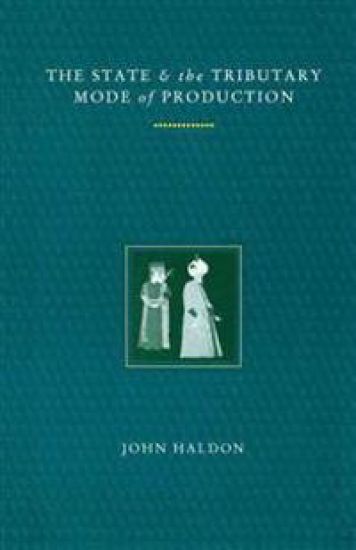
The State and the Tributary Mode of Production
In this groundbreaking critique of both traditional and Marxist notions of feudalism and of the pre-capitalist state, John Haldon considers the configuration of state and social relations in medieval Europe and Mughal India as well as in Byzantium and the Ottoman Empire. He argues that a Marxist reading of the pre-capitalist state can take account of the autonomy of power relations and avoid economic reductionism while still focusing on the forms of tribute which sustained the ruling power. Haldon explores the conflicts to which these gave rise and shows the Ottoman state elite, often held to be a clear example of independence from underlying social relations, to be deeply enmeshed in economic relationships and the extraction of tribute. Haldon argues that feudalism was the specifically European form of a much more widely diffused tributary mode, whose characteristic social relations and structural constraints can be seen at work in the Byzantine, Ottoman and Mughal empires as well. While acknowledging the range of ideological and cultural variation within and between these examples of the tributary mode, Haldon denies the thesis that such "superstructural" variations themselves yielded fundamentally contrasting social relations.