Kirjojen hintavertailu – 12 903 725 kirjaa ja 27 kauppaa
Kirjailija
John Harrison
Kirjat ja teokset yhdessä paikassa: 130 kirjaa, julkaisuja vuosilta 1978–2026, suosituimpiin kuuluu Regions in Evolution. Vertaile teosten hintoja ja tarkista saatavuus suomalaisista kirjakaupoista.
Robert Owen and the Owenites were associated with the rise of an early industrial society in Britain and with the development of an agricultural, frontier society in the United States during the first half of the nineteenth century. This book, originally published in 1969, was the first to use both British and American source material, and tells the story of Robert Owen and the movement associated with his name, from the standpoint of comparative social and intellectual history. The book directs new light on Owenism, and at the same time illuminates general problems of the history of social movements and social change in modern societies.
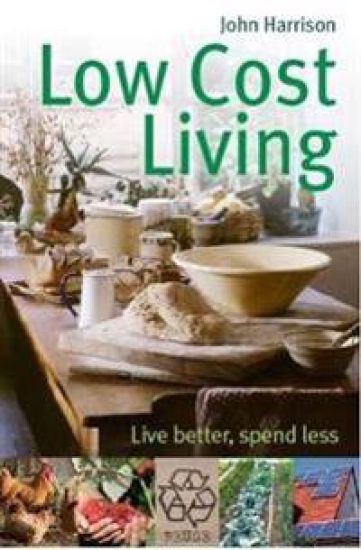
When economic conditions are tough, we all need to watch our spending. John Harrison's simple, tried and tested methods will help you to enjoy a better standard of living while saving money and helping the environment. Discover the benefits of growing your own fruit and vegetables, raising chickens, making butter, cheese and bread, and brewing your own beer. Save energy, save on your bills. Harvest food for free and avoid waste. Play the supermarkets at their own game and get the best deals. See how to recycle, re-use, make do and mend. Find out if solar power is right for you and whether wind power makes domestic sense.
The purpose of this Paperback is to start a debate about the real problem of how we should educate our young people. It is based on the book 'Chance of a Lifetime: How the other half loses' by Jonathan Langdale and John Harrison. To be winners today, young people have to be 'good at school' (or very lucky). Clearly, a great many of them aren't 'good at school', but we believe they are all good at something. Because the Great and the Good became the Great and the Good because they were 'good at school', the received wisdom is that their kind of academic schooling is good for everyone - it must be Look how successful they are Thus the 'best schools' must be facsimiles of their schools and schoolchildren must all be judged by their standards - the gold standards of GCSE A*-C and 'A' Levels followed by university. If only everyone was as academically clever as they are, wouldn't the world be a better place? And the children who fail at their kind of schooling are just that - failures. Over the years we have blamed the failure of secondary education on: The governors The head teachers The teachers and above all... The pupils. 'Chance of a Lifetime' shows that: It isn't the governors It isn't the head teachers It isn't the teachers and It certainly isn't the pupils It's the academically focussed secondary school itself. You can join the debate as soon as this website's Messages Forum is up and running in a few weeks' time/by the end of March 2007 and the book is available to purchase. Join the debate by adding your voice to the growing number who want to give hope to all our young people through an education that is right for them as individuals. About the Author The authors are practitioners with many years experience in teaching, educational leadership and training. They are not "educationalists." That is why they are able to challenge the received wisdom that schools are the only way in which young people can be educated. Both have a passionate interest in enabling all young people to develop their individual talents to the full. Jonathan Langdale is a former head of both junior and senior schools. He now delivers inspirational and motivational courses to teachers and governors and inspects schools. A writer/director of educational and training films, he is a published writer in the personal development field and is also a county level sports coach. John Harrison is an innovative, independent training consultant for public and private sector employers and schools, also operating in the field of personal development. For some years he was responsible for the direction of an Approved Training Organisation (ATO) for engineering apprentices. He works mainly in the UK but also in the USA and in the newly independent states of central Europe.
The sheer complexity of computer systems has meant that automated reasoning, i.e. the ability of computers to perform logical inference, has become a vital component of program construction and of programming language design. This book meets the demand for a self-contained and broad-based account of the concepts, the machinery and the use of automated reasoning. The mathematical logic foundations are described in conjunction with practical application, all with the minimum of prerequisites. The approach is constructive, concrete and algorithmic: a key feature is that methods are described with reference to actual implementations (for which code is supplied) that readers can use, modify and experiment with. This book is ideally suited for those seeking a one-stop source for the general area of automated reasoning. It can be used as a reference, or as a place to learn the fundamentals, either in conjunction with advanced courses or for self study.
This book examines terrorism's impact on the international aviation security regime, with a focus on the role of the United States. Tracing the historical development of the international civil aviation system, the volume examines how it has dealt with the evolving security environment caused by international terrorism. It begins by exploring the practical implications of the debates over the meaning of 'terrorism' and how the international civil aviation community developed practical solutions to avoid the debilitating debates over the concept while crafting important, if weak, international conventions. As a major civil aviation power, the United States was a predominant influence in security developments in the 1960s and 1970s, yet US civil aviation policy failed to keep pace with the changing nature of the terrorist threat. The commanding position that the United States maintains in international civil aviation provides a microcosm of the promise and perils faced by the world's sole superpower. The author examines US efforts to upgrade civil aviation security in the wake of 9/11 and the impacts of these developments on the international civil aviation system. The detailed discussion of terrorism past and present places the threat in its proper context for both the international civil aviation community and its largest individual actor, the United States. This book will be of much interest to students of terrorism, aviation security, international security and IR in general. John Harrison is an Assistant Professor at the S. Rajaratnam School of International Studies and Head of Terrorism Research at the International Center for Political Violence and Terrorism Research.
When Newton died in 1727 he left a library of some 2,100 volumes. This was largely a collection of books regarded by him as a set of working tools – several of the well-thumbed surviving items are evidence of this. The books Newton owned are of considerable interest and importance principally to Newtonian scholars and to historians of science, as well as to booksellers, librarians and book-collectors. The library was kept virtually intact until 1920 when more than half the volumes were auctioned and subsequently dispersed. Scholars have hitherto had to rely on the unpublished Huggins List (1727) and Musgrave Catalogue (c. 1766), or on their less than satisfactory transcription issued in 1931. John Harrison has now remedied this deficiency by compiling a complete and comprehensive catalogue of Newton's library.
Treating ancient plays as living drama. Classical Greek drama is brought vividly to life in this series of new translations. Students are encouraged to engage with the text through detailed commentaries, including suggestions for discussion and analysis. In addition, numerous practical questions stimulate ideas on staging and encourage students to explore the play's dramatic qualities. Hecuba is suitable for students of both Classical Civilisation and Drama. Useful features include full synopsis of the play, commentary alongside translation for easy reference and a comprehensive introduction to the Greek Theatre. Hecuba is aimed primarily at A-level and undergraduate students in the UK, and college students in North America.