

Kirjailija
John Hartley
Kirjat ja teokset yhdessä paikassa: 109 kirjaa, julkaisuja vuosilta 1982–2026, suosituimpiin kuuluu Key Concepts in Creative Industries. Vertaile teosten hintoja ja tarkista saatavuus suomalaisista kirjakaupoista.
109 kirjaa
Kirjojen julkaisuvuodet: 1982–2026.

Seets i' Lundun is an unchanged, high-quality reprint of the original edition of 1876. Hansebooks is editor of the literature on different topic areas such as research and science, travel and expeditions, cooking and nutrition, medicine, and other genres. As a publisher we focus on the preservation of historical literature. Many works of historical writers and scientists are available today as antiques only. Hansebooks newly publishes these books and contributes to the preservation of literature which has become rare and historical knowledge for the future.



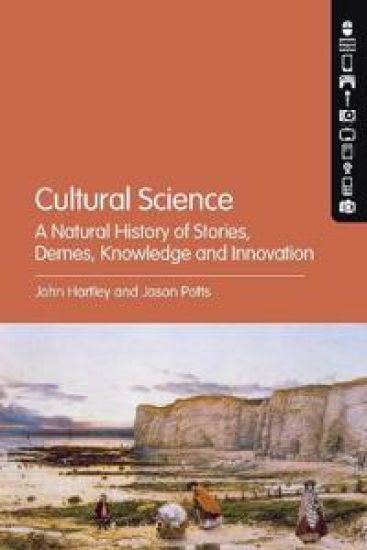
This book is available as open access through the Bloomsbury Open Access programme and is available on www.bloomsburycollections.com. Cultural Science introduces a new way of thinking about culture. Adopting an evolutionary and systems approach, the authors argue that culture is the population-wide source of newness and innovation; it faces the future, not the past. Its chief characteristic is the formation of groups or 'demes' (organised and productive subpopulation; 'demos'). Demes are the means for creating, distributing and growing knowledge. However, such groups are competitive and knowledge-systems are adversarial. Starting from a rereading of Darwinian evolutionary theory, the book utilises multidisciplinary resources: Raymond Williams's 'culture is ordinary' approach; evolutionary science (e.g. Mark Pagel and Herbert Gintis); semiotics (Yuri Lotman); and economic theory (from Schumpeter to McCloskey). Successive chapters argue that:-Culture and knowledge need to be understood from an externalist ('linked brains') perspective, rather than through the lens of individual behaviour; -Demes are created by culture, especially storytelling, which in turn constitutes both politics and economics; -The clash of systems - including demes - is productive of newness, meaningfulness and successful reproduction of culture; -Contemporary urban culture and citizenship can best be explained by investigating how culture is used, and how newness and innovation emerge from unstable and contested boundaries between different meaning systems;-The evolution of culture is a process of technologically enabled 'demic concentration' of knowledge, across overlapping meaning-systems or semiospheres; a process where the number of demes accessible to any individual has increased at an accelerating rate, resulting in new problems of scale and coordination for cultural science to address. The book argues for interdisciplinary 'consilience', linking evolutionary and complexity theory in the natural sciences, economics and anthropology in the social sciences, and cultural, communication and media studies in the humanities and creative arts. It describes what is needed for a new 'modern synthesis' for the cultural sciences. It combines analytical and historical methods, to provide a framework for a general reconceptualisation of the theory of culture – one that is focused not on its political or customary aspects but rather its evolutionary significance as a generator of newness and innovation.
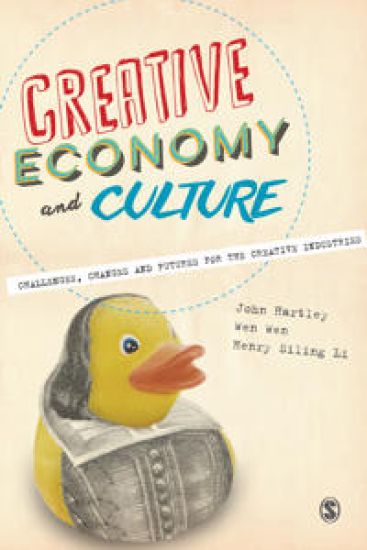
Creative Economy and Culture
John Hartley; Wen Wen; Henry Siling Li
SAGE Publications Ltd
2015
nidottu
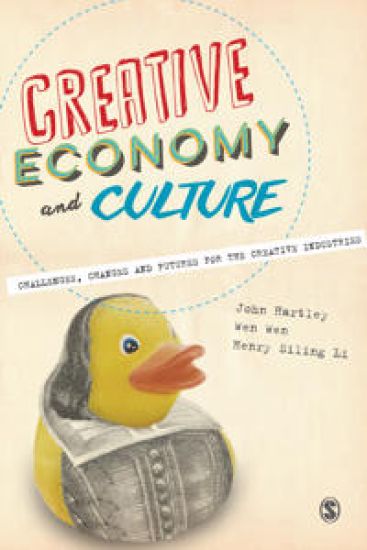
"The most ambitious, thoughtful and internationally aware assessment to date of the creative economy. Defining creativity as the production of newness in complex, adaptive systems, the authors make the case that together the creative economy, along with other cultural outputs, represent a planet-wide innovation capability which marks an epochal turn in human affairs." – Ian Hargreaves, CBE, Professor of Digital Economy, Cardiff University Creativity, new ideas and innovation - and with them the growth of knowledge - have spilled out of the lab, studio and factory into the street, scene, and social media. Now, everyday life is productive, everyone is creative, and new ideas can come from anywhere around the world. Instead of confining cultural expression to talented artists and expert professionals, this book investigates creative new ideas from everyone. Instead of confining the ‘creative industries’ to one sector of the economy and one type of productivity, this book extends the idea of creative innovation to everything. Instead of confining the growth of knowledge to wealthy countries or markets, this book looks for it in developing and emergent countries, everywhere. The productivity of creativity can now be seen as a global phenomenon. It demands a systems-based and dynamic mode of explanation. Creative Economy and Culture pursues the conceptual, historical, practical, critical and educational issues and implications. It looks at conceptual challenges, the forces and dynamics of change, and prospects for the future of creative work at planetary scale. It is essential reading for upper level students and researchers of the creative and cultural industries across media and cultural studies, communication and sociology.
Creative Economy and Culture
John Hartley; Wen Wen; Henry Siling Li
SAGE Publications Ltd
2015
sidottu
"The most ambitious, thoughtful and internationally aware assessment to date of the creative economy. Defining creativity as the production of newness in complex, adaptive systems, the authors make the case that together the creative economy, along with other cultural outputs, represent a planet-wide innovation capability which marks an epochal turn in human affairs." – Ian Hargreaves, CBE, Professor of Digital Economy, Cardiff University Creativity, new ideas and innovation - and with them the growth of knowledge - have spilled out of the lab, studio and factory into the street, scene, and social media. Now, everyday life is productive, everyone is creative, and new ideas can come from anywhere around the world. Instead of confining cultural expression to talented artists and expert professionals, this book investigates creative new ideas from everyone. Instead of confining the ‘creative industries’ to one sector of the economy and one type of productivity, this book extends the idea of creative innovation to everything. Instead of confining the growth of knowledge to wealthy countries or markets, this book looks for it in developing and emergent countries, everywhere. The productivity of creativity can now be seen as a global phenomenon. It demands a systems-based and dynamic mode of explanation. Creative Economy and Culture pursues the conceptual, historical, practical, critical and educational issues and implications. It looks at conceptual challenges, the forces and dynamics of change, and prospects for the future of creative work at planetary scale. It is essential reading for upper level students and researchers of the creative and cultural industries across media and cultural studies, communication and sociology.

Napoleon Bonaparte is often credited with saying that 'an army marches on its stomach'. A hundred years after his time, the soldiers of the Great War would do little marching. Instead, they would fight their battles from cold, muddy trenches, looking out across No Man's Land towards another set of trenches that housed the enemy. It is one of the remarkable successes of the war that they rarely went hungry. During the war, the army grew from its peace-time numbers of 250,000 to well over 3 million. They needed three meals a day and, using the men's own letters and diaries, John Hartley tells the story of the food they ate, how it got to them in those trenches and what they thought of it. It's the story of eating bully beef and army 'dog biscuits' under fire and it's the story of the enjoyment of food parcels from home or eating egg and chips in a cafe on a rare off-duty evening. It's also the story of the lives of loved ones at home - how they coped with rationing and how women changed their place in society, taking on jobs previously held by men, many working as farm labourers in the Women's Land Army. This is a book which will appeal to food lovers as well as those with an interest in military and social history.

News depends for its effect on a culturally shared language, and this book concentrates on ways we can decode its messages without simply reproducing their underlying assumptions.
Yorkshire Ditties - First Series
John Hartley
Createspace Independent Publishing Platform
2015
nidottu
Yorkshire Tales - Third Series
John Hartley
Createspace Independent Publishing Platform
2015
nidottu

Yorkshire Ditties - Second Series
John Hartley
Createspace Independent Publishing Platform
2015
nidottu
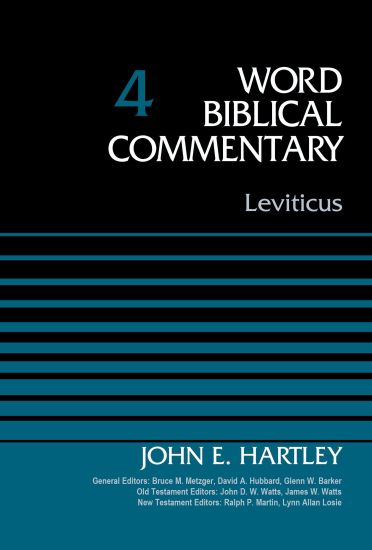
The Word Biblical Commentary delivers the best in biblical scholarship, from the leading scholars of our day who share a commitment to Scripture as divine revelation. This series emphasizes a thorough analysis of textual, linguistic, structural, and theological evidence. The result is judicious and balanced insight into the meanings of the text in the framework of biblical theology. These widely acclaimed commentaries serve as exceptional resources for the professional theologian and instructor, the seminary or university student, the working minister, and everyone concerned with building theological understanding from a solid base of biblical scholarship. Overview of Commentary OrganizationIntroduction—covers issues pertaining to the whole book, including context, date, authorship, composition, interpretive issues, purpose, and theology. Each section of the commentary includes:Pericope Bibliography—a helpful resource containing the most important works that pertain to each particular pericope. Translation—the author’s own translation of the biblical text, reflecting the end result of exegesis and attending to Hebrew and Greek idiomatic usage of words, phrases, and tenses, yet in reasonably good English. Notes—the author’s notes to the translation that address any textual variants, grammatical forms, syntactical constructions, basic meanings of words, and problems of translation. Form/Structure/Setting—a discussion of redaction, genre, sources, and tradition as they concern the origin of the pericope, its canonical form, and its relation to the biblical and extra-biblical contexts in order to illuminate the structure and character of the pericope. Rhetorical or compositional features important to understanding the passage are also introduced here. Comment—verse-by-verse interpretation of the text and dialogue with other interpreters, engaging with current opinion and scholarly research. Explanation—brings together all the results of the discussion in previous sections to expose the meaning and intention of the text at several levels: (1) within the context of the book itself; (2) its meaning in the OT or NT; (3) its place in the entire canon; (4) theological relevance to broader OT or NT issues. General Bibliography—occurring at the end of each volume, this extensive bibliographycontains all sources used anywhere in the commentary.
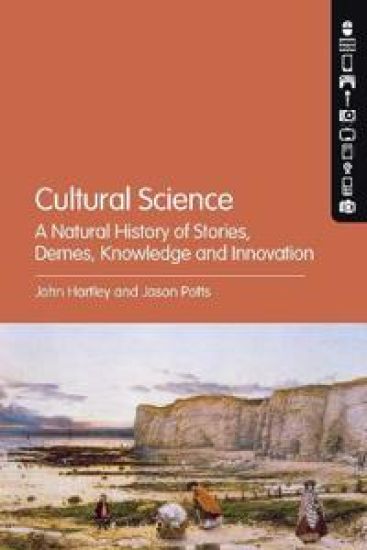
This book is available as open access through the Bloomsbury Open Access programme and is available on www.bloomsburycollections.com. Cultural Science introduces a new way of thinking about culture. Adopting an evolutionary and systems approach, the authors argue that culture is the population-wide source of newness and innovation; it faces the future, not the past. Its chief characteristic is the formation of groups or 'demes' (organised and productive subpopulation; 'demos'). Demes are the means for creating, distributing and growing knowledge. However, such groups are competitive and knowledge-systems are adversarial. Starting from a rereading of Darwinian evolutionary theory, the book utilises multidisciplinary resources: Raymond Williams's 'culture is ordinary' approach; evolutionary science (e.g. Mark Pagel and Herbert Gintis); semiotics (Yuri Lotman); and economic theory (from Schumpeter to McCloskey). Successive chapters argue that:-Culture and knowledge need to be understood from an externalist ('linked brains') perspective, rather than through the lens of individual behaviour; -Demes are created by culture, especially storytelling, which in turn constitutes both politics and economics; -The clash of systems - including demes - is productive of newness, meaningfulness and successful reproduction of culture; -Contemporary urban culture and citizenship can best be explained by investigating how culture is used, and how newness and innovation emerge from unstable and contested boundaries between different meaning systems;-The evolution of culture is a process of technologically enabled 'demic concentration' of knowledge, across overlapping meaning-systems or semiospheres; a process where the number of demes accessible to any individual has increased at an accelerating rate, resulting in new problems of scale and coordination for cultural science to address. The book argues for interdisciplinary 'consilience', linking evolutionary and complexity theory in the natural sciences, economics and anthropology in the social sciences, and cultural, communication and media studies in the humanities and creative arts. It describes what is needed for a new 'modern synthesis' for the cultural sciences. It combines analytical and historical methods, to provide a framework for a general reconceptualisation of the theory of culture – one that is focused not on its political or customary aspects but rather its evolutionary significance as a generator of newness and innovation.

Yorkshire Lyrics Poems Written in the Dialect as Spoken in the West Riding of Yorkshire. to Which Are Added a Selection of Fugitive Verses Not in the
John Hartley
Tredition Classics
2012
pokkari
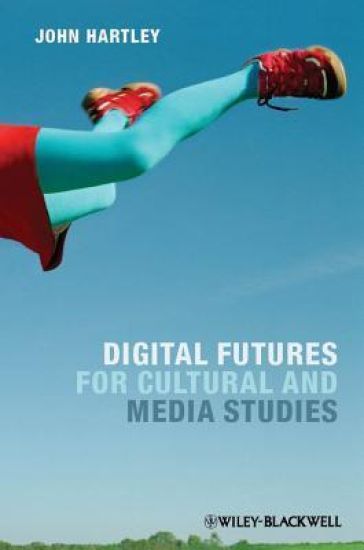
An ambitious rendering of the digital future from a pioneer of media and cultural studies, a wise and witty take on a changing field, and our orientation to it Investigates the uses of multimedia by creative and productive citizen-consumers to provide new theories of communication that accommodate social media, participatory action, and user-creativityLeads the way for new interdisciplinary engagement with systems thinking, complexity and evolutionary sciences, and the convergence of cultural and economic valuesAnalyzes the historical uses of multimedia from print, through broadcasting to the internetCombines conceptual innovation with historical erudition to present a high-level synthesis of ideas and detailed analysis of emergent forms and practicesFeatures an international focus and global reach to provide a basis for students and researchers seeking broader perspectives