Kirjojen hintavertailu – 12 903 735 kirjaa ja 27 kauppaa

Kirjailija

John Hawks

Kirjat ja teokset yhdessä paikassa: 5 kirjaa, julkaisuja vuosilta 2007–2023, suosituimpiin kuuluu Narratives of the French & Indian War. Vertaile teosten hintoja ja tarkista saatavuus suomalaisista kirjakaupoista.

5 kirjaa

Kirjojen julkaisuvuodet: 2007–2023.

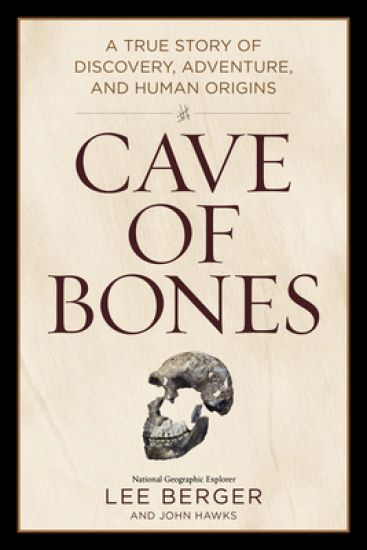
Cave of Bones

Cave of Bones

Lee Berger; John Hawks

National Geographic Society
2023
sidottu

Halvin toimitettuna 29,20 €

In the summer of 2022, Lee Berger lost 50 pounds in order to wriggle though impossibly small openings in the Rising Star cave complex in South Africa—spaces where his team has been unearthing the remains of Homo naledi, a proto-human likely to have coexisted with Homo sapiens some 250,000 years ago. The lead researcher on the site, still Berger had never made his way into the dark, cramped, dangerous underground spaces where many of the naledi fossils had been found. Now he was ready to do so. Once inside the cave, Berger made shocking new discoveries that expanded his understanding of this early hominid—discoveries that stand to alter our fundamental understanding of what makes us human. Distinctly shaped depressions containing a fossil bones appear to be burial graves. Bits of charcoal and blackened rock ceilings point to the deliberate use of fire; charred animal bones suggest fire used for cooking. A stone hidden in among a naledi skeleton has a shape similar to Neanderthal tools. All have been previously known as uniquely defined characteristics of Homo sapiens. So what does it all mean? Join Berger on the adventure of a lifetime as he explores the Rising Star cave system and begins the complicated process of explaining these extraordinary finds—finds that force a rethinking of human evolution, and discoveries that Berger calls 'the Rosetta stone of the human mind.'
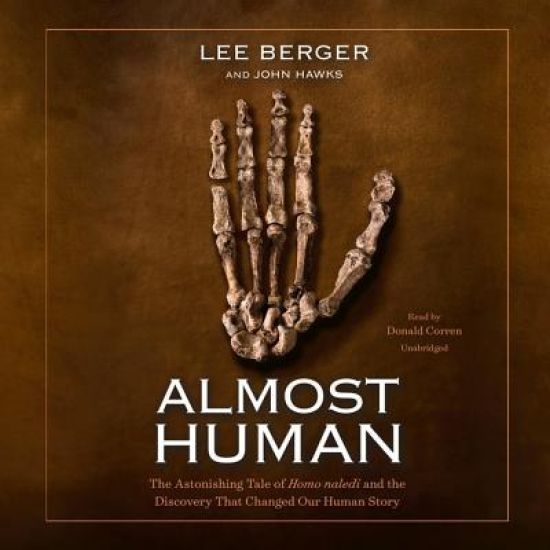
Almost Human Lib/E: The Astonishing Tale of Homo Naledi and the Discovery That Changed Our Human Story
This first-person narrative about an archaeological discovery is rewriting the story of human evolution. A story of defiance and determination by a controversial scientist, this is Lee Berger's own take on finding Homo naledi, an all-new species on the human family tree and one of the greatest discoveries of the twenty-first century. In 2013, Lee Berger, a National Geographic explorer-in-residence, caught wind of a cache of bones in a hard-to-reach underground cave in South Africa. He put out a call around the world for petite collaborators-men and women small and adventurous enough to be able to squeeze through eight-inch tunnels to reach a sunless cave forty feet underground. With this team of underground astronauts, Berger made the discovery of a lifetime: hundreds of prehistoric bones, including entire skeletons of at least fifteen individuals, all perhaps two million years old. Their features combined those of known prehominids like Lucy, the famous Australopithecus, with those more human than anything ever before seen in prehistoric remains. Berger's team had discovered an all new species, and they called it Homo naledi. The cave quickly proved to be the richest prehominid site ever discovered, full of implications that shake the very foundation of how we define what makes us human. Did this species come before, during, or after the emergence of Homo sapiens on our evolutionary tree? How did the cave come to contain nothing but the remains of these individuals? Did they bury their dead? If so, they must have had a level of self-knowledge, including an awareness of death. And yet those are the very characteristics used to define what makes us human. Did an equally advanced species inhabit Earth with us, or before us? Berger does not hesitate to address all these questions. Berger is a charming and controversial figure, and some colleagues question his interpretation of this and other finds. But in these pages, this charismatic and visionary paleontologist counters their arguments and tells his personal story: a rich and readable narrative about science, exploration, and what it means to be human.