
Kirjailija
John Hegarty
Kirjat ja teokset yhdessä paikassa: 5 kirjaa, julkaisuja vuosilta 2014–2024, suosituimpiin kuuluu Hegarty on Advertising. Vertaile teosten hintoja ja tarkista saatavuus suomalaisista kirjakaupoista.
5 kirjaa
Kirjojen julkaisuvuodet: 2014–2024.
Universities as Engines of Economic Development
Edward Crawley; John Hegarty; Kristina Edström; Juan Cristobal Garcia Sanchez
Springer Nature Switzerland AG
2021
nidottu
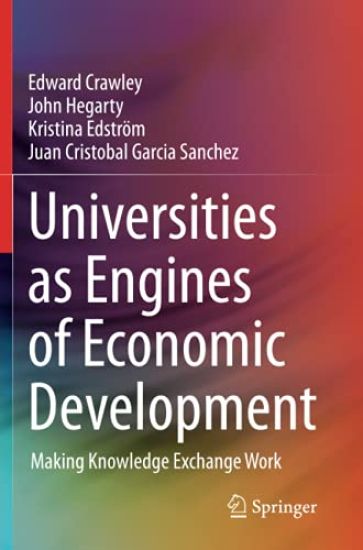
This book describes patterns of behavior that collectively allow universities to exchange knowledge more effectively with industry, accelerate innovation and eventually contribute to economic development. These are based on the effective practices of leading and ambitious universities around the world that the authors have benchmarked, and the personal experiences of the authors in a number of international institution building projects, including those of MIT. The authors provide guidance that is globally applicable, but must be locally adapted. The approach is first to describe the context in which universities act as engines of economic development, and then present a set of effective practices in four domains: education, research, innovation, and supporting practices. Each of these domains has three to six practices, and each practice is presented in a similar template, with an abstract, a rationale and description, key actions and one or two mini-case studies. The practices are summarized by integrative case studies. The book:Focuses on a globally adaptable set of effective practices, complemented by case studies, that can enhance universities’ contribution to economic development, based on an integrated view of education, research and innovation;Presents effective practices and broader insights that come from real global experience, spelled out in templates and explained by cases;Includes tangible resources for university leaders, policy makers and funders on how to proceed.
Universities as Engines of Economic Development
Edward Crawley; John Hegarty; Kristina Edström; Juan Cristobal Garcia Sanchez
Springer Nature Switzerland AG
2020
sidottu
This book describes patterns of behavior that collectively allow universities to exchange knowledge more effectively with industry, accelerate innovation and eventually contribute to economic development. These are based on the effective practices of leading and ambitious universities around the world that the authors have benchmarked, and the personal experiences of the authors in a number of international institution building projects, including those of MIT. The authors provide guidance that is globally applicable, but must be locally adapted. The approach is first to describe the context in which universities act as engines of economic development, and then present a set of effective practices in four domains: education, research, innovation, and supporting practices. Each of these domains has three to six practices, and each practice is presented in a similar template, with an abstract, a rationale and description, key actions and one or two mini-case studies. The practices are summarized by integrative case studies. The book:Focuses on a globally adaptable set of effective practices, complemented by case studies, that can enhance universities’ contribution to economic development, based on an integrated view of education, research and innovation;Presents effective practices and broader insights that come from real global experience, spelled out in templates and explained by cases;Includes tangible resources for university leaders, policy makers and funders on how to proceed.

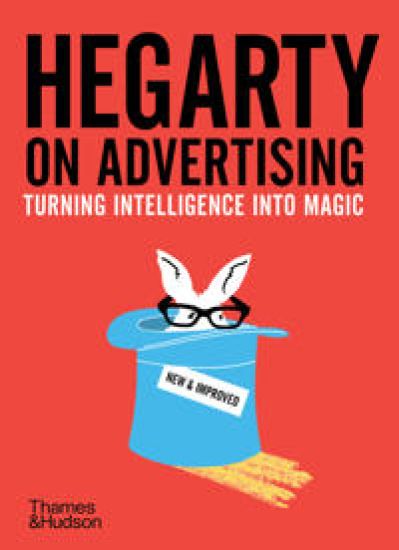
First published by Thames & Hudson in 2011, this is a book that no creative professional should be without. Written by one of the world’s leading advertising men, it contains over four decades of wisdom and insight from the man who put Nick Kamen into a laundrette for Levi Strauss and gave Audi the immortal ‘Vorsprung durch Technik’, among many, many other highly successful campaigns for major brands. This revised and expanded edition discusses the changes that have taken place in the advertising industry and Hegarty’s own career since the original book was first published in 2011. One new section – ‘Why I’m now parking my ideas in a garage’ – discusses Hegarty’s new company, The Garage. In the other new section – ‘From Unilever to the UN via a llama’ – Hegarty talks predominantly about the ad he did for the UN’s ‘Global Goals for their Sustainable Development’ campaign.

Creativity isn’t an occupation, it’s a preoccupation. It is at the very core of what makes us human. It’s also a fundamental challenge that everyone faces in the modern world, be they in business, in education or a struggling artist or musician. Being creative and innovative and communicating our ideas effectively and persuading others is vital. Who could be better able to demystify and set out some useful, generous advice on how to improve, sustain and nurture creativity than one of the world’s greatest advertising creatives and founder of an advertising agency renowned worldwide for its excellence? In this book, John Hegarty takes 50 provocations and themes that lie at the heart of creative thinking. These range from those with complex depths that lie beyond deceptively simple titles such as ‘Idea’, ‘Ego’, ‘Money’ and ‘Technology’, to others that look at the complexities of modern life, such as dealing with cynics in the workplace, or the best way of getting angry. Hegarty’s message is always crystal clear and promotes the benefits of simplifying, thinking boldly and being undaunted by challenges. With this book, when a challenge confronts them, readers will find that one of the great minds in advertising is there to guide them.