Kirjojen hintavertailu – 12 903 725 kirjaa ja 27 kauppaa

Kirjailija

John Henderson

Kirjat ja teokset yhdessä paikassa: 84 kirjaa, julkaisuja vuosilta 1987–2026, suosituimpiin kuuluu Classics. Vertaile teosten hintoja ja tarkista saatavuus suomalaisista kirjakaupoista.

84 kirjaa

Kirjojen julkaisuvuodet: 1987–2026.

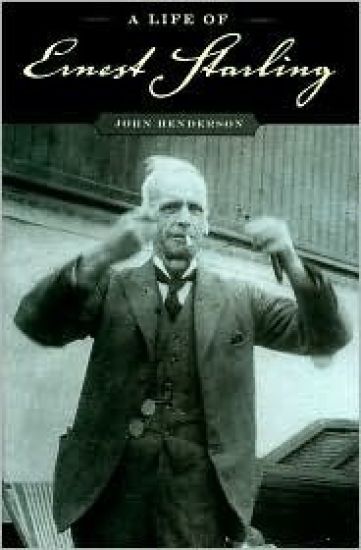
A Life of Ernest Starling

A Life of Ernest Starling

John Henderson

Oxford University Press
2008
sidottu
Ernest Starling (1866-1927) was pre-eminent in the golden age of British Physiology. His name is usually associated with his “Law of the Heart,? but his discovery of secretin (the first hormone whose mode of action was explained) and his work on capillaries were more important contributions. He coined the word 'hormone' one hundred years ago. His analysis of capillary function demonstrated that equal and opposite forces move across the capillary wall--an outward (hydrostatic) force and an inward (osmotic) force derived from plasma proteins. Starling’s contributions include:*Developing the "Frank-Starling Law of the Heart," presented in 1915 and modified in 1919.*The Starling equation, describing fluid shifts in the body (1896) *The discovery of secretin, the first hormone, with Bayliss (1902) and the introduction of the concept of hormones (1905).

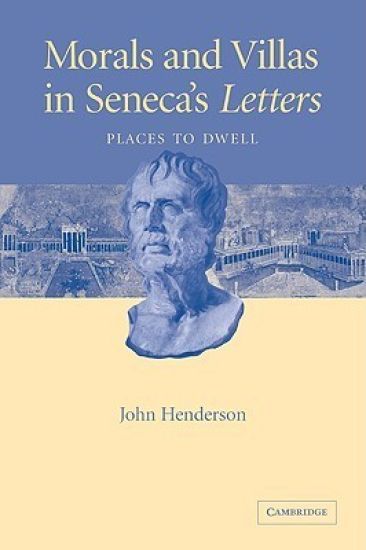
Morals and Villas in Seneca's Letters

Morals and Villas in Seneca's Letters

John Henderson

Cambridge University Press
2007
pokkari
John Henderson explores three letters of Seneca describing visits to Roman villas, and surveys the whole collection to show how these villas work as designs for contrasting lives. Seneca's own place is ageing drastically; a recent Epicurean's paradise is a seductive oasis away from the dangers of Nero's Rome; once a fortress of the dour Rome of yesteryear, the legendary Scipio's lair was now a shrine to the old morality: Seneca revels in its primitive bath-house, dark and cramped, before exploring the garden with the present owner. Seneca brings the philosophical epistle to Latin literature, creating models for moralizing which feature self-criticism, parody and re-animated myth. Virgil and Horace come in for rough handling, as the Latin moralist wrests ethical practice and writing away from Greek gurus and texts, and into critical thinking within a Roman context. Here is powerful teaching on metaphor and translation, on self-transformation and cultural tradition.
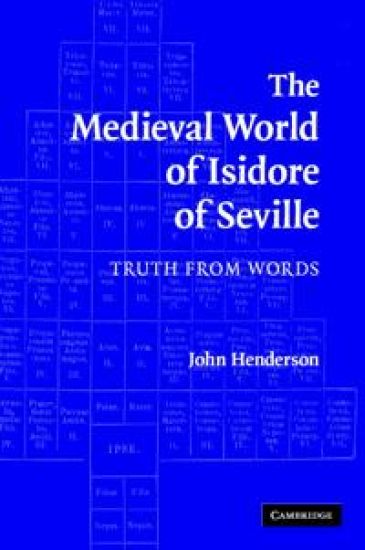
The Medieval World of Isidore of Seville

The Medieval World of Isidore of Seville

John Henderson

Cambridge University Press
2007
sidottu
In his Etymologiae, St Isidore of Seville put together a systematic survey of the world in the form of a vast thesaurus of Latin vocabulary, which supplies a more or less accepted or fanciful etymology for each term. It became one of the most influential books of European culture through the whole medieval period. This Latin 'Roget' is traditionally used as a reference work, accessed through an elaborate index system. In this book Professor Henderson, the most challenging critic writing on Latin literature and Roman culture, presents a full reading of all twenty books of the Etymologiae, showing how the material is sequenced so that its reader is treated to a thoroughgoing education in the world as it was apprehended in Jewish, Graeco-Roman and Christian culture. All Latin, including etymologies, is translated.
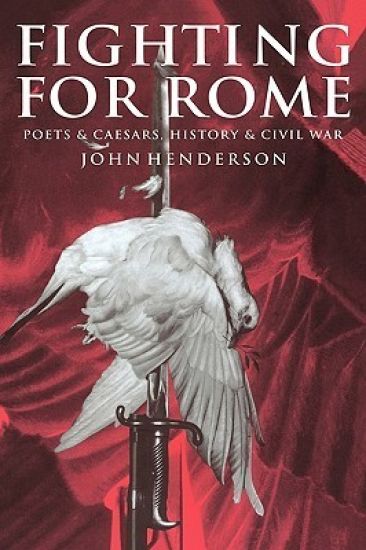
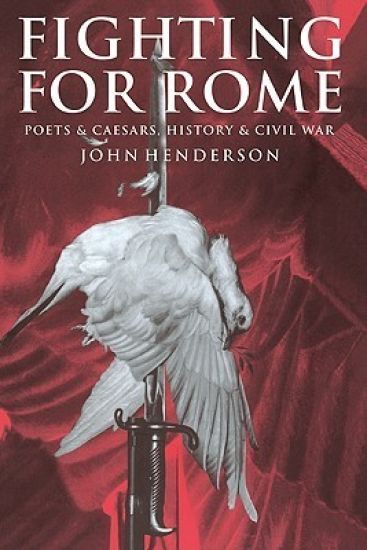
Fighting for Rome

Fighting for Rome

John Henderson

Cambridge University Press
2006
pokkari
The essays in Fighting for Rome confront the traumatic disjunction between the militarist culture of classical Rome, with its heavy investment in valour, conquest and triumph, and the domination of its history by civil war, where Roman soldiers killed so many Romans for control of Rome. The essays gathered and rewritten here range across the literary forms (history, satire, lyric and epic) and work closely with the ancient texts (Appian and Julius Caesar; Horace; Lucan and Statius; Tacitus and Livy). Close reading and powerful translation communicate the ancient writers' efforts to grasp and respond to the Roman civil wars, and to their product, Roman terror under the Caesars. The book aims to bring to life strong reactions to a world order run by civil war.
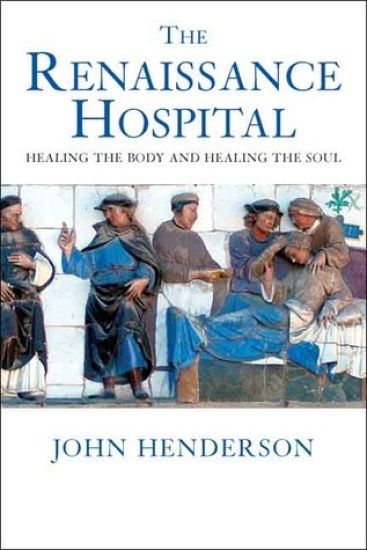
The Renaissance Hospital

The Renaissance Hospital

John Henderson

Yale University Press
2006
sidottu
In this fascinating and richly illustrated book, John Henderson takes us into the Renaissance hospitals of Florence, recreating the enormous barn-like wards and exploring the lives of those who received and those who administered treatment there. Drawing on an exceptional range of visual and documentary evidence, Henderson overturns the popular view of the pre-industrial hospital as a hellish destination for the dying poor. To the contrary, hospitals of the era developed specialized, professional care; became important centers of artistic patronage; and served a large patient population, only ten percent of whom died during their stay. The book explores the civic role of Renaissance hospitals, their beautiful architecture and interior design, and their methods of medical treatment that continue to influence healthcare practices today.
Oxford Reds

Oxford Reds

John Henderson

Bristol Classical Press
2006
sidottu
This book explores the series of classic commentaries on the most important Latin texts published by Oxford University Press between 1933 and 1976, which remain extremely influential textbooks for teaching school and university students wherever Classics is taught to English-speakers: in verse, R. G. Austin on four books of Virgil's "Aeneid" and C. J. Fordyce on "Catullus'; in prose, Austin on Cicero's "Pro Caelio", R. G. Nisbet on Cicero's "De Domo" and R. G. M. Nisbet on Cicero's "In Pisonem". The maroon boards used for these books (hence "Oxford Reds") gave them the added impact of a 'series', and, as well as capturing an impressive niche in the market, they provided a model for editions of Latin authors in the post-war competition for curriculum space in the expanding UK university system. In "Oxford Reds", John Henderson uncovers the individual and often surprising stories behind these publications, and brings out the personalities and negotiations that shaped them. His aim is to encourage students and scholars to take a close look at the textbooks they use and live with and, while not ducking the quirks and frailties, to be alive to their pioneering qualities and pedagogical ambition.
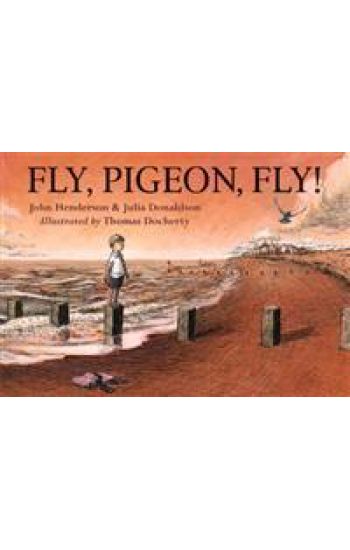
Fly, Pigeon, Fly!

Fly, Pigeon, Fly!

John Henderson; Julia Donaldson; Thomas Docherty

Little Tiger Press
2006
nidottu
When a boy finds a young pigeon, half starved, in a derelict warehouse in Glasgow, he names the pigeon Percy and takes him home. He looks after him and even teaches him to fly. Da says that Percy should be set free, but the boy wants him to stay for ever. This atmospheric book tells the story of an unusual friendship.
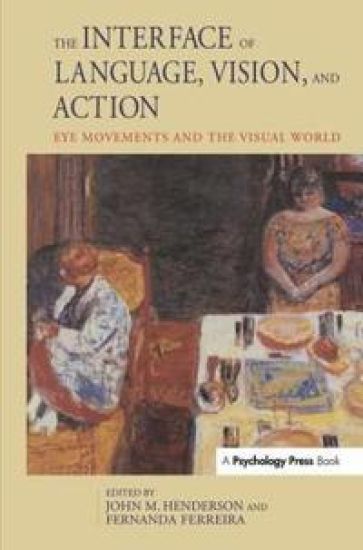
The Interface of Language, Vision, and Action

The Interface of Language, Vision, and Action

John Henderson; Fernanda Ferreira

Psychology Press Ltd
2004
sidottu
This book brings together chapters from investigators on the leading edge on this new research area to explore on the leading edge on this new research area to explore common theoretical issues, empirical findings, technical problems, and outstanding questions. This book will serve as a blueprint for work on the interface of vision, language, and action over the next five to ten years.
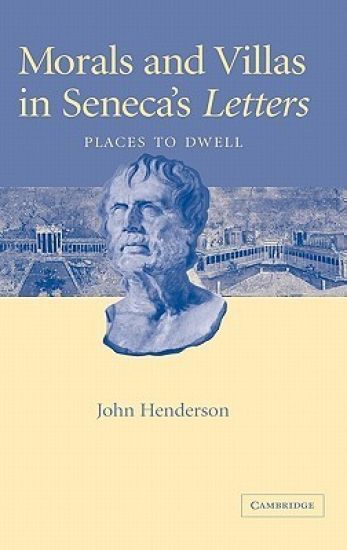
Morals and Villas in Seneca's Letters

Morals and Villas in Seneca's Letters

John Henderson

Cambridge University Press
2004
sidottu
John Henderson explores three letters of Seneca describing visits to Roman villas, and surveys the whole collection to show how these villas work as designs for contrasting lives. Seneca's own place is ageing drastically; a recent Epicurean's paradise is a seductive oasis away from the dangers of Nero's Rome; once a fortress of the dour Rome of yesteryear, the legendary Scipio's lair was now a shrine to the old morality: Seneca revels in its primitive bath-house, dark and cramped, before exploring the garden with the present owner. Seneca brings the philosophical epistle to Latin literature, creating models for moralizing which feature self-criticism, parody and re-animated myth. Virgil and Horace come in for rough handling, as the Latin moralist wrests ethical practice and writing away from Greek gurus and texts, and into critical thinking within a Roman context. Here is powerful teaching on metaphor and translation, on self-transformation and cultural tradition.
The Roman Book of Gardening

The Roman Book of Gardening

John Henderson

Routledge
2004
sidottu
The first book to look at this particular subject, The Roman Book of Gardening brings together an extraordinarily varied selection of texts on Roman horticulture, celebrating herb and vegetable gardening in verse and prose spanning five centuries. In vivid new translations by John Henderson, Virgil's Georgics stand alongside neglected works by Columella, Pliny and Palladius, bringing to life the techniques and obstacles, delights and exasperations of the Roman gardener. We also hear of the digging, hoeing, planting and weeding which then, as now, went into creating the perfect garden. This is a timely and valuable contribution to our understanding of gardening history, Roman culture and Latin literature.
The Roman Book of Gardening

The Roman Book of Gardening

John Henderson

Routledge
2004
nidottu
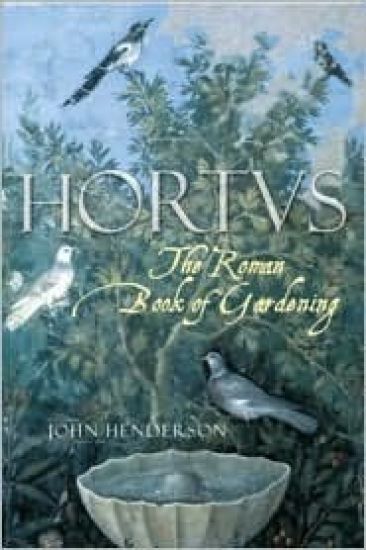
The first book to look at this particular subject, The Roman Book of Gardening brings together an extraordinarily varied selection of texts on Roman horticulture, celebrating herb and vegetable gardening in verse and prose spanning five centuries. In vivid new translations by John Henderson, Virgil's Georgics stand alongside neglected works by Columella, Pliny and Palladius, bringing to life the techniques and obstacles, delights and exasperations of the Roman gardener. We also hear of the digging, hoeing, planting and weeding which then, as now, went into creating the perfect garden. This is a timely and valuable contribution to our understanding of gardening history, Roman culture and Latin literature.
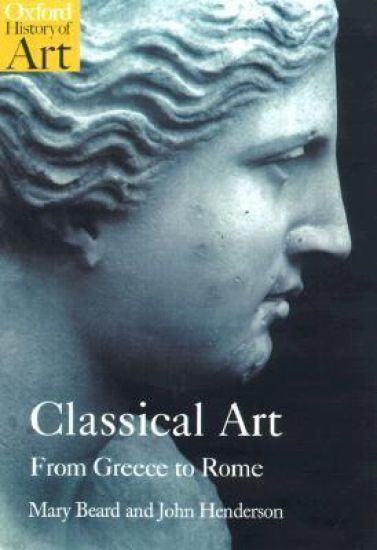
Classical Art

Classical Art

Mary Beard; John Henderson

Oxford University Press
2001
nidottu

Halvin toimitettuna 30,80 €

The stunning masterpieces of Ancient Greece and Rome are fundamental to the story of art in Western culture and to the origins of art history. The expanding Greek world of Alexander the Great had an enormous impact on the Mediterranean superpower of Rome. Generals, rulers, and artists seized, imitated, and re-thought the stunning legacy of Greek painting and sculpture, culminating in the greatest art-collector the world had ever seen, the Roman emperor, Hadrian. This exciting new look at Classical art starts with the excavation of the buried city of Pompeii, and investigates the grandiose monuments of ancient tyrants, and the sensual beauty of Apollo and Venus. Concluding with that most influential invention of all, the human portrait, it highlights the re-discovery of Classical art in the modern world, from the treasure hunts of Renaissance Rome to scientific retrieval in the twenty-first century.
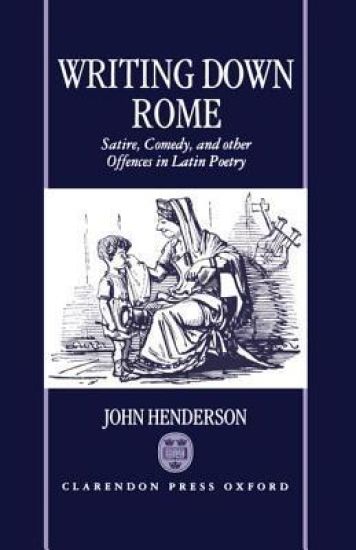
Writing Down Rome

Writing Down Rome

John Henderson

Oxford University Press
1998
sidottu
In a series of controversial essays, this book examines the Roman penchant for denigration, and in particular self-denigration, at the expense of Roman culture. Comedy in Republican Rome radically transformed both itself and the culture from which it sprang: in Poenulus, Plautus laughed at Roman depreciation of Carthage; in Adelphoe, Terence turned on his audience in provocation. The comic Roman poets played with self-mockery: in Eclogue III, Virgil tests his audience's security in judging peasant unpleasantness; in Odes III.22, Horace sends up his own pious rusticity down on the farm. In the second half of the book, Roman verse satire is the subject: the genre of male bragging mocks its own masculine aggression. The great Latin satirists make fun of making fun: Horace, Satires I.9, shows up the politics of humour, unmanned by his own good manners; Persius nails his own weaknesses in fortifying himself against the world; Juvenal, Satire 1, loathes the literary scene he bids to dominate. The book shows a vital ingredient of Roman poetry to be an energetic surge of urbane banter directed towards Roman culure.
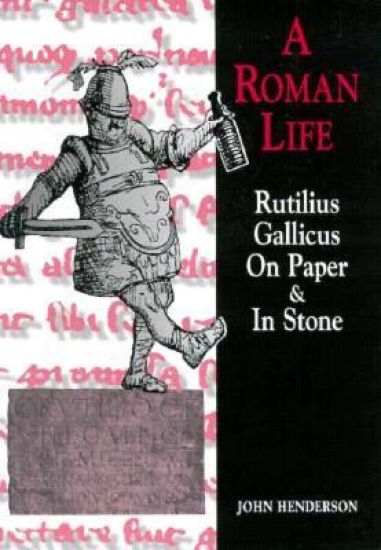
Roman Life

Roman Life

John Henderson

University of Exeter Press
1998
nidottu
Rutilius Gallicus was chief of police, poet and courtier of the Roman Emperor Domitian. He is a unique figure in that he can be studied in detail through both text and inscription, thereby fusing literature with history, and linking poetry with epigraphy. His recovery from a critical illness was celebrated in a sparkling poem by Statius, the poet laureate whose work is currently being read with new interest. As well as taking the reader on a tour across the city of Rome and the provinces, and through Flavian history and culture, Gallicus is by turns a sternly formal public servant, a delicate amateur poet and speaker, a workaholic chasing an early grave, the darling of his people, the strong-man of his tyrant Emperor, the miraculously resurrected patient of Apollo and a soldier-hero of the empire. How long could his luck last?
Fighting for Rome

Fighting for Rome

John Henderson

Cambridge University Press
1998
sidottu
The essays in Fighting for Rome confront the traumatic disjunction between the militarist culture of classical Rome, with its heavy investment in valour, conquest and triumph, and the domination of its history by civil war, where Roman soldiers killed so many Romans for control of Rome. The essays gathered and rewritten here range across the literary forms (history, satire, lyric and epic) and work closely with the ancient texts (Appian and Julius Caesar; Horace; Lucan and Statius; Tacitus and Livy). Close reading and powerful translation communicate the ancient writers’ efforts to grasp and respond to the Roman civil wars, and to their product, Roman terror under the Caesars. The book aims to bring to life strong reactions to a world order run by civil war.