Kirjojen hintavertailu – 12 903 732 kirjaa ja 27 kauppaa

Kirjailija

John Hollander

Kirjat ja teokset yhdessä paikassa: 29 kirjaa, julkaisuja vuosilta 1979–2025, suosituimpiin kuuluu Legal Writing. Vertaile teosten hintoja ja tarkista saatavuus suomalaisista kirjakaupoista.

29 kirjaa

Kirjojen julkaisuvuodet: 1979–2025.

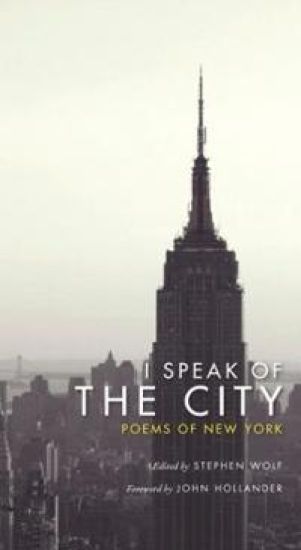
I Speak of the City

I Speak of the City

John Hollander

Columbia University Press
2007
pokkari
I Speak of the City is the most extensive collection of poems ever assembled about New York. Beginning with an early piece by Jacob Steendam (from when the city was called New Amsterdam) and continuing through poems written in the aftermath of 9/11, this anthology features voices from more than a dozen countries. It includes two Nobel Prize recipients, fifteen Pulitzer Prize winners, and many other recognizable names, but it also preserves the work of long-neglected poets who celebrate the wild possibilities and colossal achievements of this epic city. Poets capture New York's major moments and transformations, writing of Hudson's arrival, Stuyvesant's prejudice, and the city's astonishing growth and gentrification. They speak of the thrills of a skyscraper's observation deck and the privations of teeming tenements. They portray the immigrant experience at Ellis Island and the decay, fear, and unexpected kindness on a subway ride. They take place on sidewalks, bridges, and docks; in taxis, buses, and ferries; and even within nature. The Brooklyn Bridge, Times Square, Broadway, the Statue of Liberty, and other familiar landmarks are recast through the prism of individual experience yet still reflect the seeming invincibility of New York and its status as a cultural magnet for the freethinking and experimental. While certain subjects and themes can be found in all urban verse, poems about New York have their own restless rhythm and ever-changing style, much like the city itself. Whether writing sonnets, epics, or experimental or imagistic verse, each of these poets has been inspired by the marvels and madness, humor and heartbreak of an enduring city.
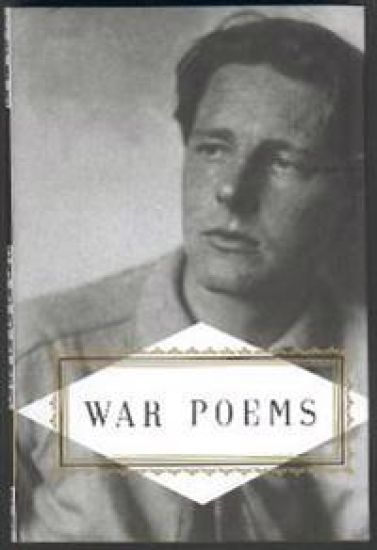
War Poems

War Poems

John Hollander

Everymans Library
1999
sidottu
Poets of all times, places and sensibilities have been moved to write about war. From Horace and Virgl to Steveie Smith, from the anonymous bards of ancient China to Adam Mickiewicz and Primo Levi, these poets have encompassed the entire spectrum of feeling - pride, compassion, courage anger fear excitement, anguish, even laughter.
The Poetry of Everyday Life

The Poetry of Everyday Life

John Hollander

The University of Michigan Press
1998
sidottu
Poet, scholar, teacher, editor, and critic John Hollander has been a colossal presence in the American literary community for several decades. He is known for his mastery of prosody as well as for the wit, nuance, and charm of his poetry. Filled with literary, philosophical, and religious allusions, his work has been compared to the neoclassical writers of the seventeenth century. A difficult and rewarding poet, Hollander challenges his readers to bring everything they possess to the reading of each poem, as he does to the writing of them. In The Poetry of Everyday Life, Hollander grapples with issues of poetry and the imagination. In a series of aphorisms, The book's title essay distinguishes between poetry's relations to the rest of life and other kinds of literature that merely deal literally with it. The essay introduces a range of other prose writing, from poetic fictions in prose (which Hollander calls "enigmatic narratives") to literary essays and memoirs of poets such as W. H. Auden, James Merrill, and Anthony Hecht. There are observations on the eternal problem of verse translation, as well as an interview with Langdon Hammer. Unburdened by theoretical agendas, both the short fables and the critical essays in this volume concern various aspects of the ways in which poetry can engage life most strongly when it most deeply regards itself. John Hollander is the author of numerous books of poetry, including Types of Shape, Harp Lake, and In Time and Place, and criticism, including The Work of Poetry and The Gazer's Spirit. He is Sterling Professor of English, Yale University.
The Poetry of Everyday Life

The Poetry of Everyday Life

John Hollander

The University of Michigan Press
1998
nidottu
Poet, scholar, teacher, editor, and critic John Hollander has been a colossal presence in the American literary community for several decades. He is known for his mastery of prosody as well as for the wit, nuance, and charm of his poetry. Filled with literary, philosophical, and religious allusions, his work has been compared to the neoclassical writers of the seventeenth century. A difficult and rewarding poet, Hollander challenges his readers to bring everything they possess to the reading of each poem, as he does to the writing of them. In The Poetry of Everyday Life, Hollander grapples with issues of poetry and the imagination. In a series of aphorisms, The book's title essay distinguishes between poetry's relations to the rest of life and other kinds of literature that merely deal literally with it. The essay introduces a range of other prose writing, from poetic fictions in prose (which Hollander calls "enigmatic narratives") to literary essays and memoirs of poets such as W. H. Auden, James Merrill, and Anthony Hecht. There are observations on the eternal problem of verse translation, as well as an interview with Langdon Hammer. Unburdened by theoretical agendas, both the short fables and the critical essays in this volume concern various aspects of the ways in which poetry can engage life most strongly when it most deeply regards itself. John Hollander is the author of numerous books of poetry, including Types of Shape, Harp Lake, and In Time and Place, and criticism, including The Work of Poetry and The Gazer's Spirit. He is Sterling Professor of English, Yale University.
The Work of Poetry

The Work of Poetry

John Hollander

Columbia University Press
1998
pokkari
New and classic essays by one of America's most distinguished contemporary poet-critics, The Work of Poetry surveys an extraordinary range of poets, from Dante to May Swenson, and George Meredith to Marianne Moore, as well as works from the Psalms to A Child's Garden of Verses. By turns generous and uncompromising, Hollander champions the enduring force of poetry against the incursion of fashionable writing. This is an elegant, uncompromising affirmation of the extraordinary powers of poetic imagination from a poet whose poems have been hailed by J. D. McClatchy as "ways of thinking on paper."
The Work of Poetry

The Work of Poetry

John Hollander

Columbia University Press
1997
sidottu
New and classic essays by one of America's most distinguished contemporary poet-critics, The Work of Poetry surveys an extraordinary range of poets, from Dante to May Swenson, and George Meredith to Marianne Moore, as well as works from the Psalms to A Child's Garden of Verses. By turns generous and uncompromising, Hollander champions the enduring force of poetry against the incursion of fashionable writing. This is an elegant, uncompromising affirmation of the extraordinary powers of poetic imagination from a poet whose poems have been hailed by J. D. McClatchy as "ways of thinking on paper."
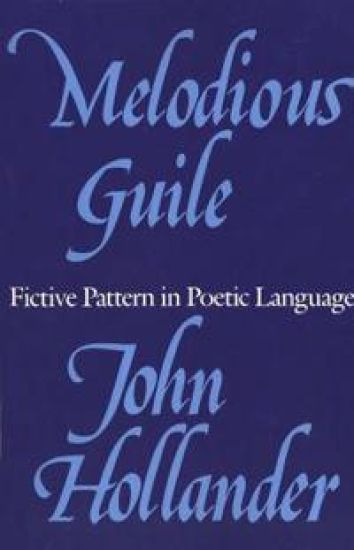
Melodious Guile

Melodious Guile

John Hollander

Yale University Press
1990
pokkari
Demonstrating a poet’s imaginative ear and a critic’s range of concern, John Hollander here writes about the "melodious guile" with which poetry speaks to us. Through analysis of formal and rhetorical patterns in examples chosen from the whole spectrum of English and American poetry, Hollander describes how poems form self-reflexive parable in order to represent realms beyond themselves. "As astute a book about poetry as anyone has produced in the last five years."—David Lehman, Newsday"A lively and enlivening work of criticism."—Library Journal"Hollander, himself a fine poet, is such a generalist; and Melodious Guile, to my mind the best of his critical books, takes its place . . . among the very few enjoyable and enriching studies of how poetry works."—Alastair Fowler, London Review of Books"An incisive display of beautifully integrated erudition. John Hollander demonstrates, just as post-structuralism is waning, that there are other, more cogent theoretical terms for thinking about poetry and for a return to the reading of poetry."—Robert Alter, University of California, BerkeleyNominated for a 1988 National Book Circle Award in Criticism
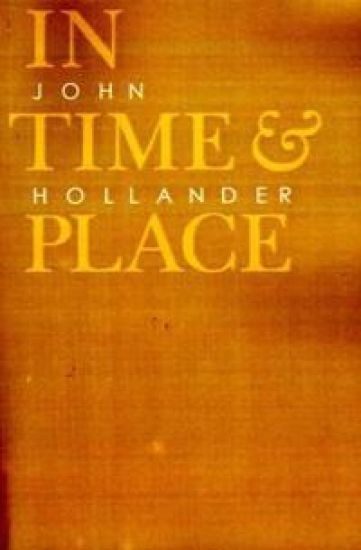
In Time and Place

In Time and Place

John Hollander

Johns Hopkins University Press
1986
pokkari
In this major new collection, John Hollander displays the elegance, versatility, and wit that mark him as perhaps the most urbane poet in America. "In Time and Place" features a generous offering of new verse, an extended prose piece, and a series of prose poems previously available only in a rare, privately published edition. The tightly rhymed quatrains of the new poems demonstrate once again the freedom Hollander achieves through mastery of form. The consummate control with which he writes in memoriam to a lost love and a time of absence gives him opportunities to move through dimensions most poets never see. His purgatorial mock-journal--dwelling on loss and gain, on difference and effacement, on places and the place of writing--leads into a sequence of captivating prose poems, where imagination centers on the word and language celebrates its own creation.
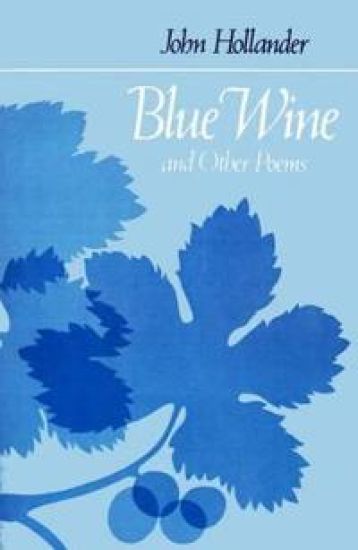
Blue Wine and Other Poems

Blue Wine and Other Poems

John Hollander

Johns Hopkins University Press
1979
pokkari
John Hollander's "Blue Wine and Other Poems," his first collection of verse since the appearance of his new and selected poems, "Spectral Emanations," shows one of our best poetic craftsmen in America moving into a new phase in his distinguished career. Poems on painting and sculpture, in which Hollander examines the static/dynamic interaction of life and art, are balanced against a graceful lyric cycle, which is itself a commentary on the meaning of art songs. The longer poems in this volume--"Blue Wine," "Monuments," "The Train," and "Just for the Ride"--move beyond Hollander's unique blend of meditative elegance, closely observed detail, and learned wit. They explore even further the realms of mythological vision beyond the boundaries of easy irony. Of the title poem, "Blue Wine," Hollander writes, "I visited Saul Steinberg one afternoon and found that he had pasted some mock- (or rather, visionary) wine labels on bottles, which were then filled with a substance I could not identify. This poem is an attempt to make sense out of what was apparently in them."