Kirjailija
John Holloway
Kirjat ja teokset yhdessä paikassa: 37 kirjaa, julkaisuja vuosilta 1983–2026, suosituimpiin kuuluu In, Against, and Beyond Capitalism. Vertaile teosten hintoja ja tarkista saatavuus suomalaisista kirjakaupoista.
37 kirjaa
Kirjojen julkaisuvuodet: 1983–2026.
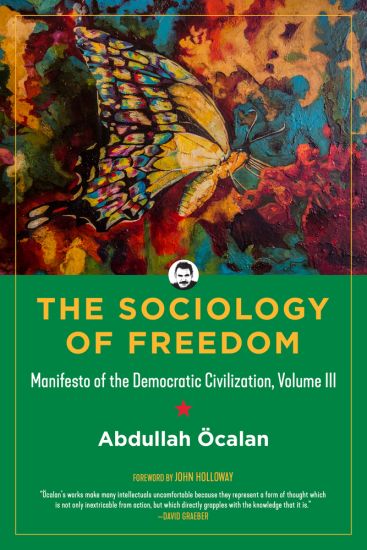
When scientific socialism, which for many years was implemented by Abdullah calan and the Kurdistan Workers' Party (PKK), became too narrow for his purposes, calan answered the call for a radical redefinition of the social sciences. Writing from his prison cell, he offered an astute new analysis of what is happening to the Kurdish people and future prospects for humanity. The Sociology of Freedom is the third volume of a five-volume work titled The Manifesto of the Democratic Civilization. The general aim of the earlier volumes was to clarify what power and capitalist modernity entailed. Here, calan presents his thesis of the Democratic Civilization, based on his criticism of Capitalist Modernity. He advances what is the most radical, far-reaching definition of democracy today and argues that a democratic civilization, as an alternative system, already exists, though systemic power and knowledge structures do not allow it to be seen. This monumental work gives profuse evidence of his position as one of the most influential thinkers of our day.
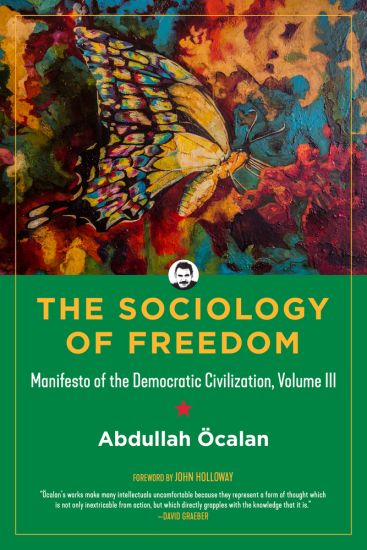
When scientific socialism, which for many years was implemented by Abdullah calan and the Kurdistan Workers' Party (PKK), became too narrow for his purposes, calan answered the call for a radical redefinition of the social sciences. Writing from his prison cell, he offered a new and astute analysis of what is happening to the Kurdish people, their freedom movement, and future prospects for humanity. The Sociology of Freedom is the third volume of a five-volume work titled The Manifesto of the Democratic Civilization. The general aim of the earlier volumes was to clarify what power and capitalist modernity entailed. Here, calan presents his thesis of the Democratic Civilization, based on his criticism of Capitalist Modernity. This volume reveals the remarkable range of one of the Left's most original thinkers with topics such as existence and freedom, nature and philosophy, anarchism and ecology. Recognizing the need for more than just a critique, he has advanced what is the most radical, far-reaching definition of democracy today and argues that a democratic civilization, as an alternative system, already exists, though systemic power and knowledge structures, along with a perverse sectarianism, do not allow it to be seen. This monumental work gives profuse evidence of his position as one of the most influential thinkers of our day.
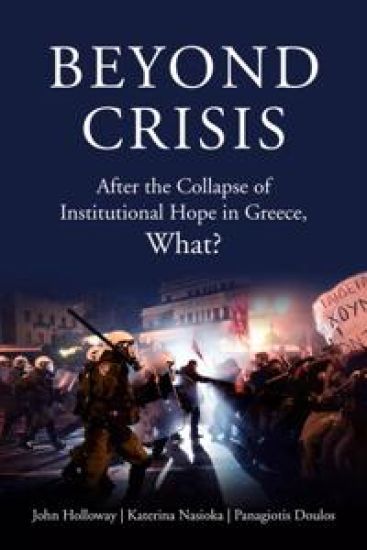
The anarchist or autonomist movement in Greece has been one of the strongest in the world yet it has failed to have a significant impact. Is there nothing beyond the world of capitalist destruction or can we still see some possibility for radical hope? The essays in this collection reflect on the experience of the crisis in Greece and its political implications for the whole world. They do not point a way forward but seek to open windows in the darkening sky of apparent impossibility.
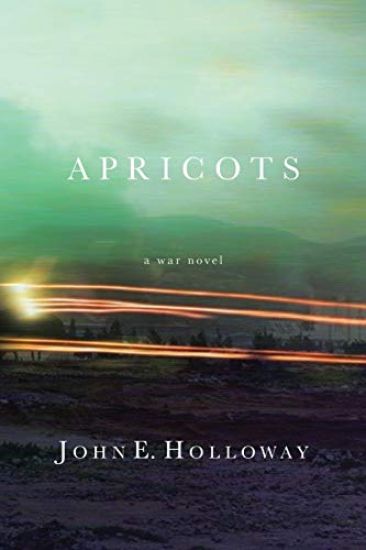
We generally experience overseas military operations in real time through the media of newspaper and television news accounts. These reports are generally superficial sketches of the action and rarely reveal the depth of the drama unfolding on the ground. This novel tells the story of Marines in combat―the comradery, humor, and sacrifice of the men on the ground thousands of miles from home. You go with the Marines out on the ship, ashore for the invasion of Grenada (the last combat of the Cold War), and then on to Beirut where the Marines fight Muslim militia (the first combat of the War on Terror). Throughout, newspaper excerpts track events that provide the setting of this fictional story. But this fictional story is framed by real events, including true accounts of the terrorist attack on the Marine headquarters in Beirut and the coup in Grenada that triggered the invasion. In all, this story shows the reader what it was like to be there.
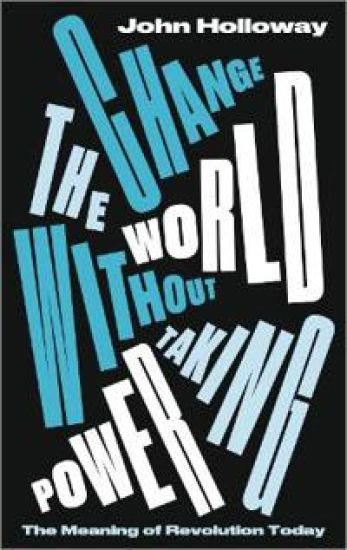
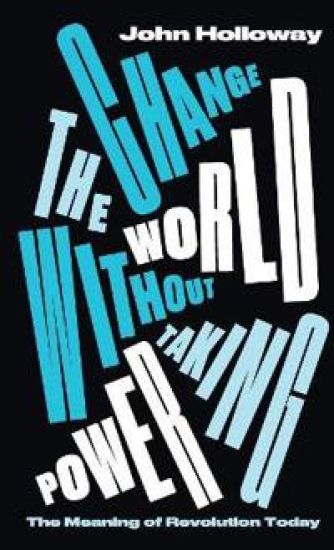
Change the World Without Taking Power
John Holloway
Pluto Press
2019
pokkari
Halvin toimitettuna 30,90 €
This book is a profound search for a theory of social change. Through clearing away the cobwebs of revolutionary socialism, it renews the fight for the ending of capitalism and the construction of a new, fairer world. After a century of failed attempts by radical projects, the concept of revolution itself is in crisis. By asking the deepest questions about the nature of humanity, work, capitalism, organisation and resistance, John Holloway looks sharply at modern protest movements and provides tools for creating new strategies. First published in 2002, this book marked a shift in the understanding of Autonomism, Anarchism and Marxism, addressing the doubts activists had in their own political history and work, and helped form the perspectives of a new generation who are today changing the world.
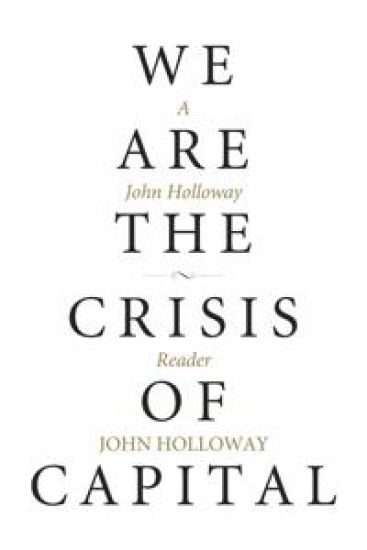
We Are the Crisis of Capital collects articles and excerpts written by radical academic, theorist, and activist John Holloway over a period of forty years. Different times, different places, and the same anguish persists throughout our societies. The articles move forward, influenced by the German state derivation debates of the seventies, by the CSE debates in Britain, and the group around the Edinburgh journal Common Sense, and then moving on to Mexico and the wonderful stimulus of the Zapatista uprising, and now the continuing whirl of discussion with colleagues and students in the Posgrado de Sociologia of the Benemerita Universidad Autonoma de Puebla."
The San Francisco Lectures
First published in 1961. Critiquing the critics, and examining the vocabulary of twentieth century criticism of the Shakespearean tragedies, John Holloway's book covers Hamlet, Othello, Macbeth, King Lear, Antony and Cleopatra, Coriolanus, Timon of Athens and the themes of Shakespearean Tragedy and the idea of human sacrifice and the concepts of myth and ritual in literature.
""Language And Intelligence"" by John Holloway is a comprehensive exploration of the relationship between language and intelligence. The book covers a wide range of topics related to this relationship, including the evolution of language, the role of language in human cognition, the relationship between language and thought, and the relationship between language and culture. Holloway draws on a variety of disciplines, including psychology, linguistics, anthropology, and philosophy, to provide a nuanced and interdisciplinary perspective on the topic. The book is aimed at both students and researchers in these fields, as well as anyone interested in the relationship between language and intelligence. Holloway's writing is clear and accessible, making the book an engaging and informative read. This scarce antiquarian book is a facsimile reprint of the old original and may contain some imperfections such as library marks and notations. Because we believe this work is culturally important, we have made it available as part of our commitment for protecting, preserving, and promoting the world's literature in affordable, high quality, modern editions, that are true to their original work.
How can we rebel against the capitalist system? John Holloway argues that by creating, cracks, fractures and fissures that forge spaces of rebellion and disrupt the current economic order. John Holloway, author of the groundbreaking Change the World Without Taking Power, sparked a world-wide debate among activists and scholars about the most effective methods of fighting capitalism from within. From campaigns against water privatisation, to simply not going to work and reading a book instead, Holloway demands we must resist the logic of capitalism in our everyday lives. Drawing on Marx's idea of 'abstract labour', Holloway develops 33 theses that will help you create, expand and multiply 'cracks' in the capitalist system.
John Holloway is probably best known for his work on Shakespeare and on the Victorian and modern periods; this 1979 book represents an extension of his interests hitherto. Though not intended as mathematical analyses of fiction or drama, the essays here have evolved largely by allowing broad mathematical concepts to suggest original lines of argument in the critical analysis of narrative structure. Among the authors to come under detailed consideration are Boccaccio, Racine, George Eliot, Dostoevsky, Chekhov, and Henry James, as well as several more recent English novelists, and the tendency of the book as a whole is to invite application of the critical approaches that it explores to a still wider range of literary works. Professor Holloway also considers some fundamental issues relating structural analysis to the concerns of the literary critic, and he includes appendices on methods of analysing political oratory, and on the idea of the transformation rule as an aid to the critical discussion of poetry.
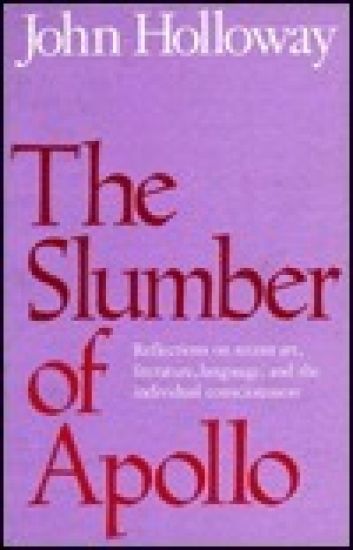
In this challenging 1993 book John Holloway explores one of the most significant aspects of contemporary culture, arguing that over the last hundred years or so there has been a radical change in the very nature of individual consciousness. He traces a crucial shift from an 'Apollonian' ideal of human involvement in the widest range of experience (implying a sense of the individual consciousness as spacious, orderly, and comprehensive) to a narrower and less integrated engagement with the world (and a more reductive conception of consciousness as random and fragmented). He plots this shift through a number of quite different fields: there are chapters on the visual arts, on colloquial language and slang, on cartoons, on political rhetoric, and on 'personality' studies by psychologists. He goes on to examine the work of certain literary figures (notably Hardy, Edwin Muir, Wyndham Lewis, Patrick White, John Cowper Powys, and Gary Snyder) who seem to have recognized, and registered in imaginative terms, the pervasive but generally unrecorded changes in consciousness for which the book is arguing.
First published in 1961. Critiquing the critics, and examining the vocabulary of twentieth century criticism of the Shakespearean tragedies, John Holloway's book covers Hamlet, Othello, Macbeth, King Lear, Antony and Cleopatra, Coriolanus, Timon of Athens and the themes of Shakespearean Tragedy and the idea of human sacrifice and the concepts of myth and ritual in literature.
In this challenging 1993 book John Holloway explores one of the most significant aspects of contemporary culture, arguing that over the last hundred years or so there has been a radical change in the very nature of individual consciousness. He traces a crucial shift from an 'Apollonian' ideal of human involvement in the widest range of experience (implying a sense of the individual consciousness as spacious, orderly, and comprehensive) to a narrower and less integrated engagement with the world (and a more reductive conception of consciousness as random and fragmented). He plots this shift through a number of quite different fields: there are chapters on the visual arts, on colloquial language and slang, on cartoons, on political rhetoric, and on 'personality' studies by psychologists. He goes on to examine the work of certain literary figures (notably Hardy, Edwin Muir, Wyndham Lewis, Patrick White, John Cowper Powys, and Gary Snyder) who seem to have recognized, and registered in imaginative terms, the pervasive but generally unrecorded changes in consciousness for which the book is arguing.