Kirjojen hintavertailu – 12 903 725 kirjaa ja 27 kauppaa

Kirjailija

John Holmes

Kirjat ja teokset yhdessä paikassa: 46 kirjaa, julkaisuja vuosilta 1979–2026, suosituimpiin kuuluu The Farmer's Dog. Vertaile teosten hintoja ja tarkista saatavuus suomalaisista kirjakaupoista.

46 kirjaa

Kirjojen julkaisuvuodet: 1979–2026.

Reduction of a Ship's Magnetic Field Signatures

Reduction of a Ship's Magnetic Field Signatures

John Holmes

Springer International Publishing AG
2008
nidottu

Halvin toimitettuna 37,30 €

Decreasing the magnetic field signature of a naval vessel will reduce its susceptibility to detonating naval influence mines and the probability of a submarine being detected by underwater barriers and maritime patrol aircraft. Both passive and active techniques for reducing the magnetic signatures produced by a vessel's ferromagnetism, roll-induced eddy currents, corrosion-related sources, and stray fields are presented. Mathematical models of simple hull shapes are used to predict the levels of signature reduction that might be achieved through the use of alternate construction materials. Also, the process of demagnetizing a steel-hulled ship is presented, along with the operation of shaft-grounding systems, paints, and alternate configurations for power distribution cables. In addition, active signature reduction technologies are described, such as degaussing and deamping, which attempt to cancel the fields surrounding a surface ship or submarine rather than eliminate its source. Table of Contents: Introduction / Passive Magnetic Silencing Techniques / Active Signature Compensation / Summary
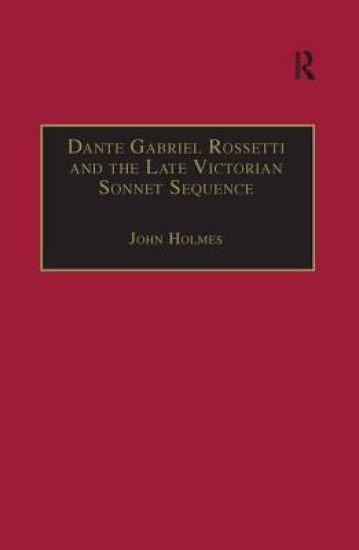
Dante Gabriel Rossetti and the Late Victorian Sonnet Sequence
In 1870, Dante Gabriel Rossetti published the first version of his sonnet sequence The House of Life. The next thirty years saw the greatest flourishing of the sonnet sequence since the 1590s. John Holmes's carefully researched and eloquent study illuminates how leading sonneteers, including the Rossettis, John Addington Symonds, Wilfrid Blunt and Augusta Webster, and their early twentieth-century successors Rosa Newmarch and Rupert Brooke, addressed the urgent questions of selfhood, religious belief and doubt, and sexual and national identity which troubled late Victorian England. Drawing on the heritage of the sonnet sequence, the poetic self-portraits they created are unsurpassed in their subtlety, complexity, courage, and honesty.
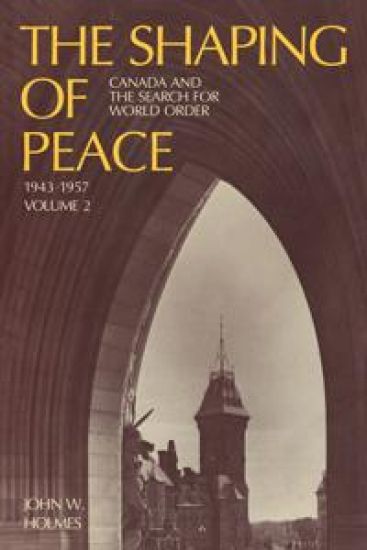
The Shaping of Peace

The Shaping of Peace

John Holmes

University of Toronto Press
1982
pokkari
The establishment of the United Nations system at the conclusion of the Second World War was followed by a period of disillusion in the late 40s about the prospects for world order. With the outbreak of the Korean War in 1950 there came a regrouping of forces and revised calculations of what was possible. The first volume of The Shaping of the Peace described Canadian attitudes and policies towards international institutions as the Second World War ended. This volume is concerned with the developments in the decade after the war, with the changing Canadian concepts as they were shaped by events and challenges. Although principal attention is paid to the organs of the United Nations, other themes such as the establishment of NATO, the progress of the new Commonwealth, and the changing concepts of the North American relationship are analysed as essential elements in the Canadian search for equilibrium. The author was himself involved in many of the activities described in these volumes; this is not a personal memoir, however, but a third-person account based on recollections tempered by research of the records.
The Shaping of Peace

The Shaping of Peace

John Holmes

University of Toronto Press
1979
pokkari
When Mackenzie King went to the San Francisco Conference he told the Commons that Canada had played its part in winning the war and it was now its duty to play a part in 'the shaping of peace.' This is a history and analysis of Canadian participation in the peace settlement and in the establishment of the United Nations and other international institutions, written by a man who was in the Department of External Affairs at the time. Although the book records the principal events, its emphasis is on the ideas and basic philosophies which Canada applied to the world scene in these years. The first of two volumes deals with postwar planning in Ottawa, the institutions which were created before the war ended, and Canada's part in settling the war, both in relief and reconstruction and in the peace treaties. It describes the shifting relations with Britain and the United States, including new defence and economic relationships, the working of the 'atomic triad,' and the postwar Commonwealth. It concludes with an extended discussion of Canada's part in the preparations for San Francisco and in the conference itself, with reference both to political and security issues and the economic and social functions involved. A second volume will describe Canada's attitudes as the cold war developed, the shifts in NATO, the experiences of the Korean War, and the evolution of middle-power diplomacy in the 1950s. John Holmes' well-informed account of 'the shaping of peace' is the first to provide a comprehensive overview of what has been regarded as Canada's most creative initiative in international affairs.