Kirjailija
John Hughes
Kirjat ja teokset yhdessä paikassa: 298 kirjaa, julkaisuja vuosilta 1978–2026, suosituimpiin kuuluu Gumbo. Vertaile teosten hintoja ja tarkista saatavuus suomalaisista kirjakaupoista.
298 kirjaa
Kirjojen julkaisuvuodet: 1978–2026.

Telephone English trainiert Lernende auf dem pre-intermediate bis intermediate Level, am Telefon sicher und effektiv auf Englisch zu kommunizieren. Sie erfahren, wie man sich auf Englisch freundlich und höflich ausdrückt, Small Talk macht und verschiedene Sprachregister verwendet. Integriert im Student?s Book ist eine Audio-CD, so dass sich alle Übungen auch für das Selbststudium eignen. Vertiefungsaufgaben am Ende jedes Abschnitts sowie eine umfassende Phrase Bank, die ein schnelles Auffinden von Wörtern und Ausdrücken ermöglicht, machen Telephone English zu einem unverzichtbaren Helfer für die Berufspraxis.

Speaking naturally and with confidence on the telephone is one of the hardest hurdles to overcome when learning a foreign language. Telephone English trains students to use the telephone confidently and effectively in the course of their work. The accompanying audio CD provides a wide range of phone call examples to increase student confidence.

Johnnie Walker Red Label, Black & White, Bells, J&B, Talisker, Lagavulin - all world famous brands, but what were their origins and what is their history?
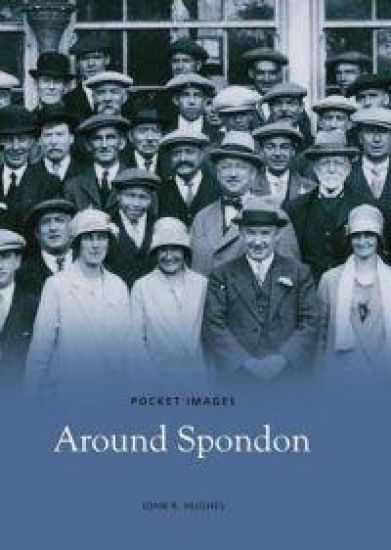
Around Spondon
Understanding Classical Sociology
John Hughes; Wes Sharrock; Peter J Martin
SAGE Publications Inc
2003
sidottu
Praise for the First Edition: `Totally reliable… the authors have produced a book urgently needed by all those charged with introducing students to the classics… quite indispensable' - Times Higher Education Supplement This is a fully updated and expanded new edition of the successful undergraduate text. Providing a lucid examination of the pivotal theories of Marx, Durkheim and Weber, the authors submit that these figures have decisively shaped the discipline. They show how the classical apparatus is in use, even though it is being directed in new ways in response to the changing character of society. Written with the needs of undergraduates in mind, the text is essential reading for students in sociology and social theory.
Understanding Modern Sociology
Wes Sharrock; John Hughes; Alan Pratt
SAGE Publications Inc
2003
nidottu
From the team that brought you the bestselling Understanding Classical Sociology (SAGE Publications, 1995), we now have a companion volume dealing with the modern period of social theory. An introductory chapter situates the reader in the main changes in society and sociology following the classic period. This is then followed by separate chapters giving a detailed account of four perspectives that are regarded to be of seminal importance - Functionalism, Critical Theory, Structuralism and Symbolic Interactionism. All of the popular features of Understanding Classical Sociology are reproduced in this book: · Clarity of exposition and criticism · A passion for the importance and relevance of sociological reasoning and explanation · A commitment to treat social theory as a living tradition of thought In addition, the volume comes with a variety of pedagogic aids including summary points and key definitions to facilitate learning and study. This is a book that enhances the sociological imagination. It draws on the authors deep understanding and experience of teaching the subject over many decades. It will be welcomed by lecturers as a vital new teaching and research aid, and students will be stimulated and enriched by the unfussy and reliable advice on doing sociology that it imparts.
Understanding Modern Sociology
Wes Sharrock; John Hughes; Alan Pratt
SAGE Publications Inc
2003
sidottu
From the team that brought you the bestselling Understanding Classical Sociology (SAGE Publications, 1995), we now have a companion volume dealing with the modern period of social theory. An introductory chapter situates the reader in the main changes in society and sociology following the classic period. This is then followed by separate chapters giving a detailed account of four perspectives that are regarded to be of seminal importance - Functionalism, Critical Theory, Structuralism and Symbolic Interactionism. All of the popular features of Understanding Classical Sociology are reproduced in this book: · Clarity of exposition and criticism · A passion for the importance and relevance of sociological reasoning and explanation · A commitment to treat social theory as a living tradition of thought In addition, the volume comes with a variety of pedagogic aids including summary points and key definitions to facilitate learning and study. This is a book that enhances the sociological imagination. It draws on the authors deep understanding and experience of teaching the subject over many decades. It will be welcomed by lecturers as a vital new teaching and research aid, and students will be stimulated and enriched by the unfussy and reliable advice on doing sociology that it imparts.
Understanding Classical Sociology
John Hughes; Wes Sharrock; Peter J Martin
SAGE Publications Inc
2003
nidottu
Praise for the First Edition: `Totally reliable… the authors have produced a book urgently needed by all those charged with introducing students to the classics… quite indispensable' - Times Higher Education Supplement This is a fully updated and expanded new edition of the successful undergraduate text. Providing a lucid examination of the pivotal theories of Marx, Durkheim and Weber, the authors submit that these figures have decisively shaped the discipline. They show how the classical apparatus is in use, even though it is being directed in new ways in response to the changing character of society. Written with the needs of undergraduates in mind, the text is essential reading for students in sociology and social theory.

120,000 people are Friends of Laphroaig Distillery, 150,000 tourists visit Glenturret every year, 15,000 are members of the Scotch Whisky Society! Why does whisky arouse such passion? What is it about the drink that attracts such a loyal following and why, if it is so popular, are there only eighty-seven malt whisky distilleries left out of the eight hundred constructed? This book will tell all. The author, responsible for marketing of the Famous Grouse for fifteen years, has been in a unique position to record the decline of the malt distillery and also to look at the remaining distilleries and explain why they survive today. The story is one of politics, taxation, social history, location, supply and demand and sheer perseverance on the part of some. Illustrated with around 200 colour illustrations of distilleries old and new and of the processes involved in the manufacture of Scotland's biggest single export.
This book studies the ways Hardy writes about music, and argues that this focus allows for a close and varied investigation of the affective dimensions of his poetry and fiction, and his recurrent preoccupations with time, community and love. Throughout his work Hardy associates music with moments of individual expression and relatedness. For him, music provokes a response to life that is inseparable from what gives life value, as well as being incompatible with his increasingly conscious vision of personal and social limitation. The first two chapters trace how this ironic disjunction is evident in the novels and the tales, while exploring in detail how they represent and evoke the spiritual and emotional transports of musical experience. In a corresponding way, the third and fourth chapters concentrate on how, within the poetry, music works as a vehicle of inspiration and memory, recurrently surprising the conscious self with intimations of other potentials of expression. In the fifth chapter, the focus falls on Hardy's own philosophical reading, and thus on his notebooks and letters, so as to revisit in an altered context many of the issues that have been opened up by the book's emphasis on his literary representations of musical experience-issues of individuality, of unconscious and bodily experience, of literary language. Finally, although the book does incorporate some biographical detail about Thomas Hardy's lifelong passion for playing and collecting music, it predominantly works through close reading, while also drawing at points on literary theoretical texts, where these offer ways of articulating the broad questions of literary convention and representation that arise.

This book offers a sustained engagement with the writings of the increasingly influential French philosopher and writer on literature, Gilles Deleuze, offering an introduction to his fascinating body of work and emphasizing its multiple possibilities for literary study. Deleuze offers a 'philosophy of becoming' whose many aspects are gaining increasing importance in a variety of disciplines both on the Continent and in Anglo-American circles. Accordingly, the first part of the book stresses the distinctiveness of Deleuze's work, setting out its provenance and recurrent concerns, and developing an account of its relevance for literary theory and literary criticism. The second part of the book provides, in these latter contexts, close readings of several late nineteenth- and early twentieth-century works of fiction by Hardy, Gissing, Conrad and Woolf. Above all, Deleuze's work opens up ways of reading that enable an articulation of fundamental ethical and effective issues explored and staged within literary texts.
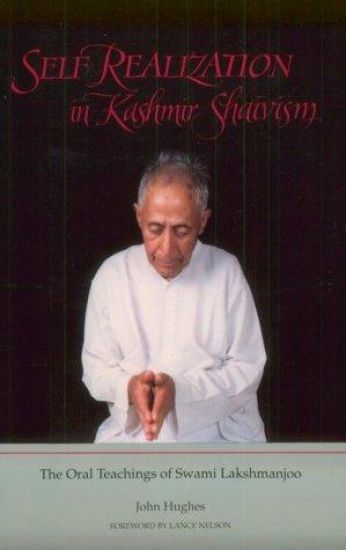
Self Realization in Kashmir Shaivism
John Hughes
State University of New York Press
1994
pokkari
Halvin toimitettuna 30,80 €
This book presents the oral teachings of the twentieth century's great Kashmir Shaivite master. The last of his long lineage, Swami Lakshmanjoo preserved, as did his predecessors, the oral knowledge that illuminates this ancient philosophy-that clarifies the often deliberately obscure tantric texts. Swami Lakshmanjoo reveals the essence of the way and the means to self realization. Here in his own original discourses, as well as in his English renderings of Abhinavagupta and Kshemaraja, he unveils the essential teachings of this yoga philosophy. Swami Lakshmanjoo reveals the tantric understanding of the purpose and reason for creation. He offers instruction on the greatness and importance of the supreme mantra sauh\. In his presentation of effective practice, he explains why meditation is both effortless and, at the same time, difficult. In his discussion of discipline he clarifies why personal habits and dispositions play an important part in spiritual growth. Finally, in his unveiling of the path of Kundalini yoga, he is intent on exposing and thereby preserving this hidden and elevated process while warning of its pitfalls. Contains 8 black and white, 14 full color photographs.
Francisco de la Torre has long been praised as an outstanding poet in the mould of Garcilaso de la Vega and his simplicity of style and soft, gentle, Arcadian environment of his poetry have been emphasized. In this volume Professor Hughes attempts to define more accurately the position of Francisco de la Torre's verse in the evolution of Spanish poetry in the sixteenth century, revealing that Torre's vision of the pastoral world and his poetic language show him to be a transitional poet of considerable quality and substance and not merely an imitator of Garcilaso. Hughes demonstrates that while some of Torre's poetry follows a general pastoral pattern, his descriptions are characterized by a sense of movement through a shifting perspective and that even in poems with a traditional pastoral setting, the descriptions sometimes negate the pastoral qualities. The author also shows that Torre, rather than looking back towards Garcilaso and his contemporaries, is already anticipating – especially in his stylistic technique and in his view of nature – the attitude of the seventeenth century.