Kirjojen hintavertailu – 12 903 725 kirjaa ja 27 kauppaa
Kirjailija
John Hutchinson
Kirjat ja teokset yhdessä paikassa: 27 kirjaa, julkaisuja vuosilta 1997–2025, suosituimpiin kuuluu The Dynamics of Cultural Nationalism. Vertaile teosten hintoja ja tarkista saatavuus suomalaisista kirjakaupoista.
First published in 1987, The Dynamics of Cultural Nationalism demonstrates the nature and role of cultural nationalism as a separate movement in the creation of modern nations. This is done through an intensive study of the modern Irish movements, and in particular the Gaelic revival at the end of the nineteenth century, which makes clear the importance of cultural nationalism as a vision and politics in its own right. The author, by approaching his material as both historian and sociologist, is able to illuminate the Irish case of nationalism by placing it in a broad, comparative perspective, showing how cultural nationalism has often provided those answers to the problems of nation building and the rediscovery of national identity that political nationalism failed to provide. This book will be of interest to all those in the social sciences and history who are concerned with problems of national identity, the uses of history and culture in the creation of modern nations, and the particular case of the development of nationalist movements in Ireland.
First published in 1987, The Dynamics of Cultural Nationalism demonstrates the nature and role of cultural nationalism as a separate movement in the creation of modern nations. This is done through an intensive study of the modern Irish movements, and in particular the Gaelic revival at the end of the nineteenth century, which makes clear the importance of cultural nationalism as a vision and politics in its own right. The author, by approaching his material as both historian and sociologist, is able to illuminate the Irish case of nationalism by placing it in a broad, comparative perspective, showing how cultural nationalism has often provided those answers to the problems of nation building and the rediscovery of national identity that political nationalism failed to provide. This book will be of interest to all those in the social sciences and history who are concerned with problems of national identity, the uses of history and culture in the creation of modern nations, and the particular case of the development of nationalist movements in Ireland.
In 1861, Union soldier and Episcopal seminarian Private Krieger Andrewes is severely wounded at the Battle of Wilson's Creek in southwest Missouri. Facing surgical amputation of his leg and probable death at the hands of a field surgeon, Krieger is spirited away from the battlefield by a mysterious backwoods woman who calls herself a healer. She saves Andrewes and nurses him back to health until Krieg returns to Saint Louis to resume his studies. Both Krieg and the healer consider their callings, commitments, and what love looks like in the midst of a dangerous war that jeopardizes their futures. Buttressed by painstaking historical research, Whiskey Woman, introduces one of the most engaging female characters in literature and follows two characters through a harrowing but inspiring ride amidst the struggles of war. Told without sentimentality and moralization, this story introduces readers to the vibrant and colorful culture that marked the Ozarks in the mid-nineteenth Century.
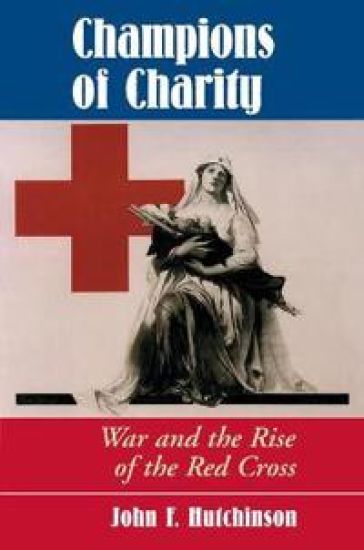
A character in an Evelyn Waugh novel once remarked that ? There's nothing wrong with war?except the fighting.? In Champions of Charity, John Hutchinson argues that while they set out with a vision to make war more humane, the world's Red Cross organizations soon became enthusiastic promoters of militarism and sacrifice in time of war. The mass armies of the nineteenth century were stalked by disease and slaughtered by ever more destructive weaponry, arousing the indignation and humanitarian concern of self-appointed battlefield Samaritans, who envisioned a neutral corps of volunteer nurses who would aid and comfort wounded soldiers, regardless of nationality. But the champions of charity soon became champions of war. Florence Nightingale was among the few at the time to recognize the dangers lurking in the Red Cross vision. She refused to join, and warned its founders that the governments of the world would cooperate with the Red Cross because ?it would render war more easy.? She was right; starting in the late 19th century armies simply used the Red Cross to efficiently recycle wounded men back into the frontlines. In World War I, national Red Cross societies became enthusiastic wartime propagandists. This was true in every combatant nation, and it is a transformation well portrayed by the fascinating selection of art in this book. Soon Red Cross personnel were even sporting military-style uniforms, and in the United States, the Red Cross became so identified with the war effort that an American citizen was convicted of treason for criticising the Red Cross in time of war! The Red Cross played an especially important role in encouraging the mass involvement of women in the ?home front? for the first time. It did this through magazines, postcards, posters, bandage-rolling parties, and speeches that blended romantic images of humanitarianism and war into a unique brand of maternal militarism. A true pioneer in mass propaganda, the Red Cross taught millions that preparation for war was not just a patriotic duty, but a normal and desirable social activity. The Red Cross societies had proven their usefulness in mobilizing civilians in wartime, and most of their functions were taken over by government agencies by the time of World War II. Gradually the Red Cross became better known for its work in public health, disaster relief, and lifesaving classes. But the legacy of a darker past still lingers: the red cross on a white background found on army ambulances, or the unsubtle subtext of sacrifice and heroism in Red Cross television advertising. It is a legacy the Red Cross itself has preferred not to acknowledge in its own self-congratulatory literature. For not only was the humanitarian impulse that inspired the creation of the Red Cross easily distorted, but this urge to militarize came from within its own ranks. This startling and provocative history of the Red Cross reminds us of the hidden dangers that sometimes come cloaked in the best of intentions.
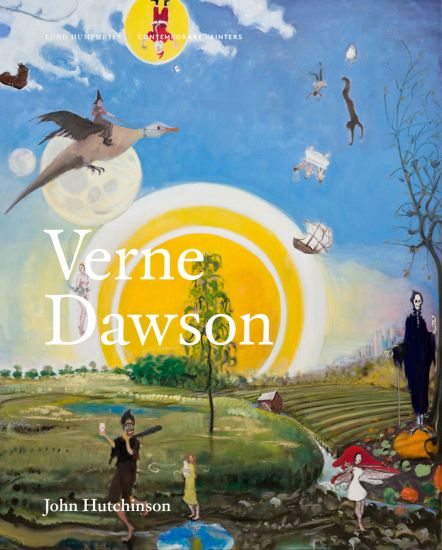
The allusive paintings of Verne Dawson (b.1961) suggest an artist fascinated with storytelling. Seeking to contextualise Dawson's imagery, John Hutchinson's survey of the artist's work to date provides fascinating insight into a complex body of work. Dawson's idiosyncratic paintings defy contemporary art-world trends and eschew categorisation, revealing an artist attuned to ideas and values that stimulate an original artistic vision. Informed by a range of interests and influences, from fairy tales to 19th-century American landscape painting, Dawson's eerie and diverse canvases are intriguing and thought-provoking. Highly individual, Verne Dawson's visionary body of work will make an important addition to the Contemporary Painters Series and to contemporary-art libraries in general.
The 18th century was a wealth of knowledge, exploration and rapidly growing technology and expanding record-keeping made possible by advances in the printing press. In its determination to preserve the century of revolution, Gale initiated a revolution of its own: digitization of epic proportions to preserve these invaluable works in the largest archive of its kind. Now for the first time these high-quality digital copies of original 18th century manuscripts are available in print, making them highly accessible to libraries, undergraduate students, and independent scholars. The Age of Enlightenment profoundly enriched religious and philosophical understanding and continues to influence present-day thinking. Works collected here include masterpieces by David Hume, Immanuel Kant, and Jean-Jacques Rousseau, as well as religious sermons and moral debates on the issues of the day, such as the slave trade. The Age of Reason saw conflict between Protestantism and Catholicism transformed into one between faith and logic -- a debate that continues in the twenty-first century.++++The below data was compiled from various identification fields in the bibliographic record of this title. This data is provided as an additional tool in helping to insure edition identification: ++++British LibraryT170230Anonymous. By John Hutchinson. Comprises the first part of 'Moses's principia'; the second part was first published in 1727. With a half-title. London: printed by J. Bettenham, in the year, 1724. 4],100p.; 8
This is the story of the world's very first club dedicated to football, founded in Scotland in 1824. Football was played from medieval times in schools and villages throughout Britain and took on many forms before the Victorians embarked on the process of codification. There were attempts in the 1840s to write down rules at Rugby School, Eton College and Cambridge University. When footballers got together they formed organisations and a club was founded at Trinity College, Dublin, in 1854, while Scotland's oldest is now the Academical Football Club in Edinburgh, established in 1857. Sheffield, also dating from 1857, makes a strong claim to be the oldest existing club now playing association football. Yet to find the world's first football club one has to go back to 1824, when an Edinburgh student called John Hope established what he simply called The Foot-Ball Club. No other contemporary football clubs are known to have existed, but this one thrived for almost 17 years, giving an outlet for organised football to a generation of young sportsmen. The club's extraordinarily detailed records have survived intact, including membership lists, accounts, letters and personal reminiscences. Many of these priceless items are reproduced in the book. Thanks to this unique archive, we know the names of almost 300 men who played for the club. The founding members might have been expected to leave football behind when they left school but by persisting with their juvenile activities and continuing to play this vigorous contact sport into adulthood, they were ahead of their time. The authors show in this book that the Foot-Ball Club fitted perfectly into the vibrant sporting culture which existed among a particular social class in Edinburgh. The city already had a wide range of clubs and societies devoted to physical exercise: Edinburgh sportsmen had already formed the world's first archery club, first golf club and first gymnastic club; they had written the first rules for golf, bowls and curling, and presented the first trophies for golf and bowls. The Foot-Ball Club continued in the same pioneering spirit, and the club's members went on to have an indelible influence on the ongoing development of football, in all its forms, far beyond their time and place. They had an impact on the game's future progress by passing on their enthusiasm and experiences to their sons, younger brothers and relatives. This is the story of how Edinburgh can lay claim to a number of football 'world firsts': the first club (1824), first written rules (1833), first medal (1851), first inter-school match (1858) and first organised games for girls (1861). There were Edinburgh-educated men at the founding meeting of the Football Association in 1863, and the city hosted the first rugby international match in 1871, in which the Scotland team was captained by the son of a Foot-Ball Club member. In writing the definitive history of the Foot-Ball Club, John Hutchinson and Andy Mitchell reveal who the club members were, how they played and what motivated them. They have uncovered a fascinating picture of sport and society in the city of Edinburgh, the people who lived in it and their social networks. They also tell the life story of the club's energetic founder, John Hope, who remained a passionate advocate of football throughout his long life, and was also a controversial character in other fields - philanthropy, education, religion, politics and temperance - which will resonate with historians of the period.
This interdisciplinary book is the first systematic study of the relationship between nationalism and war and, as such, makes an original contribution to theories of nationalism and state formation. It offers a dynamic and interactive framework by which to understand the role of warfare in its changing manifestations in the rise of nation-states, the formation of national communities, definitions of political rights and duties, and the transformation from a world of empires to one of nation states. Nationalism and War scrutinizes existing approaches that view both nations and nationalism as recent products of martial state-building that began with the military revolutions in Europe, and argues that nationalism and national communities emerged independently in the Middle Ages to shape both war-making and state-building. This book also explores the connection between war commemoration and the creation of nations as sacralized communities that offer meaning and purpose to a world marked by unpredictable change. It shows how nationalist military revolutions led to the downfall of Empires in total war and the mass production of postcolonial nation states. But problems of security have also inspired recurring patterns of re-imperialization. This book refutes claims that we are now in a global and post-national era where traumatic accounts have replaced the heroic narratives that once sustained nation-states. Finally, it appraises approaches that claim there is an inherent connection between nationalism and collective violence, arguing such connections are largely contingent.
Annelies Strba is undoubtedly one of the most significant and interesting contemporary photography and video artists. Whilst her early works in the 1980s and 1990s took the form of a kind of personal diary, her work experienced its actual artistic emancipation in the middle of the 1990s. From 1997 Strba started using only the video camera, isolating individual film stills as artistic prints and independent works of art. She is moving towards 'fantastical images' with her current work. Owing to the extreme intimacy of her shots, her 'family portraits' succeed in bringing viewers face to face with their own memories and emotions. Intimate and trance-like qualities are a constant feature of her works. The method behind her depictions and their transposition into new realities are a thoroughly unique concept, which she has been pursuing since 2009 and which is virtually unparalleled. Her group of works entitled My Life Dreams, a composition inspired by the world of artificially created stories, appears as the pinnacle of her work so far, but at the same time it is a consistent continuation of all her previous work. Text in English & German.
Title: The history of the Province of Massachusetts Bay from 1749 to 1774, comprising a detailed narrative of the origin and early stages of the American Revolution ... Edited ... by ... J. Hutchinson. Publisher: British Library, Historical Print EditionsThe British Library is the national library of the United Kingdom. It is one of the world's largest research libraries holding over 150 million items in all known languages and formats: books, journals, newspapers, sound recordings, patents, maps, stamps, prints and much more. Its collections include around 14 million books, along with substantial additional collections of manuscripts and historical items dating back as far as 300 BC. The HISTORY OF COLONIAL NORTH AMERICA collection includes books from the British Library digitised by Microsoft. This collection refers to the European settlements in North America through independence, with emphasis on the history of the thirteen colonies of Britain. Attention is paid to the histories of Jamestown and the early colonial interactions with Native Americans. The contextual framework of this collection highlights 16th century English, Scottish, French, Spanish, and Dutch expansion. ++++The below data was compiled from various identification fields in the bibliographic record of this title. This data is provided as an additional tool in helping to insure edition identification: ++++ British Library Hutchinson, Thomas; Hutchinson, John; 1828. 8 . 1061.f.14.