Kirjojen hintavertailu – 12 903 725 kirjaa ja 27 kauppaa

Kirjailija

John Ibbitson

Kirjat ja teokset yhdessä paikassa: 8 kirjaa, julkaisuja vuosilta 2007–2025, suosituimpiin kuuluu The Landing. Vertaile teosten hintoja ja tarkista saatavuus suomalaisista kirjakaupoista.

8 kirjaa

Kirjojen julkaisuvuodet: 2007–2025.

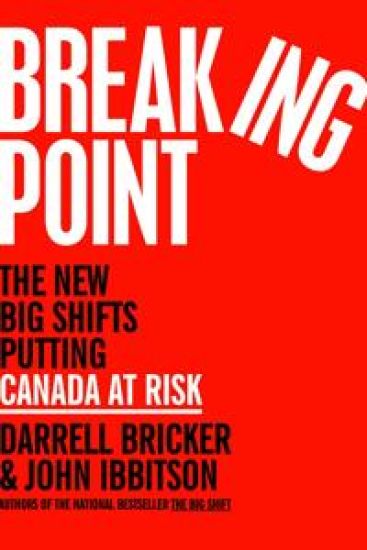
Breaking Point: The New Big Shifts Putting Canada at Risk

Breaking Point: The New Big Shifts Putting Canada at Risk

Darrell Bricker; John Ibbitson

Signal Books
2025
sidottu
From the authors of The Big Shift and Empty Planet, a timely and provocative exploration of the seismic forces reshaping Canada's political, cultural, and economic landscape. Darrell Bricker and John Ibbitson's explosive new polemic, arrives in the midst of the greatest political crisis Canada has ever faced. The country stands at risk. Even before Donald Trump returned to the U. S. presidency, brandishing tariffs and threats of annexation, Canada had started to crack. Year after year of decisions deferred, problems ignored, and cans kicked carelessly down the road have created dangerous fissures. Stifling regulations drag down the economy. Younger people feel angry and alienated by dizzying housing prices and gig jobs. Regional tensions threaten unity in both Quebec and the Prairies. The immigration system is broken. And Canada stands alone, having failed to pay the cost of defending itself. Canadians elected a former bank governor to fix all this. But can the Liberals get us out of the mess they helped get us into? What future awaits the progressive and conservative coalitions? Will the Laurentian elites continue to misgovern, or are there alternatives? The country is at a breaking point. Canadians must act to save it before they lose it. Provocative, urgent, and unapologetically candid, Breaking Point will ignite debate, dominate political discourse, and become the definitive guide to understanding what is shaping up to be one of the most turbulent eras in Canadian history.
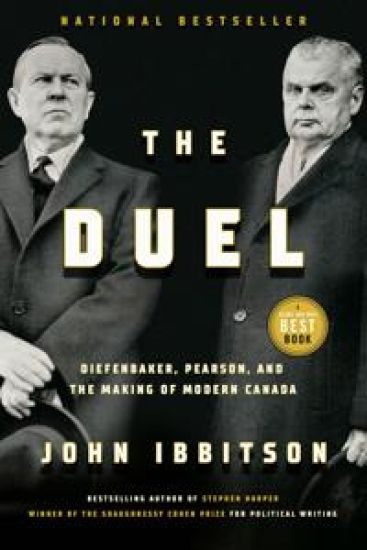
The Duel

The Duel

John Ibbitson

McClelland Stewart Inc.
2025
nidottu
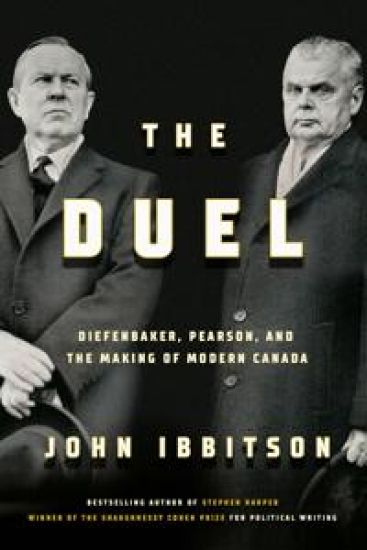
NATIONAL BESTSELLERA GLOBE AND MAIL BEST BOOK OF THE YEAR The brilliant, critically-acclaimed story of two legendary leaders who fought each other relentlessly, but between them created today's Canada. John Diefenbaker has been unfairly treated by history. Although he wrestled with personal demons, his governments launched major reforms in public health care, law reform and immigration. On his watch, First Nations on reserve obtained the right to vote and the federal government began to open up the North. He established Canada as a leader in the struggle against apartheid in South Africa, and took the first steps in making Canada a leader in the fight against nuclear proliferation. And Diefenbaker's Bill of Rights laid the groundwork for the Charter of Rights and Freedoms. He set in motion many of the achievements credited to his successor, Lester B. Pearson. Pearson, in turn, gave coherence to Diefenbaker's piecemeal reforms. He also pushed Parliament to adopt a new, and now much-loved, Canadian flag against Diefenbaker's fierce opposition. Pearson understood that if Canada were to be taken seriously as a nation, it must develop a stronger sense of self. Pearson was superbly prepared for the role of prime minister: decades of experience at External Affairs, respected by leaders from Washington to Delhi to Beijing, the only Canadian to win the Nobel Prize for Peace. Diefenbaker was the better politician, though. If Pearson walked with ease in the halls of power, Diefenbaker connected with the farmers and small-town merchants and others left outside the inner circles. Diefenbaker was one of the great orators of Canadian political life; Pearson spoke with a slight lisp. Diefenbaker was the first to get his name in the papers, as a crusading attorney: Diefenbaker for the Defence, champion of the little man. But he struggled as a politician, losing five elections before making it into the House of Commons, until his ascension to the Progressive Conservative leadership in 1956 through a freakish political accident. As a young university professor, Pearson caught the attention of the powerful men who were shaping Canada's first true department of foreign affairs, rising to prominence as the helpful fixer, the man both sides trusted, the embodiment of a new country that had earned its place through war in the counsels of the great powers: ambassador, undersecretary, minister, peacemaker. Everyone knew he was destined to be prime minister. But in 1957, destiny took a detour. Then they faced each other, Diefenbaker v Pearson, across the House of Commons, leaders of their parties, each determined to wrest and hold power, in a decade-long contest that would shake and shape the country.
A Nation's Paper

A Nation's Paper

John Ibbitson

McClelland Stewart Inc.
2024
sidottu
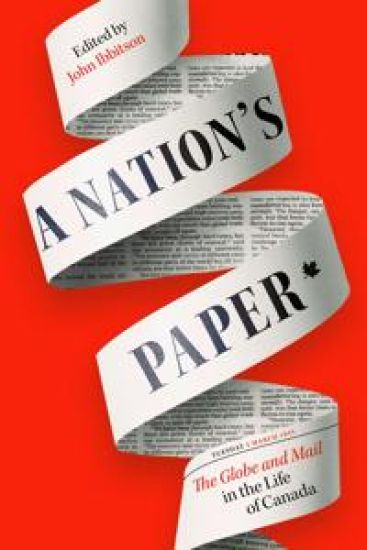
From Canada's newspaper of record for 180 years, here are thirty-one brilliant and provocative essays by a diverse selection of their writers on how The Globe and Mail covered and influenced major events and issues from the paper's founding to the latest file. Since 1844, the Globe and Mail and its predecessor, George Brown's Globe, have chronicled Canada: as a colony, a dominion, and a nation. To mark the paper's 180th anniversary, Globe writers explored thirty issues and events in which the national newspaper has influenced the course of the country: Confederation, settler migrations, regional tensions, tussles over language, religion, and race. The essays reveal a tapestry of progress, conflict, and still-incomplete reconciliation: Catholic-Protestant hostilities that are now mostly the stuff of memory; the betrayal of Indigenous peoples with which we still grapple; the frustrations and triumphs of women journalists; pandemics old and new; environmental challenges; the joys of covering sports and the arts; chronicling the nation's business, international coverage, the impossibility of Canada and of this newspaper, which both somehow flourish nonetheless. Riveting, insightful, disturbing, witty, and always a joy to read, A Nation's Paper chronicles a country and a newspaper that have grown and struggled together - essential reading for anyone who wants to understand where we came from and where we are going. The Globe and Mail will donate all its proceeds from the book to Journalists for Human Rights.
The Duel

The Duel

John Ibbitson

McClelland Stewart Inc.
2023
sidottu
One of Canada's foremost authors and journalists, offers a gripping account of the contest between John Diefenbaker and Lester Pearson, two prime ministers who fought each other relentlessly, but who between them created today's Canada. John Diefenbaker has been unfairly treated by history. Although he wrestled with personal demons, his governments launched major reforms in public health care, law reform and immigration. On his watch, First Nations on reserve obtained the right to vote and the federal government began to open up the North. He established Canada as a leader in the struggle against apartheid in South Africa, and took the first steps in making Canada a leader in the fight against nuclear proliferation. And Diefenbaker's Bill of Rights laid the groundwork for the Charter of Rights and Freedoms. He set in motion many of the achievements credited to his successor, Lester B. Pearson. Pearson, in turn, gave coherence to Diefenbaker's piecemeal reforms. He also pushed Parliament to adopt a new, and now much-loved, Canadian flag against Diefenbaker's fierce opposition. Pearson understood that if Canada were to be taken seriously as a nation, it must develop a stronger sense of self. Pearson was superbly prepared for the role of prime minister: decades of experience at External Affairs, respected by leaders from Washington to Delhi to Beijing, the only Canadian to win the Nobel Prize for Peace. Diefenbaker was the better politician, though. If Pearson walked with ease in the halls of power, Diefenbaker connected with the farmers and small-town merchants and others left outside the inner circles. Diefenbaker was one of the great orators of Canadian political life; Pearson spoke with a slight lisp. Diefenbaker was the first to get his name in the papers, as a crusading attorney: Diefenbaker for the Defence, champion of the little man. But he struggled as a politician, losing five elections before making it into the House of Commons, and becoming as estranged from the party elites as he was from the Liberals, until his ascension to the Progressive Conservative leadership in 1956 through a freakish political accident. As a young university professor, Pearson caught the attention of the powerful men who were shaping Canada's first true department of foreign affairs, rising to prominence as the helpful fixer, the man both sides trusted, the embodiment of a new country that had earned its place through war in the counsels of the great powers: ambassador, undersecretary, minister, peacemaker. Everyone knew he was destined to be prime minister. But in 1957, destiny took a detour. Then they faced each other, Diefenbaker v Pearson, across the House of Commons, leaders of their parties, each determined to wrest and hold power, in a decade-long contest that would shake and shape the country. Here is a tale of two men, children of Victoria, who led Canada into the atomic age: each the product of his past, each more like the other than either would ever admit, fighting each other relentlessly while together forging the Canada we live in today. To understand our times, we must first understand theirs.
Empty Planet

Empty Planet

Darrell Bricker; John Ibbitson

Robinson
2020
pokkari

Halvin toimitettuna 18,50 €

**A SUNDAY TIMES MUST-READ**'Riveting and vitally important' - Steven Pinker'A gripping narrative of a world on the cusp of profound change' - Anjana Ahuja, New StatesmanEmpty Planet offers a radical, provocative argument that the global population will soon begin to decline, dramatically reshaping the social, political and economic landscape. For half a century, statisticians, pundits and politicians have warned that a burgeoning planetary population will soon overwhelm the earth's resources. But a growing number of experts are sounding a different kind of alarm. Rather than growing exponentially, they argue, the global population is headed for a steep decline. Throughout history, depopulation was the product of catastrophe: ice ages, plagues, the collapse of civilizations. This time, however, we're thinning ourselves deliberately, by choosing to have fewer babies than we need to replace ourselves. In much of the developed and developing world, that decline is already underway, as urbanisation, women's empowerment, and waning religiosity lead to smaller and smaller families. In Empty Planet, Ibbitson and Bricker travel from South Florida to Sao Paulo, Seoul to Nairobi, Brussels to Delhi to Beijing, drawing on a wealth of research and firsthand reporting to illustrate the dramatic consequences of this population decline - and to show us why the rest of the developing world will soon join in. They find that a smaller global population will bring with it a number of benefits: fewer workers will command higher wages; good jobs will prompt innovation; the environment will improve; the risk of famine will wane; and falling birthrates in the developing world will bring greater affluence and autonomy for women. But enormous disruption lies ahead, too. We can already see the effects in Europe and parts of Asia, as aging populations and worker shortages weaken the economy and impose crippling demands on healthcare and vital social services. There may be earth-shaking implications on a geopolitical scale as well. Empty Planet is a hugely important book for our times. Captivating and persuasive, it is a story about urbanisation, access to education and the empowerment of women to choose their own destinies. It is about the secularisation of societies and the vital role that immigration has to play in our futures. Rigorously researched and deeply compelling, Empty Planet offers a vision of a future that we can no longer prevent - but that we can shape, if we choose to.
Empty Planet: The Shock of Global Population Decline

Empty Planet: The Shock of Global Population Decline

Darrell Bricker; John Ibbitson

Crown Publishing Group (NY)
2020
nidottu

Halvin toimitettuna 24,90 €

NATIONAL BESTSELLER - In this "gripping narrative of a world on the cusp of profound change" (New Statesman), an award-winning journalist and leading international social researcher argue that the global population's inevitable decline will dramatically reshape our social, political, and economic landscape. "An ambitious reimagining of our demographic future."--The New York Times Book Review For half a century, statisticians, pundits, and politicians have warned that a burgeoning population will soon overwhelm the earth's resources. But a growing number of experts are sounding a different alarm. Rather than continuing to increase exponentially, they argue, the global population is headed for a steep decline--and in many countries, that decline has already begun. In Empty Planet, international social researcher Darrell Bricker and award-winning journalist John Ibbitson find that a smaller global population will bring with it many benefits: Fewer workers will command higher wages, the environment will improve, the risk of famine will wane, and falling birthrates in the developing world will bring greater affluence and autonomy for women. But enormous disruption lies ahead, too. The United States and Canada are well positioned to successfully navigate these coming demographic shifts--unless growing isolationism leads us to close ourselves off just as openness becomes more critical to our survival than ever. Rigorously researched and deeply compelling, Empty Planet offers a vision of the future that we can no longer prevent--but one that we can shape, if we choose.
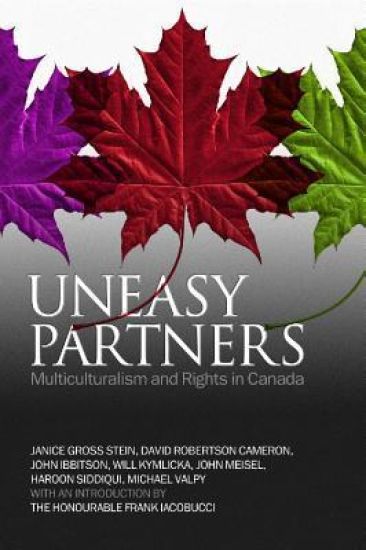
Uneasy Partners

Uneasy Partners

Janice Stein; David Robertson Cameron; John Ibbitson; Will Kymlicka; John Meisel; Haroon Siddiqui; Michael Valpy

Wilfrid Laurier University Press
2007
nidottu
After decades of extraordinary successes as a multicultural society, new debates are bubbling to the surface in Canada. The contributors to this volume examine the conflict between equality rights, as embedded in the Charter, and multiculturalism as policy and practice, and ask which charter value should trump which and under what circumstances? The opening essay deliberately sharpens the conflict among religion, culture, and equality rights and proposes to shift some of the existing boundaries. Other contributors disagree strongly, arguing that this position might seek to limit freedoms in the name of justice, that the problem is badly framed, or that silence is a virtue in rebalancing norms. The contributors not only debate the analytic arguments but infuse their discussion with their personal experiences, which have shaped their perspectives on multiculturalism in Canada. This volume is a highly personal as well as strongly analytic discussion of multiculturalism in Canada today.