Kirjojen hintavertailu – 12 859 819 kirjaa ja 27 kauppaa

Kirjailija

John J. Drummond

Kirjat ja teokset yhdessä paikassa: 4 kirjaa, julkaisuja vuosilta 2010–2022, suosituimpiin kuuluu Historical Dictionary of Husserl's Philosophy. Vertaile teosten hintoja ja tarkista saatavuus suomalaisista kirjakaupoista.

4 kirjaa

Kirjojen julkaisuvuodet: 2010–2022.

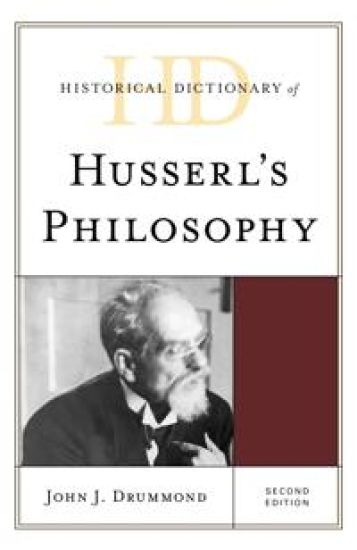
Historical Dictionary of Husserl's Philosophy

Historical Dictionary of Husserl's Philosophy

John J. Drummond

BLOOMSBURY PUBLISHING PLC
2022
sidottu
Edmund Husserl is generally regarded as the founding figure of the philosophical movement of “phenomenology,” by which he understands a descriptive science of the essential structures of experiences and of their objects precisely as these are experienced. Phenomenology has had a decisive influence on philosophy in the 20th century, especially in Europe. The movement known as “continental philosophy,” whether practiced in Europe or elsewhere, has its roots in phenomenology and in the post-Hegelian philosophies of Søren Kierkegaard, Friedrich Nietzsche, and Karl Marx. Historical Dictionary of Husserl's Philosophy, Second Edition contains a chronology, an introduction, and an extensive bibliography. The dictionary section has more than 600 cross-referenced entries on his key concepts and major writings as well as entries on his most important predecessors, contemporaries, and successors. This book is an excellent resource for students, researchers, and anyone wanting to know more about Edmund Husserl.
The New Yearbook for Phenomenology and Phenomenological Philosophy
Volume XVIIISpecial Issue: Gian-Carlo Rota and The End of Objectivity, 2019Aim and Scope: The New Yearbook for Phenomenology and Phenomenological Philosophy provides an annual international forum for phenomenological research in the spirit of Husserl's groundbreaking work and the extension of this work by such figures as Scheler, Heidegger, Sartre, Levinas, Merleau-Ponty and Gadamer. Contributors: Gabriele Baratelli, Stefania Centrone, Giovanna C. Cifoletti, Jean-Marie Coquard, Steven Crowell, Deborah De Rosa, Daniele De Santis, Nicolas de Warren, Agnese Di Riccio, Aurélien Djian, Yuval Dolev, Mirja Hartimo, Burt C. Hopkins, Talia Leven, Ah Hyun Moon, Luis Niel, Fabrizio Palombi, Mario Ariel González Porta, Gian-Carlo Rota, Michael Roubach, Franco Trabattoni and Michele Vagnetti. Submissions: Manuscripts, prepared for blind review, should be submitted to the Editors ([email protected] and [email protected]) electronically via e-mail attachments.
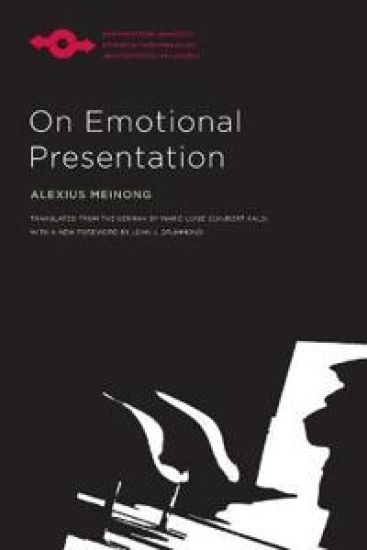
On Emotional Presentation

On Emotional Presentation

Alexius Meinong; John J. Drummond

Northwestern University Press
2020
nidottu
On Emotional Presentation, first published in German in 1917, contains the Austrian philosopher Alexius Meinong's clearest and most-developed account of the emotions and their relation to values. In this work, which was written toward the end of his life, Meinong argues that values are given in and through emotions but are also ontologically independent of these emotions or any subjective attitude. Available again in English with a new foreword by John J. Drummond that presents Meinong's account and situates it in the context of contemporary discussions of the emotions, this translation will be welcome to those interested in Meinong and his theory of objects as well as those interested in the philosophy of the emotions and values.
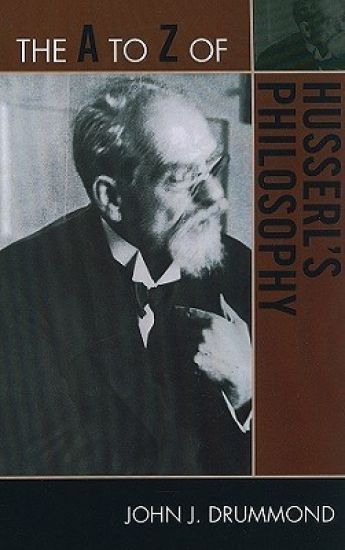
The A to Z of Husserl's Philosophy

The A to Z of Husserl's Philosophy

John J. Drummond

Scarecrow Press
2010
nidottu
Edmund Husserl (1859-1938) is widely regarded as the founding figure of the philosophical movement of "phenomenology." Husserl's philosophical program was both embraced and rejected by many, but in either case, his ideas set the stage for and exercised an enormous influence on the development of much of the philosophy that followed. In particular, his thought provides the backdrop and impetus for movements such as existentialism, hermeneutics, and deconstruction. Also, because of his career-long concerns with logic and mathematics, there are many points of contact between Husserl's phenomenology and so-called "analytical philosophy," further cementing study of Husserl's thought across the philosophical spectrum. The A to Z of Husserl's Philosophy provides the means to approach the texts of Husserl, as well as those of his major commentators. This is done through a chronology, an introductory essay, an extensive bibliography, and hundreds of cross-referenced dictionary entries on key terms and neologisms, as well as brief discussions of Husserl's major works and of some of his most important predecessors, contemporaries, and successors.