
Kirjailija
John J. Mearsheimer
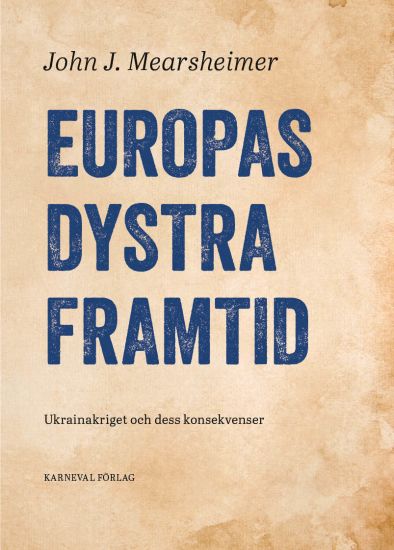
Kirjat ja teokset yhdessä paikassa: 12 kirjaa, julkaisuja vuosilta 1985–2026, suosituimpiin kuuluu Europas dystra framtid. Vertaile teosten hintoja ja tarkista saatavuus suomalaisista kirjakaupoista.
Nimi esiintyy myös muodoissa: John J Mearsheimer
12 kirjaa
Kirjojen julkaisuvuodet: 1985–2026.
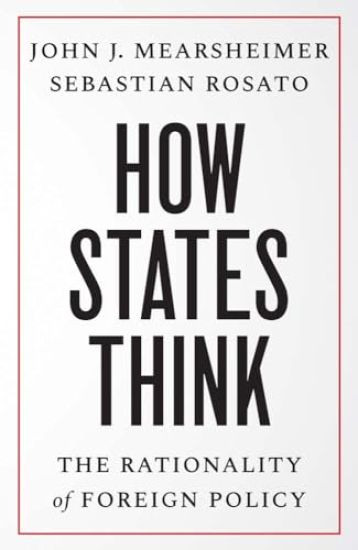
How States Think
John J. Mearsheimer; Sebastian Rosato
YALE UNIVERSITY PRESS
2024
pokkari
Halvin toimitettuna 22,50 €
A groundbreaking examination of a central question in international relations: Do states act rationally? To understand world politics, you need to understand how states think. Are states rational? Much of international relations theory assumes that they are. But many scholars believe that political leaders rarely act rationally. The issue is crucial for both the study and practice of international politics, for only if states are rational can scholars and policymakers understand and predict their behavior. John J. Mearsheimer and Sebastian Rosato argue that rational decisions in international politics rest on credible theories about how the world works and emerge from deliberative decision-making processes. Using these criteria, they conclude that most states are rational most of the time, even if they are not always successful. Mearsheimer and Rosato make the case for their position, examining whether past and present world leaders, including George W. Bush and Vladimir Putin, have acted rationally in the context of momentous historical events, including both world wars, the Cold War, and the post–Cold War era. By examining this fundamental concept in a novel and comprehensive manner, Mearsheimer and Rosato show how leaders think, and how to make policy for dealing with other states.
A groundbreaking examination of a central question in international relations: Do states act rationally? To understand world politics, you need to understand how states think. Are states rational? Much of international relations theory assumes that they are. But many scholars believe that political leaders rarely act rationally. The issue is crucial for both the study and practice of international politics, for only if states are rational can scholars and policymakers understand and predict their behavior. John J. Mearsheimer and Sebastian Rosato argue that rational decisions in international politics rest on credible theories about how the world works and emerge from deliberative decision-making processes. Using these criteria, they conclude that most states are rational most of the time, even if they are not always successful. Mearsheimer and Rosato make the case for their position, examining whether past and present world leaders, including George W. Bush and Vladimir Putin, have acted rationally in the context of momentous historical events, including both world wars, the Cold War, and the post–Cold War era. By examining this fundamental concept in a novel and comprehensive manner, Mearsheimer and Rosato show how leaders think, and how to make policy for dealing with other states.
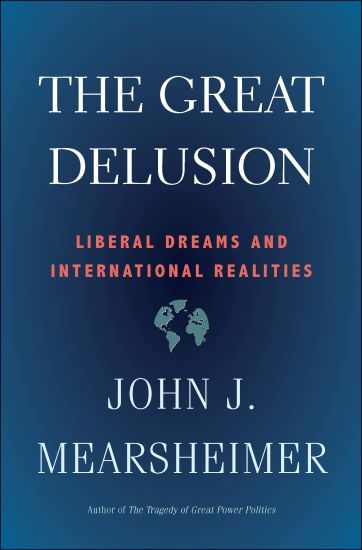
The Great Delusion
John J. Mearsheimer
Yale University Press
2019
pokkari
Halvin toimitettuna 22,70 €
A renowned scholar argues that liberal hegemony—the policy America has pursued since the Cold War ended—is doomed to failNamed a Financial Times Best Book of 2018“Idealists as well as realists need to read this systematic tour de force.”—Robert D. Kaplan, author of The Return of Marco Polo’s World It is widely believed in the West that the United States should spread liberal democracy across the world, foster an open international economy, and build international institutions. The policy of remaking the world in America’s image is supposed to protect human rights, promote peace, and make the world safe for democracy. But this is not what has happened. Instead, the United States has become a highly militarized state fighting wars that undermine peace, harm human rights, and threaten liberal values at home. In this major statement, the renowned international-relations scholar John Mearsheimer argues that liberal hegemony—the foreign policy pursued by the United States since the Cold War ended—is doomed to fail. It makes far more sense, he maintains, for Washington to adopt a more restrained foreign policy based on a sound understanding of how nationalism and realism constrain great powers abroad. The Great Delusion is a lucid and compelling work of the first importance for scholars, policymakers, and everyone interested in the future of American foreign policy.
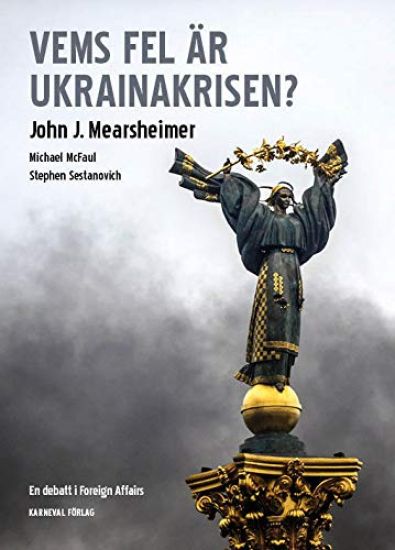
Vems fel är Ukrainakrisen?
John J. Mearsheimer; Michael McFaul; Stephen Sestanovich
Karneval förlag
2014
nidottu
I denna bok har samlats fyra uppmärksammade artiklar som publicerades i Foreign Affairs 2014. I den första artikeln argumenterar statsvetarprofessorn John J. Mearsheimer för att det inte är Ryssland, utan USA och dess allierade, som bär huvudansvaret för den Ukrainakris som intensivt flammade upp åren 2013-2014. I två efterföljande artiklar hävdar tvärtom Michael McFaul och Stephen Sestanovich, tidigare diplomater och regeringsrådgivare, att Ukrainakrisen uteslutande måste skyllas på Ryssland och Putins aggressiva erövringspolitik. I en avslutande reflektion bemöter John J. Mearsheimer dessa invändningar. John J. Mearsheimers föredrag »Why is Ukraine the West's Fault?«, som grundar sig på hans bidrag i denna bok, har haft 28 miljoner visningar på Youtube (University of Chicagos kanal: https://youtu.be/JrMiSQAGOS4). Foreign Affairs, grundad 1922, är USA:s ledande tidskrift för analys och debatt om utrikespolitik, geopolitik och internationella förhållanden. OM FÖRFATTARNA John J. Mearsheimer är professor i statsvetenskap vid University of Chicago. Hans senaste böcker är The Great Delusion: Liberal Dreams and International Realities (2018) och Why Leaders Lie: The Truth About Lying in International Politics (2013). Michael McFaul är professor i statsvetenskap vid Stanford University. Han var rådgivare till president Obamas nationella säkerhetsråd 2009-2012 och ambassadör i Ryssland 2012-2014. Han är författare till From Cold War to Hot Peace: An American Ambassador in Putin's Russia (2018). Stephen Sestanovich är professor i internationell diplomati vid Columbia University och verksam på tankesmedjan Council on Foreign Relations avdelning för ryska och eurasiska studier. Han var under åren 1997-2001 särskild rådgivare till USA:s utrikesminister Madeleine Albright tillika ambassadör för de nya oberoende stater som då nyligen hade bildats på det forna Sovjetunionens territorium. Han är författare till Maximalist: America and the World From Truman to Obama (2014).
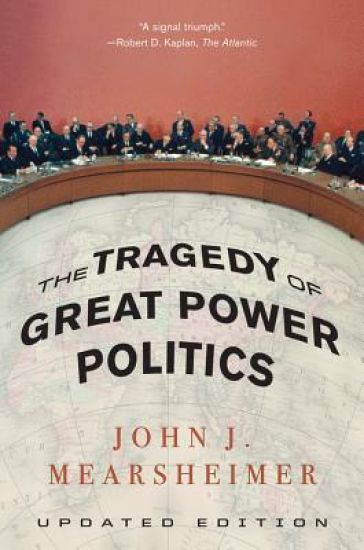
The Tragedy of Great Power Politics
John J. Mearsheimer
WW Norton Co
2014
nidottu
Halvin toimitettuna 23,10 €
The updated edition of this classic treatise on the behavior of great powers takes a penetrating look at the question likely to dominate international relations in the twenty-first century: Can China rise peacefully? In clear, eloquent prose, John Mearsheimer explains why the answer is no: a rising China will seek to dominate Asia, while the United States, determined to remain the world's sole regional hegemon, will go to great lengths to prevent that from happening. The tragedy of great power politics is inescapable.
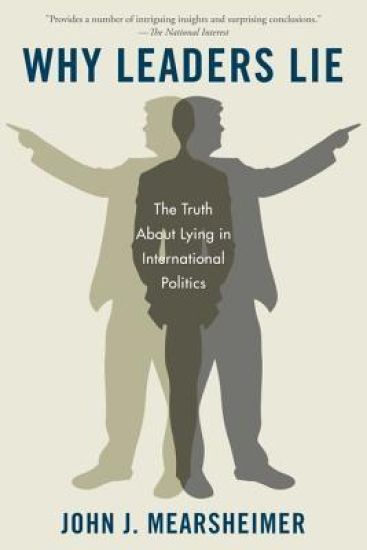
Why Leaders Lie: The Truth about Lying in International Politics
John J. Mearsheimer
Oxford University Press
2013
nidottu
Halvin toimitettuna 22,90 €
For more than two decades, John J. Mearsheimer has been regarded as one of the foremost realist thinkers on foreign policy. Clear and incisive, a fearlessly honest analyst, his coauthored 2007 New York Times bestseller, The Israel Lobby and U. S. Foreign Policy, aroused a firestorm with its unflinching look at the making of America's Middle East policy. Now he takes a look at another controversial but understudied aspect of international relations: lying. In Why Leaders Lie, Mearsheimer provides the first systematic analysis of lying as a tool of statecraft, identifying the varieties, the reasons, and the potential costs and benefits. Drawing on a trove of examples, he argues that leaders often lie for good strategic reasons, so a blanket condemnation is unrealistic and unwise. Yet there are other kinds of deception besides lying, including concealment and spinning. Perhaps no distinction is more important than that between lying to another state and lying to one's own people. Mearsheimer was amazed to discover how unusual interstate lying has been; given the atmosphere of distrust among the great powers, he found that outright deceit is difficult to pull off and thus rarely worth the effort. Plus it sometimes backfires when it does occur. Khrushchev lied about the size of the Soviet missile force, sparking an American build-up. Eisenhower got caught lying about U-2 spy flights in 1960, which scuttled an upcoming summit with Krushchev. Leaders more often mislead their own publics, sometimes with damaging consequences. Though the reasons may be noble--Franklin Roosevelt, for example, lied to the American people about German U-boats attacking the destroyer Greer in 1940, to build a case for war against Hitler-they can easily lead to disaster, as with the Bush administration's falsehoods about Iraq's weapons of mass destruction. There has never been a sharp analysis of international lying. Now a leading expert fills the gap with a richly informed and powerfully argued book.
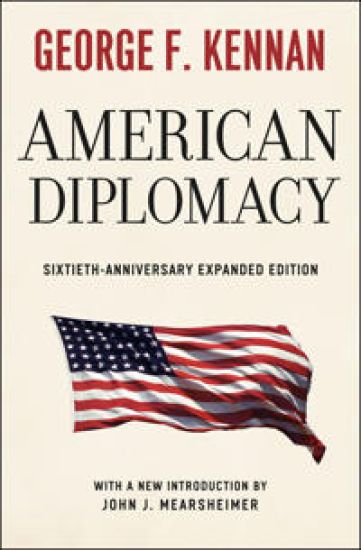
American Diplomacy – Sixtieth–Anniversary Expanded Edition
George F. Kennan; John J. Mearsheimer
University of Chicago Press
2012
nidottu
Halvin toimitettuna 31,90 €
For more than fifty years, George F. Kennan's "American Diplomacy" has been a standard work on American foreign policy. Drawing on his considerable diplomatic experience and expertise, Kennan offers an overview and critique of the foreign policy of an emerging great power whose claims to rightness often spill over into self-righteousness, whose ambitions conflict with power realities, whose judgmentalism precludes the interests of other states, and whose domestic politics frequently prevent prudent policies and result in overstretch. Keenly aware of the dangers of military intervention and the negative effects of domestic politics on foreign policy, Kennan identifies troubling inconsistencies in the areas between actions and ideals - even when the strategies in question turned out to be decided successes. In this expanded fiftieth-anniversary edition, a substantial new introduction by John J. Mearsheimer, one of America's leading political realists, provides new understandings of Kennan's work and explores its continued resonance. As America grapples with its new role as one power among many - rather than as the "indispensable nation" that sees "further into the future" - Kennan's perceptive analysis of the past is all the more relevant. Today, as then, the pressing issue of how to wield power with prudence and responsibility remains, and Kennan's cautions about the cost of hubris are still timely. Refreshingly candid, "American Diplomacy" cuts to the heart of policy issues that continue to be hotly debated today.
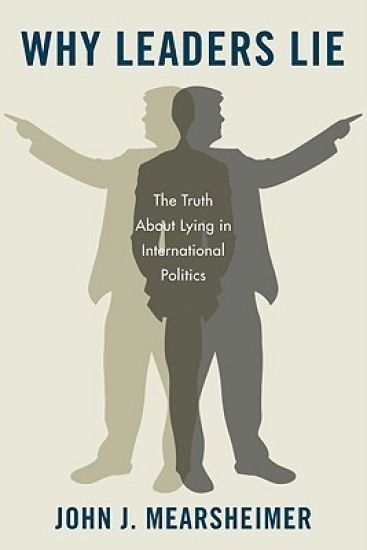
Why Leaders Lie: The Truth about Lying in International Politics
John J. Mearsheimer
Oxford University Press, USA
2011
sidottu
For more than two decades, John J. Mearsheimer has been regarded as one of the foremost realist thinkers on foreign policy. Clear and incisive as well as a fearlessly honest analyst, his coauthored 2007 New York Times bestseller, The Israel Lobby and U. S. Foreign Policy, aroused a firestorm with its unflinching look at the making of America's Middle East policy. Now he takes a look at another controversial but understudied aspect of international relations: lying. In Why Leaders Lie, Mearsheimer provides the first systematic analysis of lying as a tool of statecraft, identifying the varieties, the reasons, and the potential costs and benefits. Drawing on a wealth of examples, he argues that leaders often lie for good strategic reasons, so a blanket condemnation is unrealistic and unwise. Yet there are other kinds of deception besides lying, including concealment and spinning. Perhaps no distinction is more important than that between lying to another state and lying to one's own people. Mearsheimer was amazed to discover how unusual interstate lying has been; given the atmosphere of distrust among the great powers, he found that outright deceit is difficult to pull off and thus rarely worth the effort. Moreover, it sometimes backfires when it does occur. Khrushchev lied about the size of the Soviet missile force, sparking an American build-up. Eisenhower was caught lying about U-2 spy flights in 1960, which scuttled an upcoming summit with Krushchev. Leaders are more likely to mislead their own publics than other states, sometimes with damaging consequences. Though the reasons may be noble--Franklin Roosevelt, for example, lied to the American people about German U-boats attacking the destroyer USS Greer in 1940, to build a case for war against Hitler-they can easily lead to disaster, as with the Bush administration's falsehoods about Iraq's weapons of mass destruction. There has never been a sharp analysis of international lying. Now a leading expert provides a richly informed and powerfully argued work that will change our understanding of why leaders lie.
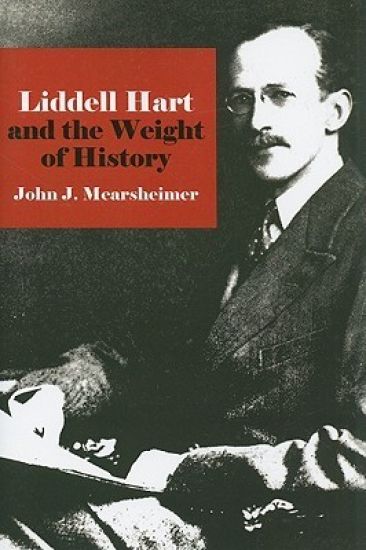
For almost half a century, Sir Basil Henry Liddell Hart (1895–1970) was the most highly regarded writer on strategy and military matters in the English-speaking world and even today, his ideas are still discussed and debated. Although he helped to formulate Great Britain's military doctrine after the First World War, it was his critique of British strategic policy before and during the early years of the Second World War that earned him a seemingly unassailable reputation as a brilliant strategist. In this unflinching but balanced book, John J. Mearsheimer reexamines Liddell Hart's career and uncovers evidence that he manipulated the facts to create a false picture of his role in military policy debates in the 1930s. According to Liddell Hart's widely accepted account, his progressive ideas about armored warfare were rejected by the British army and adopted instead by the more far-sighted German generals. The Wehrmacht's application of his theory of blitzkrieg, he claimed, resulted in the defeat of France in 1940, a disaster he foresaw. Setting the historical record straight, Mearsheimer shatters once and for all the myth of Liddell Hart's prescience in the interwar period. Liddell Hart had, in fact, "been quite wrong on the basic military questions of the 1930s," Mearsheimer finds, "and his writings helped lead the British government into serious error. Wide recognition of Liddell Hart's misjudgments badly damaged his reputation during the war, and Mearsheimer shows how he mounted a successful campaign to restore his image. Although some of Liddell Hart's military theories are still relevant, Mearsheimer warns that they should be applied with caution. This troubling book offers a striking illustration of how history can be used and abused—how a gifted individual can create their own self-serving version of the past. Based on scrupulously documented evidence, Liddell Hart and the Weight of History is certain to be of great interest to those concerned with military policy and history.
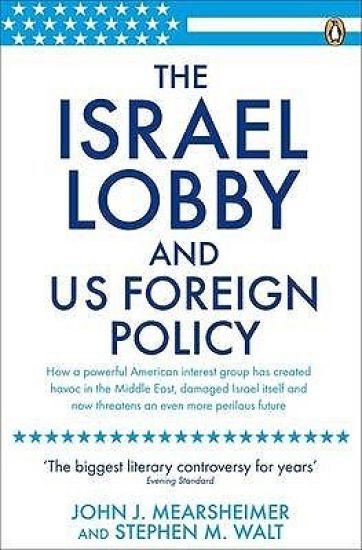
The Israel Lobby and US Foreign Policy
John J Mearsheimer; Stephen M Walt
Penguin Books Ltd
2008
pokkari
Halvin toimitettuna 20,30 €
Does America’s pro-Israel lobby wield inappropriate control over US foreign policy? This book has created a storm of controversy by bringing out into the open America’s relationship with the Israel lobby: a loose coalition of individuals and organizations that actively work to shape foreign policy in a way that is profoundly damaging both to the United States and Israel itself. Israel is an important, valued American ally, yet Mearsheimer and Walt show that, by encouraging unconditional US financial and diplomatic support for Israel and promoting the use of its power to remake the Middle East, the lobby has jeopardized America’s and Israel’s long-term security and put other countries – including Britain – at risk.
Conventional Deterrence
John J. Mearsheimer
Cornell University Press
1985
pokkari
Halvin toimitettuna 29,80 €
Conventional Deterrence is a book about the origins of war. Why do nations faced with the prospect of large-scale conventional war opt for or against an offensive strategy? John J. Mearsheimer examines a number of crises that led to major conventional wars to explain why deterrence failed. He focuses first on Allied and German decision making in the years 1939–1940, analyzing why the Allies did not strike first against Germany after declaring war and, conversely, why the Germans did attack the West. Turning to the Middle East, he examines the differences in Israeli and Egyptian strategic doctrines prior to the start of the major conventional conflicts in that region. Mearsheimer then critically assays the relative strengths and weaknesses of NATO and the Warsaw Pact to determine the prospects for conventional deterrence in any future crisis. He is also concerned with examining such relatively technical issues as the impact of precision-guided munitions (PGM) on conventional deterrence and the debate over maneuver versus attrition warfare. Mearsheimer pays considerable attention to questions of military strategy and tactics. Challenging the claim that conventional detrrence is largely a function of the numerical balance of forces, he also takes issue with the school of thought that ascribes deterrence failures to the dominance of "offensive" weaponry. In addition to examining the military consideration underlying deterrence, he also analyzes the interaction between those military factors and the broader political considerations that move a nation to war.