Kirjojen hintavertailu – 12 859 818 kirjaa ja 27 kauppaa

Kirjailija

John Keady

Kirjat ja teokset yhdessä paikassa: 5 kirjaa, julkaisuja vuosilta 2007–2023, suosituimpiin kuuluu Involving Families in Care Homes. Vertaile teosten hintoja ja tarkista saatavuus suomalaisista kirjakaupoista.

5 kirjaa

Kirjojen julkaisuvuodet: 2007–2023.

Reconsidering Neighbourhoods and Living with Dementia: Spaces, Places, and People
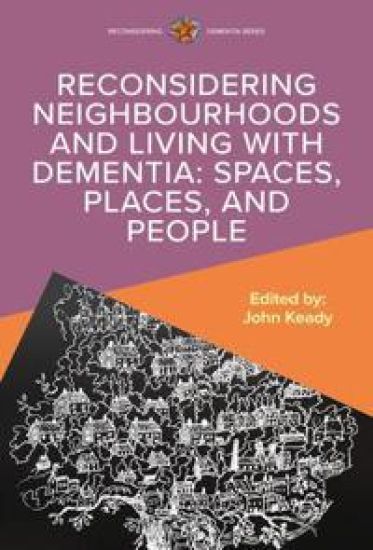
“This book holds the story of a monumental research effort… It provides a moving, thoughtful, understanding of what “neighbourhood” means and is a beacon for efforts aimed at improving the quality of life of all involved.” Steven R. Sabat, Professor Emeritus of Psychology, Georgetown University, Washington D. C., USA“It is indicative reading for educators, researchers, clinicians and policy makers nationally and internationally. By grounding the underpinning research in the lived experience of people with dementia, the book’s appeal extends to voluntary and community groups. Reading it is a must!” Assumpta Ryan, Professor of Ageing and Health, Ulster University, UK“A remarkable contribution to the ‘Reconsidering Dementia’ series.” Bob Woods, Emeritus Professor, Bangor University, UKThis book provides research based insights into the lived experience of dementia, aging in place and the use of participatory and creative social research approaches in the field of dementia studies. For the first time the key findings of one of the UKs largest funded social science research projects, the Neighbourhoods study, are assembled into one accessibly written blueprint for dementia care aiding better understanding of the place and position of those living with dementia in the home and neighbourhood context. Reconsidering Neighbourhoods and Living with Dementia highlights the importance of home for people living with dementia and that neighbourhoods are seen to be relational, virtual, technological, connected, lived, remembered, and imagined, and to exist within and across time. The book is organised under five key parts:•The Lived Neighbourhood•Neighbourhoods, Measurement and Technology•Neighbourhoods and Big Data•Personal Well-Being and Neighbourhood Programme Support•Bringing it Together and Future Directions This comprehensive book is appropriate to a wide range of readers and disciplines including those living with dementia, the related health and voluntary professions, family carers, practitioners, academics, and students undertaking a variety of courses aligned to gerontology, dementia studies and human geography. The Reconsidering Dementia Series is an interdisciplinary series published by Open University Press that covers contemporary issues to challenge and engage readers in thinking deeply about the topic. The dementia field has developed rapidly in its scope and practice over the past ten years and books in this series will unpack not only what this means for the student, academic and practitioner, but also for all those affected by dementia. Series Editors: Dr Keith Oliver and Professor Dawn Brooker MBE. John Keady is a mental health nurse who has been involved in dementia care for over 30 years. Since 2006, he has held a joint appointment between the University of Manchester and the Greater Manchester Mental Health NHS Foundation Trust. He was the Chief Investigator of the Neighbourhoods study.
Design for People Living with Dementia

Design for People Living with Dementia

Emmanuel Tsekleves; John Keady

Taylor Francis Ltd
2021
nidottu
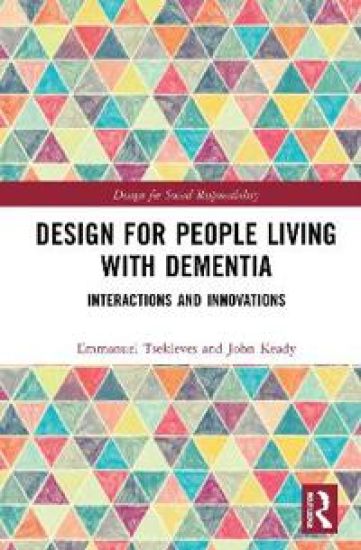
There were an estimated 50 million people worldwide living with dementia in 2017 and this number will almost double every 20 years, reaching 82 million in 2030. Design has significant potential to contribute to managing this global concern. This book is the first to synthesise the considerable research and projects in dementia and design. Design interactions is a new way of considering how we can improve the relationship between people, products, places and services and of course technology trends, such as the ‘internet of things’, offer great opportunities in providing new ways to connect people with services and products that can contribute to healthier lifestyles and mechanisms to support people with acute and chronic conditions. In light of this, the book explores the contribution and future potential of design for dementia through the lens of design interactions, such as people, contexts, material and things. Design for People Living with Dementia is a guide to this innovative and cutting-edge field in healthcare. This book is essential reading for healthcare managers working to provide products, services and care to people with dementia, as well as design researchers and students. .
Design for People Living with Dementia

Design for People Living with Dementia

Emmanuel Tsekleves; John Keady

Routledge
2021
sidottu
There were an estimated 50 million people worldwide living with dementia in 2017 and this number will almost double every 20 years, reaching 82 million in 2030. Design has significant potential to contribute to managing this global concern. This book is the first to synthesise the considerable research and projects in dementia and design. Design interactions is a new way of considering how we can improve the relationship between people, products, places and services and of course technology trends, such as the ‘internet of things’, offer great opportunities in providing new ways to connect people with services and products that can contribute to healthier lifestyles and mechanisms to support people with acute and chronic conditions. In light of this, the book explores the contribution and future potential of design for dementia through the lens of design interactions, such as people, contexts, material and things. Design for People Living with Dementia is a guide to this innovative and cutting-edge field in healthcare. This book is essential reading for healthcare managers working to provide products, services and care to people with dementia, as well as design researchers and students. .
Risk Assessment and Management for Living Well with Dementia

Risk Assessment and Management for Living Well with Dementia

John Keady; Charlotte L. Clarke; Catherine E. Gibb; Catherine Gibb; Heather Wilkinson

Jessica Kingsley Publishers
2011
pokkari
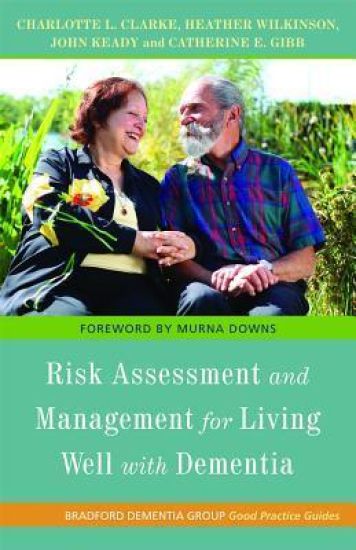
*Winner in the Health and Social Care category at the 2012 British Medical Association Book Awards*Risk is central to professional practice, assessment and decision-making in dementia care. Yet theories of risk are often complex and difficult to translate into everyday practice. This book outlines some of the key issues in risk perception, assessment and management in dementia care in a way that is both practical and accessible to a wide range of practitioners. It develops an approach to risk that promotes choice for people with dementia whilst also acknowledging the complex challenges care providers face. The authors provide an overview of the legislative framework currently in place, and of the ethical dilemmas which may emerge in practice. Frameworks for informed and balanced decision-making are offered, and the importance of including the person with dementia, their family, and care providers in decision-making is emphasised. Throughout the book, case studies are used to illustrate effective negotiation and practical solutions to risk dilemmas in practice. This book highlights principles of good practice for managing risk in dementia care, and presents a rounded approach that will help practitioners negotiate some of the complex issues this entails.
Involving Families in Care Homes

Involving Families in Care Homes

John Keady; Bob Woods; Diane Seddon

Jessica Kingsley Publishers
2007
pokkari
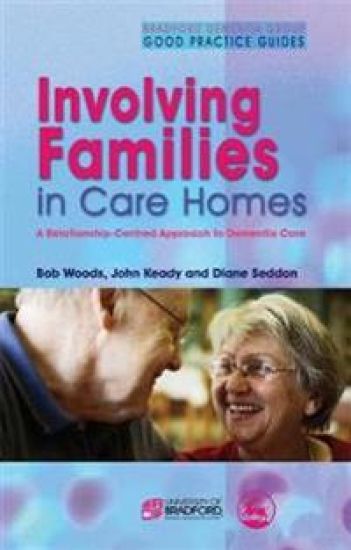
Families often wrestle with the decision to move a person with dementia into a care home. The decision can be highly charged and emotional, involving feelings of loss, sadness and guilt. Moreover, developing a good relationship between the family and the care home is not an easy matter. In this accessible guide the authors take person-centred dementia care a step forward by outlining ways in which care homes can help families to become partners in the caring process. Using case examples, quotations and research-based evidence, the authors offer practical advice and good practice guidelines for supporting relatives who choose to be involved in the care of people with dementia living in a care home, as well as highlighting the value of this involvement. The book is written in an easy-to-read style and incorporates useful features such as checklists for reviewing current practices and summaries of key points for each chapter. An invaluable resource for care home managers and staff, this book will also be helpful for families of people with dementia, as well as for students and researchers interested in dementia care practice.