Kirjojen hintavertailu – 12 859 818 kirjaa ja 27 kauppaa
Kirjailija
John Keats
Kirjat ja teokset yhdessä paikassa: 295 kirjaa, julkaisuja vuosilta 1977–2026, suosituimpiin kuuluu John Keats. Vertaile teosten hintoja ja tarkista saatavuus suomalaisista kirjakaupoista.
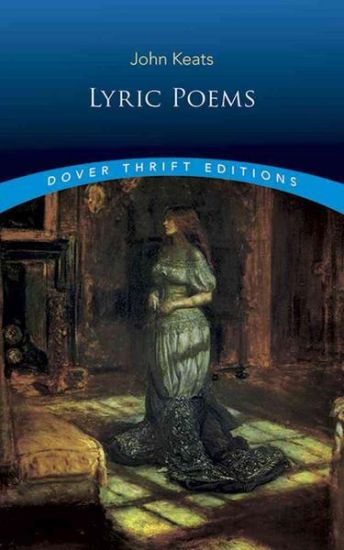
Treasury of 30 works, including such favorites as "On first looking into Chapman's Homer," "The Eve of St. Agnes," "On seeing the Elgin Marbles," "La Belle Dame sans Merci," "Ode to a Nightingale," "Ode on a Grecian Urn," "To Autumn," and 23 more. Reprinted from a standard text. Alphabetical List of Opening Lines.
The first publication in the Grolier Club’s Fine Printing New Series, John Keats’s Letters from a Walking Tour reproduces 12 letters written during the poet’s tour of the Lake District, in which Keats provides striking passages on the mountains, waterfalls, and lakes he experienced on his journey and philosophizes on landscape scenery and the imagination. The edition also includes articles written after the journey by Keats’s companion on the tour, Charles Brown. Only 225 numbered copies were published of this beautiful edition, which was bound by Judi Conant in navy silk with a tan leather spine label titled in gilt, gray cloth, and a marbled board slipcase. Edited with a foreword and notes by the distinguished Keatsian Jack Stillinger, it includes a portrait frontispiece, map, and facsimile letter.
Presents all of the English poet's verse, including his sonnets and odes, the allegorical romance "Endymion," and the five-act poetic tragedy "Otho the Great"
Keats is celebrated as a writer in three forms: lyric verse, narrative verse and letters. All three are represented here in a volume which reprints all the famous odes, a selection os sonnets and other short poems, both versions of HYPERION, extentsive selections from ENDYMION, and the complete ISABELLA, LAMIA and THE EVE OF ST. AGNES. Finally, there-are letters in which Keats discusses his attitude to poetry and to other poets.
These Everyman's Library Pocket Poets hardcover editions are popular for their compact size and reasonable price which do not compromise content. Poems: Keats contains a full selection of Keats's work, including his lyric poems, narrative poems, letters, and an index of first lines.
With an Introduction by Paul Wright. 'What the imagination seizes as Beauty must be truth' So wrote the Romantic poet John Keats (1795-1821) in 1817. This collection contains all of his poetry: the early work, which is often undervalued even today, the poems on which his reputation rests including the 'Odes' and the two versions of the uncompleted epic 'Hyperion', and work which only came to light after his death including his attempts at drama and comic verse. It all demonstrates the extent to which he tested his own dictum throughout his short creative life. That life spanned one of the most remarkable periods in English history in the aftermath of the French Revolution and this collection, with its detailed introductions and notes, aims to place the poems very much in their context. The collection is ample proof that Keats deservedly achieved his wish to 'be among the English Poets after my death'
Despised by many contemporaries as a Cockney versifier, in our own time Keats has outstripped more famous colleagues in public esteem. While Byron and Shelley languish in the academy, Keats is now regarded as the quintessential English Romantic poet: lyrical, passionate, tender, dreamy, sensuous. The Eve of St Agnes, Hyperion and – above all – the five great Odes represent the pinnacle of poetic achievement in English. The Everyman edition of the poems presents a re-ordered and re-edited version of the complete text with detailed notes to every poem, plus chronology and bibliography.
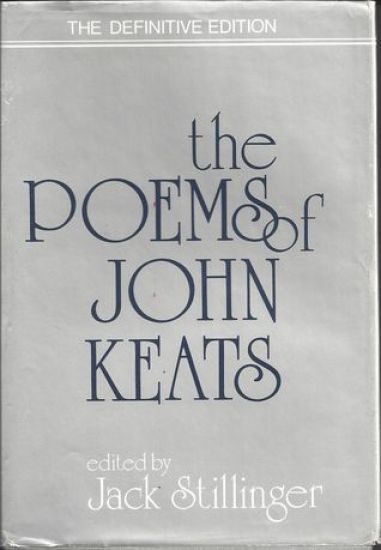
Here is the first reliable edition of John Keats’s complete poems designed expressly for general readers and students. Upon its publication in 1978, Jack Stillinger’s The Poems of John Keats won exceptionally high praise: “The definitive Keats,” proclaimed The New Republic—“An authoritative edition embodying the readings the poet himself most probably intended, prepared by the leading scholar in Keats textual studies.” Now this scholarship is at last available in a graceful, clear format designed to introduce students and general readers to the “real” Keats. In place of the textual apparatus that was essential to scholars, Stillinger here provides helpful explanatory notes. These notes give dates of composition, identify quotations and allusions, gloss names and words not included in the ordinary desk dictionary, and refer the reader to the best critical interpretations of the poems. The new introduction provides central facts about Keats’s life and career, describes the themes of his best work, and speculates on the causes of his greatness.
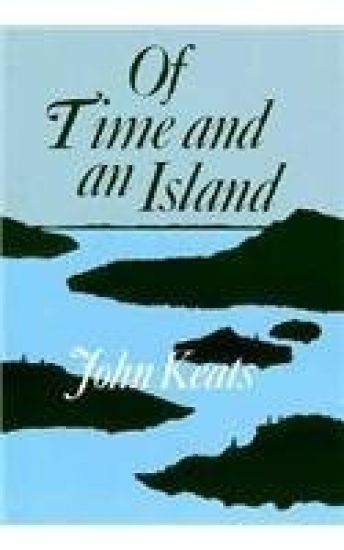
Thirty years ago, John Keats and his family purchased a two-acre island in the St. Lawrence River, at a time when boats were still lovingly crafted of wood and an island could be had for $4,000. Depending on the elements and on their own resourcefulness, the Keats family thrives in the rhythms of island life-fishing, learning to navigate the river and read the clouds for weather, acquiring an "Indian" view of time, maintaining a house, several boats, and three children on a windswept rock. But more than a book about a single family's adventures, this one is strong witness that we all need islands of our own in the midst of life. Originally published in 1974, Of Time and an Island was chosen as a Book-of-the-Month Club alternate selection.
Here at last is the definitive Keats—an edition of John Keats’s poems that embodies the readings the poet himself most probably intended. The culmination of a tradition of literary and textual scholarship, it is the work of the one scholar best qualified to do the job. Largely because of the wealth and complexity of the manuscript materials and the frequency with which first printings were based on inferior sources, there has never been a thoroughly reliable edition of Keats. Indeed, in The Texts of Keats’s Poems Jack Stillinger demonstrated that fully one third of the poems as printed in current standard editions contain substantive errors. This edition is the first in the history of Keats scholarship to be based on a systematic investigation of the transmission of the texts. The readings given here represent in each case, as exactly as can be determined, the version that Keats preferred. The chronological arrangement of the poems and the full record of variants and manuscript alterations (presented in a style that will be clear to the general reader as well as useful to the scholar) display the development of Keats’s poetic artistry. Notes at the back provide dates of composition, relate extant manuscripts and early printings, and explain the choices of texts. The London Times said of Stillinger’s earlier study of the texts: “Thanks to Mr. Stillinger a revolution in Keats studies is at hand.” Here is the crucial step in that revolution.
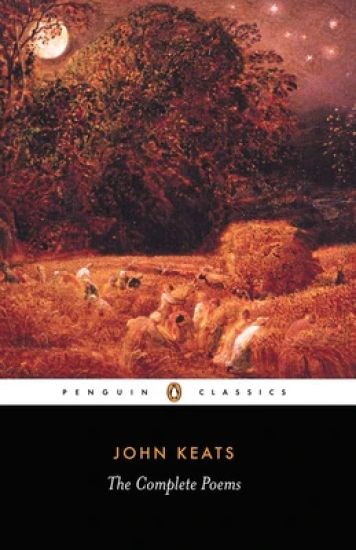
Covering the entire output of an archetypal - and tragically short-lived - romantic genius, the Penguin Classics edition of The Complete Poems of John Keats is edited with an introduction and notes by John Barnard. Keats's first volume of poems, published in 1817, demonstrated both his belief in the consummate power of poetry and his liberal views. While he was criticized by many for his politics, his immediate circle of friends and family immediately recognized his genius. In his short life he proved to be one of the greatest and most original thinkers of the second generation of Romantic poets, with such poems as 'Ode to a Nightingale', 'Bright Star,' 'The Eve of St Agnes' and 'La Belle Dame sans Merci'. While his writing is illuminated by his exaltation of the imagination and abounds with sensuous descriptions of nature's beauty, it also explores profound philosophical questions. John Barnard's acclaimed volume contains all the poems known to have been written by Keats, arranged by date of composition. The texts are lightly modernized and are complemented by extensive notes, a comprehensive introduction, an index of classical names, selected extracts from Keats's letters and a number of pieces not widely available, including his annotations to Milton's Paradise Lost. John Keats (1795-1821) lost both his parents at an early age. His decision to commit himself to poetry, rather than follow a career in medicine, was a personal challenge, unfounded in any prior success. His first volume of poetry, published in 1817, was a critical and commercial failure. During his short life he received little recognition, and it was not until the latter part of the nineteenth century that his place in English Romanticism began to be understood, and not until this century that it became fully appreciated. If you enjoyed Keats's Complete Poems you might enjoy John Clare's Selected Poems, also available in Penguin Classics.