Kirjojen hintavertailu – 12 903 724 kirjaa ja 27 kauppaa
Kirjailija
John Kirk
Kirjat ja teokset yhdessä paikassa: 46 kirjaa, julkaisuja vuosilta 1988–2025, suosituimpiin kuuluu Bring Your Best Game. Vertaile teosten hintoja ja tarkista saatavuus suomalaisista kirjakaupoista.
An examination of representations of the British working class in 20th-century literature and film. John Kirk reasserts the importance of class as a category of critical analysis through a wide-ranging discussion of the changing nature, status and ideological concerns of working-class writing.
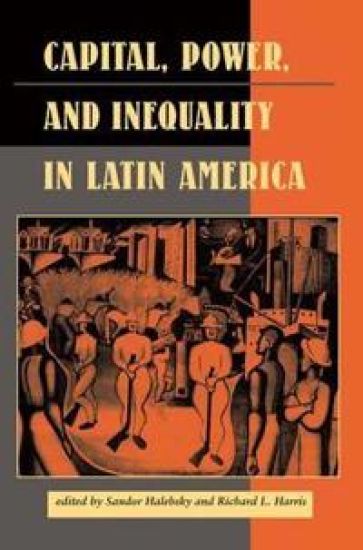
Over the last two decades, economic, political, and social life in Latin America has been transformed by the region’s accelerated integration into the global economy. Although this transformation has tended to exacerbate various inequities, new forms of popular expression and action challenging the contemporary structures of capital and power have also developed. This volume is a comprehensive, genuinely comparative text on contemporary Latin America. In it, an international group of contributors offer multidimensional analyses of the historical context, contemporary character, and future direction of rural transformation, urbanization, economic restructuring, and the transition to political democracy. In addition, individual essays address the changing role of women, the influence of religion, the growth of new social movements, the struggles of indigenous peoples, and ecological issues. Finally, the book examines the influence of U. S. policy and of regionalization and globalization on the Latin American states. Sandor Halebsky is professor of sociology at Saint Mary’s University in Halifax, Nova Scotia. He coedited Cuba in Transition: Crisis and Transformation (Westview, 1992). Richard L. Harris is chair of the faculty at Golden Gate University in Monterey, California. He is one of the coordinating editors of the journal Latin American Perspectives and the author of Marxism, Socialism, and Democracy in Latin America (Westview, 1992).
This is the second of two volumes to bear witness to the Cuban experience. Together with its predecessor, Cuba: Twenty-Five Years of Revolution, it offers a positive account. Yet, it is sensitive to the dilemmas and flawed strategies in Cuba's thirty-year process of transformation. It warns that no preconceived notion of state or of development will help grasp the multifaceted nature of this nation, which reflects aspects of both developed and underdeveloped nations. Seventeen chapters, five of which are from Cuban contributors, thoroughly investigate recent political, economic, and social changes as well as the successes and failures of long-term development policies. Heavy attention is paid to the rectification process launched by Castro in 1986. This volume portrays a Cuba facing the 1990s with a burst of increased vigor in its efforts to secure continued far-reaching transformation. Seventeen chapters describe major changes in the economic realm caught up in the rectification campaign; a slow process of liberalization in the political sphere; and a Cuba that, in social terms, is far better off than any other Latin American country.
This is the second of two volumes to bear witness to the Cuban experience. Together with its predecessor, Cuba: Twenty-Five Years of Revolution, it offers a positive account. Yet, it is sensitive to the dilemmas and flawed strategies in Cuba's thirty-year process of transformation. It warns that no preconceived notion of state or of development will help grasp the multifaceted nature of this nation, which reflects aspects of both developed and underdeveloped nations. Seventeen chapters, five of which are from Cuban contributors, thoroughly investigate recent political, economic, and social changes as well as the successes and failures of long-term development policies. Heavy attention is paid to the rectification process launched by Castro in 1986. This volume portrays a Cuba facing the 1990s with a burst of increased vigor in its efforts to secure continued far-reaching transformation. Seventeen chapters describe major changes in the economic realm caught up in the rectification campaign; a slow process of liberalization in the political sphere; and a Cuba that, in social terms, is far better off than any other Latin American country.
Central America provocatively challenges the myths of Central American democracy, development, and change--concepts traditionally maligned and oversimplified, but here presented analytically through a unique series of first-hand accounts. Incorporating essays by a variety of well-known academics and Central American specialists, this work considers each of the three concern areas separately. Part I includes five essays on democracy in the context of such nations as El Salvador, Guatemala, and Honduras. Part II explores the idea of development, the development of democratic education, U. S. aid, and the Social Democratic Project of 1948. Part III discusses the concept of change--seven essays cover liberation theology, the Sanctuary Movement, and the Reagan administration's attempts to thwart change.