Kirjailija
John L. Kessell
Kirjat ja teokset yhdessä paikassa: 18 kirjaa, julkaisuja vuosilta 1976–2025, suosituimpiin kuuluu Around the World Not Counting Days. Vertaile teosten hintoja ja tarkista saatavuus suomalaisista kirjakaupoista.
Nimi esiintyy myös muodoissa: John L Kessell
18 kirjaa
Kirjojen julkaisuvuodet: 1976–2025.
Northern New Spain, New Mexico Historical Review Essays (Hardcover)`
John L Kessell
Sunstone Press
2024
sidottu
This re-issued biography recounts [Kino's] work with loving detail and with an accuracy that has survived slight amendments. Its accompanying plates, maps, and bibliography enhance a text that should find a place in every serious library.""– Religious Studies Review
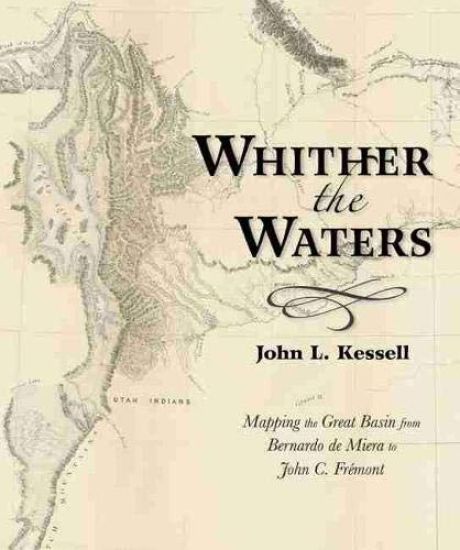
Bernardo de Miera y Pacheco (1713–1785) is remembered today not only as colonial New Mexico’s preeminent religious artist, but also as the cartographer who drew some of the most important early maps of the American West. His “Plano Geographico” of the Colorado Plateau and Great Basin, revised by his hand in 1778, influenced other mapmakers for almost a century. This book places the man and the map in historical context, reminding readers of the enduring significance of Miera y Pacheco. Later Spanish cartographers, as well as Baron Alexander von Humboldt, Captain Zebulon Montgomery Pike, and Henry Schenck Tanner, projected or expanded upon the Santa Fe cartographer’s imagery. By so doing, they perpetuated Miera y Pacheco’s most notable hydrographic misinterpretations. Not until almost seventy years after Miera did John Charles Frémont take the field and see for himself whither the waters ran and whither they didn’t.
The Mission of Guevavi on the Santa Cruz River in what is now southern Arizona served as a focal point of Jesuit missionary endeavor among the Pima Indians on New Spain's far northwestern frontier. For three-quarters of a century, from the first visit by the renowned Eusebio Francisco Kino in 1691 until the Jesuit Expulsion in 1767, the difficult process of replacing one culture with another—the heart of the Spanish mission system—went on at Guevavi. Yet all but the initial years presided over by Father Kino have been forgotten. Drawing upon archival materials in Mexico, Spain, and the United States—including accounts by the missionaries themselves and the surviving pages of the Guevavi record books—Kessell brings to life those forgotten years and forgotten men who struggled to transform a native ranchería into an ordered mission community. Of the eleven Black Robes who resided at Guevavi between 1701 and 1767, only a few are well known to history. Others—such as Joseph Garrucho, who presided more years at Guevavi than any other Padre; Alexandro Rapicani, son of a favorite of Sweden's Queen Christina; Custodio Zimeno, Guevavi's last Jesuit—have the details of their roles filled in here for the first time. In this in-depth study of a single missionary center, Kessell describes in detail the daily round of the Padres in their activities as missionaries, educators, governors, and intercessors among the often-indifferent and occassionally hostile Pimas. He discusses the Pima uprising of 1751 and the events that led up to it, concluding that it actually continued sporadically for some ten years. The growing ferocity of the Apache, the disastrous results of certain government policies—especially the removal of the Sobaípuri Indians from the San Pedro Valley—and the declining native population due to a combination of enforced culture change and epidemics of European diseases are also carefully explored. The story of Guevavi is one of continuing adversity and triumph. It is the story, finally, of explusion for the Jesuits and, a few short years later, the end of Mission Guevavi at the hands of the Apaches. In Mission of Sorrows Kessell has projected meticulous research into a highly readable narrative to produce an important contribution to the history of the Spanish Borderlands.
The Franciscan mission San José de Tumacácori and the perennially undermanned presidio Tubac become John L. Kessell's windows on the Arizona–Sonora frontier in this colorful documentary history. His fascinating view extends from the Jesuit expulsion to the coming of the U. S. Army. Kessell provides exciting accounts of the explorations of Francisco Garcés, de Anza's expeditions, and the Yuma massacre. Drawing from widely scattered archival materials, he vividly describes the epic struggle between Bishop Reyes and Father President Barbastro, the missionary scandals of 1815–18, and the bloody victory of Mexican civilian volunteers over Apaches in Arivaipa Canyon in 1832. Numerous missionaries, presidials, and bureaucrats—nameless in histories until now—emerge as living, swearing, praying, individuals. This authoritative chronicle offers an engrossing picture of the continually threatened mission frontier. Reformers championing civil rights for mission Indians time and again challenged the friars' "tight-fisted paternalistic control" over their wards. Expansionists repeatedly saw their plans dashed by Indian raids, uncooperative military officials, or lack of financial support. Frairs, Soldiers, and Reformers brings into sharp focus the long, blurry period between Jesuit Sonora and Territorial Arizona.
Remembered today as an early cartographer and prolific religious artist, don Bernardo de Miera y Pacheco (1713-1785) engaged during his lifetime in a surprising array of other pursuits: engineer and militia captain on Indian campaigns, district officer, merchant, debt collector, metallurgist, luckless silver miner, presidial soldier, dam builder, and rancher. This long-overdue, richly illustrated biography recounts Miera's complex life in cinematic detail, from his birth in Cantabria, Spain, to his sudden and unexplained appearance at Janos, Chihuahua, and his death in Santa Fe at age seventy-one. In Miera y Pacheco, John L. Kessell explores each aspect of this Renaissance man's life in the colony. Beginning with his marriage to the young descendant of a once-prominent New Mexican family, we see Miera transformed by his varied experiences into the quintessential Hispanic New Mexican. As he traveled to every corner of the colony and beyond, Miera gathered not only geographical, social, and political data but also invaluable information about the Southwest's indigenous peoples. At the same time, Miera the artist was carving and painting statues and panels of the saints for the altar screens of the colony. Miera's most ambitious surviving map resulted from his five-month ordeal as cartographer on the Domínguez-Escalante expedition to the Great Basin in 1776. Two years later, with the arrival of famed Juan Bautista de Anza as governor of New Mexico, Miera became a trusted member of Anza's inner circle, advising him on civil, military, and Indian affairs. Miera's maps and his religious art, represented here, have long been considered essential to the cultural history of colonial New Mexico. Now Kessell's biography tells the rest of the story. Anyone with an interest in southwestern history, colonial New Mexico, or New Spain will welcome this study of Miera y Pacheco's eventful life and times.


Pueblos, Spaniards, and the Kingdom of New Mexico
John L. Kessell
University of Oklahoma Press
2010
nidottu
For more than four hundred years in New Mexico, Pueblo Indians and Spaniards have lived ""together yet apart."" Now the preeminent historian of that region's colonial past offers a fresh, balanced look at the origins of a precarious relationship. John L. Kessell has written the first narrative history devoted to the tumultuous seventeenth century in New Mexico. Setting aside stereotypes of a Native American Eden and the Black Legend of Spanish cruelty, he paints an evenhanded picture of a tense but interwoven coexistence. Beginning with the first permanent Spanish settlement among the Pueblos of the Rio Grande in 1598, he proposes a set of relations more complicated than previous accounts envisioned and then reinterprets the Pueblo Revolt of 1680 and the Spanish reconquest in the 1690s. Kessell clearly describes the Pueblo world encountered by Spanish conquistador Juan de Oñate and portrays important but lesser-known Indian partisans, all while weaving analysis and interpretation into the flow of life in seventeenth-century New Mexico. Brimming with new insights embedded in an engaging narrative, Kessell's work presents a clearer picture than ever before of events leading to the Pueblo Revolt. Pueblos, Spaniards, and the Kingdom of New Mexico is the definitive account of a volatile era.
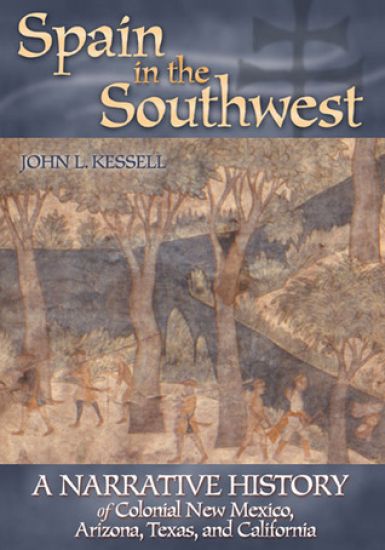
John L. Kessell's Spain in the Southwest presents a fast-paced, abundantly illustrated history of the Spanish colonies that became the states of New Mexico, Arizona, Texas, and California. With an eye for human interest, Kessell tells the story of New Spain's vast frontier--today's American Southwest and Mexican North--which for two centuries served as a dynamic yet disjoined periphery of the Spanish empire. Chronicling the period of Hispanic activity from the time of Columbus to Mexico's independence from Spain in 1821, Kessell traces the three great swells of Hispanic exploration, encounter, and influence that rolled north from Mexico across the coasts and high deserts of the western borderlands. Throughout this sprawling historical landscape, Kessell treats grand themes through the lives of individuals. He explains the frequent cultural clashes and accommodations in remarkably balanced terms. Stereotypes, the author writes, are of no help. Indians could be arrogant and brutal, Spaniards caring, and vice versa. If we select the facts to fit preconceived notions, we can make the story come out the way we want, but if the peoples of the colonial Southwest are seen as they really were--more alike than diverse, sharing similar inconstant natures--then we need have no favorites.
That Disturbances Cease
Diego De Vargas; John L. Kessell
University of New Mexico Press
2000
sidottu
Documents the legal manoeuvring at Santa Fe, Mexico City, and Madrid, as sitting governor, former governor, and groups of contending colonists struggle to make themselves heard and advance their interests.
Blood on the Boulders
Diego De Vargas; John L. Kessell; Rick Hendricks; Meredith D. Dodge
University of New Mexico Press
1998
sidottu
Having retaken Santa Fe by force of arms late in 1693, Diego de Vargas faces unrelenting challenges, waging active warfare against defiant Pueblo Indian resisters while maintaining peace with Pueblo allies; providing homes, food, and supplies for 1,500 unsure colonists; and bidding unceasingly for greater support from viceregal authorities in Mexico City. At the head of combined units of Spanish and Pueblo fighting men, the governor in 1694 leads repeated assaults on castle-like fortified sites. Through combat, prisoner exchange, and negotiation, he reestablishes the kingdom. Franciscans reopen some of the missions. Vargas founds the villa of Santa Cruz de la Canada. Pueblos north and west of Santa Fe rebel again in 1696; wearily, Vargas reports more blood on the boulders. Through The Journals of don Diego de Vargas, translated from official and private correspondence, we are drawn back, through conflict and compromise, into New Mexico's formative era.
To the Royal Crown Restored
Diego de Vargas; John L Kessell; Hendricks Rick; Meredith D Dodge
University of New Mexico Press
1995
sidottu
A documentary account of the resettlement of New Mexico composed of journals and official government records from the late 17th century.