Kirjojen hintavertailu – 12 859 818 kirjaa ja 27 kauppaa

Kirjailija

John Lane

Kirjat ja teokset yhdessä paikassa: 35 kirjaa, julkaisuja vuosilta 1906–2026, suosituimpiin kuuluu The Works of Max Beerbohm. Vertaile teosten hintoja ja tarkista saatavuus suomalaisista kirjakaupoista.

35 kirjaa

Kirjojen julkaisuvuodet: 1906–2026.

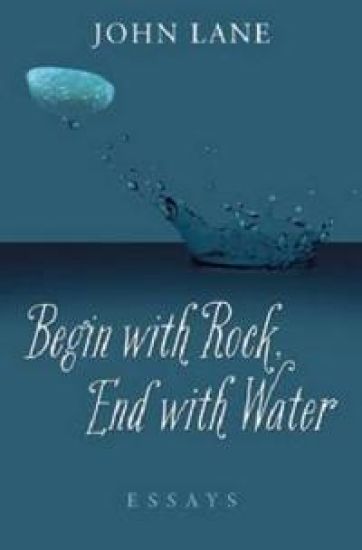
Begin with Rock, End with Water

Begin with Rock, End with Water

John Lane

Mercer University Press
2012
nidottu
Begin with Rock, End with Water is John Lane’s third collection of essays. In this new gathering of seventeen narrative essays Lane pushes even deeper into a twenty-year lyrical consideration of his place (and the place of all of us) in the changing natural world. Though there are many themes and settings in this collection, rivers such as the Chattooga, Youghigheny, Dead, Reedy, Micos, Yuribamba, and Tallahatchie figure prominently in Lane’s understanding of place and culture.
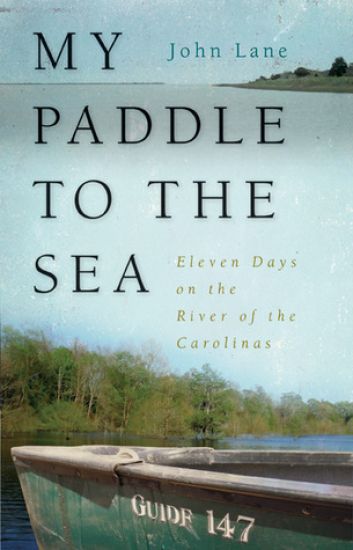
My Paddle to the Sea

My Paddle to the Sea

John Lane

University of Georgia Press
2012
pokkari
Three months after a family vacation in Costa Rica ends in tragedy when two fellow rafters die on the flooded Rio Reventazón, John Lane sets out with friends from his own backyard in upcountry South Carolina to calm his nerves and to paddle to the sea. Like Huck Finn, Lane sees a river journey as a portal to change, but unlike Twain’s character, Lane isn’t escaping. He’s getting intimate with the river that flows right past his home in the Spartanburg suburbs. Lane’s three­hundred-mile float trip takes him down the Broad River and into Lake Marion before continuing down the Santee River. Along the way Lane recounts local history and spars with streamside literary presences such as Mind of the South author W. J. Cash; Henry Savage, author of the Rivers of America Series volume on the Santee; novelist and Pulitzer Prize–winner Julia Peterkin; early explorer John Lawson; and poet and outdoor writer Archibald Rutledge. Lane ponders the sites of old cotton mills; abandoned locks, canals, and bridges; ghost towns fallen into decay a century before; Indian mounds; American Revolutionary and Civil War battle sites; nuclear power plants; and boat landings. Along the way he encounters a cast of characters Twain himself would envy—perplexed fishermen, catfish clean­ers, river rats, and a trio of drug-addled drifters on a lonely boat dock a day’s paddle from the sea. By the time Lane and his companions finally approach the ocean about forty miles north of Charleston they have to fight the tide and set a furious pace. Through it all, paddle stroke by paddle stroke, Lane is reminded why life and rivers have always been wedded together.
Lane's Library.

Lane's Library.

John Lane

British Library, Historical Print Editions
2011
pokkari
Title: Lane's Library. Publisher: British Library, Historical Print EditionsThe British Library is the national library of the United Kingdom. It is one of the world's largest research libraries holding over 150 million items in all known languages and formats: books, journals, newspapers, sound recordings, patents, maps, stamps, prints and much more. Its collections include around 14 million books, along with substantial additional collections of manuscripts and historical items dating back as far as 300 BC. The FICTION & PROSE LITERATURE collection includes books from the British Library digitised by Microsoft. The collection provides readers with a perspective of the world from some of the 18th and 19th century's most talented writers. Written for a range of audiences, these works are a treasure for any curious reader looking to see the world through the eyes of ages past. Beyond the main body of works the collection also includes song-books, comedy, and works of satire. ++++The below data was compiled from various identification fields in the bibliographic record of this title. This data is provided as an additional tool in helping to insure edition identification: ++++ British Library Lane, John; 1896, etc. 8 . 012627.i.
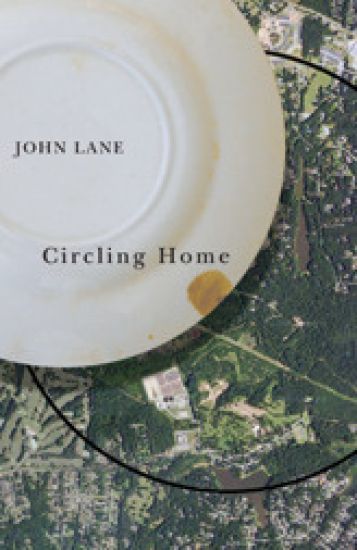
Circling Home

Circling Home

John Lane

University of Georgia Press
2009
pokkari
After many years of limited commitments to people or places, writer and naturalist John Lane married in his late forties and settled down in his hometown of Spartanburg, in the South Carolina piedmont. He, his wife, and two stepsons built a sustainable home in the woods near Lawson’s Fork Creek. Soon after settling in, Lane pinpointed his location on a topographical map. Centering an old, chipped saucer over his home, he traced a circle one mile in radius and set out to explore the area. What follows from that simple act is a chronicle of Lane’s deepening knowledge of the place where he’ll likely finish out his life. An accomplished hiker and paddler, Lane discovers, within a mile of his home, a variety of coexistent landscapes—ancient and modern, natural and manmade. There is, of course, the creek with its granite shoals, floodplain, and surrounding woods. The circle also encompasses an eight-thousand-year-old cache of Native American artifacts, graves of a dozen British soldiers killed in 1780, an eighteenth-century ironworks site, remnants of two cotton plantations, a hundred-year-old country club, a sewer plant, and a smattering of mid- to late twentieth-century subdivisions. Lane’s explorations intensify his bonds to family, friends, and colleagues as they sharpen his sense of place. By looking more deeply at what lies close to home, both the ordinary and the remarkable, Lane shows us how whole new worlds can open up.

Best of the Kudzu Telegraph

Best of the Kudzu Telegraph

John Lane

Hub City Press
2008
pokkari
Jimmy Buffet has his "Coconut Telegraph," but he's got nothing on nature writer John Lane, who sends his musings into the world each week in a popular newspaper column named after the ubiquitous green vine that's swallowing the South. Lane is a champion of the underdog, and what he seeks to protect is the character and the beauty of the place he lives. Lane, a much published poet and essayist, is a soldier for sustainability and a warrior for wildness. Using both wit and wisdom he takes on the environmental issues of our times, often by simply taking us on a walk through the woods or a drive up the highway. Just when he seems to write best about animals in his South Carolina Upcountry backyard-deer, tree frogs, and, yes, coyotes-he captivates us with a river adventure. He writes with as much intensity about old maps or a favorite pickup truck as he does about the socio-political issues that concern him-land use, urban planning, and conservation. These four dozen short essays, published by Community Journals in upstate South Carolina, will make you look more closely at the world around you and also, Lane hopes, will make you look ahead: to take actions, large and small, to protect the place you live.
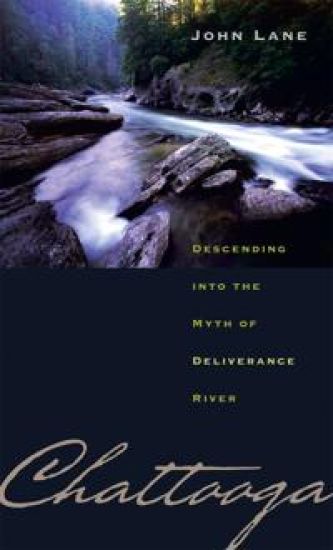
Chattooga

Chattooga

John Lane

University of Georgia Press
2005
pokkari
Before the novel and the film Deliverance appeared in the early 1970s, any outsiders one met along the Chattooga River were likely serious canoeists or anglers. In later years, untold numbers and kinds of people have felt the draw of the river’s torrents, which pour down the Appalachians along the Georgia-South Carolina border. Because of Deliverance the Chattooga looms enigmatically in our shared imagination, as iconic as Twain’s Mississippi—or maybe Conrad’s Congo. This is John Lane’s search for the real Chattooga—for the truths that reside somewhere in the river’s rapids, along its shores, or in its travelers’ hearts. Lane balances the dark, indifferent mythical river of Deliverance against the Chattooga known to locals and to the outdoors enthusiasts who first mastered its treacherous vortices and hydraulics. Starting at its headwaters, Lane leads us down the river and through its complex history to its current status as a National Wild and Scenic River. Along the way he stops for talks with conservation activists, seventh-generation residents, locals who played parts in the movie, day visitors, and others. Lane weaves into each encounter an abundance of details drawn from his perceptive readings and viewings of Deliverance and his wide-ranging knowledge of the Chattooga watershed. At the end of his run, Lane leaves us still fully possessed by the Chattooga’s mystery, yet better informed about its place in his world and ours.
Waist Deep in Black Water

Waist Deep in Black Water

John Lane

University of Georgia Press
2004
pokkari
John Lane has scaled a granite dome in the Suriname rain forest and waded past cottonmouths in the heart of a Florida cypress swamp. He has shadowed crocodiles in a Yucatán mangrove thicket and paddled the rapids of North Carolina's Tuckaseegee River in search of a drowned kayaker. Waist Deep in Black Water offers a collection of Lane's own writings that range from wilderness exploration, to conservation issues, to explorations of family history in Spartanburg, South Carolina. Lane's trek to the Medicine Wheel National Historic Landmark in Wyoming becomes an occasion to draw connections between religion, sexuality, and mountain lore. A hike into Kentucky's Red River Gorge prompts a meditation on the words and spirit of Wendell Berry, who helped prevent the gorge from being dammed. Some of Lane's writings are set closer to home, where the South Carolina hills meet the Blue Ridge. In "Something Rare as a Dwarf-Flowered Heartleaf," Lane recounts his campaign to stop the development of a woodland area within Spartanburg's city limits. Family issues also surface, as in "Confluence: Pacolet River." Here Lane kayaks through country where his family has lived for generations as he reckons the distances between himself and his farming, millworking forebears. Something is always at stake wherever Lane takes us: a stand of old-growth trees, a primate population, a friendship, a soul. Lane bestows loving attention on the places and people he visits in this collection and, in the process, goes beyond the traditional concerns of nature and travel writing.
Timeless Simplicity

Timeless Simplicity

John Lane

Green Books
2001
pokkari

Halvin toimitettuna 17,90 €

This is a book about simplicity, not destitution, not parsimoniousness, not self-denial, but the restoration of wealth in the midst of an affluence in which we are starving the spirit.
What Are Uncles For?

What Are Uncles For?

John Lane

Harbour Publishing
1984
nidottu
Through Michael's eyes he could see the familiar world reflected as a fantastic, often hilariously distorted place, and fortunately he had the time and sensitivity to capture the magic of these childhood perceptions in a heartwarming series of poems. Illustrated in kindred spirit by two small boys, What Are Uncles For? will prove equally entertaining for uncles, aunts, parents - and children.
Return Fare

Return Fare

John Lane

Turnstone Press
1981
nidottu
Three printings in three months - a shocking and powerful novel in the tradition of classic realism. The story of a young teenager from the Okanagan's descent into the nightmarish world of Californian migrant workers.