

Kirjailija
John Lange
Kirjat ja teokset yhdessä paikassa: 16 kirjaa, julkaisuja vuosilta 2015–2023, suosituimpiin kuuluu A Commentary on the Gospel According to John. Vertaile teosten hintoja ja tarkista saatavuus suomalaisista kirjakaupoista.
16 kirjaa
Kirjojen julkaisuvuodet: 2015–2023.


Reprint of the original, first published in 1872. The publishing house Anatiposi publishes historical books as reprints. Due to their age, these books may have missing pages or inferior quality. Our aim is to preserve these books and make them available to the public so that they do not get lost.

Reprint of the original, first published in 1872. The publishing house Anatiposi publishes historical books as reprints. Due to their age, these books may have missing pages or inferior quality. Our aim is to preserve these books and make them available to the public so that they do not get lost.

Reprint of the original, first published in 1872. The publishing house Anatiposi publishes historical books as reprints. Due to their age, these books may have missing pages or inferior quality. Our aim is to preserve these books and make them available to the public so that they do not get lost.

Reprint of the original, first published in 1872. The publishing house Anatiposi publishes historical books as reprints. Due to their age, these books may have missing pages or inferior quality. Our aim is to preserve these books and make them available to the public so that they do not get lost.

Reprint of the original, first published in 1872. The publishing house Anatiposi publishes historical books as reprints. Due to their age, these books may have missing pages or inferior quality. Our aim is to preserve these books and make them available to the public so that they do not get lost.

Reprint of the original, first published in 1872. The publishing house Anatiposi publishes historical books as reprints. Due to their age, these books may have missing pages or inferior quality. Our aim is to preserve these books and make them available to the public so that they do not get lost.

Reprint of the original, first published in 1872. The publishing house Anatiposi publishes historical books as reprints. Due to their age, these books may have missing pages or inferior quality. Our aim is to preserve these books and make them available to the public so that they do not get lost.

Reprint of the original, first published in 1872. The publishing house Anatiposi publishes historical books as reprints. Due to their age, these books may have missing pages or inferior quality. Our aim is to preserve these books and make them available to the public so that they do not get lost.

Being a successful teacher means constantly examining your own development to identify blind spots and ensure you engage on a meaningful level with teaching and learning. This book discusses theoretical and conceptual ideas, linked to direct strategies for the classroom, that guide students towards becoming proactive and effective learners, giving them the confidence to take charge of their professional future in teaching. Built around a series of ‘contributing ideas', this book includes a conceptual framework for critically analysing and thinking about the teaching and learning environment. Examples throughout explore how to make the most of professional learning opportunities so students can take personal control of their learning, through self-regulation and self-monitoring. Strategies for making practical use of these ideas for classroom planning and preparation for learning are also included.

Being a successful teacher means constantly examining your own development to identify blind spots and ensure you engage on a meaningful level with teaching and learning. This book discusses theoretical and conceptual ideas, linked to direct strategies for the classroom, that guide students towards becoming proactive and effective learners, giving them the confidence to take charge of their professional future in teaching. Built around a series of ‘contributing ideas', this book includes a conceptual framework for critically analysing and thinking about the teaching and learning environment. Examples throughout explore how to make the most of professional learning opportunities so students can take personal control of their learning, through self-regulation and self-monitoring. Strategies for making practical use of these ideas for classroom planning and preparation for learning are also included.

While quick to question the claims to knowledge that others make, philosophers have not so readily submitted their own affirmations to the same scrutiny. In fact, it seems to be the common conviction of philosophers that the assertions they make are cognitive, are true or false, and that philosophical disagreement is genuine disagreement. In this stimulating essay Professor Lange confronts this assumption, presents his own view of philosophy as proposal, and then seeks a solution to the paradox that his view poses for philosophy. Originally published in 1970. The Princeton Legacy Library uses the latest print-on-demand technology to again make available previously out-of-print books from the distinguished backlist of Princeton University Press. These editions preserve the original texts of these important books while presenting them in durable paperback and hardcover editions. The goal of the Princeton Legacy Library is to vastly increase access to the rich scholarly heritage found in the thousands of books published by Princeton University Press since its founding in 1905.

The difference between a status-quo, but revisable, “common sense” and new realities, new discoveries, and such, generates a tension. One of the places where philosophy spends its time is the border country between a new science and an old common sense. What sense can we make of new truths, new possibilities, in, reprogenetics, cloning, genetic engineering, artificial intelligence, artificial life, and such? How shall we think about them? Should they alter our view of the world, not merely additively, as in learning a new telephone number, but radically, as in taking seriously the hypothesis that wind is a meteorological phenomenon and not the breath of a god, that the earth moves, that humanity might be transformed, for example, biologically, by means of genetic engineering, and technologically, by means of electronic implants and enhancements? Our species, unique among known species, can control its own evolution. Will it do so? Should it do so? How might it do so? Philosophy has new things to do, and new places to go. This book begins the journey.

Political radical John Wright is plotting an act of mass destruction and federal agent John Graves has him under surveillance, trying to figure out what the plot is. When a government computer is hacked and a high-security shipment of nerve gas gets hijacked, Graves puts the pieces together but can he stop Wright from unleashing his weapon before it kills a million people...including the President of the United States?"
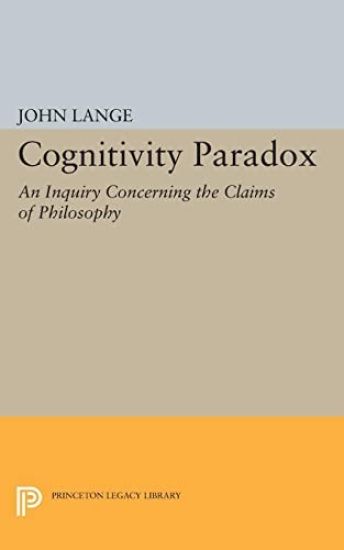
While quick to question the claims to knowledge that others make, philosophers have not so readily submitted their own affirmations to the same scrutiny. In fact, it seems to be the common conviction of philosophers that the assertions they make are cognitive, are true or false, and that philosophical disagreement is genuine disagreement. In this stimulating essay Professor Lange confronts this assumption, presents his own view of philosophy as proposal, and then seeks a solution to the paradox that his view poses for philosophy. Originally published in 1970. The Princeton Legacy Library uses the latest print-on-demand technology to again make available previously out-of-print books from the distinguished backlist of Princeton University Press. These editions preserve the original texts of these important books while presenting them in durable paperback and hardcover editions. The goal of the Princeton Legacy Library is to vastly increase access to the rich scholarly heritage found in the thousands of books published by Princeton University Press since its founding in 1905.