Kirjojen hintavertailu – 12 859 829 kirjaa ja 27 kauppaa

Kirjailija

John Law

Kirjat ja teokset yhdessä paikassa: 54 kirjaa, julkaisuja vuosilta 1984–2026, suosituimpiin kuuluu The End of the Experiment?. Vertaile teosten hintoja ja tarkista saatavuus suomalaisista kirjakaupoista.

54 kirjaa

Kirjojen julkaisuvuodet: 1984–2026.

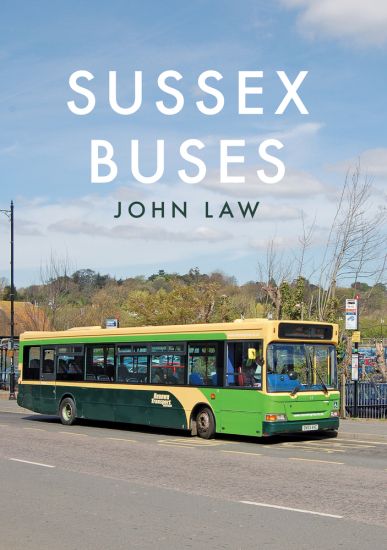
Sussex Buses

Sussex Buses

John Law

AMBERLEY PUBLISHING
2018
nidottu
Southdown Motor Services, a subsidiary of the British Electric Traction Company, once dominated the county of Sussex, with a history dating back to 1915. The National Bus Company took over in 1969 and the company was split up in the 1980s, with the Brighton and much of the East Sussex areas becoming ‘Brighton & Hove’, bringing back memories of the former Tilling Group operator of a similar name. Brighton Corporation also ran buses in that town, as did neighbouring Eastbourne, both with fascinating fleets, though both concerns are no longer operating. The northern part of what is now West Sussex was the territory of London Country, particularly around East Grinstead and Crawley. In East Sussex, Maidstone & District ran most of the services around Hastings. Today Stagecoach and the Go Ahead Group are the principal bus operators in Sussex, with their operations supplemented by various small, but interesting, independents. John Law has been photographing the Sussex bus scene since the early 1970s and presents here a wonderful selection of his photographs, bringing back memories of vanished operators and vehicles.
Messy Ethnographies in Action

Messy Ethnographies in Action

John Law

Vernon Press
2018
pokkari
This edited collection of chapters showcases original and interdisciplinary ethnographic fieldwork in a range of international settings; including studies of underground pub life in North East England; Finnish hotels; and bio-scientific institutions in the Amazonian rainforest. Informed by John Law's concept of ethnographic "mess," this book makes a unique, empirically-informed, contribution to an understanding of the social construction of knowledge and the role that ethnography can and does play (Law, 2004). It provides a range of colourful snapshots from the field, showing how different researchers from multiple research environments and disciplines are negotiating the practicalities, and epistemological and ethical implications, of "messy" ethnographic practice as a means of researching "messy" social realities. Law notes that "social...science investigations interfere with the world...things change as a result. The issue, then, is not to seek disengagement but rather with how to engage" (ibid p14). Drawing on their own situated experiences, the book's contributors address the "messy" implications of this and also explore the (equally messy) issue of why engage. They reflect on the process of undertaking research, and their role in the research process as they negotiate their own position in the field. What is ethnography "for"? What impact should, or do, we have in the field and after we leave the research site? What about unintended consequences? When (if ever) are we "off duty?" What does "informed consent" mean in a constantly shifting, dynamic ethnographic context? Is ethnography by its very nature a form of "action research?" By providing a wide range of situated explorations of "messy ethnographies," the book presents a unique, hands-on guide to the challenges of negotiating ethnography in practice, which will be of use to all researchers and practitioners who use ethnography as a method.
Hertfordshire Buses

Hertfordshire Buses

John Law

Amberley Publishing
2018
nidottu
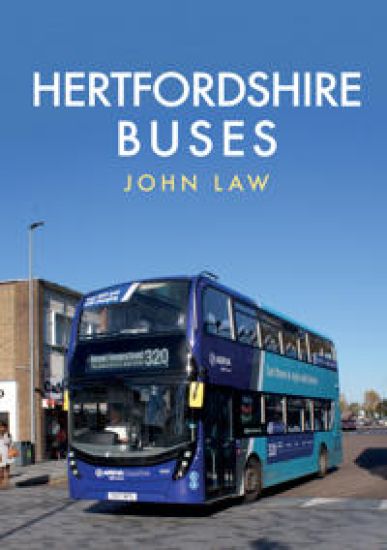
From 1933 to the end of the 1960s, most of the bus services in Hertfordshire were in the hands of London Transport’s country services, with standardised green buses. These vehicles and routes were passed to the National Bus Company in 1969, with a new green London Country livery being adopted, though within five years it was replaced by NBC corporate colours. The 1970s and 1980s saw London Country’s fleet brought up to a modern standard. The Thatcher government’s policies brought about the split of London Country, with Hertfordshire being unequally divided between the North East and North West businesses. Since then, there have been Sovereign, County Bus and Luton & District, which eventually all came together to become part of the Arriva Group. London Transport’s Potters Bar Garage found itself in Hertfordshire after boundary changes in the1960s, bringing red buses into the south of the county and reaching as far as St Albans. Other NBC subsidiaries could be found on the fringes of Hertfordshire, including United Counties and Eastern National. Various independents have featured in the county’s bus scene, the numbers greatly increasing after deregulation. Some of the most notable operators today include Uno and Centrebus. The author has been living in Hertfordshire since the 1970s and has built up a fantastic collection of photographs of the county’s buses, the best of which are displayed here.
Money and Trade Consider'd; With a Proposal for Supplying the Nation With Money. By Mr. John Law, ... The Second Edition
The 18th century was a wealth of knowledge, exploration and rapidly growing technology and expanding record-keeping made possible by advances in the printing press. In its determination to preserve the century of revolution, Gale initiated a revolution of its own: digitization of epic proportions to preserve these invaluable works in the largest archive of its kind. Now for the first time these high-quality digital copies of original 18th century manuscripts are available in print, making them highly accessible to libraries, undergraduate students, and independent scholars. Delve into what it was like to live during the eighteenth century by reading the first-hand accounts of everyday people, including city dwellers and farmers, businessmen and bankers, artisans and merchants, artists and their patrons, politicians and their constituents. Original texts make the American, French, and Industrial revolutions vividly contemporary.++++The below data was compiled from various identification fields in the bibliographic record of this title. This data is provided as an additional tool in helping to insure edition identification: ++++University of London's Goldsmiths' LibraryT097293With a half-title. London: printed for W. Lewis, 1720. 4],96p.; 8
Money and Trade Considered, With a Proposal for Supplying the Nation With Money
The 18th century was a wealth of knowledge, exploration and rapidly growing technology and expanding record-keeping made possible by advances in the printing press. In its determination to preserve the century of revolution, Gale initiated a revolution of its own: digitization of epic proportions to preserve these invaluable works in the largest archive of its kind. Now for the first time these high-quality digital copies of original 18th century manuscripts are available in print, making them highly accessible to libraries, undergraduate students, and independent scholars. Delve into what it was like to live during the eighteenth century by reading the first-hand accounts of everyday people, including city dwellers and farmers, businessmen and bankers, artisans and merchants, artists and their patrons, politicians and their constituents. Original texts make the American, French, and Industrial revolutions vividly contemporary.++++The below data was compiled from various identification fields in the bibliographic record of this title. This data is provided as an additional tool in helping to insure edition identification: ++++British LibraryT097650Anonymous. By John Law. The ornament on the titlepage resembles a coastline and its reflection. Variant: the ornament contains an eagle and vines. Edinburgh: printed by the heirs and successors of Andrew Anderson, anno Dom., 1705. 120p.; 4
Yorkshire Traction Buses

Yorkshire Traction Buses

John Law

Amberley Publishing
2018
nidottu
Public transport began in Barnsley in 1902 with the opening of the Barnsley & District Electric Traction Co. Ltd, with a small Y-shaped network from Smithies to Worsborough Bridge and Worsborough Dale. Motorbus operations commenced in 1913, which soon expanded outwards, bringing about the first name change, with the word electric being dropped from the company’s title. 1928 saw the name changed again, with Yorkshire Traction being adopted, reflecting the growing business beyond the boundaries of Barnsley. Two small Yorkshire Traction subsidiaries were absorbed into the main fleet in the late 1960s. Fellow British Electric Traction company Mexborough & Swinton, once a tram and trolleybus operator, became fully integrated into Yorkshire Traction. County Motors, jointly owned by large independent West Riding Automobile Company and Yorkshire Traction, operated in the area between Huddersfield and Barnsley. With West Riding becoming part of the National Bus Company, the County Motors fleet received Yorkshire Traction red livery. In December 2005, the Yorkshire Traction Company sold out to the Stagecoach Group, who continue to run bus services in the area today. John Law was brought up in ‘Tracky’ territory. He has been studying the company’s buses for many years and has amassed a vast collection of photographs of all the above operations, the best of which are to be found within these pages.
Hampshire Buses

Hampshire Buses

John Law

Amberley Publishing
2017
nidottu
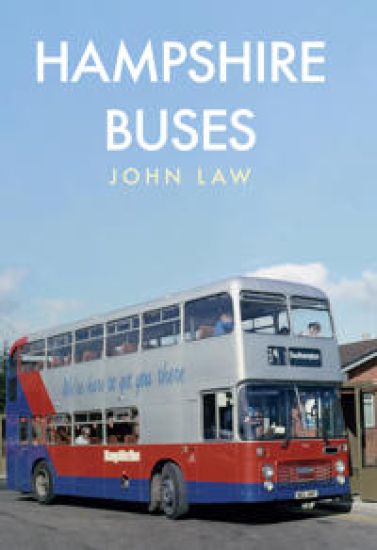
Hampshire is the largest county in south-east England, despite losing the Isle of Wight and other areas during the 1974 boundary changes. Three important cities fall within its present boundaries: Winchester, Southampton and Portsmouth. Winchester, once the capital of England and still the county town, was home to the famous green buses of King Alfred Motor Services until the business was sold to the National Bus Company subsidiary Hants & Dorset in 1973. Formerly a Tilling Group member, Hants & Dorset’s green buses were soon painted red in NBC days and could be seen throughout the county until the company was split up in 1983. The Hampshire operations continued under the auspices of Hampshire Bus until Stagecoach took over in 1987, though many of the Southampton area services passed to Solent Blue Line. The other NBC operator was Provincial, operating around Gosport and Fareham, later to become part of First Bus. The same fate befell the two municipal operators, Southampton and Portsmouth. The latter city also saw the green buses of Southdown Motor Services running in from neighbouring West Sussex. Many smaller operators have been, or still are, operating in Hampshire. John Law has been photographing them all since the early 1970s. The best of his pictures are seen in this wonderful collection of memories of Hampshire’s bus operations.
Benelux Railways

Benelux Railways

John Law

Amberley Publishing
2017
nidottu
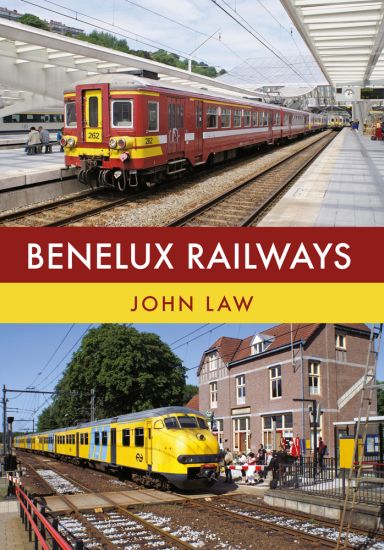
The Netherlands, Belgium and Luxembourg are three separate European countries that have their own railway systems, with much integration between each other. They are united by all running regular passenger train services, mostly hourly or more frequent, within each country and beyond. Nederlandse Spoorwegen supplies the principal rail service within the Netherlands, supplemented by other operators such as Arriva and Syntus, who run a few local lines. All the passenger services within Belgium are operated by NMBS/SNCB (Nationale Maatschappij der Belgische Spoorwegen or Société Nationale des Chemins de Fer Belges), uniting the Flemish and Wallonian parts of the country. CFL (correctly called Société Nationale des Chemins de Fer Luxembourgeois) has a surprisingly large rail network, with frequent internal services and innumerable cross-border operations, including those from Germany and France. John Law has been visiting the railways of this part of Europe since the early 1970s and has travelled on nearly all the lines opened to passenger traffic. He has photographed the changing scene over the years and has compiled a huge number of images, the best of which are within these pages.
Suffolk Buses

Suffolk Buses

John Law

Amberley Publishing
2017
nidottu
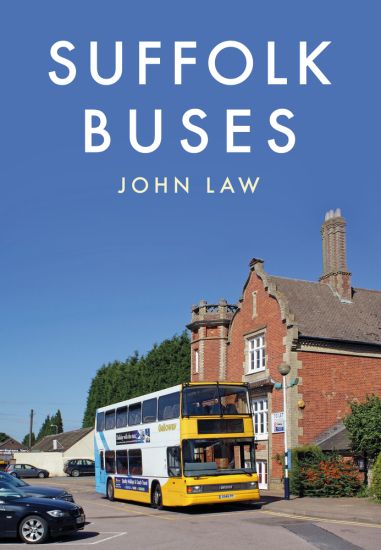
Suffolk was once the territory of the Eastern Counties Omnibus Company, with two municipal operators and several notable independents also running bus services in the county. Eastern Counties eventually became part of the First Bus Group. Lowestoft Corporation Transport, later known as Waveney District Council, sold out in 1977. The other local authority-owned operator, Ipswich Buses, is one of the few examples left in the United Kingdom. The independent sector has expanded considerably within Suffolk. Established operators like Simond’s of Botesdale are still trading, while several newcomers are now running services in the county. As with most of the country, quite a number of independents have ceased trading. Remember Norfolk’s of Nayland, Premier Travel, and Theobald’s of Long Melford? Since the early 1970s, John Law has been photographing these bus operations. The best of his efforts are shown, bringing back memories of vanished operators and the varied liveries of their vehicles, together with the current bus scene in Suffolk.
Doncaster's Railways

Doncaster's Railways

John Law

Amberley Publishing
2017
nidottu
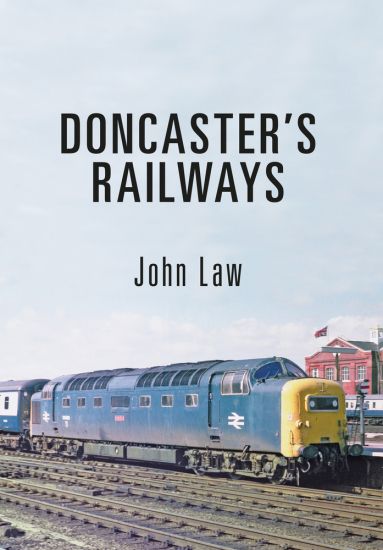
The railways first came to Doncaster in the 1840s. In the 1850s, the Great Northern Railway established the Doncaster Locomotive and Carriage Building Works, later responsible for building Mallard and Flying Scotsman for the LNER as well as many hundreds of other locomotives. Today, Doncaster railway station is on the East Coast Main Line between London and Scotland, and is a major interchange with CrossCountry routes and local services through the north of England. In this book, photographer John Law looks at railway activity in and around Doncaster, from the end of local steam in 1967 through to the present day, including the Works, the signalling and the station itself. Motive power from the days of green diesels, through the last days of steam in the local collieries, to the modern electrics used on the main line is illustrated.
Essex Buses

Essex Buses

John Law

Amberley Publishing
2017
nidottu
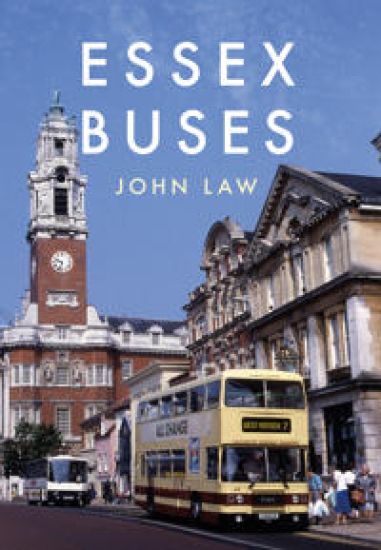
Essex has long been full of interest for followers of Britain’s bus industry. The western side of the county has always fallen under the influence of London, even to the extent that places like Romford, Upminster and Ilford were transferred into the newly created Greater London in 1974. The dominant operator in Essex was Eastern National, which started life in London under the auspices of Thomas Clarkson in 1909. The company later became part of the Tilling Group, followed by the British Transport Commission, and then the National Bus Company. Eastern National fell into the hands of First Group after privatisation. There were lots of other operators in Essex. To the west, both London Transport and London Country were to be found. Eastern Counties, from that company’s vast empire in East Anglia, could be found around the border areas. There were also two municipal businesses, in Colchester and Southend-on-Sea. Sell-offs resulted in both becoming part of the Deutsche Bahn-owned Arriva. Perhaps Essex is best known for its independent bus companies. Many have now gone, leaving just memories of operators such as Osborne’s, Norfolk’s and Went’s. Hedingham & District still exist, albeit now owned by the Go Ahead Group. Many new companies have since come along to run stage-carriage services in the county. All this history and more is explored in Essex Buses. The author has been photographing public transport since he first visited Eastern England in the early seventies, and here presents us with a fine selection of images showcasing Essex’s bus scene over those years.
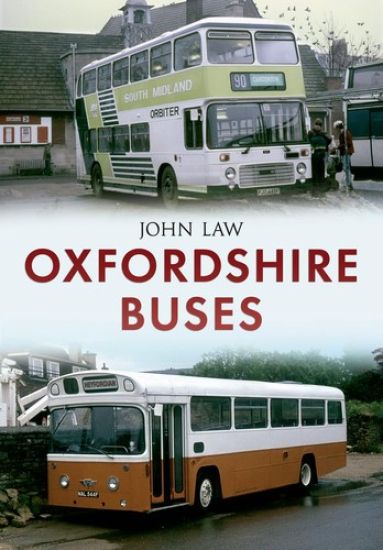
Oxfordshire Buses

Oxfordshire Buses

John Law

Amberley Publishing
2015
nidottu
John Law has been visiting Oxfordshire and photographing the county’s buses and coaches since 1973. In this book, he covers Oxfordshire buses from the days of the National Bus Company, which was split into smaller companies such as the Oxford Bus Company, South Midland and Midland Red South, to the present day, when bigger groups have taken over many of the county’s bus routes. Go Ahead Group, owner of the Oxford Bus Company, and Stagecoach, which took over Midland Red South, still compete with each other, especially on the express London services. As well as these major operators, the minibus revolution took strong hold in Oxfordshire when South Midland became Thames Transit. There were Midland Red buses in the Banbury area and rural Oxford South Midland depots. Various independent operators including ones that have fallen by the wayside, such as Chiltern Queens, are also included. John Law takes a look at these companies and their operations and tells the story of Oxfordshire buses with a collection of images that will bring back memories of the county from times past.
Out of Work. [A Novel.]

Out of Work. [A Novel.]

John Law

British Library, Historical Print Editions
2011
pokkari
Title: Out of Work. A novel.]Publisher: British Library, Historical Print EditionsThe British Library is the national library of the United Kingdom. It is one of the world's largest research libraries holding over 150 million items in all known languages and formats: books, journals, newspapers, sound recordings, patents, maps, stamps, prints and much more. Its collections include around 14 million books, along with substantial additional collections of manuscripts and historical items dating back as far as 300 BC. The FICTION & PROSE LITERATURE collection includes books from the British Library digitised by Microsoft. The collection provides readers with a perspective of the world from some of the 18th and 19th century's most talented writers. Written for a range of audiences, these works are a treasure for any curious reader looking to see the world through the eyes of ages past. Beyond the main body of works the collection also includes song-books, comedy, and works of satire. ++++The below data was compiled from various identification fields in the bibliographic record of this title. This data is provided as an additional tool in helping to insure edition identification: ++++ British Library Law, John; null 8 . 012633.l.18.