

Kirjailija
John Lehman
Kirjat ja teokset yhdessä paikassa: 9 kirjaa, julkaisuja vuosilta 2003–2026, suosituimpiin kuuluu Little Book on Being Healthy and Well, The. Vertaile teosten hintoja ja tarkista saatavuus suomalaisista kirjakaupoista.
9 kirjaa
Kirjojen julkaisuvuodet: 2003–2026.
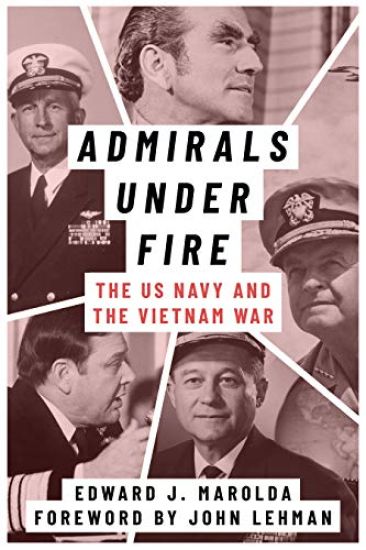
By now the world knows well the exploits of World War II admirals Ernest King, Chester Nimitz, and "Bull" Halsey. These brilliant strategists and combat commanders--backed by a powerful Allied coalition, a nation united, gifted civilian leaders, and abundant war-making resources--led U. S. and allied naval forces to victory against the Axis powers. Leadership during the Vietnam War was another story. The Vietnam War and its aftermath sorely tested the professional skill of four-star admirals Harry D. Felt, Ulysses S. Grant Sharp, Thomas H. Moorer, Elmo R. Zumwalt Jr., and James L. Holloway III. Unlike their World War II predecessors, these equally battle-tested leaders had to cope with a flawed American understanding of U. S. and Vietnamese Communist strengths and weaknesses, distrustful and ill-focused Washington leaders, an increasingly discontented American populace, and an ultimately failing war effort. Like millions of other Americans, these five admirals had to come to terms with America's first lost war, and what that loss meant for the future of the nation and the U. S. armed forces. The challenges were both internal and external. A destabilized U. S. Navy was troubled by racial discord, drug abuse, anti-war and anti-establishment sentiment, and a host of personnel and material ills. At the same time, increasingly serious global threats to US interests, such as the rise of Soviet nuclear-missile and naval power, were shaping confrontations on the postwar stage. Critical to the story is how these naval leaders managed their relationships with Presidents Kennedy, Johnson, Nixon, Ford, and Carter, and Secretaries of Defense McNamara, Laird, and Schlesinger. Based on prodigious research into many formerly classified sources, Edward J. Marolda relates in dramatic detail how America's top naval leaders tackled their responsibilities, their successes, and their failures. This is a story of dedication to duty, professionalism, and service by America's top admirals during a time of great national and international adversity.
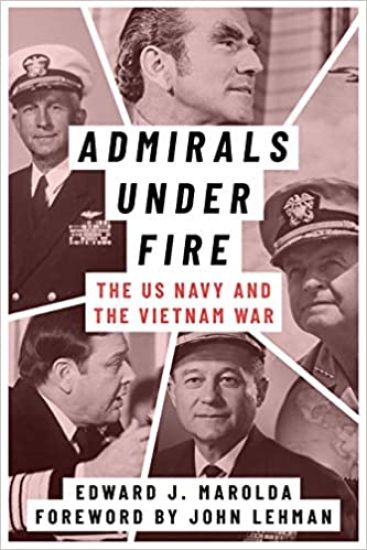
By now the world knows well the exploits of World War II admirals Ernest King, Chester Nimitz, and "Bull" Halsey. These brilliant strategists and combat commanders--backed by a powerful Allied coalition, a nation united, gifted civilian leaders, and abundant war-making resources--led U. S. and allied naval forces to victory against the Axis powers. Leadership during the Vietnam War was another story. The Vietnam War and its aftermath sorely tested the professional skill of four-star admirals Harry D. Felt, Ulysses S. Grant Sharp, Thomas H. Moorer, Elmo R. Zumwalt Jr., and James L. Holloway III. Unlike their World War II predecessors, these equally battle-tested leaders had to cope with a flawed American understanding of U. S. and Vietnamese Communist strengths and weaknesses, distrustful and ill-focused Washington leaders, an increasingly discontented American populace, and an ultimately failing war effort. Like millions of other Americans, these five admirals had to come to terms with America's first lost war, and what that loss meant for the future of the nation and the U. S. armed forces. The challenges were both internal and external. A destabilized U. S. Navy was troubled by racial discord, drug abuse, anti-war and anti-establishment sentiment, and a host of personnel and material ills. At the same time, increasingly serious global threats to US interests, such as the rise of Soviet nuclear-missile and naval power, were shaping confrontations on the postwar stage. Critical to the story is how these naval leaders managed their relationships with Presidents Kennedy, Johnson, Nixon, Ford, and Carter, and Secretaries of Defense McNamara, Laird, and Schlesinger. Based on prodigious research into many formerly classified sources, Edward J. Marolda relates in dramatic detail how America's top naval leaders tackled their responsibilities, their successes, and their failures. This is a story of dedication to duty, professionalism, and service by America's top admirals during a time of great national and international adversity.

When Ronald Reagan took office in 1981, the United States and NATO were losing the Cold War. The USSR had superiority in conventional weapons and manpower in Europe, and had embarked on a construction programme to gain naval pre-eminence. But Reagan had a plan. Reagan pushed Congress to build the navy back to its 1945 strength. He gathered a circle of experienced naval planners, including the author, to devise an aggressive strategy. New radars, sensors and emissions technology would make ghosts of US submarines and surface fleets. They would operate aircraft carriers in Arctic waters which no navy had attempted. The Soviets, surrounded by their forward naval strategy, bankrupted their economy trying to keep pace. It wasn’t long before the Berlin Wall fell and the USSR was disbanded.
When Ronald Reagan took office in 1981, the United States and NATO were losing the Cold War. The USSR had superiority in conventional weapons and manpower in Europe, and had embarked on a construction programme to gain naval pre-eminence. But Reagan had a plan. Reagan pushed Congress to build the navy back to its 1945 strength. He gathered a circle of experienced naval planners, including the author, to devise an aggressive strategy. New radars, sensors and emissions technology would make ghosts of US submarines and surface fleets. They would operate aircraft carriers in Arctic waters which no navy had attempted. The Soviets, surrounded by their forward naval strategy, bankrupted their economy trying to keep pace. It wasn’t long before the Berlin Wall fell and the USSR was disbanded.

In any marriage, it is extremely important to recognize that there are certain areas which must be guided and guarded. The five areas which can attract significant challenges and difficulties are as follows: role relationships, communication, physical relationships, finances, and parenting. Throughout this book, biblical content is sought to help couples be all they can be for God s glory, and in so doing, be able to show the world Christ and the Church through their own personal marriage relationship "


To The Movies: Poems and Conversations about the Movies
John Lehman
Createspace Independent Publishing Platform
2015
nidottu
From Ronald Reagan's Secretary of the Navy comes the incredible story of that service, beginning to end. John Lehman focuses on the important ships, interesting people, and decisive battles in American naval history from the Revolutionary War to the present day. Everyone and everything in these pages is larger than life. Some of the men are legends. Lehman covers, among others, the Revolutionary War's John Paul Jones (of "I have not yet begun to fight" fame); David Glasgow "Damn the torpedoes" Farragut of the Civil War; and the recently retired Hyman G. Rickover, the "high priest" of the nuclear submariners and his stormy, controversial relationship with Lehman himself. He also uses little-known diaries and accounts to tell the stories of the individual, unknown sailors who made it all possible. Then there are the ships: from the U. S. S. Constitution and C. S. S. Alabama to the ships of today's Navy including yesterday's nuclear-powered Nimitz supercarriers and today's superfast, high-tech Arleigh Burke destroyers just rolling off their blocks in Maine's Bath Ironworks. And finally, of course, the battles, thrillingly recounted from the Battle of New Orleans to the Battle of Midway to Grenada (which is more exciting than you thought).