

Kirjailija
John Leland
Kirjat ja teokset yhdessä paikassa: 54 kirjaa, julkaisuja vuosilta 1989–2025, suosituimpiin kuuluu Porcher's Creek. Vertaile teosten hintoja ja tarkista saatavuus suomalaisista kirjakaupoista.
54 kirjaa
Kirjojen julkaisuvuodet: 1989–2025.
The Rights of Conscience Inalienable, and Therefore Religious Opinions not Cognizable by Law
John Leland
Gale Ecco, Print Editions
2018
sidottu
The 18th century was a wealth of knowledge, exploration and rapidly growing technology and expanding record-keeping made possible by advances in the printing press. In its determination to preserve the century of revolution, Gale initiated a revolution of its own: digitization of epic proportions to preserve these invaluable works in the largest archive of its kind. Now for the first time these high-quality digital copies of original 18th century manuscripts are available in print, making them highly accessible to libraries, undergraduate students, and independent scholars. The Age of Enlightenment profoundly enriched religious and philosophical understanding and continues to influence present-day thinking. Works collected here include masterpieces by David Hume, Immanuel Kant, and Jean-Jacques Rousseau, as well as religious sermons and moral debates on the issues of the day, such as the slave trade. The Age of Reason saw conflict between Protestantism and Catholicism transformed into one between faith and logic -- a debate that continues in the twenty-first century.++++The below data was compiled from various identification fields in the bibliographic record of this title. This data is provided as an additional tool in helping to insure edition identification: ++++Library of CongressW021996New-London Conn.]: Printed by T. Green & Son, M, DCC, XCI. 1791]. 29, 3]p.; 4
Reflections on the Late Lord Bolingbroke's Letters on the Study and use of History; ... By John Leland,
John Leland
Gale Ecco, Print Editions
2018
sidottu
The 18th century was a wealth of knowledge, exploration and rapidly growing technology and expanding record-keeping made possible by advances in the printing press. In its determination to preserve the century of revolution, Gale initiated a revolution of its own: digitization of epic proportions to preserve these invaluable works in the largest archive of its kind. Now for the first time these high-quality digital copies of original 18th century manuscripts are available in print, making them highly accessible to libraries, undergraduate students, and independent scholars. The Age of Enlightenment profoundly enriched religious and philosophical understanding and continues to influence present-day thinking. Works collected here include masterpieces by David Hume, Immanuel Kant, and Jean-Jacques Rousseau, as well as religious sermons and moral debates on the issues of the day, such as the slave trade. The Age of Reason saw conflict between Protestantism and Catholicism transformed into one between faith and logic -- a debate that continues in the twenty-first century.++++The below data was compiled from various identification fields in the bibliographic record of this title. This data is provided as an additional tool in helping to insure edition identification: ++++British LibraryT076807London: printed for Benj. Dod, 1753. xix, 1],167, 1]p.; 8
The Bible-Baptist. By John Leland. [Two Lines of Verse]
John Leland
Gale Ecco, Print Editions
2018
sidottu
The 18th century was a wealth of knowledge, exploration and rapidly growing technology and expanding record-keeping made possible by advances in the printing press. In its determination to preserve the century of revolution, Gale initiated a revolution of its own: digitization of epic proportions to preserve these invaluable works in the largest archive of its kind. Now for the first time these high-quality digital copies of original 18th century manuscripts are available in print, making them highly accessible to libraries, undergraduate students, and independent scholars. The Age of Enlightenment profoundly enriched religious and philosophical understanding and continues to influence present-day thinking. Works collected here include masterpieces by David Hume, Immanuel Kant, and Jean-Jacques Rousseau, as well as religious sermons and moral debates on the issues of the day, such as the slave trade. The Age of Reason saw conflict between Protestantism and Catholicism transformed into one between faith and logic -- a debate that continues in the twenty-first century.++++The below data was compiled from various identification fields in the bibliographic record of this title. This data is provided as an additional tool in helping to insure edition identification: ++++British LibraryW029971Baltimore: Printed by William Goddard, in Market-Street, M. DCC. LXXXIX. 1789]. 27, 1]p.; 8
Three Short Discourses on the Manner of Christ's Teaching, the Fear of God, and Christian Contentment. Abridged From Leland, Rogers, and Amory. By a Member of the Society for Promoting Christian Knowledge. With a set of ... Prayers,
John Leland
Gale Ecco, Print Editions
2018
sidottu
The 18th century was a wealth of knowledge, exploration and rapidly growing technology and expanding record-keeping made possible by advances in the printing press. In its determination to preserve the century of revolution, Gale initiated a revolution of its own: digitization of epic proportions to preserve these invaluable works in the largest archive of its kind. Now for the first time these high-quality digital copies of original 18th century manuscripts are available in print, making them highly accessible to libraries, undergraduate students, and independent scholars. The Age of Enlightenment profoundly enriched religious and philosophical understanding and continues to influence present-day thinking. Works collected here include masterpieces by David Hume, Immanuel Kant, and Jean-Jacques Rousseau, as well as religious sermons and moral debates on the issues of the day, such as the slave trade. The Age of Reason saw conflict between Protestantism and Catholicism transformed into one between faith and logic -- a debate that continues in the twenty-first century.++++The below data was compiled from various identification fields in the bibliographic record of this title. This data is provided as an additional tool in helping to insure edition identification: ++++British LibraryT136974Newark: printed and sold by S. and I. Ridge. Sold also by J. Johnson, and Crosby and Co., London, 1800?]. 48p.; 12
Discourses on Various Subjects, by the Late Reverend John Leland, D.D. With a Preface, Giving Some Account of the Life, Character, and Writings of the Author. In Four Volumes. ... of 4; Volume 1
John Leland
Gale Ecco, Print Editions
2018
sidottu
The 18th century was a wealth of knowledge, exploration and rapidly growing technology and expanding record-keeping made possible by advances in the printing press. In its determination to preserve the century of revolution, Gale initiated a revolution of its own: digitization of epic proportions to preserve these invaluable works in the largest archive of its kind. Now for the first time these high-quality digital copies of original 18th century manuscripts are available in print, making them highly accessible to libraries, undergraduate students, and independent scholars. The Age of Enlightenment profoundly enriched religious and philosophical understanding and continues to influence present-day thinking. Works collected here include masterpieces by David Hume, Immanuel Kant, and Jean-Jacques Rousseau, as well as religious sermons and moral debates on the issues of the day, such as the slave trade. The Age of Reason saw conflict between Protestantism and Catholicism transformed into one between faith and logic -- a debate that continues in the twenty-first century.++++The below data was compiled from various identification fields in the bibliographic record of this title. This data is provided as an additional tool in helping to insure edition identification: ++++British LibraryT136969Vol. 2 is dated 1768. With a list of subscribers in vol. 1. London: printed for W. Johnston; and J. Dodsley, 1769. 4v.; 8
An Answer to a Late Book Intituled, Christianity as old as the Creation. In two Parts. ... By John Leland. of 2; Volume 2
John Leland
Gale Ecco, Print Editions
2018
sidottu
The 18th century was a wealth of knowledge, exploration and rapidly growing technology and expanding record-keeping made possible by advances in the printing press. In its determination to preserve the century of revolution, Gale initiated a revolution of its own: digitization of epic proportions to preserve these invaluable works in the largest archive of its kind. Now for the first time these high-quality digital copies of original 18th century manuscripts are available in print, making them highly accessible to libraries, undergraduate students, and independent scholars. The Age of Enlightenment profoundly enriched religious and philosophical understanding and continues to influence present-day thinking. Works collected here include masterpieces by David Hume, Immanuel Kant, and Jean-Jacques Rousseau, as well as religious sermons and moral debates on the issues of the day, such as the slave trade. The Age of Reason saw conflict between Protestantism and Catholicism transformed into one between faith and logic -- a debate that continues in the twenty-first century.++++The below data was compiled from various identification fields in the bibliographic record of this title. This data is provided as an additional tool in helping to insure edition identification: ++++British LibraryT136971Dublin: printed by S. Powell, for Abraham Bradley, 1733. 2v.; 8

A View of the principal deistical Writers - Vol. II is an unchanged, high-quality reprint of the original edition of 1798. Hansebooks is editor of the literature on different topic areas such as research and science, travel and expeditions, cooking and nutrition, medicine, and other genres. As a publisher we focus on the preservation of historical literature. Many works of historical writers and scientists are available today as antiques only. Hansebooks newly publishes these books and contributes to the preservation of literature which has become rare and historical knowledge for the future.

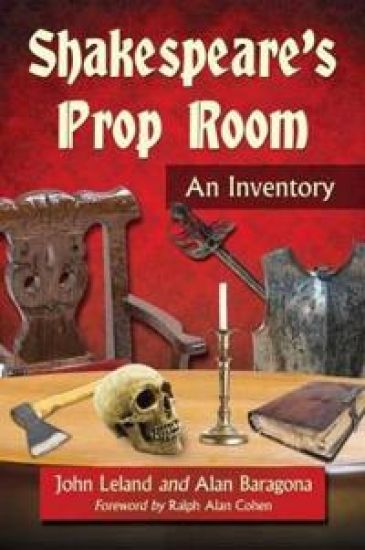
This study provides the first comprehensive examination of every prop in Shakespeare's plays, whether mentioned in stage directions, indicated in dialogue or implied by the action. Building on the latest scholarship and offering a witty treatment of the subject, the authors delve into numerous historical documents, the business of theater in Renaissance England, and the plays themselves to explain what audiences might have seen at the Globe, the Rose, the Curtain, or the Blackfriars Playhouse, and why it matters. Students of the plays will be able to read beyond Shakespeare's words and visualize the drama as it might have appeared on the stage. Scholars will find a wealth of previously unmined material for reconstructing Renaissance theatrical practices. School drama groups, amateur theaters and directors and prop masters of professional troupes will find help in mounting their own productions as the Bard's audiences would have seen them.
A View of the Principal Deistical Writers of the Last and Present Century, Volume 2
John Leland
Arkose Press
2015
sidottu
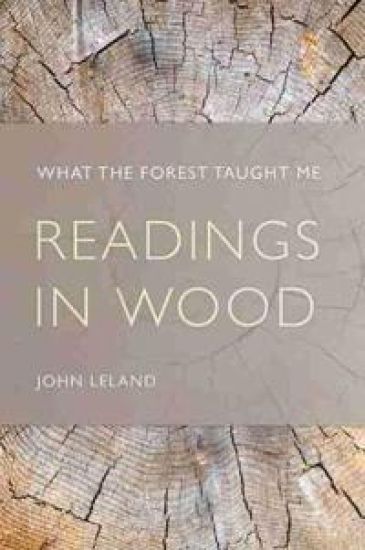
Award-winning nature writer John Leland offers a collection of twenty-seven short, poetic essays that marry science and the humanities as the author seeks meaning in trees. Readings in Wood is an investigation of trees and forests and also of wood as a material that people have found essential in the creation of society and culture. Leland views with wit and erudition the natural world and the curious place of human beings as saviors and destroyers of this world. At once personal memoir, natural history, and cultural criticism, the book reflects Leland's idiosyncratic vision. In one essay Leland asks the trees, "Do you, like us, rejoice in sunny days, dance with the wind, and blush to have your sexual desires known by prurient passersby? Why, like us, do you torture yourselves reaching for a heaven beyond your grasp? Why twist yourselves so that your grain becomes a record of your grief? What mystic patterns of science, math, and religion hide in your whirls of leaf and branch?" As vast as a forest, topics range from tree grain and leaf shape to economic theories, mathematics, and engineering. Readings in Wood is a hybrid testament of science, faith, superstition, and disbelief learned from sitting on tree trunks and peering at leaves and fungi. Leland hopes others will join him in nature's classroom. Quite aware of the irony, he reminds us, "These leaves you desultorily turn over once hung in a green wood gone to make this book. Touching a book, you touch a tree. I pray that Readings in Wood's essays, touching you, may justify in some small way the trees who died in their making.
The Advantage And Necessity Of Christian Revelation V1: Shown From The State Of Religion In The Ancient Heathen World
John Leland
Literary Licensing, LLC
2014
nidottu
The Advantage and Necessity of Christian Revelation V2: Shown from the State of Religion in the Ancient Heathen World
John Leland
Literary Licensing, LLC
2014
nidottu
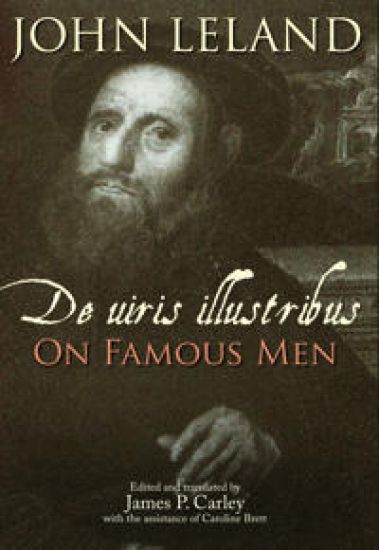
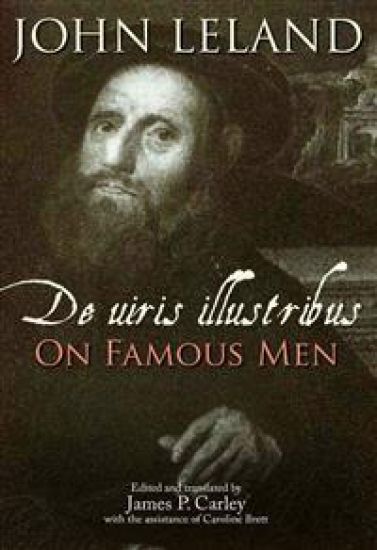
Equipped with a commission from Henry VIII, John Leland began to record the contents of English monastic libraries in 1533 before they were dispersed. His booklists were compiled as the primary resources for his comprehensive dictionary of British writers in four books, entitled De uiris illustribus. This remarkable testament to medieval and early modern habits of book collecting, but also to history and national identity, lay incomplete at Leland’s death. The sole extant witness to the author’s ambitious task is the autograph manuscript, now Oxford, Bodleian Library, MS Top. gen. c. 4. Although antiquaries made use of De uiris illustribus over the next generations it did not see its way into print until 1709 when Anthony Hall produced a careless edition, a significant number of passages omitted, under the title Commentarii de scriptoribus Britannicis. Hall’s text has formed the basis for subsequent scholarship. This new edition is based on a thorough examination of the autograph, supplemented with readings from John Bale’s epitome, now Cambridge, Trinity College, MS R.7.15 (753). True to Leland’s original text, this new edition shows how unreliable and misleading Hall’s was in many respects. It includes a complete English translation, published on facing pages accompanying the Latin text. The translation seeks to capture Leland’s own excitement with his project and also to convey his shifts in interpretation during the process of revision: the text mirrors in miniature the stages of the English reformation under Henry VIII. The extensive introduction provides a full history of the manuscript, examines sources, and shows the relationship of the text to Leland’s booklists and other contemporary documents.
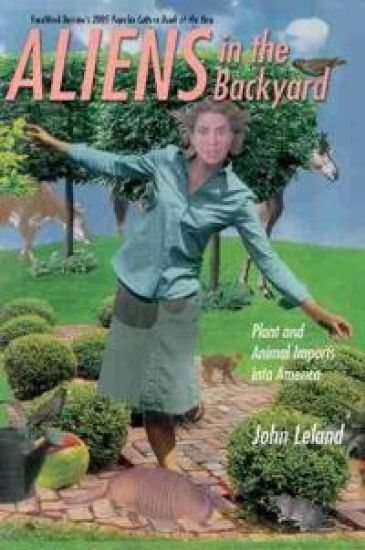
Aliens live among us. Thousands of species of nonnative flora and fauna have taken up residence within U. S. borders. Our lawns sprout African grasses, our roadsides flower with European weeds, and our homes harbor Asian, European, and African pests. Misguided enthusiasts deliberately introduced carp, kudzu, and starlings. And the American cowboy spread such alien life forms as cows, horses, tumbleweed, and anthrax, supplanting and supplementing the often unexpected ways ""Native"" Americans influenced the environment. Aliens in the Backyard recounts the origins and impacts of these and other nonindigenous species on our environment and pays overdue tribute to the resolve of nature to survive in the face of challenge and change. In considering the new home that imported species have made for themselves on the continent, John Leland departs from those environmentalists who universally decry the invasion of outsiders. Instead Leland finds that uncovering stories of alien arrivals and assimilation is a more intriguing--and ultimately more beneficial--endeavor. Mixing natural history with engaging anecdotes, Leland cuts through problematic myths coloring our grasp of the natural world and suggests that how these alien species have reshaped our landscape is now as much a part of our shared heritage as tales of our presidents and politics. Simultaneously he poses questions about which of our accepted icons are truly American (not apple pie or Kentucky bluegrass; not Idaho potatoes or Boston ivy). Leland's ode to survival reveals how plant and animal immigrants have made the country as much an environmental melting pot as its famed melding of human cultures, and he invites us to reconsider what it means to be American.
The Rights of Conscience Inalienable, and Therefore Religious Opinions Not Cognizable by Law
John Leland
Gale Ecco, Print Editions
2010
pokkari

Reflections on the late Lord Bolingbroke's letters on the study and use of history; ... By John Leland, ...
John Leland
Gale Ecco, Print Editions
2010
pokkari
Three Short Discourses on the Manner of Christ's Teaching, the Fear of God, and Christian Contentment. Abridged from Leland, Rogers, and Amory. by a Member of the Society for Promoting Christian Knowledge. with a Set of ... Prayers, ...
John Leland
Gale Ecco, Print Editions
2010
pokkari