

Kirjailija
John Leslie
Kirjat ja teokset yhdessä paikassa: 47 kirjaa, julkaisuja vuosilta 1989–2025, suosituimpiin kuuluu Geometrische Analysis ... Aus Dem Englischen Übersetzt Und Sehr Vermehnt. Vertaile teosten hintoja ja tarkista saatavuus suomalaisista kirjakaupoista.
47 kirjaa
Kirjojen julkaisuvuodet: 1989–2025.
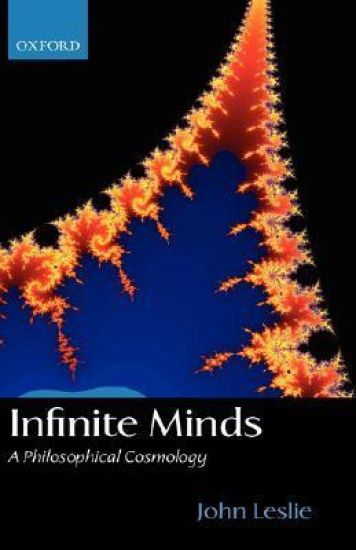
Infinite Minds develops a Platonic creation story. The cosmos exists just because of the ethical need for it. We, and all the intricate structures of our universe, exist as intricately structured thoughts in a divine mind that knows everything worth knowing. There could also be infinitely many other universes in this mind, and after death we might explore the wonders of its knowledge. Minds of the same kind could exist in infinite number. In this original and thought-provoking book John Leslie unfolds his view of the nature of the universe, inspired by Spinoza, perhaps the greatest of the philosophical rationalists. Over the last three decades Leslie has been developing his theory in a series of path-breaking publications; now at last he gives it its definitive exposition. It may be hard to believe that the universe is as he says it is --but it is hard also to resist his compelling ideas and arguments.
Are we in imminent danger of extinction? Yes, we probably are, argues John Leslie in his chilling account of the dangers facing the human race as we approach the second millenium. The End of the World is a sobering assessment of the many disasters that scientists have predicted and speculated on as leading to apocalypse. In the first comprehensive survey, potential catastrophes - ranging from deadly diseases to high-energy physics experiments - are explored to help us understand the risks. One of the greatest threats facing humankind, however, is the insurmountable fact that we are a relatively young species, a risk which is at the heart of the 'Doomsday Argument'. This argument, if correct, makes the dangers we face more serious than we could have ever imagined. This more than anything makes the arrogance and ignorance of politicians, and indeed philosophers, so disturbing as they continue to ignore the manifest dangers facing future generations.
Are we in imminent danger of extinction? Yes, we probably are, argues John Leslie in his chilling account of the dangers facing the human race as we approach the second millenium. The End of the World is a sobering assessment of the many disasters that scientists have predicted and speculated on as leading to apocalypse. In the first comprehensive survey, potential catastrophes - ranging from deadly diseases to high-energy physics experiments - are explored to help us understand the risks. One of the greatest threats facing humankind, however, is the insurmountable fact that we are a relatively young species, a risk which is at the heart of the 'Doomsday Argument'. This argument, if correct, makes the dangers we face more serious than we could have ever imagined. This more than anything makes the arrogance and ignorance of politicians, and indeed philosophers, so disturbing as they continue to ignore the manifest dangers facing future generations.
Universes discusses the alleged evidence of fine tuning; mechanisms by which a varied set of Universes might be generated, and whether belief in God could be preferable to accepting universes in vast numbers.
Universes discusses the alleged evidence of fine tuning; mechanisms by which a varied set of Universes might be generated, and whether belief in God could be preferable to accepting universes in vast numbers.