Kirjojen hintavertailu – 12 859 818 kirjaa ja 27 kauppaa

Kirjailija

John Lewis Gaddis

Kirjat ja teokset yhdessä paikassa: 13 kirjaa, julkaisuja vuosilta 1989–2023, suosituimpiin kuuluu Tillämpad historia : Klassiska texter. Vertaile teosten hintoja ja tarkista saatavuus suomalaisista kirjakaupoista.

13 kirjaa

Kirjojen julkaisuvuodet: 1989–2023.

Tillämpad historia : Klassiska texter

Tillämpad historia : Klassiska texter

Lord Acton; J.B. Bury; Herbert Butterfield; Johann Gustav Droysen; John Lewis Gaddis; Michael Howard; Friedrich Nietzsche; Leopold von Ranke; Benjamin F. Shambaugh; Philip Zelikow; Cory J. Clark; Gill Bennett

Bokförlaget Stolpe
2023
sidottu
Uppmaningen att lära av historien är välbekant. Men vad betyder det egentligen? Förespråkarna för tillämpad historia menar att historiska studier kan användas praktiskt och ge vägledning för framtiden. Beslutsfattare och politiker kan få perspektiv, hitta ledtrådar till vart en utveckling kan leda och bedöma vad ett agerande kan få för konsekvenser. Men den tillämpade historiens ökade popularitet skymmer det faktum att historiker ända sedan antikens Grekland har analyserat de stora politiska, ekonomiska och militära frågorna med liknande perspektiv och tankesätt. Varje generation historiker har utvecklat sin forskning på basis av tidigare idéer och kunskap med målet att förstå sin samtid genom att studera det förflutna. Klassiker inom tillämpad historia tar ett stort och ambitiöst grepp om hur historisk kunskap skapas, lärs ut och används under olika epoker. I boken presenteras ett brett urval av texter från till exempel Niccolò Machiavelli, E. H. Carr, Ernest May och Margaret MacMillan, som tillsammans skapar både överblick och insikt i detta ständigt aktuella ämne. Varje text introduceras och placeras i sitt historiska sammanhang av en nu verksam historiker.
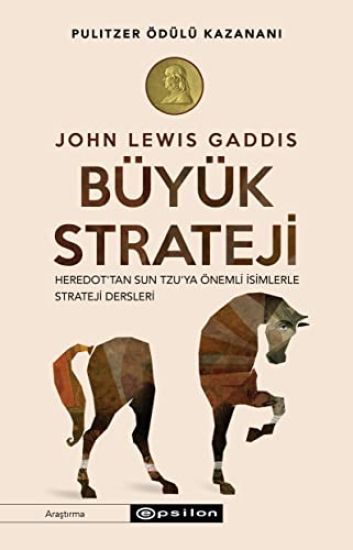
On Grand Strategy

On Grand Strategy

John Lewis Gaddis

Penguin Books Ltd.
2019
pokkari

Halvin toimitettuna 17,00 €

John Lewis Gaddis, the distinguished historian and acclaimed author of The Cold War, has for almost two decades co-taught the grand strategy seminar at Yale University with his colleagues Charles Hill and Paul Kennedy. Now, in On Grand Strategy, Gaddis reflects with insight and wit on what he has learned. In chapters extending from the ancient world through World War II, Gaddis assesses grand strategic theory and practice in Herodotus, Thucydides, Sun Tzu, Octavian/Augustus, Saint Augustine, Machiavelli,Elizabeth I, Philip II, the American Founding Fathers, Clausewitz, Tolstoy,Lincoln, Wilson, Franklin D. Roosevelt, and Isaiah Berlin.'For the past 16 years Gaddis has taught a course on grand strategy to students at Yale University. Reading his book, you wish every university could offer it. Gaddis roves across the centuries, offering advice on subjects from statecraft and warfare to leading a worthwhile life' Phillip Delves Broughton, Evening Standard.
On Grand Strategy

On Grand Strategy

John Lewis Gaddis

PENGUIN BOOKS
2019
nidottu

Halvin toimitettuna 21,20 €

"The best education in grand strategy available in a single volume . . . a book that should be read by every American leader or would-be leader."--The Wall Street Journal A master class in strategic thinking, distilled from the legendary program the author has co-taught at Yale for decades John Lewis Gaddis, the distinguished historian of the Cold War, has for almost two decades co-taught grand strategy at Yale University with his colleagues Charles Hill and Paul Kennedy. Now, in On Grand Strategy, Gaddis reflects on what he has learned. In chapters extending from the ancient world through World War II, Gaddis assesses grand strategic theory and practice in Herodotus, Thucydides, Sun Tzu, Octavian/Augustus, St. Augustine, Machiavelli, Elizabeth I, Philip II, the American Founding Fathers, Clausewitz, Tolstoy, Lincoln, Wilson, Franklin D. Roosevelt, and Isaiah Berlin. On Grand Strategy applies the sharp insights and wit readers have come to expect from Gaddis to times, places, and people he's never written about before. For anyone interested in the art of leadership, On Grand Strategy is, in every way, a master class.
Den kalde krigen

Den kalde krigen

John Lewis Gaddis

Historie Kultur
2008
sidottu
Den kalde krigen, skrevet av den amerikanske historikeren John Lewis Gaddis forteller hvordan det var å leve i den kalde krigens skygge: Frykten for et kjernefysisk ragnarokk. Boken gir en oversikt over hele denne perioden - fra andre verdenskrigs slutt til Berlinmurens fall. Gaddis forteller om spionasje, kriger, konfrontasjoner og løgner, men også om stort politisk mot i den spennende sluttfasen. Gaddis viser hvordan beslutningstagere på toppen . og vanlige folk . endret historiens gang. Sammen oppnådde de en av de største triumfer noensinne for den menneskelige åndskraft: De skapte fred - og hindret en atomkrig som kunne ødelegge vår verden. Gaddis regnes som USAs ledende historiker på sitt felt. Denne boken er nå oversatt til 18 språk og er i Norge utgitt av forlaget Historie & Kultur.
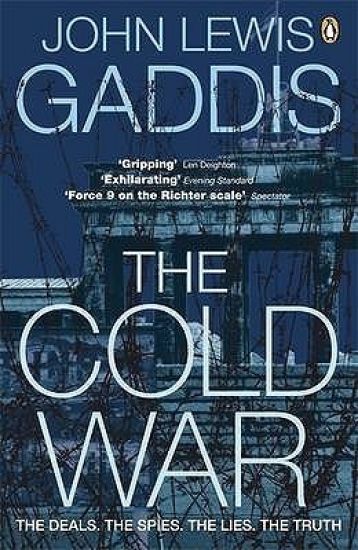
The Cold War

The Cold War

John Lewis Gaddis

Penguin Books Ltd
2007
pokkari

Halvin toimitettuna 20,30 €

A brilliantly arresting historical work, John Lewis Gaddis's The Cold War takes us as never before to the time when the world stood on the brink of destruction. In 1945 war came to an end. But a whole new terror was only just beginning... Here is the truth behind every spy thriller you've read: why America and the Soviet Union became locked in a deadly stalemate; how close we came to nuclear catastrophe; what was really going on in the minds of leaders from Stalin to Mao Zedong, Ronald Reagan to Mikhail Gorbachev, how secret agents plotted and East German holidaymakers helped the Berlin Wall fall. It is a story of crisis talks and subterfuge, tyrants and power struggles - and of ordinary people changing the course of history. 'Gripping' Len Deighton 'Superb ... brimful of racy incident' Independent on Sunday 'A lively and readable history' The Times 'Force 9 on the Richter scale' Spectator John Lewis Gaddis is the Robert A. Lovett Professor of History at Yale University, and 'the dean of cold war historians' (The New York Times). He is the author of numerous books, including Security and the American Experience, the book recently pressed on his cabinet and senior security staff by President Bush.
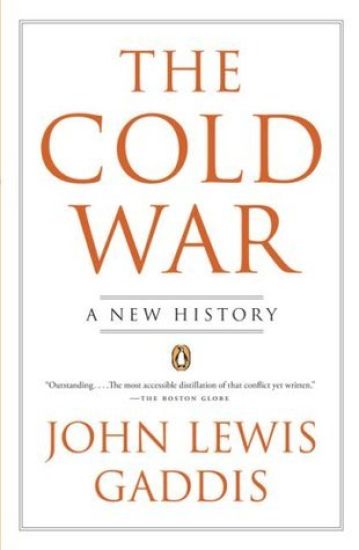
The Cold War: A New History

The Cold War: A New History

John Lewis Gaddis

PENGUIN BOOKS
2007
nidottu

Halvin toimitettuna 21,40 €

"Outstanding . . . The most accessible distillation of that conflict yet written." --The Boston Globe "Energetically written and lucid, it makes an ideal introduction to the subject." --The New York Times The "dean of Cold War historians" (The New York Times) now presents the definitive account of the global confrontation that dominated the last half of the twentieth century. Drawing on newly opened archives and the reminiscences of the major players, John Lewis Gaddis explains not just what happened but why--from the months in 1945 when the U. S. and the U. S. S. R. went from alliance to antagonism to the barely averted holocaust of the Cuban Missile Crisis to the maneuvers of Nixon and Mao, Reagan and Gorbachev. Brilliant, accessible, almost Shakespearean in its drama, The Cold War stands as a triumphant summation of the era that, more than any other, shaped our own. Gaddis is also the author of On Grand Strategy.
The Cold War: A New History

The Cold War: A New History

John Lewis Gaddis

Highbridge Audio
2005
cd
The "dean of Cold War historians" (New York Times) now presents the definitive account of the global confrontation that dominated the last half of the twentieth century. It began during the Second World War, when American and Soviet troops converged from east and west. Their meeting point--a small German city--became part of a front line that solidified shortly thereafter into an Iron Curtain. It ended in a climactic square-off between Ronald Reagan's America and Gorbachev's Soviet Union. In between were decades of global confrontation, uncertainty, and fear. Drawing on new and often startling information from newly opened Soviet, Eastern European, and Chinese archives, this thrilling account explores the strategic dynamics that drove the Cold War, provides illuminating portraits of its major personalities, and offers much fresh insight into its most crucial events. Riveting, revelatory, and wise, it tells a story whose lessons it is vitally necessary to understand as America once more faces an implacable ideological enemy.
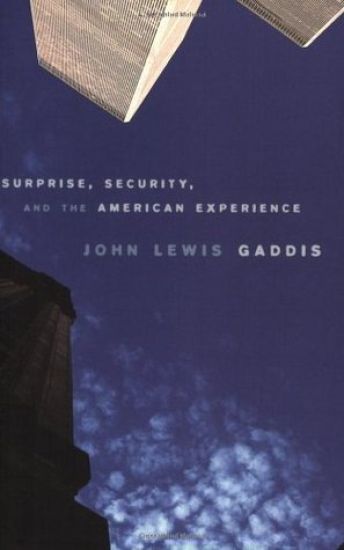
Surprise, Security, and the American Experience

Surprise, Security, and the American Experience

John Lewis Gaddis

Harvard University Press
2005
nidottu
September 11, 2001, distinguished Cold War historian John Lewis Gaddis argues, was not the first time a surprise attack shattered American assumptions about national security and reshaped American grand strategy. We've been there before, and have responded each time by dramatically expanding our security responsibilities. The pattern began in 1814, when the British attacked Washington, burning the White House and the Capitol. This early violation of homeland security gave rise to a strategy of unilateralism and preemption, best articulated by John Quincy Adams, aimed at maintaining strength beyond challenge throughout the North American continent. It remained in place for over a century. Only when the Japanese attacked Pearl Harbor in 1941 did the inadequacies of this strategy become evident: as a consequence, the administration of Franklin D. Roosevelt devised a new grand strategy of cooperation with allies on an intercontinental scale to defeat authoritarianism. That strategy defined the American approach throughout World War II and the Cold War. The terrorist attacks of 9/11, Gaddis writes, made it clear that this strategy was now insufficient to ensure American security. The Bush administration has, therefore, devised a new grand strategy whose foundations lie in the nineteenth-century tradition of unilateralism, preemption, and hegemony, projected this time on a global scale. How successful it will be in the face of twenty-first-century challenges is the question that confronts us. This provocative book, informed by the experiences of the past but focused on the present and the future, is one of the first attempts by a major scholar of grand strategy and international relations to provide an answer.
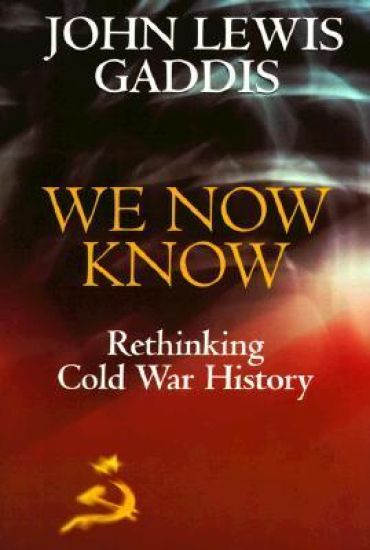
We Now Know

We Now Know

John Lewis Gaddis

Clarendon Press
1998
nidottu
The end of the Cold War makes it possible, for the first time, to begin writing its history from a truly international perspective, one reflecting Soviet, East European, and Chinese as well as American and West European viewpoints. In a major departure from his earlier scholarship, John Lewis Gaddis, the pre-eminent American authority on the United States and the Cold War, has written a comprehensive comparative history of that conflict from its origins through to its most dangerous moment, the Cuban missile crisis. We Now Know is packed with new information drawn from previously unavailable sources; it also reflects the findings of a new generation of Cold War historians. It contains striking new insights into the role of ideology, democracy, economics, alliances, and nuclear weapons, as well as major reinterpretations of Stalin, Truman, Khrushchev, Mao, Eisenhower, and Kennedy. It suggests solutions to long-standing puzzles: Did the Soviet Union want world revolution? Why was Germany divided? Who started the Korean War? What did the Americans mean by "massive retaliation"? When did the Sino-Soviet split begin? Why did the U. S. S. R. send missiles to Cuba? And what made the Cold War last as long as it did? This is a fresh, thought-provoking and powerfully argued reassessment of the Cold War by one of its most distinguished historians. It will set the agenda for debates on this subject for years to come.
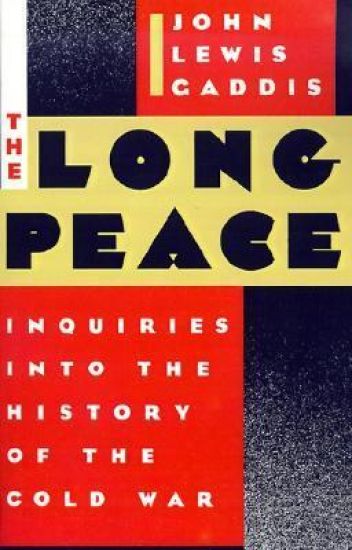
The Long Peace

The Long Peace

John Lewis Gaddis

Oxford University Press Inc
1989
nidottu
How has it happened that the United States and the Soviet Union have managed to get through more than four decades of Cold War confrontation without going to war with one another? Historian John Lewis Gaddis suggests answer to this and other vital questions about post-war diplomacy in this new book. Gaddis uses recently declassified American and British documents to explore several key issues in Cold War history that remain unresolved: Precisely what itwas about the Soviet Union's behaviour after World War II that American leaders found so threatening? Whether the United States really wanted a sphere of influence in post-war Europe? What led the Truman administration first to endorse, but then immediately to avoid American military involvement on the mainland of Asia? This is a provocative exercise in contemporary history, certain to generate new insights on both past and present aspects of the age we live in.