Kirjojen hintavertailu – 12 859 829 kirjaa ja 27 kauppaa

Kirjailija

John Lin

Kirjat ja teokset yhdessä paikassa: 3 kirjaa, julkaisuja vuosilta 2013–2022, suosituimpiin kuuluu Uncertainty. Vertaile teosten hintoja ja tarkista saatavuus suomalaisista kirjakaupoista.

3 kirjaa

Kirjojen julkaisuvuodet: 2013–2022.

Uncertainty

Uncertainty

John Lin; Olivier Ottevaere; Donn Holohan

Oro Editions
2022
nidottu
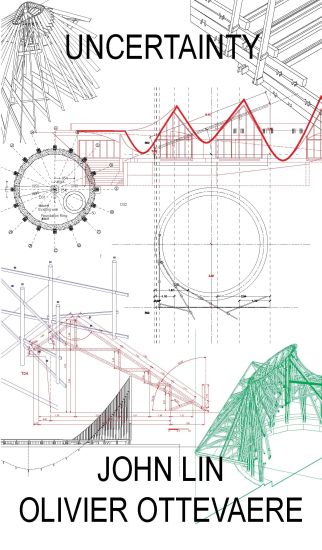
Working in rural China is unlike other countryside: it is full of contradiction, neither rural nor urban, both traditional and modern, abandoned in some areas and yet others are becoming cities overnight. It is in fact a laboratory for new ways of living. And it has become our laboratory for new ways of making architecture. Whereas contemporary architecture since the advent of modernism has developed increasingly controlled, prototypical, and standardised mechanisms for building, our experiments embrace the opposite: a lack of control, taking place within the flux of political, social and economic uncertainties. The experiments presented here are examples taken from a series of design and build projects conducted from the Department of Architecture at the University of Hong Kong over the past 10 years. They are remarkable in their diffuse explorations and situations. Some were urgent post-earthquake reconstructions, often adapting to extreme topographies or taking place in the midst of major urbanising transformations, whereas other experiments occurred in forgotten villages with left-behind craftspeople and their disappearing building cultures. These forays and what can be best described as adventures in building, left us with varied and novel (sometimes failed) experiments with structure and program. But they are presented here for the trait they have in common: an exploration of the limits of material, geometry, construction methods, and even historical context. The diversity manifested in this collection of projects is a direct reflection of the incredible diversity of climates, locations, and conditions that underlie the ongoing Chinese urbanisation experiment. The focus here is not on the what but the how, as each project engages with its own set of limiting factors or unideal conditions. They are stories of design, overcoming and even embracing adverse situations in order to discover some hidden advantage. Each chapter explores a different attempt to revert seemingly challenging limitations (particularly those which the architect cannot exert control over) and turn these into novel building approaches. As often occurs for architects working in a foreign landscape, the differences in language and culture have proven to be a source of constant miscommunication and surprising discovery. The lack of a common spoken language—these remote areas speak their own dialects—has placed an emphasis on drawing as another means of communication. Through drawing we have explored a means of design and a means of building. Therefore, this is also a book about ways of drawing that represent ways of control and, inversely perhaps, what not to control.
As Found Houses

As Found Houses

John Lin; Sony Devabhaktuni

Oro Editions
2021
nidottu
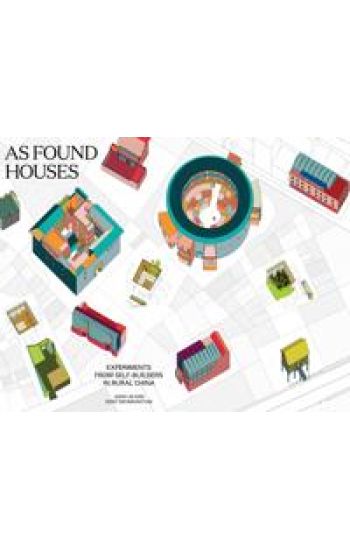
In rural China, an informal wave of building catalysed by economic and social developments has rendered some villages unrecognisable. This building boom, taking place in a context of limited regulations, has created densities more often found in urban areas. At the same time, the rapid transformation of rural villages has generated some remarkable hybrid experiments where rural builders use generic construction methods to adapt, modify, graft, cleave and wrap traditional vernacular typologies. These typologies have existed for hundreds of years and represent an accretion of localised building knowledge and cultural identity. Where often these typologies are preserved and maintained as tourist destinations, this book looks at those instances where families transform them to account for new ways of living. By looking closely at these transformations, As Found Houses identifies innovative, informal design responses that negotiate between traditional housing forms and the changing conditions of the rural village. The book presents the intelligent and surprising solutions applied to house typologies conceived by builders in 4 regions of rural China. Using photographs, axonometric drawings and interviews with the villagers who live in these hybrid experiments, the book situates design solutions within the context of their larger human narratives, thereby challenging ossified understandings of vernacular architecture that treat historical and cultural tradition as static. The book argues that the manifold evolution of the vernacular is part of the every-day practice of the villagers' lives, and that architecture for them is very much still a home. As Found Houses is a guide to the surprising design decisions found in the domestic architecture of rural China and a resource for thinking about contemporary design.
Rural Urban Framework

Rural Urban Framework

Joshua Bolchover; John Lin

Birkhauser
2013
sidottu
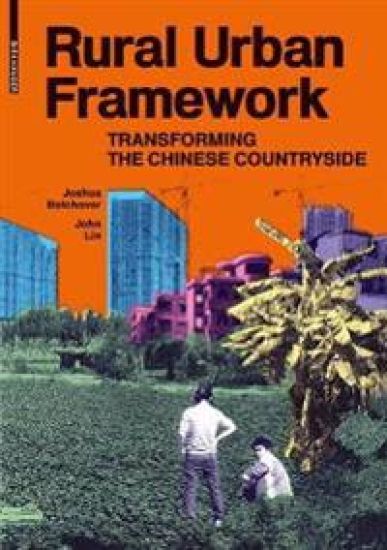
While most attention is given to the booming mega-cities in China and the associated problems of over-population, the rural areas in China are being largely ignored. Yet, a sustainable development of the rural areas is precisely that, which will be decisive for China’s future. Through its rapid development into an industrial country, China now needs to tackle far-reaching problems such as increasing population, growing income gap between the poor and the rich, rural exodus, decreased agricultural production, and environmental pollution. Rural Urban Framework is a work group at the University of Hong Kong that not only researches the far-reaching changes of the last thirty years in China’s rural areas, but has also realized concrete projects aimed at improving supply and infrastructure on site. In this publication, the authors present for the first time the results of their research as well as their built projects in the Chinese backlands, and question whether China’s only future model lies in cities.