Kirjojen hintavertailu – 12 903 724 kirjaa ja 27 kauppaa

Kirjailija

John M. Cooper

Kirjat ja teokset yhdessä paikassa: 12 kirjaa, julkaisuja vuosilta 1986–2026, suosituimpiin kuuluu Birds of British Columbia, Volume 4. Vertaile teosten hintoja ja tarkista saatavuus suomalaisista kirjakaupoista.

Nimi esiintyy myös muodoissa: John M. Cooper, John M Cooper

12 kirjaa

Kirjojen julkaisuvuodet: 1986–2026.

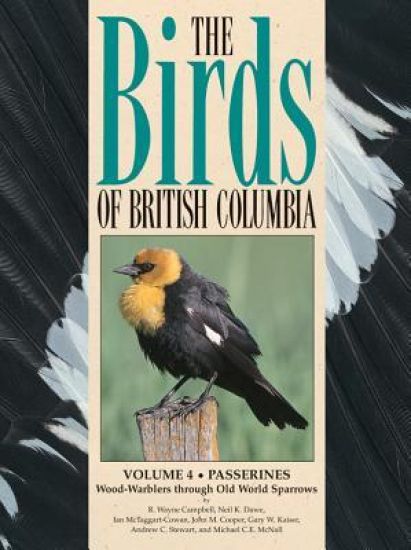
Birds of British Columbia, Volume 4

Birds of British Columbia, Volume 4

Wayne Campbell; Neil K. Dawe; Ian McTaggart-Cowan; John M. Cooper; Gary W. Kaiser; Michael C.E. McNall

University of British Columbia Press
2001
sidottu
This much-awaited final volume of The Birds of British Columbia completes what some have called one of the most important regional ornithological works in North America. It is the culmination of more than 25 years of effort by the authors who, with the assistance of thousands of dedicated volunteers throughout the province, have created the basic reference work on the avifauna of British Columbia. Volume 4 covers the last half of the passerines and describes 102 species, including the warblers, sparrows, grosbeaks, blackbirds, and finches. The text builds upon the authoritative format of the previous volumes and is supported by hundreds of full-colour illustrations, including detailed distribution maps, unique habitat shots, and beautiful photographs of the birds, their nests, eggs, and young. In addition, a species update lists and describes 27 species of birds new to the province since the first three volumes were published. The book concludes with Synopsis: The Birds of British Columbia into the 21st Century, which synthesizes data and information from all four volumes and looks at the conservation challenges facing birds in the new millennium. The four volumes in The Birds of British Columbia provide unprecedented coverage of the region's birds, presenting a wealth of information on the ornithological history, regional environment, habitat, breeding habits, migratory movements, seasonality and distribution patterns of 472 species of birds. It is the complete reference work for birdwatchers, ornithologists and naturalists.
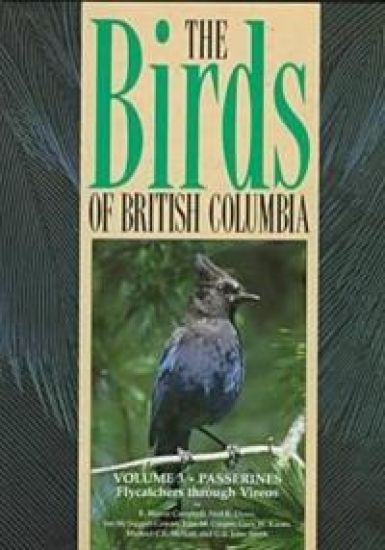
Birds of British Columbia, Volume 3

Birds of British Columbia, Volume 3

Wayne Campbell; Neil K. Dawe; Ian McTaggart-Cowan; John M. Cooper; Gary W. Kaiser; Michael C.E. McNall; G. E. John Smith

University of British Columbia Press
1997
sidottu
British Columbia has one of the richest assemblages of bird species in the world. The four volumes of The Birds of British Columbia provide unprecedented coverage of this region's birds, presenting a wealth of information on the ornithological history, habitat, breeding habits, migratory movements, seasonality, and distribution patterns of each of the 472 species of birds. This third volume, covering the first half of the passerines, builds on the authoritative format of the previous bestselling volumes. It contains 89 species, including common ones such as swallows, jays, crows, wrens, thrushes, and starlings. The text is supported by hundreds of full-colour pictures, including unique habitat photographs, detailed distribution maps, and beautiful illustrations of the birds, their nests, eggs, and young. The Birds of British Columbia is a complete reference work for bird-watchers, ornithologists, and naturalists who want in-depth information on the province's regularly occurring and rare birds.
Plato's Theaetetus

Plato's Theaetetus

John M. Cooper

Routledge
2016
nidottu
Originally published in 1990. This book discusses in a philosophically responsible and illuminating way the progress of the dialogue and its separate sections to improve our understanding of Plato’s work on Theaetetus. An early coverage of this dialogue, this investigation predated a surge in study of Plato’s piece which examined Socratic and pre-Socratic thought. The author’s argument is that the Theaetetus engages in re-evaluation of earlier doctrines of middle-period Platonism as well as reaffirming theories about knowledge. An important work in Platonic studies and epistemology.
Plato's Theaetetus

Plato's Theaetetus

John M. Cooper

Routledge
2015
sidottu
Originally published in 1990. This book discusses in a philosophically responsible and illuminating way the progress of the dialogue and its separate sections to improve our understanding of Plato’s work on Theaetetus. An early coverage of this dialogue, this investigation predated a surge in study of Plato’s piece which examined Socratic and pre-Socratic thought. The author’s argument is that the Theaetetus engages in re-evaluation of earlier doctrines of middle-period Platonism as well as reaffirming theories about knowledge. An important work in Platonic studies and epistemology.
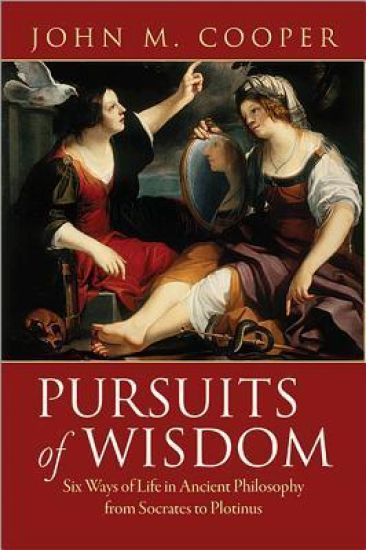
Pursuits of Wisdom

Pursuits of Wisdom

John M. Cooper

Princeton University Press
2013
pokkari
This is a major reinterpretation of ancient philosophy that recovers the long Greek and Roman tradition of philosophy as a complete way of life--and not simply an intellectual discipline. Distinguished philosopher John Cooper traces how, for many ancient thinkers, philosophy was not just to be studied or even used to solve particular practical problems. Rather, philosophy--not just ethics but even logic and physical theory--was literally to be lived. Yet there was great disagreement about how to live philosophically: philosophy was not one but many, mutually opposed, ways of life. Examining this tradition from its establishment by Socrates in the fifth century BCE through Plotinus in the third century CE and the eclipse of pagan philosophy by Christianity, Pursuits of Wisdom examines six central philosophies of living--Socratic, Aristotelian, Stoic, Epicurean, Skeptic, and the Platonist life of late antiquity. The book describes the shared assumptions that allowed these thinkers to conceive of their philosophies as ways of life, as well as the distinctive ideas that led them to widely different conclusions about the best human life. Clearing up many common misperceptions and simplifications, Cooper explains in detail the Socratic devotion to philosophical discussion about human nature, human life, and human good; the Aristotelian focus on the true place of humans within the total system of the natural world; the Stoic commitment to dutifully accepting Zeus's plans; the Epicurean pursuit of pleasure through tranquil activities that exercise perception, thought, and feeling; the Skeptical eschewal of all critical reasoning in forming their beliefs; and, finally, the late Platonist emphasis on spiritual concerns and the eternal realm of Being. Pursuits of Wisdom is essential reading for anyone interested in understanding what the great philosophers of antiquity thought was the true purpose of philosophy--and of life.
Pursuits of Wisdom

Pursuits of Wisdom

John M. Cooper

Princeton University Press
2012
sidottu
This is a major reinterpretation of ancient philosophy that recovers the long Greek and Roman tradition of philosophy as a complete way of life--and not simply an intellectual discipline. Distinguished philosopher John Cooper traces how, for many ancient thinkers, philosophy was not just to be studied or even used to solve particular practical problems. Rather, philosophy--not just ethics but even logic and physical theory--was literally to be lived. Yet there was great disagreement about how to live philosophically: philosophy was not one but many, mutually opposed, ways of life. Examining this tradition from its establishment by Socrates in the fifth century BCE through Plotinus in the third century CE and the eclipse of pagan philosophy by Christianity, Pursuits of Wisdom examines six central philosophies of living--Socratic, Aristotelian, Stoic, Epicurean, Skeptic, and the Platonist life of late antiquity. The book describes the shared assumptions that allowed these thinkers to conceive of their philosophies as ways of life, as well as the distinctive ideas that led them to widely different conclusions about the best human life. Clearing up many common misperceptions and simplifications, Cooper explains in detail the Socratic devotion to philosophical discussion about human nature, human life, and human good; the Aristotelian focus on the true place of humans within the total system of the natural world; the Stoic commitment to dutifully accepting Zeus's plans; the Epicurean pursuit of pleasure through tranquil activities that exercise perception, thought, and feeling; the Skeptical eschewal of all critical reasoning in forming their beliefs; and, finally, the late Platonist emphasis on spiritual concerns and the eternal realm of Being. Pursuits of Wisdom is essential reading for anyone interested in understanding what the great philosophers of antiquity thought was the true purpose of philosophy--and of life.
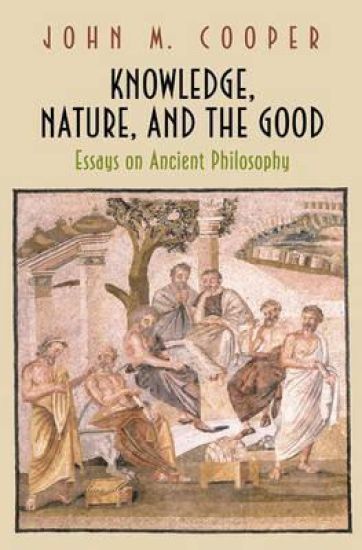
Knowledge, Nature, and the Good

Knowledge, Nature, and the Good

John M. Cooper

Princeton University Press
2004
pokkari
Knowledge, Nature, and the Good brings together some of John Cooper's most important works on ancient philosophy. In thirteen chapters that represent an ideal companion to the author's influential Reason and Emotion, Cooper addresses a wide range of topics and periods--from Hippocratic medical theory and Plato's epistemology and moral philosophy, to Aristotle's physics and metaphysics, academic scepticism, and the cosmology, moral psychology, and ethical theory of the ancient Stoics. Almost half of the pieces appear here for the first time or are presented in newly expanded, extensively revised versions. Many stand at the cutting edge of research into ancient ethics and moral psychology. Other chapters, dating from as far back as 1970, are classics of philosophical scholarship on antiquity that continue to play a prominent role in current teaching and scholarship in the field. All of the chapters are distinctive for the way that, whatever the particular topic being pursued, they attempt to understand the ancient philosophers' views in philosophical terms drawn from the ancient philosophical tradition itself (rather than from contemporary philosophy). Through engaging creatively and philosophically with the ancient texts, these essays aim to make ancient philosophical perspectives freshly available to contemporary philosophers and philosophy students, in all their fascinating inventiveness, originality, and deep philosophical merit. This book will be treasured by philosophers, classicists, students of philosophy and classics, those in other disciplines with an interest in ancient philosophy, and anyone who seeks to understand philosophy in philosophical terms.
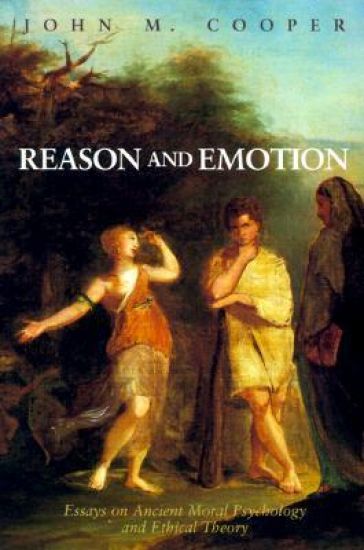
Reason and Emotion

Reason and Emotion

John M. Cooper

Princeton University Press
1999
pokkari
This book brings together twenty-three distinctive and influential essays on ancient moral philosophy--including several published here for the first time--by the distinguished philosopher and classical scholar John Cooper. The volume gives a systematic account of many of the most important issues and texts in ancient moral psychology and ethical theory, providing a unified and illuminating way of reflecting on the fields as they developed from Socrates and Plato through Aristotle to Epicurus and the Stoic philosophers Chrysippus and Posidonius, and beyond. For the ancient philosophers, Cooper shows here, morality was "good character" and what that entailed: good judgment, sensitivity, openness, reflectiveness, and a secure and correct sense of who one was and how one stood in relation to others and the surrounding world. Ethical theory was about the best way to be rather than any principles for what to do in particular circumstances or in relation to recurrent temptations. Moral psychology was the study of the psychological conditions required for good character--the sorts of desires, the attitudes to self and others, the states of mind and feeling, the kinds of knowledge and insight. Together these papers illustrate brilliantly how, by studying the arguments of the Greek philosophers in their diverse theories about the best human life and its psychological underpinnings, we can expand our own moral understanding and imagination and enrich our own moral thought. The collection will be crucial reading for anyone interested in classical philosophy and what it can contribute to reflection on contemporary questions about ethics and human life.