Kirjojen hintavertailu – 12 903 725 kirjaa ja 27 kauppaa

Kirjailija

John M. Janzen

Kirjat ja teokset yhdessä paikassa: 4 kirjaa, julkaisuja vuosilta 1982–2021, suosituimpiin kuuluu Health in a Fragile State. Vertaile teosten hintoja ja tarkista saatavuus suomalaisista kirjakaupoista.

4 kirjaa

Kirjojen julkaisuvuodet: 1982–2021.

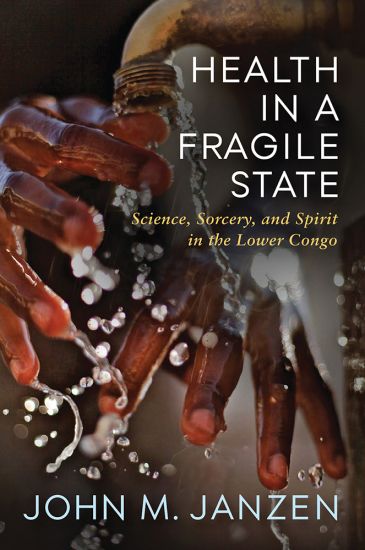
Health in a Fragile State

Health in a Fragile State

John M. Janzen

University of Wisconsin Press
2021
nidottu
Based on extensive field research in the Manianga region of the Lower Congo, Health in a Fragile State is an anthropological account of public health and health care after the collapse of the Congolese state in the 1980s and 1990s. This work brings into focus John M. Janzen's earlier books on African health and healing, revealing the collaborative effort by local, national, and international agencies to create viable alternative institutions to those that represented the centralized state. This book documents and analyzes the realignment of existing institutions and the creation of new ones that shape health and healing. Janzen explores the manner in which power and information, including science, are legitimized in the preservation and improvement of health. Institutional validity and knowledge empower citizens and health practitioners to gain the upper hand over the region's principal diseases, including malaria, tuberculosis, typhoid, and HIV/AIDS.
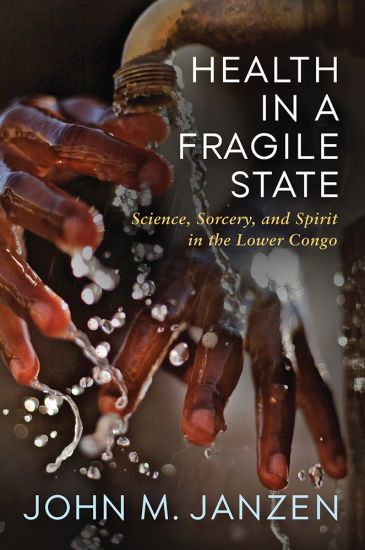
Health in a Fragile State

Health in a Fragile State

John M. Janzen

University of Wisconsin Press
2019
sidottu
Based on extensive field research in the Manianga region of the Lower Congo, Health in a Fragile State is an anthropological account of public health and health care after the collapse of the Congolese state in the 1980s and 1990s. This work brings into focus John M. Janzen's earlier books on African health and healing, revealing the collaborative effort by local, national, and international agencies to create viable alternative institutions to those that represented the centralized state. This book documents and analyzes the realignment of existing institutions and the creation of new ones that shape health and healing. Janzen explores the manner in which power and information, including science, are legitimized in the preservation and improvement of health. Institutional validity and knowledge empower citizens and health practitioners to gain the upper hand over the region's principal diseases, including malaria, tuberculosis, typhoid, and HIV/AIDS.
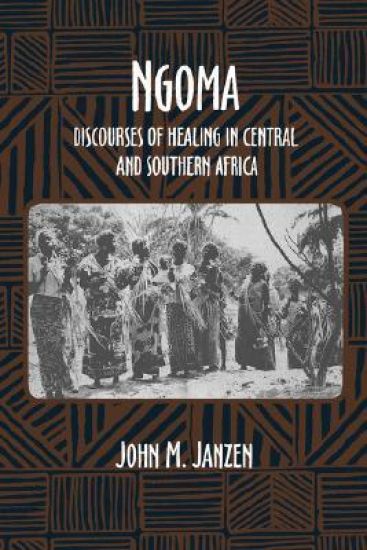
Ngoma

Ngoma

John M. Janzen

University of California Press
1992
sidottu
Ngoma, in Bantu, means drum, song, performance, and healing cult or association. A widespread form of ritual healing in Central and Southern Africa, ngoma is fully investigated here for the first time and interpreted in a contemporary context. John Janzen's daring study incorporates drumming and spirit possession into a broader, institutional profile that emphasizes the varieties of knowledge and social forms and also the common elements of "doing ngoma." Drawing on his recent field research in Kinshasa, Dar-es-Salaam, Mbabane, and Capetown, Janzen reveals how ngoma transcends national and social boundaries. Spoken and sung discourses about affliction, extended counseling, reorientation of the self or household, and the creation of networks that link the afflicted, their kin, and their healers are all central to ngoma--and familiar to Western self-help institutions as well. Students of African healing and also those interested in the comparative and historical study of medicine, religion, and music will find Ngoma a valuable and thought-provoking book.
The Quest for Therapy in Lower Zaire

The Quest for Therapy in Lower Zaire

John M. Janzen; Charles Leslie

University of California Press
1982
pokkari
In this book, Dr. John M. Janzen describes patterns of healing among the BaKongo of Lower Zaire in Africa, who, like many people elsewhere, utilize cosmopolitan medicine alongside traditional healing practices. What criteria, he asks, determine the choice of the alternative therapies? And what is their institutional interrelationship? In seeking answers, he analyzes case histories and cultural contexts to explore what social transactions, decision making, illness and therapy classifications, and resource allocations are used in the choice of therapy by the ill, their kinfolk, friends, associates, and specialized practitioners. From the Preface: this book presents an 'on the ground' ethnographic account of how medical clients of one region of Lower Zaire diagnose illness, select therapies, and evaluate treatments, a process we call 'therapy management'. The book is intended to clarify a phenomenon of which central African clients have long been cognizant, namely, that medical systems are used in combination. Our study is aimed primarily at readers interested in the practical issues of medical decision-making in an African country, the cultural content of symptoms, and the dynamics of medical pluralism, that is, the existence in a single society of differently designed and conceived medical systems.