Kirjojen hintavertailu – 12 903 724 kirjaa ja 27 kauppaa

Kirjailija

John M. Levy

Kirjat ja teokset yhdessä paikassa: 7 kirjaa, julkaisuja vuosilta 1990–2024, suosituimpiin kuuluu Economic Development Programs for Cities, Counties and Towns, 2nd Edition. Vertaile teosten hintoja ja tarkista saatavuus suomalaisista kirjakaupoista.

7 kirjaa

Kirjojen julkaisuvuodet: 1990–2024.

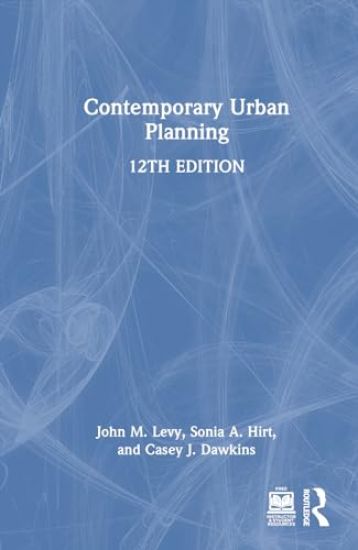
Contemporary Urban Planning

Contemporary Urban Planning

John M. Levy; Sonia A. Hirt; Casey J. Dawkins

TAYLOR FRANCIS LTD
2024
sidottu
Contemporary Urban Planning, 12e provides students with an unvarnished and in-depth introduction to the historic, economic, political, legal, ideological, and environmental factors affecting urban planning today. Planning is a highly political activity. Urban and regional planning decisions often involve large sums of money, both public and private, with the potential to deliver large benefits to some and losses to others. The extensively revised edition of this beloved text tackles the most pressing recent issues in urban development, including:current demographic, technological, and lifestyle changes and the possibility for a major turn toward reurbanization/urban revitalization after decades of decentralizationan expanded consideration of contemporary means of public participation in planningthe impact of contemporary social movements on planning, and the rising importance of social equity as a major planning objectivethe affordable housing shortage facing cities in many large U. S. metropolitan areasmaking cities more adaptable to micro-mobilityenvironmental goals and the role of planners in responding to global climate change, current public-health challenges, and major environmental catastrophes andthe effect of varied applications of land use controls and other planning policies in different countries and under different political regimes, with case study examples from the UK, France, Eastern Europe, China, Asia, Africa, and Latin AmericaThis thoroughly updated new edition also benefits from resources to help classroom instruction, both in the text and online. These include discussion and multiple-choice questions, and links for students to online supplemental readings, websites, and media sources. Contemporary Urban Planning is an essential resource for students, city planners, and all who are concerned with the nature of contemporary urban development problems. Visit the Instructor and Student Resources website: www.routledge.com/cw/levy
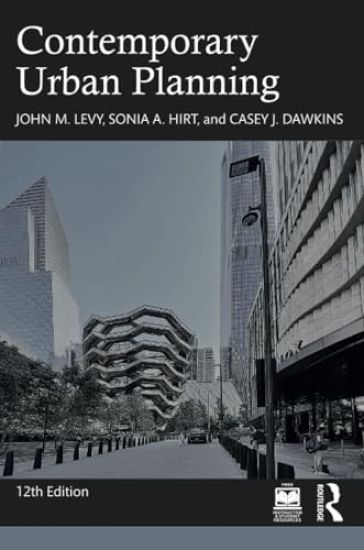
Contemporary Urban Planning

Contemporary Urban Planning

John M. Levy; Sonia A. Hirt; Casey J. Dawkins

TAYLOR FRANCIS LTD
2024
nidottu
Contemporary Urban Planning, 12e provides students with an unvarnished and in-depth introduction to the historic, economic, political, legal, ideological, and environmental factors affecting urban planning today. Planning is a highly political activity. Urban and regional planning decisions often involve large sums of money, both public and private, with the potential to deliver large benefits to some and losses to others. The extensively revised edition of this beloved text tackles the most pressing recent issues in urban development, including:current demographic, technological, and lifestyle changes and the possibility for a major turn toward reurbanization/urban revitalization after decades of decentralizationan expanded consideration of contemporary means of public participation in planningthe impact of contemporary social movements on planning, and the rising importance of social equity as a major planning objectivethe affordable housing shortage facing cities in many large U. S. metropolitan areasmaking cities more adaptable to micro-mobilityenvironmental goals and the role of planners in responding to global climate change, current public-health challenges, and major environmental catastrophes andthe effect of varied applications of land use controls and other planning policies in different countries and under different political regimes, with case study examples from the UK, France, Eastern Europe, China, Asia, Africa, and Latin AmericaThis thoroughly updated new edition also benefits from resources to help classroom instruction, both in the text and online. These include discussion and multiple-choice questions, and links for students to online supplemental readings, websites, and media sources. Contemporary Urban Planning is an essential resource for students, city planners, and all who are concerned with the nature of contemporary urban development problems. Visit the Instructor and Student Resources website: www.routledge.com/cw/levy
Contemporary Urban Planning

Contemporary Urban Planning

John M. Levy

Routledge
2016
sidottu
Planning is a highly political activity. It is immersed in politics and inseparable from the law. Urban and regional planning decisions often involve large sums of money, both public and private, with the potential to deliver large benefits to some and losses to others. Contemporary Urban Planning, 11e provides students with an unvarnished and in-depth introduction to the historic, economic, political, legal, ideological, and environmental factors affecting urban planning today, and emphasizes the importance of considering who wins and who loses in planning decision making. The extensively revised and updated 11th edition of this beloved text tackles the most pressing recent issues in urban development—including the major turn toward reurbanization, Affordable Housing and the particular housing needs of an aging population, new developments in public transportation planning, policy, and technology, standards for "green" buildings, the second Obama administration’s environmental policy and energy planning, as well as the rapidly growing and critical field of planning for natural catastrophes. Contemporary Urban Planning is an essential resource for students, city planners, and all who are concerned with the nature of contemporary urban development problems.
Essential Microeconomics for Public Policy Analysis

Essential Microeconomics for Public Policy Analysis

John M. Levy

Praeger Publishers Inc
1995
nidottu
John Levy's text presents microeconomic theory for use in analyzing and formulating public policy. It couples a direct and non-intimidating approach to essential theory with a presentation that is sophisticated at the policy level. It does not attempt to cover the entire body of economic theory, but rather presents those elements of theory most relevant to courses in public economics and public policy in such programs as public administration, policy analysis, health planning, environmental management, urban affairs, and urban planning. The text is divided into two parts. The first introduces basic concepts with an emphasis on their philosophical underpinnings and policy uses; the second consists of six essays on policy-related subjects, selected to make use of concepts presented in the first part. Among the unusual features of the book are the discussion of the tax expenditure concept, benefit cost analysis with numerical example, substantial discussions of the origins and philosophical implications of economic man as a behavioral model, and an entire chapter devoted to public choice.
Essential Microeconomics for Public Policy Analysis

Essential Microeconomics for Public Policy Analysis

John M. Levy

Praeger Publishers Inc
1995
sidottu
John Levy's text presents microeconomic theory for use in analyzing and formulating public policy. It couples a direct and non-intimidating approach to essential theory with a presentation that is sophisticated at the policy level. It does not attempt to cover the entire body of economic theory, but rather presents those elements of theory most relevant to courses in public economics and public policy in such programs as public administration, policy analysis, health planning, environmental management, urban affairs, and urban planning. The text is divided into two parts. The first introduces basic concepts with an emphasis on their philosophical underpinnings and policy uses; the second consists of six essays on policy-related subjects, selected to make use of concepts presented in the first part. Among the unusual features of the book are the discussion of the tax expenditure concept, benefit cost analysis with numerical example, substantial discussions of the origins and philosophical implications of economic man as a behavioral model, and an entire chapter devoted to public choice.
Economic Development Programs for Cities, Counties and Towns, 2nd Edition
This completely updated and revised edition of Levy's highly regarded work examines the important changes in the economic world faced by communities since publication of the first edition in 1981. Much new material has been added to reflect the increasingly important role of state government, heightened intermunicipal competition, rising foreign investment, the diminished availability of federal development funds, and more. Like the previous edition, this is designed as a how-to book for the practitioner as well as a resource for students of public administration, planning, and development economics. The author provides a general framework for considering the pros and cons of various economic development approaches, offers an overview of the new federal role in local economic development and the rationale for national economic development policy, and presents a systematic discussion of local economic development techniques, strategy, financing and tax abatement, federal and state programs, and marketing and promotion. Following a general introduction, Levy looks at the political context of economic development, local government organizations and personnel, and recent economic changes-- including the deindustrialization issue and foreign trade-related matters. Chapters on the role of the states, reasonable expectations, and local economic development in the national context are new to this edition, as is a chapter that surveys actual practitioner experience in order to identify what does and does not work in local economic development. Subsequent discussions focus on the use of public relations, advertising and marketing in local government; assessing economic development potential; development planning and financing; and labor markets and fiscal impacts. An important addition to this edition is the inclusion of a simple, generic PC-based fiscal impact model. Indispensable for anyone involved in local economic development, this new edition offers a comprehensive look at the development situation faced by communities as we move into the 1990s.
Economic Development Programs for Cities, Counties and Towns, 2nd Edition
This completely updated and revised edition of Levy's highly regarded work examines the important changes in the economic world faced by communities since publication of the first edition in 1981. Much new material has been added to reflect the increasingly important role of state government, heightened intermunicipal competition, rising foreign investment, the diminished availability of federal development funds, and more. Like the previous edition, this is designed as a how-to book for the practitioner as well as a resource for students of public administration, planning, and development economics. The author provides a general framework for considering the pros and cons of various economic development approaches, offers an overview of the new federal role in local economic development and the rationale for national economic development policy, and presents a systematic discussion of local economic development techniques, strategy, financing and tax abatement, federal and state programs, and marketing and promotion. Following a general introduction, Levy looks at the political context of economic development, local government organizations and personnel, and recent economic changes-- including the deindustrialization issue and foreign trade-related matters. Chapters on the role of the states, reasonable expectations, and local economic development in the national context are new to this edition, as is a chapter that surveys actual practitioner experience in order to identify what does and does not work in local economic development. Subsequent discussions focus on the use of public relations, advertising and marketing in local government; assessing economic development potential; development planning and financing; and labor markets and fiscal impacts. An important addition to this edition is the inclusion of a simple, generic PC-based fiscal impact model. Indispensable for anyone involved in local economic development, this new edition offers a comprehensive look at the development situation faced by communities as we move into the 1990s.