Kirjojen hintavertailu – 12 903 725 kirjaa ja 27 kauppaa

Kirjailija

John M. Mackenzie

Kirjat ja teokset yhdessä paikassa: 10 kirjaa, julkaisuja vuosilta 1986–2023, suosituimpiin kuuluu Orientations: A Life at the End of Empire. Vertaile teosten hintoja ja tarkista saatavuus suomalaisista kirjakaupoista.

Nimi esiintyy myös muodoissa: John M Mackenzie

10 kirjaa

Kirjojen julkaisuvuodet: 1986–2023.

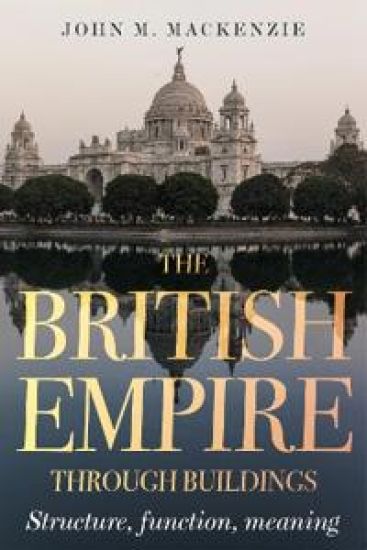
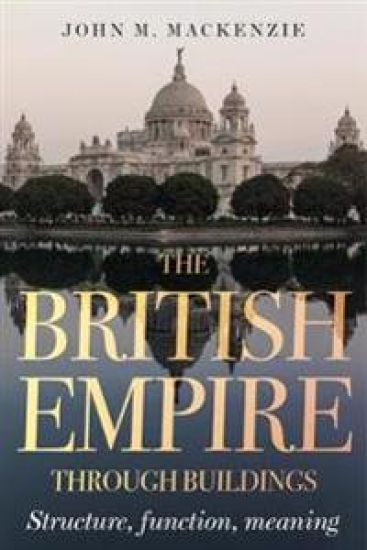
The British Empire Through Buildings

The British Empire Through Buildings

John M. MacKenzie

MANCHESTER UNIVERSITY PRESS
2023
nidottu
Buildings provide tremendous insights into the character of imperialism, not least in the manner in which Western forms were spread across the globe. They reveal the projection of power and authority in colonised landscapes, as well the economic ambitions and social and cultural needs of colonial peoples in all types of colonies. They also represent a colonial order of social classes and racial divisions, together with the ways in which these were inflected through domestic living space, places of work and various aspects of cultural relations. They illuminate the desires of Europeans to indulge in cultural and religious proselytisation, encouraging indigenous peoples to adopt western norms. But the resistance of the supposedly subordinate people led to the invasion, adoption and adaptation of such buildings for a post-colonial world. The book will be vital reading for all students and scholars interested in the widest aspects of material culture.
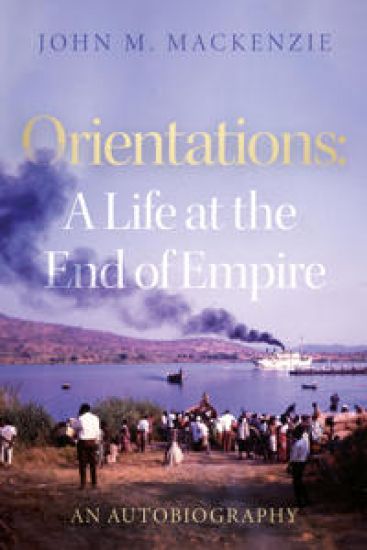
Orientations: A Life at the End of Empire

Orientations: A Life at the End of Empire

John M. Mackenzie

TROUBADOR PUBLISHING
2023
nidottu
Born in 1943, John MacKenzie’s career took him around the world. Educated in Northern Rhodesia (Zambia), Scotland and Canada, he pursued exceptionally adventurous journeys in Canada, Africa and India. These are described in the early chapters of the book. Other chapters chart the manner in which his travels and experience of university teaching influenced his career as a historian. The development of his ideas and the passionate injection of these into his many innovative books and articles led him to be embroiled in much controversy about the history of the British Empire. Realising he was gay, he ‘came out’ as a teenager in the late 1950s and was defiant in his adherence to an honest approach to life at a time of persecution. The chapters of the book describe the interweaving of his personal and professional life, his philosophy as teacher and scholar, his love of ships and the sea, as well as the debates which led him to appear on television and radio, as well as arguing (somewhat against his own left-wing views) in the celebrated Oxford Union. He has enjoyed a highly productive relationship and marriage for more than forty years.
The British Empire Through Buildings

The British Empire Through Buildings

John M. MacKenzie

Manchester University Press
2020
sidottu
Buildings provide tremendous insights into the character of imperialism, not least in the manner in which Western forms were spread across the globe. They reveal the projection of power and authority in colonised landscapes, as well the economic ambitions and social and cultural needs of colonial peoples in all types of colonies. They also represent a colonial order of social classes and racial divisions, together with the ways in which these were inflected through domestic living space, places of work and various aspects of cultural relations. They illuminate the desires of Europeans to indulge in cultural and religious proselytisation, encouraging indigenous peoples to adopt western norms. But the resistance of the supposedly subordinate people led to the invasion, adoption and adaptation of such buildings for a post-colonial world. The book will be vital reading for all students and scholars interested in the widest aspects of material culture.
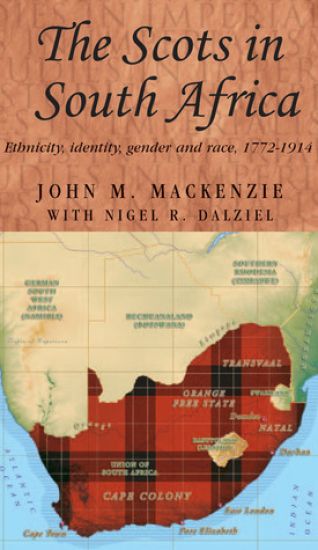
The Scots in South Africa

The Scots in South Africa

John M. MacKenzie

Manchester University Press
2012
nidottu
The description of South Africa as a 'rainbow nation' has always been taken to embrace the black, brown and white peoples who constitute its population. But each of these groups can be sub-divided and in the white case, the Scots have made one of the most distinctive contributions to the country's history. Now available in paperback, this book is a full-length study of their role from the eighteenth to twentieth centuries. It highlights the interaction of Scots with African peoples, the manner in which missions and schools were credited with producing 'Black Scotsmen' and the ways in which they pursued many distinctive policies. It also deals with the inter-weaving of issues of gender, class and race as well as with the means by which Scots clung to their ethnicity through founding various social and cultural societies. This book offers a major contribution to both Scottish and South African history and in the process illuminates a significant field of the Scottish Diaspora that has so far received little attention.
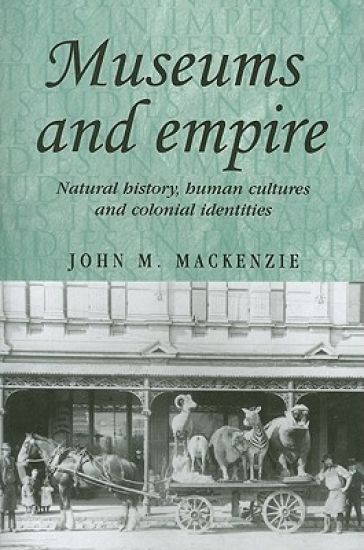
Museums and Empire

Museums and Empire

John M. MacKenzie

Manchester University Press
2010
nidottu
Museums and empire is the first book to examine the origins and development of museums in six major regions if the British Empire in the nineteenth and twentieth centuries. It analyses museum histories in thirteen major centres in Canada, South Africa, Australia, New Zealand, India and South-East Asia, setting them into the economic and social contexts of the cities and colonies in which they were located. Written in a lively and informative style, it also touches upon the history of many other museums in Britain and other territories of the Empire. A number of key themes emerge from its pages; the development of elites within colonial towns and cities; the emergence of the full range of cultural institutions associated with this; and the reception and modification of the key scientific ideas of the age. It will be essential reading for students and academics concerned with museum studies and imperial history and to a wider public devoted to the cause of museums and heritage
The Railway Station

The Railway Station

Jeffrey Richards; John M Mackenzie

Faber Faber
2010
pokkari
In the preface the authors describe their approach, 'In examining the social history of railway stations we were concerned to treat them not as inanimate objects, but as living, breathing places which, better than any other building type of the last 150 years, reflected the societies around them, public buildings which people used in all sorts of ways and whose significance they instantly recognized when depicted in the theatre, the cinema, paintings, photographs, poetry, novels, and travel works. For this reason we have chosen to allow other voices to tell part of the story, to illustrate through quotation the central, but often differing, role of the station in so many societies and so many lives.'They succeed triumphantly in this aim. After the introduction aptly called 'The Mystique of the Railway Station' there are fifteen absorbing chapters covering: The Station in Architecture (three chapters); The Station and Society; The Station in Politics; Class, Race, and Sex; Some Station Types; The Station in the Economy (two chapters); The Station as Place of Work; The Station in Wartime (two chapters); The Usual Offices; The Station in Painting and Poetry, Postcard and Poster; and The Station in Literature and Film. The scope is comprehensive, the achievement magnificent.'written with great enthusiasm . . . packed with rich detail. This is real social history.' Asa Briggs'full of good quotations, and (the authors) write with the infectious enthusiasm of addicts, captivated by the romance of railways' Times Literary Supplement'remarkable . . . the railway station in all its aspects' A. N. Wilson.
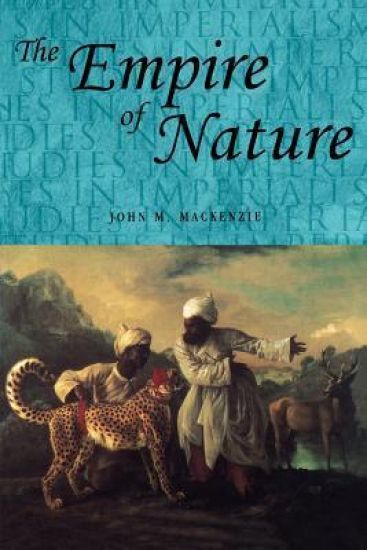
The Empire of Nature

The Empire of Nature

John M. MacKenzie

Manchester University Press
1997
nidottu
This study assesses the significance of the hunting cult as a major element of the imperial experience in Africa and Asia. Through a study of the game laws and the beginnings of conservation in the 19th and early-20th centuries, the author demonstrates the racial inequalities which existed between Europeans and indigenous hunters. Africans were denied access to game, and the development of game reserves and national parks accelerated this process. Indigenous hunters in Africa and India were turned into "poachers" and only Europeans were permitted to hunt. In India, the hunting of animals became the chief recreation of military officers and civilian officials, a source of display and symbolic dominance of the environment. Imperial hunting fed the natural history craze of the day, and many hunters collected trophies and specimens for private and public collections as well as contributing to hunting literature. Adopting a radical approach to issues of conservation, this book links the hunting cult in Africa and India to the development of conservation, and consolidates widely-scattered material on the importance of hunting to the economics and nutrition of African societies.
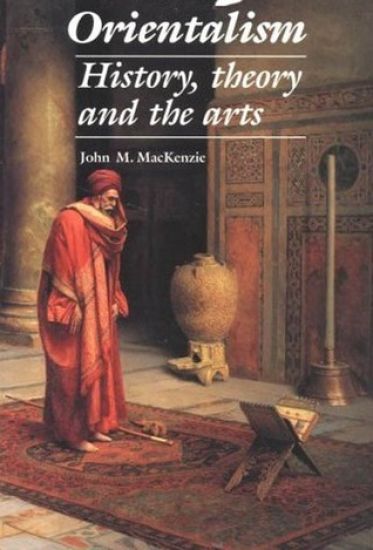
Orientalism

Orientalism

John M. MacKenzie

Manchester University Press
1995
nidottu
The Orientalism debate, inspired by the work of Edward Said, has been a major source of cross-disciplinary controversy in recent years. John MacKenzie offers a comprehensive re-evaluation of this vast literature of Orientalism and brings to the subject highly original historical perspectives. The study provides the first major discussion of Orientalism by a historian of imperialism. Setting the analysis within the context of conflicting scholarly interpretations, John MacKenzie then carries the discussion into wholly new areas, testing the notion that the western arts received genuine inspiration from the East by examining the visual arts, architecture, design, music and theatre. John MacKenzie concludes that western approaches to the Orient have been much more ambiguous and genuinely interactive then Said allowed. The artistic construction of the East by the West has invariably been achieved through a greater spirit of respect and in search of a truly syncretic culture. The Orient has indeed proved an inspiration to the European arts, even when caught in the web of imperial power relations.
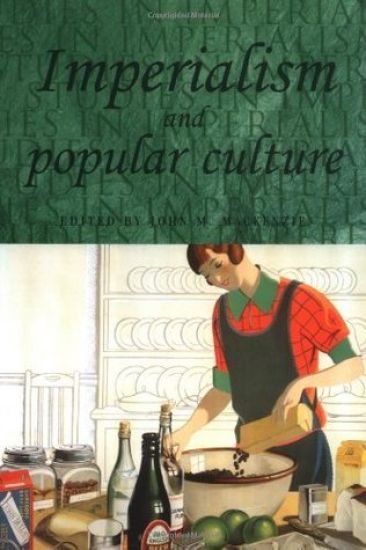
Imperialism and Popular Culture

Imperialism and Popular Culture

John M. MacKenzie

Manchester University Press
1987
nidottu
Popular culture is invariably a vehicle for the dominant ideas of its age. Never was this more true than in the late-19th and early 20th centuries, when it reflected the nationalist and imperialist ideologies current throughout Europe. This text examines the various media through which nationalist ideas were conveyed in late-Victorian and Edwardian times - in the theatre, "ethnic" shows, juvenile literature, education and the iconography of popular art. Several chapters look beyond World War I, when the most popular media, cinema and broadcasting, continued to convey an essentially late-19th-century world view, while government agencies like the Empire Marketing Board sought to convince the public of the economic value of empire. Youth organizations, which had propagated imperialist and militarist attitudes before the war, struggled to adapt to the new internationalist climate.
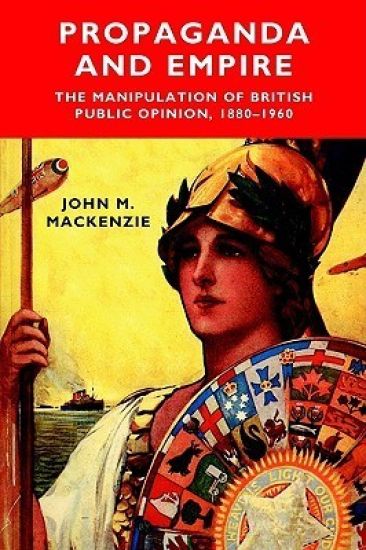
Propaganda and Empire

Propaganda and Empire

John M. MacKenzie

Manchester University Press
1986
nidottu
It has been said that the British Empire, on which the sun never set, meant little to the man in the street. Apart from the jingoist eruptions at the death of Gordon or the relief of Mafeking he remained stonily indifferent to the imperial destiny that beckoned his rulers so alluringly. Strange, then that for three-quarters of a century it was scarcely possible to buy a bar of soap or a tin of biscuits without being reminded of the idea of Empire. Packaging, postcards, music hall, cinema, boy's stories and school books, exhibitions and parades, all conveyed the message that Empire was an adventure and an ennobling responsibility. Army and navy were a sure shield for the mother country and the subject peoples alike. Boys' brigades and Scouts stiffened the backbone of youth who flocked to join. In this illuminating study John M. Mackenzie explores the manifestations of the imperial idea, from the trappings of royalty through writers like G. A. Henty to the humble cigarette card. He shows that it was so powerful and pervasive that it outlived the passing of Empire itself and, as events such as the Falklands 'adventure' showed, the embers continue to smoulder.