Kirjojen hintavertailu – 12 859 828 kirjaa ja 27 kauppaa

Kirjailija

John Macfarlane

Kirjat ja teokset yhdessä paikassa: 32 kirjaa, julkaisuja vuosilta 1999–2026, suosituimpiin kuuluu Library Administration. Vertaile teosten hintoja ja tarkista saatavuus suomalaisista kirjakaupoista.

32 kirjaa

Kirjojen julkaisuvuodet: 1999–2026.

Word and Plan

Word and Plan

John MacFarlane

Columbia University Press
2026
pokkari
We commonly believe that communication is successful when a hearer grasps what a speaker means. But Abe can assert “Sam is tall” without having any definite intention about how tall one must be to count as “tall,” and Bertha can understand his assertion without grasping such an intention. What exactly has been communicated in such a case? John MacFarlane argues that standard models of meaning and communication cannot answer this question. To answer it, he proposes, we need to see vague talk as not purely factual but in part expressive of linguistic plans. In this book, he gives a novel expressivist account of vagueness and explores its implications for semantics, pragmatics, thought, and disagreement.
Word and Plan

Word and Plan

John MacFarlane

Columbia University Press
2026
sidottu
We commonly believe that communication is successful when a hearer grasps what a speaker means. But Abe can assert “Sam is tall” without having any definite intention about how tall one must be to count as “tall,” and Bertha can understand his assertion without grasping such an intention. What exactly has been communicated in such a case? John MacFarlane argues that standard models of meaning and communication cannot answer this question. To answer it, he proposes, we need to see vague talk as not purely factual but in part expressive of linguistic plans. In this book, he gives a novel expressivist account of vagueness and explores its implications for semantics, pragmatics, thought, and disagreement.
Triquet's Cross

Triquet's Cross

John MacFarlane

MCGILL-QUEEN'S UNIVERSITY PRESS
2025
nidottu
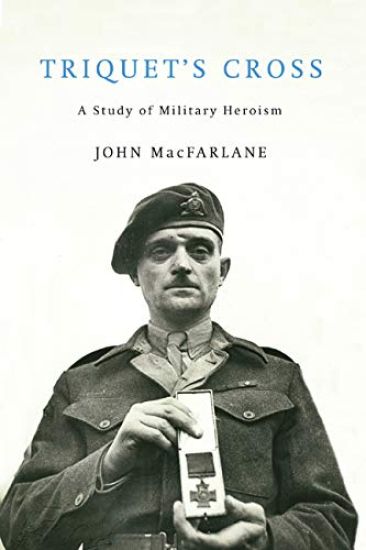
In Triquet's Cross John MacFarlane tells the story of Paul Triquet, a French-Canadian soldier who was awarded the Victoria Cross for bravery in the battle for Casa Berardi during the Second World War. One of only thirteen members of the Canadian Armed Forces to be awarded the highest military honour during the war, Triquet was later pressured to resign from the force due to the overwhelming public and political expectations that the award entailed. The role of hero did not suit Triquet and weighed heavily on him and his family. MacFarlane shows how Triquet's story was changed by those who wished to make his hero status the cornerstone in a political debate between francophones and anglophones, particularly with regard to his representing the Commonwealth despite his French-Canadian heritage. Military heroism has changed in the postwar period, and heroes are no longer expected to be perfect models. But in 1944 Paul Triquet - perhaps the most popular Canadian hero of the war - was asked to conform to political, social, and military agendas. His story reveals much about Canadian and Québécois society at the time and the history of French-Canadians in the Second World War.
Philosophical Logic

Philosophical Logic

John MacFarlane

Routledge
2020
nidottu

Halvin toimitettuna 52,20 €

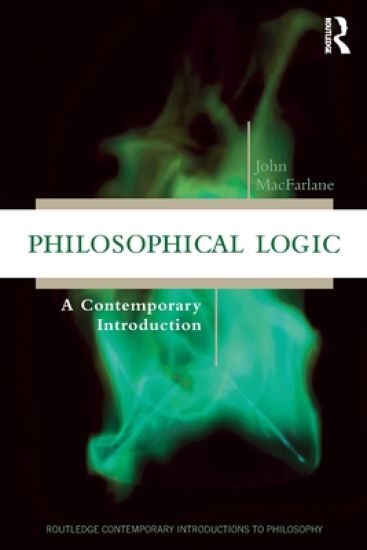
Introductory logic is generally taught as a straightforward technical discipline. In this book, John MacFarlane helps the reader think about the limitations of, presuppositions of, and alternatives to classical first-order predicate logic, making this an ideal introduction to philosophical logic for any student who already has completed an introductory logic course. The book explores the following questions. Are there quantificational idioms that cannot be expressed with the familiar universal and existential quantifiers? How can logic be extended to capture modal notions like necessity and obligation? Does the material conditional adequately capture the meaning of 'if'—and if not, what are the alternatives? Should logical consequence be understood in terms of models or in terms of proofs? Can one intelligibly question the validity of basic logical principles like Modus Ponens or Double Negation Elimination? Is the fact that classical logic validates the inference from a contradiction to anything a flaw, and if so, how can logic be modified to repair it? How, exactly, is logic related to reasoning? Must classical logic be revised in order to be applied to vague language, and if so how? Each chapter is organized around suggested readings and includes exercises designed to deepen the reader's understanding. Key Features:An integrated treatment of the technical and philosophical issues comprising philosophical logicDesigned to serve students taking only one course in logic beyond the introductory levelProvides tools and concepts necessary to understand work in many areas of analytic philosophyIncludes exercises, suggested readings, and suggestions for further exploration in each chapter
Philosophical Logic

Philosophical Logic

John MacFarlane

Routledge
2020
sidottu
Introductory logic is generally taught as a straightforward technical discipline. In this book, John MacFarlane helps the reader think about the limitations of, presuppositions of, and alternatives to classical first-order predicate logic, making this an ideal introduction to philosophical logic for any student who already has completed an introductory logic course. The book explores the following questions. Are there quantificational idioms that cannot be expressed with the familiar universal and existential quantifiers? How can logic be extended to capture modal notions like necessity and obligation? Does the material conditional adequately capture the meaning of 'if'—and if not, what are the alternatives? Should logical consequence be understood in terms of models or in terms of proofs? Can one intelligibly question the validity of basic logical principles like Modus Ponens or Double Negation Elimination? Is the fact that classical logic validates the inference from a contradiction to anything a flaw, and if so, how can logic be modified to repair it? How, exactly, is logic related to reasoning? Must classical logic be revised in order to be applied to vague language, and if so how? Each chapter is organized around suggested readings and includes exercises designed to deepen the reader's understanding. Key Features:An integrated treatment of the technical and philosophical issues comprising philosophical logicDesigned to serve students taking only one course in logic beyond the introductory levelProvides tools and concepts necessary to understand work in many areas of analytic philosophyIncludes exercises, suggested readings, and suggestions for further exploration in each chapter
Assessment Sensitivity

Assessment Sensitivity

John MacFarlane

Oxford University Press
2016
nidottu
John MacFarlane debates how we might make sense of the idea that truth is relative, and how we might use this idea to give satisfying accounts of parts of our thought and talk that have resisted traditional methods of analysis. Although there is a substantial philosophical literature on relativism about truth, going back to Plato's Theaetetus, this literature (both pro and con) has tended to focus on refutations of the doctrine, or refutations of these refutations, at the expense of saying clearly what the doctrine is. In contrast, Assessment Sensitivity begins with a clear account of what it is to be a relativist about truth, and uses this view to give satisfying accounts of what we mean when we talk about what is tasty, what we know, what will happen, what might be the case, and what we ought to do. The book seeks to provide a richer framework for the description of linguistic practices than standard truth-conditional semantics affords: one that allows not just standard contextual sensitivity (sensitivity to features of the context in which an expression is used), but assessment sensitivity (sensitivity to features of the context from which a use of an expression is assessed). The Context and Content series is a forum for outstanding original research at the intersection of philosophy, linguistics, and cognitive science. The general editor is François Recanati (Institut Jean-Nicod, Paris).
Assessment Sensitivity

Assessment Sensitivity

John MacFarlane

Oxford University Press
2014
sidottu
John MacFarlane debates how we might make sense of the idea that truth is relative, and how we might use this idea to give satisfying accounts of parts of our thought and talk that have resisted traditional methods of analysis. Although there is a substantial philosophical literature on relativism about truth, going back to Plato's Theaetetus, this literature (both pro and con) has tended to focus on refutations of the doctrine, or refutations of these refutations, at the expense of saying clearly what the doctrine is. In contrast, Assessment Sensitivity begins with a clear account of what it is to be a relativist about truth, and uses this view to give satisfying accounts of what we mean when we talk about what is tasty, what we know, what will happen, what might be the case, and what we ought to do. The book seeks to provide a richer framework for the description of linguistic practices than standard truth-conditional semantics affords: one that allows not just standard contextual sensitivity (sensitivity to features of the context in which an expression is used), but assessment sensitivity (sensitivity to features of the context from which a use of an expression is assessed). The Context and Content series is a forum for outstanding original research at the intersection of philosophy, linguistics, and cognitive science. The general editor is François Recanati (Institut Jean-Nicod, Paris).
The Seabound Coast

The Seabound Coast

William Johnston; William G.P. Rawling; Richard H. Gimblett; John MacFarlane

Dundurn Group Ltd
2011
sidottu
From its creation in 1910, the Royal Canadian Navy was marked by political debate over the countrys need for a naval service. The Seabound Coast, Volume I of a three-volume official history of the RCN, traces the story of the navys first three decades, from its beginnings as Prime Minister Sir Wilfrid Lauriers tinpot navy of two obsolescent British cruisers to the force of six modern destroyers and four minesweepers with which it began the Second World War. The previously published Volume II of this history, Part 1, No Higher Purpose, and Part 2, A Blue Water Navy, has already told the story of the RCN during the 19391945 conflict. Based on extensive archival research, The Seabound Coast recounts the acrimonious debates that eventually led to the RCNs establishment in 1910, its tenuous existence following the Laurier governments sudden replacement by that of Robert Borden one year later, and the navys struggles during the First World War when it was forced to defend Canadian waters with only a handful of resources. From the effects of the devastating Halifax explosion in December 1917 to the U-boat campaign off Canadas East Coast in 1918, the volume examines how the RCNs task was made more difficult by the often inconsistent advice Ottawa received from the British Admiralty in London. In its final section, this important and well-illustrated history relates the RCNs experience during the interwar years when anti-war sentiment and an economic depression threatened the services very survival.